by Christie Purifoy | Jul 26, 2016 | children, Family, Gardening, Grateful, grief, motherhood, Uncategorized
My children have spent the past week with their grandparents. Untethered from their needs, I spent the week living in my head.
Daydreams, interior monologues, thoughts, prayers, and wishes: the inner world is my favorite landscape.
It is quiet there, and I am all alone.
*
I set several overly-ambitious writing goals for the week. I also determined to catch up on every gardening chore and organize the house from top to bottom. In 90-degree heat.
It was a plan guaranteed to ensure that by the time my children returned, I would feel like a miserable failure who had squandered the most precious days that ever were.
The gardening chores have at least forced me to temporarily abandon my inner world. Daydreams evaporate very quickly when one is sweating, swatting mosquitoes, and cursing one’s inability to properly stake a sprawling cherry tomato plant.
Also, there are flowers. I am finding this summer that I do not think very much in the flower garden. There is something about the overpowering scent of oriental lilies that empties my head of everything else. Only a few days in to my full immersion in the life of the mind, I decided that it is a good thing to take a break from oneself. My inner world, as much as I love it, can be exhausting.
I do not think I would like to live there full-time.
*
Something else happened while the children were away: I turned on the car radio. I am not sure why I so rarely do that. Perhaps it is the demands from my little companions in travel for this music but not that. Perhaps it is my own need to control the tunes that tickle their ears.
I hopped in the car for the first time in days only because a few library books were due and our first bag of peaches was ready at the orchard where we participate in a fruit-share CSA. I do not think that anything less than library books and peaches could have convinced me to leave the quiet oasis of my child-free house.
Left to my own devices like that, I found myself punching the AM/FM knob. I had to take my eyes off the road for quite a dangerous stretch before my fingers found a tiny button labeled “seek.”
I don’t know what I was seeking, but a familiar voice filled the car. It was a childlike voice and instantly recognizable to me. I was a little girl in the early 80s, and the voice of Cyndi Lauper will always recall that one memorable sleepover when my best friend Michelle and I decided to find out how many times in a row it was possible to view that classic 80s film Girls Just Wanna Have Fun. I think we watched it two-and-a-half times through before Michelle fell asleep.
*
In April, in Texas, the very first person who greeted me when we arrived at the cemetery for Shawn’s burial was Michelle’s mom.
I was holding two children by the hands and feeling a bit dazed by the heat and the crowd and the terrible finality of a flag-draped coffin. I was searching for a path through the people who had gathered around a small tent and a few rows of folding chairs, when she suddenly appeared beside me and put her hand on my arm. I had not seen her in years, but I had no trouble recognizing the woman who placed our after-school snacks with such care on those tv trays, the same woman who never complained when Michelle and I brought home sticky gumballs we had spit out and saved from the gumball ice-cream cones we purchased at the mall.
*
I sort of love Cyndi Lauper’s strange voice. She always sounds a bit like a little girl, and my best friend Michelle will always be, for me, the little girl I loved best. I wish I could call her up and tell her that, but Michelle died in a car accident not long after I graduated from high school.
There’s a kind of epiphany that only comes when the music is turned up loud and you are all alone in the car. It’s a strange mix of sadness, joy, and gratitude.
Half my mind was singing Time After Time and the other half was recognizing what a privilege it is to sweat in my garden and run dirty, weed-stained fingers through hair that is beginning to gray. What a privilege it is to feel overwhelmed by four children, to bicker and then make up with the same man for twenty years. How glad I am for this life of interruption and inconvenience and heartache.
It’s a good thing to stop on a too-hot summer day and remember and cry for those who left us too soon.
We are following fast on their heels, but meanwhile, there are flowers to grow and meals to prepare and stories to tell. And there are songs to sing.
Loudly and with the windows rolled down.
by Christie Purifoy | Jul 9, 2016 | Art, Books, Chicago, Grace Table, peace, Pennsylvania, These Farmhouse Bookshelves, Uncategorized
(an installment in my occasional series of book recommendations; this post contains affiliate links)

These are violent days. What good are books? Of what use is poetry?
In his elegy for W. B. Yeats, the poet W. H. Auden famously wrote, “poetry makes nothing happen.” Yet the poem itself complicates this view.
Poetry may or may not change a thing, but if we feel compelled to sing, why not sing, as Mary once sang, of justice?
If we feel compelled to read, why not shed the burden of our own particular skin and view the world through another’s eyes? For a little while?
Here is a poem for that.
Here is one more.
*
A favorite book on our family shelves is Brown Girl Dreaming, a recent Newbery Honor Book by Jacqueline Woodson. My twelve-year-old daughter and I both loved it. The poetry is accessible but incredibly rich.
In a similar vein, I recommend Inside Out and Back Again, by Thanhha Lai. Written in verse, this story communicates difficult truths and complicated historical experiences with grace and lyricism. It is one of the sweetest, saddest, loveliest books I have read.
When I was a new graduate student living on the south side of Chicago, I first read the classic 1952 novel Invisible Man by Ralph Ellison. That was years ago, and I don’t remember the book very well. What I do remember is the shock I felt reading a novel told from the perspective of a nameless black man. For the first time in my life I recognized how the skin we walk around in can remake the world around us. I had never even imagined a world like the one inhabited by this invisible man, but there it was, and while I read the book, I lived in it.
*
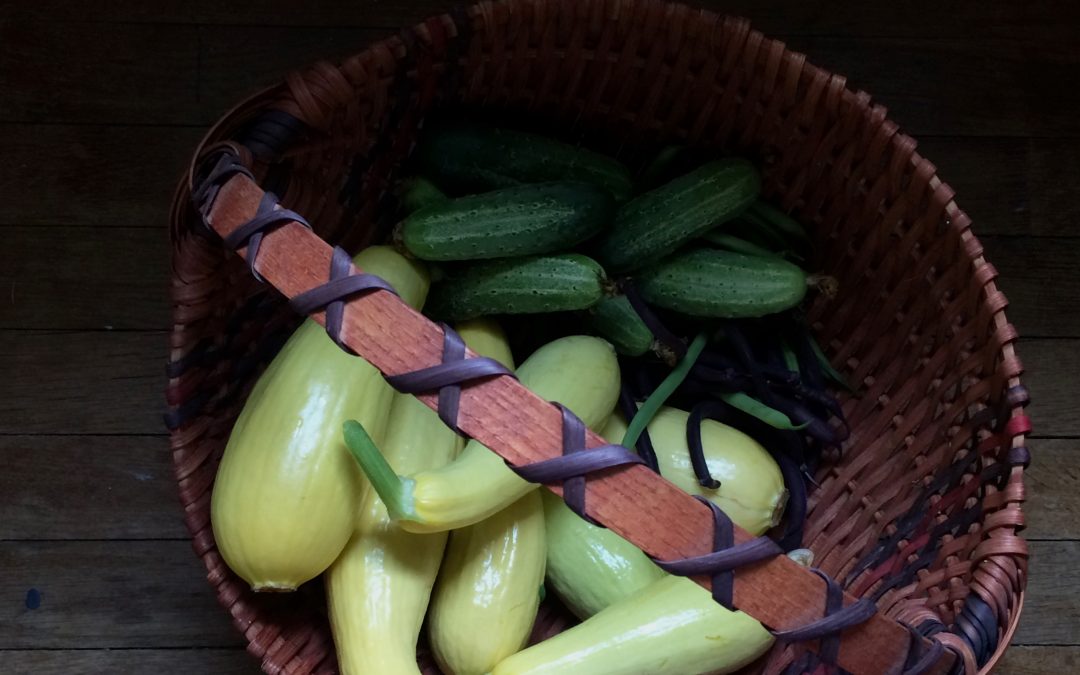
Like most summers, this one is too loud, too crowded, too hot. But, as I write in Roots and Sky, this cuts two ways. There are also too many lilies in the garden and too many squash on the vine. My way of dealing with the too-muchness of it all is what I call “comfort-reading.” This means I am finding most of my reading material on the shelf at my local Goodwill thrift store: fifty cent Agatha Christie paperbacks, an old Martha Stewart gardening book without its carefully photographed jacket, an Englishman’s memoir of life in Provence that must have been on everyone’s beach-read list the summer of ’89.
I revisited the Goodwill bookshelves only yesterday and found two treasures. The first was a copy of The Taize Picture Bible: Stories From the Scriptures in almost perfect, vintage condition. I have heard such good things about this illustrated Bible for children over the years, but it has long been out of print. I paid $1.97 and couldn’t believe my luck.
The second was a pristine paperback copy of Elizabeth Enright’s Thimble Summer, the winner of the 1939 Newbery Medal. I didn’t buy it only because I recently found a vintage hardback of the same title at my local used bookstore. It has been our evening family read-aloud for a week now.
My ongoing quest to discover read-aloud books all four of my kids will submit to listening to (actually enjoying the book is a higher standard; I am satisfied if two of four children say they “like” the book) has recently met with failure upon failure. The last success I remember is Laura Ingalls Wilder’s Farmer Boy, a book that has a lot in common with Thimble Summer.
*
On the recommendation of a friend, I recently began reading The Manor: Three Centuries at a Slave Plantation on Long Island. After my friend explained it was a book about an old house written by a landscape historian, she said, “I think you’ll like it.” I said, “I think you’re right.”
More factual and straightforward than a historical novel, yet much more readable and compelling than a history textbook, The Manor tells the story of one of the first great European houses in North America, and the family who lived in it and preserved its history for centuries. One house might not seem so important, but the door of this house opens up a story of northern slavery that has since been either forgotten or willfully ignored.
The first Sylvesters were Quakers, and the story of their lives is revising a story I have always taken pride in. My own farmhouse was built by Quakers, and I have long given credit for the beauty of this part of Pennsylvania to the generations of residents who have sown peace and justice into the very soil of this place. That story is still true, but The Manor tells an older, darker tale. According to this story, the blood of enslaved Africans touches every aspect of our earliest history and every one of my seemingly peaceful, green hills.
*
Seeds of brutality and injustice were sown into our country’s soil from its earliest days. It is a small thing to know that the atrocities of slavery on sugar plantations in Barbados could not have been sustained without the animals and crops raised on New England farms, yet somehow that knowledge has brought the shame of slavery home to my own heart.
Those Barbadian plantation owners lived in homes built like fortresses. They exploited, in fact, they brutalized their workers and so they feared them.
Slavery is long gone, but we still reap that terrible harvest. We worship safety. We are afraid of black men, but it is the black men, and their communities, who pay the price for our fear.
When I hear that one more police officer has killed one more black man, I cannot throw a stone at that officer. I remember how, years ago, fear would rise up in me if I followed the sidewalk beneath a graffiti-splattered viaduct and saw a young black man in baggy pants approaching from the other direction. It took years of living in that south-side Chicago neighborhood to learn that I was always so much safer than any of those young black men. In ten years, I was never the victim of a crime, but neighbor after neighbor, innocent after innocent, male and female but always black-skinned, died of gun violence while I lived, untouched, in their midst.
Separation breeds fear, and fear breeds violence.
But if violence is a failure of the imagination, as the poet William Stafford said, then perhaps poetry can make something happen?
Comfort-reading has its place, but I must also read to bring dark things into the light. Especially, those dark things in my own self.
What if we tuned our imaginations to the songs of others not like ourselves?
If poetry makes beauty and creates hope, can it also help us to act justly and love mercy?
Can it help us walk humbly with our God?
*
With these questions in mind, do you have any book recommendations for me?
If you are looking for a quick Saturday read, here is my latest post for Grace Table: “What Hospitality Looks Like In A Castle.”

by Christie Purifoy | Jun 23, 2016 | children, Family, grief, Life Right Now, Roots and Sky, Seasons, Summer, Uncategorized

Life right now is the first day of summer and the longest day of the year.
This is the day that brings us nearest to that time and place when “there will be no more night” (Rev. 22:5).
But even the night is brighter than most. As the ripe moon rises, it scatters the last few tattered clouds until it shines like silver in our faces.
“Look!” I tell my two-year-old nephew. “A strawberry moon!”
“Yes, Auntie Christie,” he says. “A watermelon moon!”
*
We wander down the avenue while fireflies come out to play. They buzz and snap. It is a fireworks extravaganza for the fairies.
My sister catches one in her hand, and we crouch, there, on the edge of the driveway, with firefly light in our eyes.
*
One more night, and I sit with my four children at a memorial service for a child.
The room is decorated with twinkle lights. We are indoors, but here is the night sky. Here are the summer fireflies.
After the songs, and the words, and the prayers, we step outside and into the setting sun. Everyone holds golden balloons on golden strings until – a whistle and a cry – we let them fly.
“These balloons are for you, Adam!”
“Balloons! For you!”
*
The kitchen is filled with balloons.
“Happy birthday!” they say. “Happy birthday,” everyone sings.
It is my birthday. It is my son’s birthday.
“This is the day, more than any other, when I confront the ties of love that bind me to the living and the dead. The old world and the new” (Roots and Sky, p. 174).
*
Death, where is your sting? What victory do you have?
You are so small I cannot even see you. You are blotted out by this bright summer light.
But, Life, oh, Life. You are so full. You are as weighty as the dropping sun. You are as sharp as the silver moon. You dazzle my eyes, and you break my heart.
Like the Israelites of old, when I see the fire and the glory belonging to the Lord of Life, what can I do?
What can I do but kneel with my face to the ground, saying, “He is good; his love endures forever” (2 Chron 7:3).
*
Three posts for you on my birthday:
In A Land of Small Wonders (written for Emily P. Freeman)
Why I Grieve On My Birthday
Why I Give Thanks On My Birthday
*
by Christie Purifoy | Jun 14, 2016 | Family, God, guest post, motherhood, rest, Seasons, Summer, Uncategorized

Officially, summer is still days away, but we are already knee deep in it.
The sprinkler is making its rainbow arc for Elsa and her two-year-old cousin. Even the big cousins have stained their t-shirts with grape-juice popsicles, and we are shifting our Friday-night, homemade pizza from the oven to the grill.
Everything is a little hotter, a little louder, a little messier. Everyone is a little happier, a little more relaxed, and a little more likely to lose their temper.
We’re still waiting for the last day of school and the longest day of the year, but summer has already arrived.
I feel incredibly grateful and more than a little nervous about the coming months. My kids will all tell you that their mother is not at her best when the air is humid and the house is crowded and the children are singing, “I’m bored.” Because, like afternoon storm clouds, time can hang a little heavy in the summer.
I am grateful for these words from Abby Perry. She is a writer who lives with her family in my Texas hometown, and she knows summer heat. She also knows that time is a gift and every season reveals the One who first established its rhythm.

by Abby Perry
Two little boys found their way into my bed this morning, snuggles turned to wrestling each time one felt the other had greater access to me than he did. They are Owen and Gabriel, whose birthdays at the end of summer will turn them 4 and 2. Their dad is out of the country for two weeks on a mission trip. We have Backyard Bible Club each evening this week.
Summer has begun.
We live in Texas, where it has been unseasonably rainy recently; the scorching weather holding off just a few weeks more than usual. But today, it is in full force. 90 degrees before noon and I am remembering what it was like to work long, hot summers at camp in East Texas, what it feels like when my legs stick to the chair at an outdoor wedding, what our air conditioning bill will soon be.
A husband out of the country, two little boys so dependent, so rosy cheeked in the sun. Gabriel, the youngest, has a neuro-genetic disorder that results in the need to wear braces everyday, his pudgy legs covered just below the knee to his toes. Owen asks to go to the pool and I fight immediate overwhelm, wondering how I will make it work with Gabriel’s schedule since he is only supposed to be out of his braces for an hour of each 24.
It can be hard for me to believe that the summer is a time for flourishing.
“Can’t I just take this season off?” I wonder. “Go quiet, hibernate a bit?”
I internally answer my own questions before I’ve even finished asking them. It is not hibernation that I’m truly craving, it’s rest. It is soul quiet, whether my hands are busy or calm. It’s certainty that I am thriving in my place, that I am where I should be, that I am contributing and not merely letting the days pass me by. What I crave is the confidence that I am redeeming the time given to me, with all of its caveats and demands, expectations and interruptions. What I crave is not something I can find by looking into myself, or by gazing at my calendar. It is not something I can conjure up through scheduled breaks, nor hard work, nor abounding family time, though each of those endeavors have great merit.
I wonder if you’re craving the same?
What we crave is something only to be found by looking upward. There is treasure we search for that is only discovered when we seek an orientation to the True North, when we remind ourselves of our position and protection under a good and sovereign God.
I glance at the Liturgical Calendar sitting near the sink and am reminded that it is the season of Ordinary Time. It is the season for ministry and discipleship, the season for hands to the plow and eyes fixed upward and forward, the glory of God and the service of others ever before me. The calendar reminds me that though I do not wake up each morning convinced of God’s sovereignty over time, nor go to bed each night certain of His goodness, His grace abounds all the more and sets a cadence for my days. He makes my paths straight, allowing me to be oriented to him, to set my pace by Him, to move my feet in rhythm with Him.
As we seek to live well in the summer months, through work and play, labor and rest, may we find ourselves certain of the infinite One who is not limited by the finite restraints we live within on this earth. May we exchange the complaints of the hurried heart for the gratitude of the surrendered soul, confident and joyful in each commitment we make, resolute when we need to say, “no.” May we carve out space for long evenings on the porch, kids making up games late into the night and falling into their beds with that outdoors induced exhaustion that produces the sweetest sleep. May we find opportunities to serve and to seek the peace and prosperity of our communities, our hands and feet guiding our eyes away from ourselves. And in it all, may we remember our desire to flourish and to see others do the same comes from the Giver of all good gifts, and that time, in all of its wildness and wonder, is one of them.

Abby is an old soul, a Jesus girl, better in writing. She is a pastor’s wife and mom of two boys, one of whom has a neuro-genetic disorder, which Abby writes about (among other things such as faith, liturgy, depression, social issues, and literature) at www.joywovendeep.com. Abby directs communications for a nonprofit organization and co-facilitates two community efforts – one promoting bridge-building racial reconciliation conversations, the other supporting area foster and adoptive families. She has a soft spot for books, podcasts, learning about human relationships through television and movies, personality typing, and pasta. Abby holds a B.A in Communication from Texas A&M University and is completing her graduate degree at Dallas Theological Seminary.
Twitter & Instagram @abbyjperry | Facebook Page: Abby Perry

by Christie Purifoy | Jun 3, 2016 | Community, Dreams, Faith, Gardening, God, Grateful, healing, Home, Hope, hospitality, Roots and Sky, Uncategorized
“Nothing is perfect.”
Those words cut me. They always have. I don’t care if they’re true because everything in me wants them to be untrue. Everything in me longs for perfection though perfect is as cold and distant as the morning star.
Yet here is the lesson I keep learning over and over again: when perfection falls to earth it veils its light in imperfection.
*
This house is my perfect dream come true, but Lord-have-mercy it is a mess.
Half the windows can’t be opened, whole chunks of molding are missing near the roofline, there is an ominous bulge in the plaster wall along the stairs, and please do watch your step on the porch. You never know when your foot might crash right through.
I wrote these words in Roots and Sky, though I did not know how true they would become:
“… I picture this house, this hilltop, cracked open. Torn right open. And everyone invited to come in. In this picture, it seems that something precious has been emptied out and is being passed around. It is a frightening, exhilarating vision.”
The thing about a broken, imperfect house is that we cannot live in it alone.
When I met Dr. B (“doctor of old houses”), he told me he had prayed God would bring him another old house to work on.
When I called J about our windows and gave him my name, we both held our phones in a state of shock. Apparently, he had purchased Roots and Sky for his wife only the day before.
Jonathan and I always hoped that this place would be a blessing for many beyond our own immediate family. We glimpsed how that could be true our very first Easter when one hundred neighbors joined us to hunt eggs on the lawn. We sent those invitations to a neighborhood of strangers because we were lonely.
I called these local craftsmen because our house is broken.
Perfectly, beautifully broken.
Praise be to God for broken houses, broken hearts, broken bodies, and all the other precious broken things.
Praise be to God for hands that heal and hands that make things beautiful and whole.
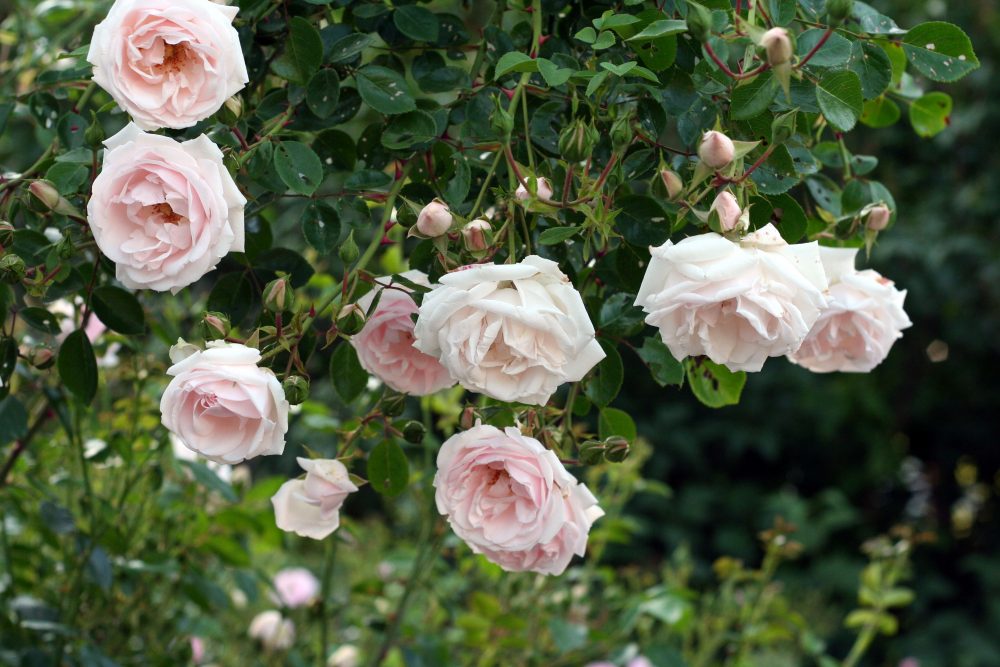


Praise be to God for roses.
Praise be to God for thorns.
*
by Christie Purifoy | May 14, 2016 | Books, children, Grateful, motherhood, Uncategorized

After Shawn’s accident in mid-January, I hardly read a thing. I would sometimes pick up a book, but I couldn’t quiet my mind enough to read it. Life was too heavy, and it wasn’t possible to slow down without feeling the weight of it all. If I sat still in a chair for five minutes, I would feel that weight settle until my arms would lower and I had set my book aside.
Since we returned from the burial in Texas, I’ve been reading almost constantly. I am weary in my bones, tired out by grief and small talk. Temporarily at least, it is a relief to let myself fall, forgetfully, into the world of a book.
My Name is Lucy Barton by Elizabeth Strout is simple yet searing, a short novel that consists almost entirely of one young woman’s reminiscences and conversations while recovering from an illness in the hospital. For so many reasons, this is my literary ideal. I read the entire thing in awe that Strout could shape the most ordinary words and experiences into something so powerful. Lucy Barton’s voice will be in my head for a long while.
I did not choose to read Elizabeth Alexander’s The Light of the World: A Memoir because of our experiences as a family during the past few months. I’m fairly certain I put a library hold on the title without remembering the subject, and it was delivered to my local library branch a few weeks ago.
Elizabeth Alexander is a well known poet (I remember appreciating the poem she wrote for the occasion of President Obama’s first inauguration), and this is a memoir about her marriage, her husband’s unexpected death, and the first year of life without him.
Honestly, it’s the kind of book I tend to avoid (too sad!), and there has certainly been no forgetfulness while reading it. Yet, I am so glad it found it’s way to me now. It’s as much about marriage as it is about loss, and Alexander’s observations and descriptions of both are exquisite. There is a great deal of joy in this book: the joy of cooking and eating, of making art, of gardening, and the joy of witnessing your children’s growth. Alexander is open about not being a religious person, and yet her poetic sensibility and her faith in the truthfulness of poetic logic gives this honest book a spiritual weightiness that I appreciated very much.
Life Among the Savages by Shirley Jackson couldn’t be more different. This hilarious domestic memoir (those savages are Jackson’s four children) is from the queen of the creepy tale. You’ve probably read her famous short story The Lottery. Her books We Have Always Lived in the Castle and The Haunting of Hill House are wonderful, spooky classics.
Life Among the Savages, published in 1953, describes another world (pregnant mothers who are never far from their cigarettes and children who play cowboys and Indians with television swagger), but it is hilarious precisely because it describes so well the day to day insanity of life with small children.
My strongest feeling while reading this book was gratitude. Somehow, Jackson’s deadpan delivery and knack for dialogue reminded me how sweet this phase of life can be. Yes, our houses are a mess and children possess an illogic that cannot be reasoned with, but, this book seems to say, isn’t it wonderful?
In my own book news, you can listen to an interview I recently gave about Roots and Sky. Here is my conversation with Cara Strickland for Off the Page. We talk about writing, home, seasons, liturgy, and family.
And, you are all invited to join the Summer Book Club at Grace Table. This summer’s pick is Roots and Sky, and the conversation takes place in June. Sign up today!
Now tell me: which books are saving your life lately?


