by Christie Purifoy | Mar 7, 2015 | Books, Gardening, Uncategorized, Winter
No doubt most of you are not sitting under a foot of snow as we are here at Maplehurst, but early March days are still ideal reading days.
I’m reading mostly gardening books, which, I suppose, must mean that I am a very hopeful person. Or else that I am practiced in denial.
I have a stack of gardening books currently checked out from my library, including the coffee-table treasury Visions of Paradise by photographer Marina Schinz. It begins with these words:
To create a garden is to search for a better world. In our effort to improve on nature, we are guided by a vision of paradise. … This hope for the future is at the heart of all gardening.
I think this is true of gardening, but my late-winter prayer is that these words would be true in every area of my life. That my reading, my loving, my working – everything – be motivated by hope for the future.
The following post contains affiliate links. You can find all my book recommendations here.
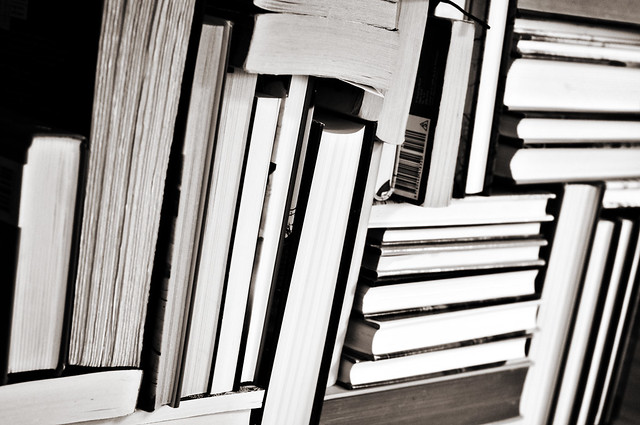
My favorite book in that stack of gardening books is The Essential Earthman: Henry Mitchell on Gardening .
.
Henry Mitchell was a columnist for the Washington Post. This posthumous collection has been called “one of the great American gardening books,” and I absolutely agree. This is wonderful reading: informative, practical, hilarious, witty. In its own subtle way, it is brilliant.
Its appeal for gardeners is obvious, but as I read I decided the book was worthy of an even broader audience. Almost all of the pieces are wonderful examples of what newspaper opinion writing can be.
We can all learn something from Henry Mitchell. We might learn about planting peonies or which varieties of daffodil are the most glorious. Or, we might learn the subtle art of communicating one’s own strong opinions in the most disarming and entertaining way.
*
Dept. of Speculation (Vintage Contemporaries) by Jenny Offill is not like any other novel you have read. I am sure of that. It is more like one of those works of art that looks, from a distance, like a hyper-realist portrait but is, upon closer examination, found to be made up entirely of buttons or bottle caps.
From a distance, this is the story of a marriage that is falling apart. Now, I know that sounds entirely too depressing for late-winter, but the full arc of the story is hopeful and beautiful.
But close up? This is a strange collection of thoughts and facts and memories. I tend not to like experiments in fiction, James Joyce excepted, of course. But when an experiment works, it really, really works. And this one works.
There is nothing self-indulgent about Offill’s writing. Instead, she has found a new way to tell a familiar story, and the result is astonishing.
*
I sometimes postpone writing these book recommendation posts because I worry that I haven’t read enough new, great books. I forget that the premise, when I began, was simply to tell you about the books on my shelves. Or, more accurately, the books taken off the shelves and left lying near beds and armchairs.
We’ve loved Mary Ann Hoberman’s picture book The Seven Silly Eaters for years, but this book has recently come off the shelf for round after round of reading. Elsa loves it, but my nearly-six and nearly-nine-year-old boys come like moths to a flame when they hear me reading it.
We are big fans of other Hoberman books, especially A House Is a House for Me and The Llama Who Had No Pajama: 100 Favorite Poems
 , but The Seven Silly Eaters is special. It’s the rhyming story of a tired mother with seven picky-eaters for children, but, like all great picture books, it offers so much more. Every illustration tells a story of its own, and, I think, every family will find something of themselves in its pages.
Do you think your child is too old for picture books? Do you think you are too old for picture books? Then I recommend The Seven Silly Eaters as a very necessary corrective.
Happy reading, friends.
*
by Christie Purifoy | Feb 14, 2015 | Books, children, Gardening, Home, Seasons, Uncategorized, Winter
It’s the coldest weekend of the season for us here at Maplehurst.
The week did not begin well. The same night Jonathan left town for a business trip, the tank of heating oil that supplies our furnace ran dry.
Oops.
Elsa and I spent the next morning wearing coats by the parlor fireplace waiting for an oil refill and a technician to restart our heating system.
However, the week ended with the installation of our much dreamed-about, much anticipated woodstove. It sits in our once freezing kitchen, but, as I type this from the kitchen table, the room is throbbing with warmth.
If you’re looking for any of us this weekend, you’ll find us here. In the kitchen. Feeding logs into the mouth of a cast-iron stove on four, pretty little legs, reading picture books and gardening books and the woodstove manual.
You’ll find us here, drinking coffee and cocoa, reading about mice who drink “acorn coffee” and deciding the very important question of whether or not acorn coffee might be something we’d like to try.
The following post contains affiliate links. You can find all my book recommendations here.
The acorn coffee appears in Winter Story (Brambly Hedge) by Jill Barklem, but we love every beautiful book in the Brambly Hedge series. You might begin with the four seasonal books (I am very fond of the June wedding of the miller mouse and the dairy-maid mouse that takes place on a bark raft floating at the edge of the stream), but don’t miss the other stories. My boys, especially, love to follow the winding staircase in one of the images from The Secret Staircase (Brambly Hedge)
 .
.
These books are thirty years old, but they were old-fashioned when they appeared. They celebrate English seasonal folk customs as depicted in a community of hedge-dwelling mice. The mice wear straw hats and drink delicate, floral wines. There is a lord and lady and a palace, but they store their food communally in a stump. They enjoy picnics and outings to pick blackberries. Do I need to say more?
I will say more but only this: it is the highly detailed illustrations that make these books so magical. Every intricate twist in a mouse cottage burrow is depicted in delicious detail. A patch of trees lights up with tiny mouse windows. A cottage kitchen drips with stored crabapples, homemade jam, and embroidered tea towels.
I pretty much want to move in to Brambly Hedge.
*
One of the most surprising and inspiring books I’ve read this winter is Keeping House: The Litany of Everyday Life by Margaret Kim Peterson. Recommended by a friend who studied with Peterson at Eastern University, this is a book about the spiritual value of housekeeping. It is for men and women, married and single, university students, empty-nesters … what I’m trying to say is that this book offers something important and encouraging to anyone who has ever found themselves with a dirty dish in their hand or a bed in need of making.
As someone who values the home but loathes just about every task associated with keeping one (I tolerate laundry, I despise cleaning, I rarely make my bed), this book completely reoriented the way I see my home and the work involved in caring for it. I’ve always said that washing dishes can be holy work, but I don’t think I ever really believed it, until I read this.
Keeping House is rich in theology, but it is clearly written, thoroughly accessible, and seasoned with personal stories. I loved it. I can’t recommend it enough.
*
One book I’ll keep close to the woodstove this weekend is Dirr’s Encyclopedia of Trees and Shrubs . This is an enormous, treasure of a book, and it is not inexpensive. Even though I was cashing in a gift card, I still debated quite a bit before I hit purchase.
But, wow! I am so glad I did. This book is the work of a lifetime, particularly of famed botanist Michael Dirr’s lifetime, and you will not find a more exhaustive, thoroughly researched, delightfully written, well-photographed book of trees, shrubs, and vines.
I love the personal, witty writing style (if a tree is rubbish for gardens, Dirr will let us know), I love reading the histories of familiar trees, I love the lists of particularly worthwhile varieties. I’ll be planting three crabapples this spring, and I’ve already chosen the named varieties based on Dirr’s descriptions.
If you aren’t quite ready for the financial commitment (not to mention the commitment of coffee-table space), you might prefer to read Dirr’s earlier volume Dirr’s Hardy Trees and Shrubs: An Illustrated Encyclopedia . This is a smaller book (though not small), and the information is slightly less up-to-date, but it remains an excellent resource. Also, you should be able to find it at your library.
*
Today, I have one bonus recommendation. Dawn Camp’s just-released collection The Beauty of Grace: Stories of God’s Love from Today’s Most Popular Writers is lovely. It is brimming over with brief reflections from some of my favorite Christian bloggers. I love that this book gathers some of the best of ephemeral internet writing and gives it permanence.
I think this book would make an especially fine gift. I love giving books as gifts, but sometimes it is difficult to find just the right book match. This book solves that problem entirely. Everyone will find something to love in this book. But my highest praise? It has earned a place by my bedside table.
by Christie Purifoy | Feb 4, 2015 | Seasons, Uncategorized, Winter
“He saw no colour but those he knew, gold and white and blue and green, but they were fresh and poignant, as if he had at that moment first perceived them and made for them names new and wonderful. In winter here no heart could mourn for summer or for spring. … On the land of Lorien there was no stain.”
– J.R.R. Tolkien
I recently placed myself in something like a writer’s Time-Out.
It was similar to the break my younger son is often required to take when his grumbling about the breakfast oatmeal reaches a critical stage. I simply told myself I must stay away from this blog until I had something better to contribute than complaints about the weather.
But then January turned into February, and though the weather has been, if anything, more disappointing than ever, I decided it was probably time to let my words out again.
We’ll see what happens.
*
My older son received snow shoes for Christmas. Though he has taken them out for a few test runs each time the snow has drifted into something resembling reasonable depth, for the most part, they have sat, ready and waiting, by the laundry-room door.
For a few weeks, those new snowshoes looked optimistic. Expectant. They perched neatly with their accompanying poles. Yesterday, I realized that they had fallen behind a pile of cardboard waiting to be recycled. Their metallic blue surface was dimmed by dust.
Whether or not you are the proud owner of new snowshoes, I do not think there is anything more miserable than sheets of rain and a high temperature of thirty-eight degrees.
*
This morning, the winter sun shone. Elsa and I walked the neighborhood sidewalks like puppies released from a kennel.
I noticed, as I walked, that the sky was a very pale, very delicate blue. It looked like porcelain. It looked as if a bowl of fine bone china had been turned upside-down over the treetops.
It was one of the loveliest skies I think I have ever seen. But it was also a thoroughly winter sky.
There are no skies like bone china in June.
by Christie Purifoy | Nov 30, 2014 | Advent, Desire, Dreams, Jesus, river, Seasons, Uncategorized, Waiting, Winter
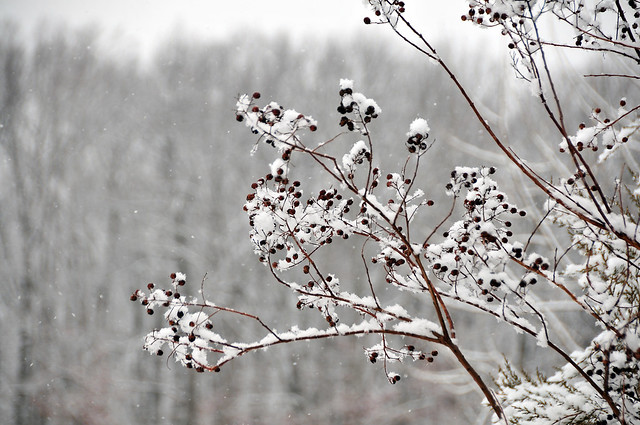
Our first serious snowfall arrived the day before Thanksgiving.
The day began with rain. I left the house early to meet a friend for coffee and prayer, and the rain was already running in rivers. They said the rain would turn to snow mid-morning, yet that is a miracle I am always reluctant to believe without seeing. They were right. At ten in the morning, as I sat writing in one of the third-floor attic bedrooms, the rain turned quietly to snow.
Within minutes the golden-brown leaves still piled on our lawn were dusted with snow. Within an hour, the whole world had changed. Autumn had disappeared, buried beneath a new, wintry world.
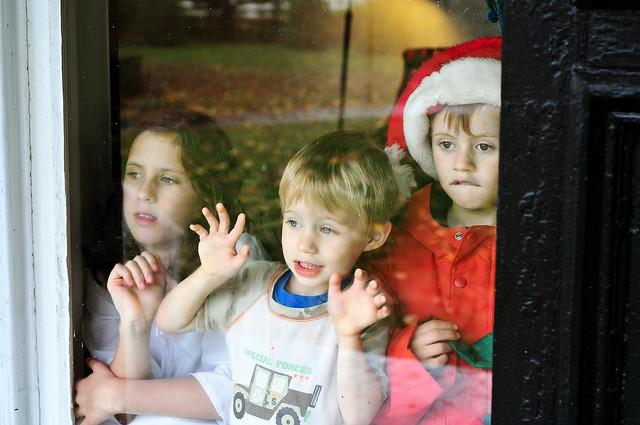
My children had an early release from school for the holiday. I was standing at the parlor window, watching for them to come walking the long length of our driveway, when I heard it. A rumble. Like a heavy truck. But the rumble grew and cracked and broke into pieces, and I recognized it for what it was.
Thunder. A long, rolling river of thunder.
*
*
Every year since I began writing this website, I have blogged daily during Advent. During the rest of the year, I struggle to post regularly once each week. But those Advent seasons of daily writing have been my favorite seasons. The intensity of those days, the witnessing and the telling, have changed me. They have also changed my life.
I began this discipline of daily Advent blogging because I was desperate. Desperate for something new and good in my life. Desperate for more. I ached and yearned and waited, and I wrote about it. I tried to anchor my own story in The Story. That January I found out I was pregnant. I’d had no idea what I was aching for, but Elsa Spring is, as her name suggests, new and good and as beautiful as a long-anticipated spring.
The second year I was weighed down by a gray post-partum fog. I was sure I had nothing to say. But God showed himself and gave me words. And in January the fog was finally rolled back. I was myself again. I knew happiness again.
The third year, I was sure I couldn’t do it. I had not had time to pre-plan a single post. I kept my eyes wide open, and I scratched out a few words each night. And God showed up. I woke every day feeling empty, and I went to bed every night having been given the story for that day.
In January, my long, vague dream of writing a book crystalized unexpectedly. Just after Epiphany, a book idea dropped, fully formed, into my head. And, in another year, that book will show up in bookstores.
You would be right if you guessed that I approach Advent with not a small amount of fear and trembling.
*
Advent is a journey. And it changes us. It is a season of quiet beauty and gentle expectation, but it can roll over our lives like thunder. Sit. Watch. Wait. There is no telling what you might see.
Two thousand years ago, the whole world changed. And it goes on changing. There is always, always something new.
This year, I am deep in words for my book. For the first time, I have had to admit that I cannot blog every day of Advent. But I have not wanted to give it up. Instead, I have asked a few of my writer friends to join me here. I’ll be sharing their Advent reflections with you this season. I’ll also be showing up with Saturday book recommendations and a special food-themed Christmas giveaway.
And I pray, however you observe Advent, that it will be as beautiful as the first snowfall of the season. I pray that it will rock the earth beneath your feet like thunder.
*
by Christie Purifoy | Nov 13, 2014 | children, Family, God, grief, Jesus, motherhood, prayer, Seasons, Spring, Winter
I know that the killing freeze arrived later this year because I checked last year’s date in my journal. I understand that the cold air pouring in even as I type is, if anything, overdue, and yet I wish it had held off longer still.
Winter approaches, and I find myself afraid.
Most of the maple leaves have fallen, but the trees still wear a few. They look like dabs of watercolor paint. It is autumn’s last deep breath before the descent of winter’s gray veil.
Last winter was long, and the memory is still heavy. I love snow falling past the window, and I love pulling my children on a sled through the Christmas tree farm, but winter is not only that. Winter is also dark afternoons and ice in the chicken’s water and snow turned to mud.
*
We have all been sick for weeks, and I keep getting better only to get worse again. The baby’s eyes are red and infected, and our whole house shakes with bone-deep coughs.
I am too weary for bad news, I have kept the radio turned off, but terrible tidings slink in, like that draft around my office window. First there was a text from my friend. Such a devastating loss. A week later there was a phone call from family, and that one was so much worse.
They aren’t my stories to tell. Perhaps they aren’t stories at all. They are ruptures. Faultlines.
But you don’t need the details. I’m afraid you’ve heard them before. You, too, have received a text. You, too, have picked up that phone. These are the things that should never happen.
These are the stories every atheist mentions when he or she says they cannot, cannot believe in a good and loving and all-powerful God.
And I find I have no desire to argue with them. Such things should not happen. My atheist friends are absolutely right about that.
*
When the text came in, I started praying a prayer I’ve never prayed before. I think every true prayer is given, but the given-ness of this one was more apparent than most.
I prayed Let there be light.
I was still praying that prayer when the phone call came. And now I see no reason to stop. Lord, let there be some light. Dear God, please.
It is a winter prayer, and it beckons me toward spring promises:
For as the days of a tree, so will be the days of my people …
They will not labor in vain, nor will they bear children doomed to misfortune.
– Isaiah 65:22-23
I want to believe that these words are true, but I am thinking of two mothers. One labored in vain. One bore a child doomed to misfortune. At least, that is what appears to be so.
But what if death was no more the end than winter is the end? What if these words are yet true for these mothers and their children? All hope seems lost, but maybe that is a lie.
After the cross came an empty tomb in a springtime garden.
Winter is near. They say it will be long and cold. I know for certain that it will be dark. But I also know that on the other side of winter is spring.
On the other side of death is life.
*
by Christie Purifoy | Apr 29, 2014 | Desire, Dreams, Easter, Family, Food, Lent, Seasons, Spring, Stories, Uncategorized, Winter
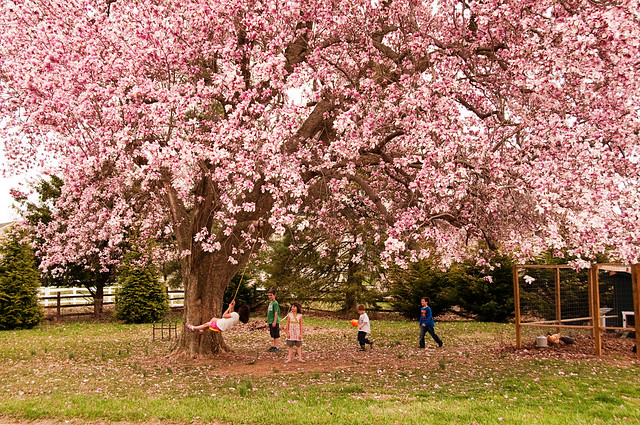
Our Easter feast began the day before, on Saturday morning. One hundred or so neighbors. Two thousand or so eggs. Warm sunshine and hot coffee. Conversation and sticky children.
Or maybe it began earlier that week. When my sister and her four children tumbled, along with the crayons and crumpled napkins, from their minivan. A three-day road trip from Florida suddenly ended.
It is Easter, and we have feasted. On cousins sprouting like weeds and epic games of Monopoly. On baby chickens discovering bugs and grass and baby lettuces discovering rain.
We have feasted on hard-boiled eggs turned somewhat unappetizing shades of blue and my mother’s recipe for Greek chicken.
But mostly, we have feasted on time. On moments stretching into days spent at the table side-by-side with family.
***
***
Family, for us, has always been feast or famine. Separated by miles, our mailing addresses like stars in a far-flung constellation, we do not relate casually. There is no dropping by. No Sunday lunches then home again. No Christmas gifts delivered in person. No grandparents to babysit for date night.
We have only not enough (telephone calls and emails) or too much (three daily cycles of the dishwasher and four of laundry just to keep the show running).
We know Lenten hunger, and we know Easter fullness.
***
Feast days leave little space for story-making. Not storytelling. There is time for that as we sit at table. Storytelling is a necessary part of celebration.
But story-making is born of hunger rather than plenty. It is our longing that reveals the contours of new dreams and new stories. Because we hunger, because we do not have, because we suffer, we search for meaning like desperate sailors search for land.
We search for cool blue in desert wastes. We search for Kelly green in stubborn snow.
In winter, we toss in our sleep, and we dream of spring.
In spring, we sleep dreamlessly and wake refreshed.
***
***
“For everyone who asks receives; the one who seeks finds; and to the one who knocks, the door will be opened.”
Matthew 7:8
