by Christie Purifoy | Aug 30, 2016 | children, Family, God's promises, grief, Hope, motherhood, Uncategorized, Vacation

There are days that plod, one after the other, days of sameness and stasis.
Summer days are often like that. Sometimes it is a hard thing, and sometimes it is a gift. Our recent vacation days in the Adirondacks were a gift, but remembering them now is like remembering one long day, so slow and similar were they.
Then there are days when you can feel the planet tilting and swirling beneath you. These are days when change rushes toward you like the wind, and you are flung toward new horizons as if shot from a circus cannon.
All four of my children went to school on Monday.
It was only four years ago that we came to Maplehurst. Only four years ago that my firstborn walked all the way down our long driveway toward third grade, her first-grade brother trailing behind. My little boy stayed home for games of Candy Land, and our baby girl would be born in only a week.
Four years sounds like nothing at all, but it is nearly an eternity in the life of a child. This week, my firstborn walked all the way down our long driveway toward seventh grade, her fifth and second-grade brothers trailing behind.
And Elsa Spring started preschool.
*

*
Our little sorrows seem as nothing, especially when they are sorrows of abundance. How silly is it to cry for our lost babies when our arms are filled with growing children?
I too would laugh, I too would call this folly, except that I have seen how easy it is for me to discount every form of grief. Like so many, I privilege “closure” and “recovery.” Like a foolish accountant, I weigh the world’s sorrows on a scale. The loss of a child weighs the most. The loss of a spouse a little less, the loss of a sibling or a favorite aunt still less. The ordinary grief a mother feels watching her children grow and leave her behind counts not at all.
Why is it so hard to acknowledge that we all walk through life with grief for which there is, today, no compensation?
We grieve the baby we wanted but could never have, the baby who died too soon, the baby who lived but grew up to leave us.
We grieve, we grieve, we grieve.
In Housekeeping, her perfect poem of a novel, Marilynne Robinson writes: “The force behind the movement of time is a mourning that will not be comforted. That is why the first event is known to have been an expulsion, and the last is hoped to be a reconciliation and return.”
If we pretend that this life gives enough comfort and consolation to erase our griefs is it because we fear we can hope for nothing better?
If we assume that what is lost is lost forever, then why not take what little comfort we can, wherever we can?
But if we persist in the wild belief that the world will be made new and whole, that everything lost will be found again, then we must go on grieving.
To turn our back on sorrow is to turn our back on hope.
*

*
These are the things I tell myself, seven months after Shawn’s death. Twenty years after Michelle’s death. Twenty-four years after Sissie’s death. And four years after I birthed a baby girl who would not long remain a baby.
Time is cruel because it carries us so far from the people and places and things we have loved and lost.
Time is sweet grace because it propels us, ready or not, like it or not, toward a hoped-for day. A day when all the fragments of our lives, all the broken bits and pieces, will be gathered up.
On that day, the promise inherent in our precious memories will be fulfilled. The half-forgotten and the dimly-recalled will take on flesh, and greet us by name, and together we will go home.
*


by Christie Purifoy | Aug 16, 2016 | Books, Food, Gardening, God's Love, Religion, These Farmhouse Bookshelves, Uncategorized
(this post contains affiliate links)
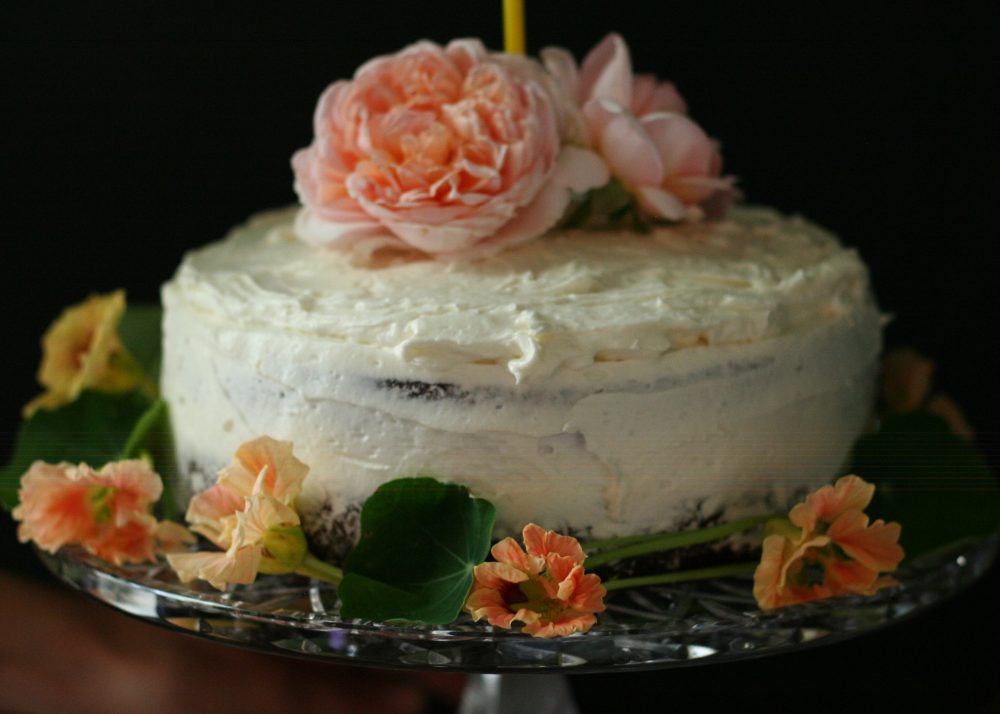
I moved to this old farmhouse with dreams of a garden, but it wasn’t a flower garden. What an extravagant dream that would have been. I was a garden do-gooder. If you had asked me to place a spiritual value on a box of seed packets, tomatoes for canning and cucumbers for pickling would have risen right to the top. Morning glories were an indulgence.
Extravagance is something I have had to learn.
Jesus told us he came to give us life. But not just enough life to scrape by. Not a pinched and narrow life. Life to the full. Abundant life. Life like a cup overflowing.
Life like a garden bursting with flowers.
There is a ministry of flowers. I don’t think I can yet claim it as my own. If I practice it, it is only in small ways. A bouquet for a neighbor here. A flower photo on instagram there.
These days, the ministry of flowers is God’s ministry to me. The flowers that grow here at Maplehurst have become an emblem of God’s wild love and evidence of his generative presence on this earth. They are extravagant. Foolish in their ephemeral beauty. Profuse and profligate and anything but practical.
But this is a post about books.
And it is a post about the ministry of cake.
D. L. Mayfield is one of my favorite online writers. Her first book comes out today, and it is a gorgeous, heartbreaking, and wise collection of personal essays.


Assimilate Or Go Home shows us how Mayfield’s own do-gooder dream deflated, not in the garden but on the mission field. In her own words:
The more I failed to communicate the love of God to my refugee friends, the more I experienced it for myself. The more overwhelmed I felt as I became involved in the myriads of problems facing my friends who experience poverty in America, the less pressure I felt to attain success or wealth or prestige. And the more my world started to expand at the edges of my periphery, the more it became clear that life was more beautiful and more terrible than I had been told.
There are so many reasons to read this book, but I especially recommend it for Mayfield’s final reflections on the ministry of cake. Cake, like flowers, seems like a nonessential. In a world rocked by wars and rumors of wars, in a world of unbearable sorrows and grief, a world where too many people lack even basic necessities, what is the point of cake? I am reminded of Marie Antoinette. If we celebrate flowers or cake, if we celebrate at all, are we hopelessly out of touch? Extravagant to the point of selfishness?
Sometimes we must receive something in order to understand that it is worth giving. Because God gave me flowers, I tend those flowers and I give them away knowing that they matter. Mayfield wanted to give her refugee friends everything: answers, solutions, even the love of God, but they gave her cake and that changed everything.
Her most of all.
Here are two more book recommendations (one for cake and one for flowers). Perhaps they might help you to receive the love of God in more beautiful and more delicious ways.


This is my new favorite cookbook. It’s a book of seasonal desserts inspired by homegrown produce and farmer’s market bounty. As soon as I opened it, I wanted to bake my way from first page to last.
The banana and summer squash cake is my children’s new favorite cake. Seriously. Also, there is a cake recipe inspired by those apple cider doughnuts so beloved at Amish farmstands and pick-your-own apple orchards. Need I say more?


This beautiful book was a birthday gift to me from my sister Kelli. It is pretty and inspiring, but it’s also informative and practical. I still have so much to learn about floral design (okay, I still have everything to learn), but I’ve already implemented a few good tips and ideas from this book. Because the bouquet we take to a neighbor, and the flowers we arrange for our own bedside table, matter more than we know.
Tell me, what books are on your nightstand?

by Christie Purifoy | Aug 9, 2016 | children, Dreams, Family, God, grief, Joy, Life Right Now, Roots and Sky, Uncategorized

*
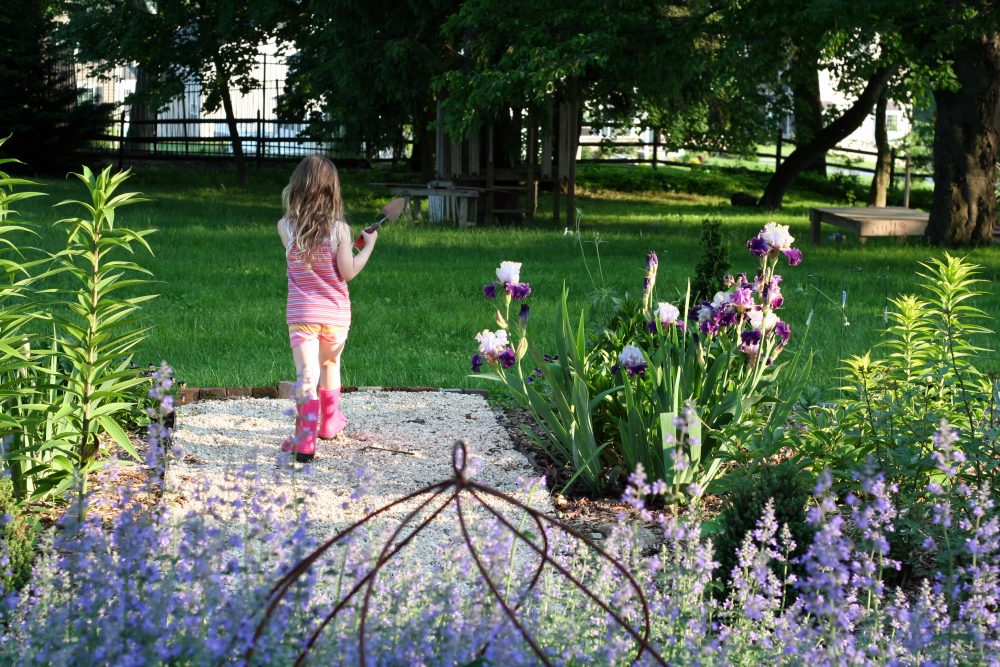
I always know just how long it’s been since we moved to this old farmhouse called Maplehurst. I can judge it by the length of her curls and the stoutness of her legs.
I was eight-months pregnant when I watched the London Olympics surrounded by teetering piles of unpacked cardboard boxes. Elsa Spring was born six weeks after we moved in. This week she and I watched Olympic “gymtastics” while I held her on the sofa in the family room.
*
I wrote about our first year in this place in a book called Roots and Sky: A Journey Home in Four Seasons. I wrote about how small and slow this new beginning was for us. We had such big dreams. I wanted to see them realized immediately, but before we’d even unpacked all of the boxes, I had a baby daughter in my arms. Not long after that, winter settled in. Ice on the windowpanes. Ice in my veins.
That first year was a year for slow and small. Those first four seasons were all about be still.
And since then? The days have continued to feel slow and small and ordinary. It is only when I look back, only when I take in the full sweep of four years all at once, do I feel that explosion of new life.
Nothing has been small. Nothing has been slow. Nothing has been ordinary.
All along, God has been doing a new thing. And I am a witness.
*


*
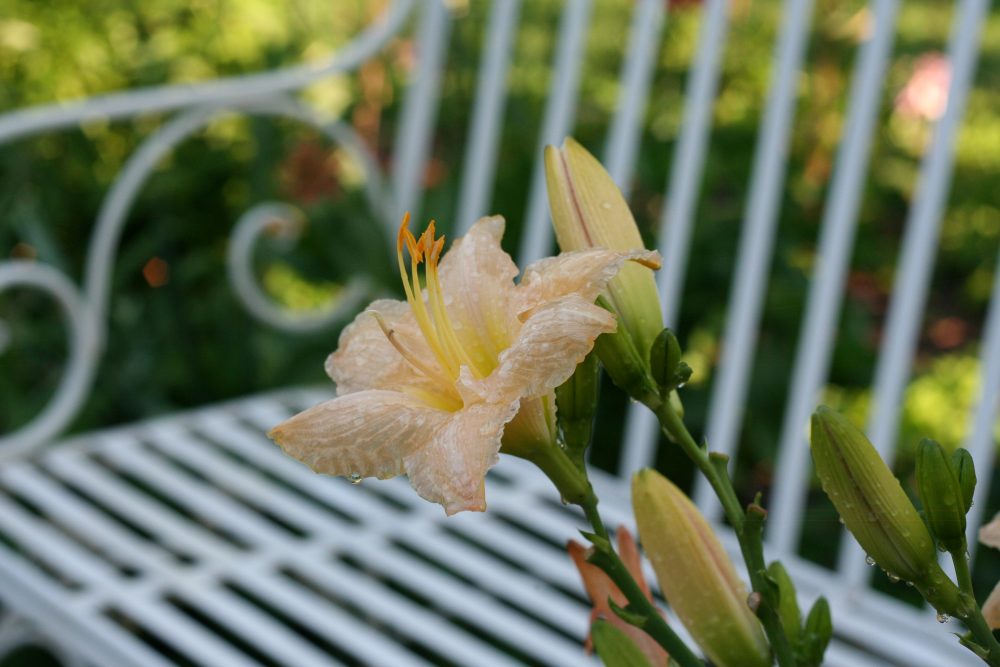
What has happened in four years? We welcomed a daughter, we watched four children grow, I wrote a book, we built gardens, and we have almost filled our guestbook with names. I wrote about that, the guests and the flowers, in a recent piece for Art House America. You can read my quiet manifesto here.
We continue to dream new dreams for this place and for those who join us here, which means we continue to wade through the small, and the slow, and the ordinary.
The house is wrapped in scaffolding, but thanks to the care of two men, the one-hundred-and-thirty-year-old bricks haven’t looked this solid since the year they were laid. The worn, black shutters have been removed, and the day when we will reinstall them, either repaired or remade, feels impossibly far away. One by one, a local craftsman is restoring our windows, but it could be years before every window in this house is repaired. Yet once stripped and repaired, these old windows with their wavy glass will welcome cool breezes for another hundred years.
It feels, four years on, as if we are still in the messy middle. Those words I wrote in Roots and Sky have lately come floating back into my mind:
We love beginnings, and we privilege endings, but we live most of our lives in some sort of middle. Life is perpetually unfinished. That is its nature. – Roots and Sky, p 122
Unfinished it may be, but I can say with confidence that here at Maplehurst I have seen the goodness of the Lord in the land of the living. And that is enough for me.
*
God’s goodness and the world’s grief are not as irreconcilable as I sometimes think. Four years ago, I could not have anticipated the sorrows that would visit us in this place. I wrote about the grief of that first, hard winter in Roots and Sky. I have written about other sorrows here on this blog.
Four years ago, I could not have anticipated how much would be given and just how much would be taken away. It is good that I did not know. It is good because I would have weighed it all in some balance. I would have asked if the gains compensated for the losses. Would there be more laughter than tears? More happiness than grief?
But I have learned that joy spreads its roots through laughter and tears. I have learned that sometimes we receive the most when something precious has been lost. Abundant life is mystery, not mathematics. Or perhaps, mathematics, which I’ve been told is the language of the universe, is more mysterious than I knew.
There is a wise woman in Proverbs. She is one who “can laugh at the days to come.” What will the next four years bring? I feel too sobered by the recent past to laugh. Considering time, I cannot help but tremble. It is so clearly held in hands that are not mine.
I may not be laughing, but I do feel very small and very still. Four years on, I am no longer fighting the wisdom of this place. So much has grown here in these four years: a baby girl, a book, a ring of apple trees. The soil here was always fertile, but we have watered it faithfully with our tears. I cannot say with certainty what we will harvest next, but I think the harvest will be a good one. Perhaps our best yet.
Perhaps our next harvest will be laughter.
*
by Christie Purifoy | Jul 26, 2016 | children, Family, Gardening, Grateful, grief, motherhood, Uncategorized
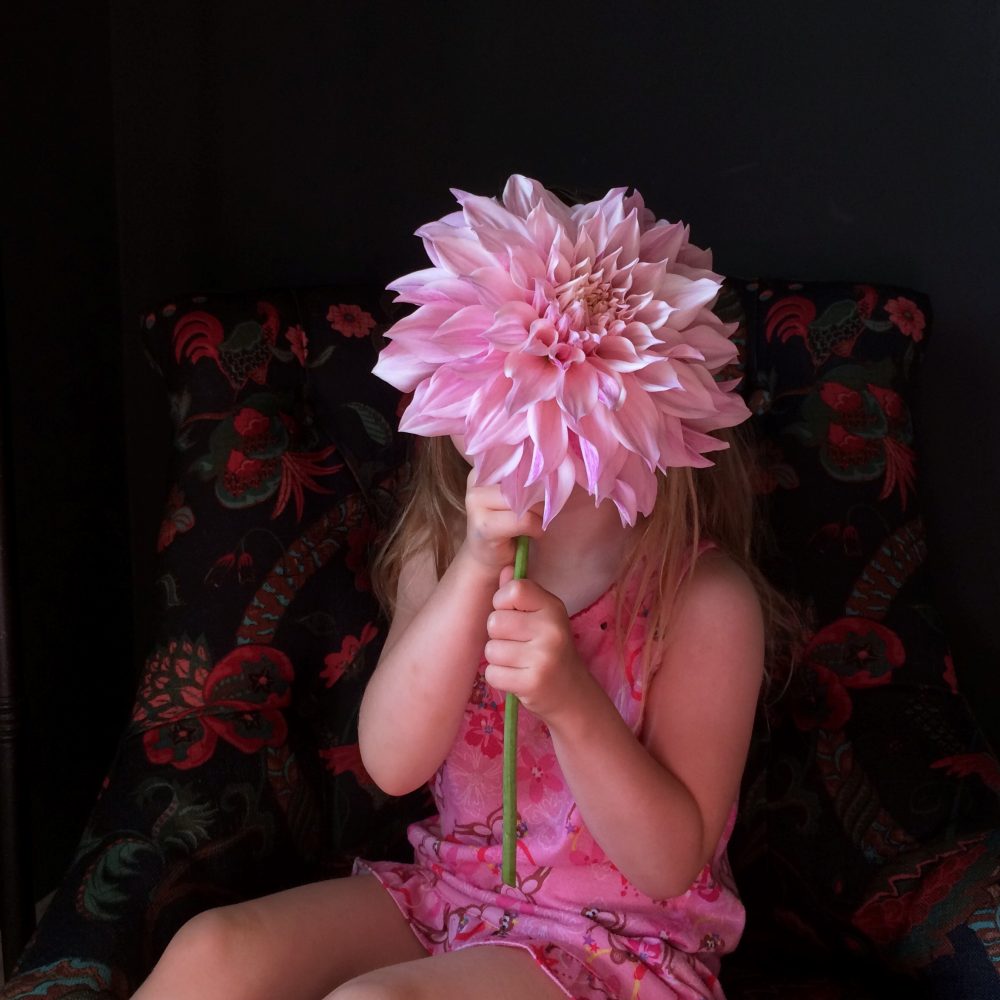
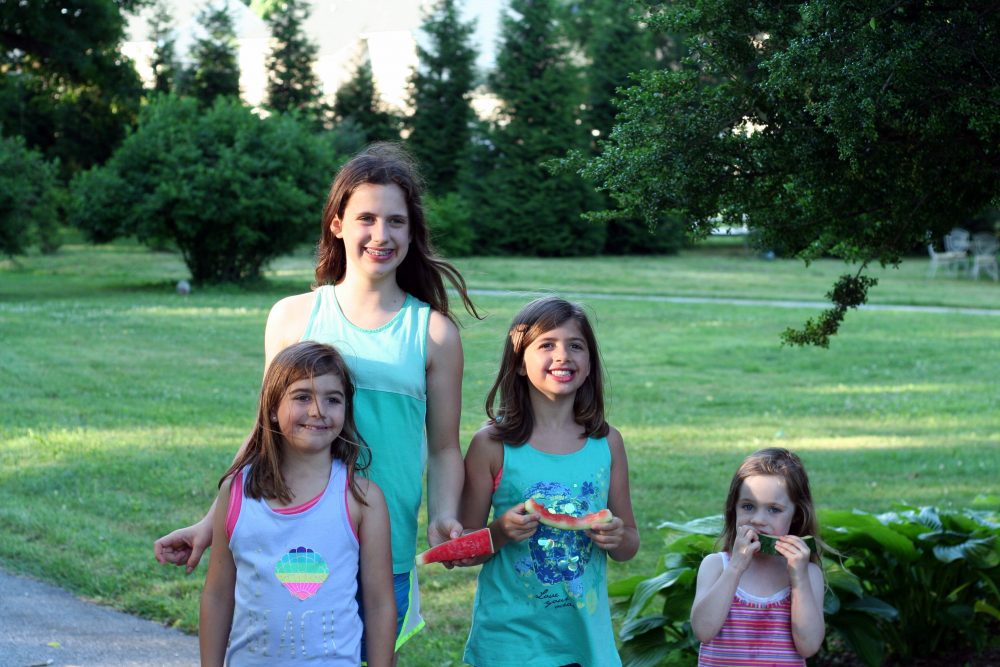
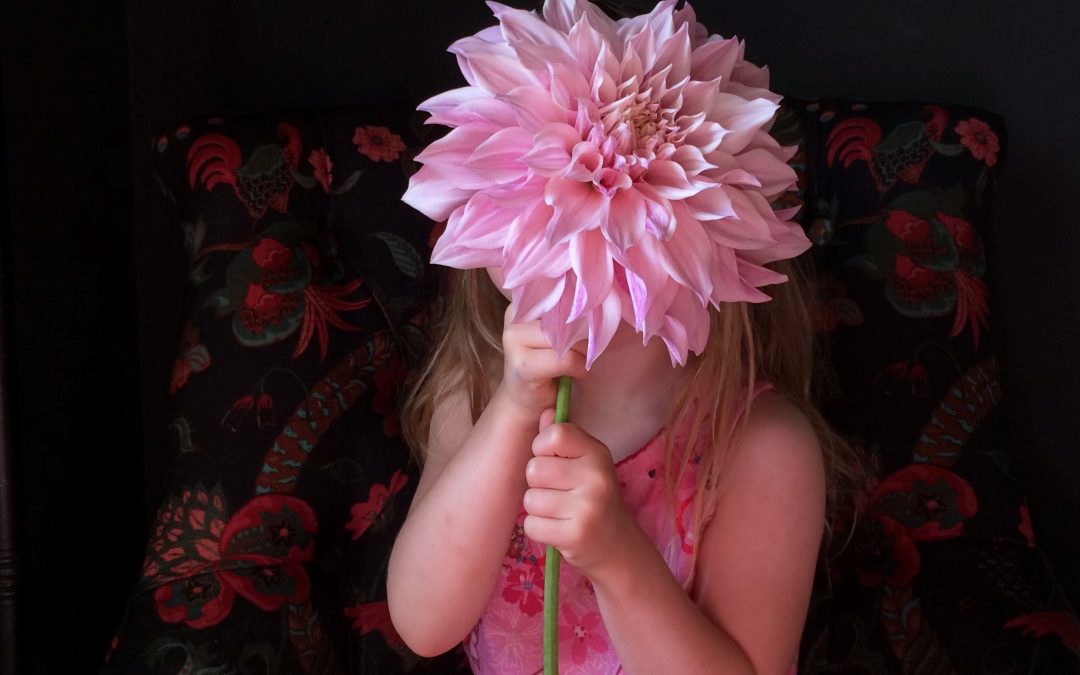
My children have spent the past week with their grandparents. Untethered from their needs, I spent the week living in my head.
Daydreams, interior monologues, thoughts, prayers, and wishes: the inner world is my favorite landscape.
It is quiet there, and I am all alone.
*
I set several overly-ambitious writing goals for the week. I also determined to catch up on every gardening chore and organize the house from top to bottom. In 90-degree heat.
It was a plan guaranteed to ensure that by the time my children returned, I would feel like a miserable failure who had squandered the most precious days that ever were.
The gardening chores have at least forced me to temporarily abandon my inner world. Daydreams evaporate very quickly when one is sweating, swatting mosquitoes, and cursing one’s inability to properly stake a sprawling cherry tomato plant.
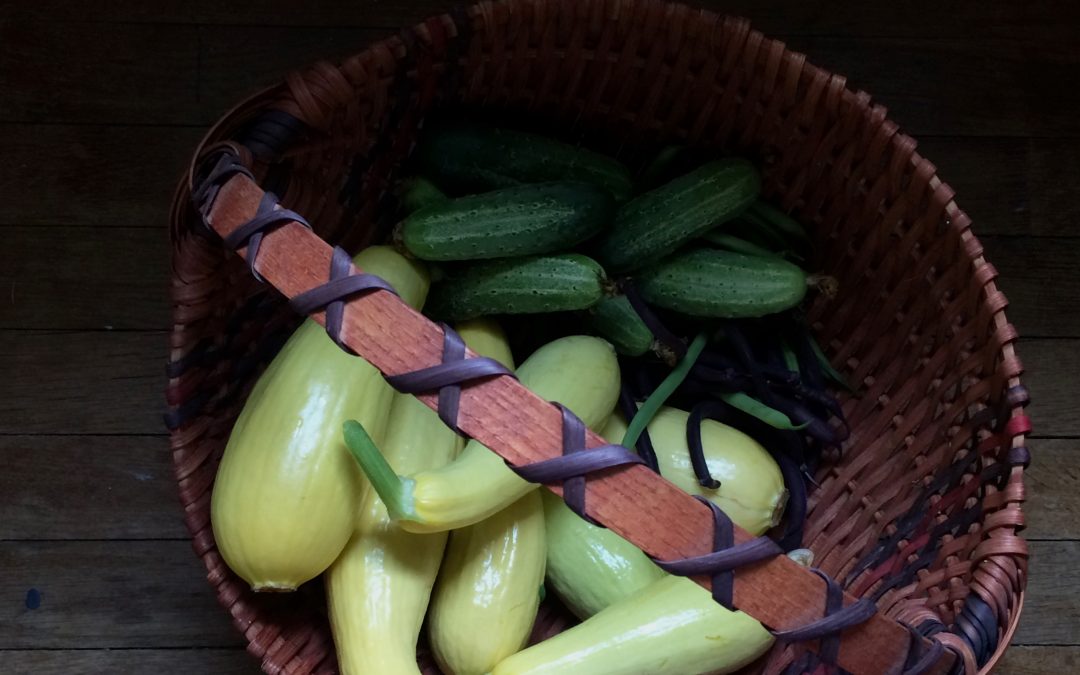
Also, there are flowers. I am finding this summer that I do not think very much in the flower garden. There is something about the overpowering scent of oriental lilies that empties my head of everything else. Only a few days in to my full immersion in the life of the mind, I decided that it is a good thing to take a break from oneself. My inner world, as much as I love it, can be exhausting.
I do not think I would like to live there full-time.
*
Something else happened while the children were away: I turned on the car radio. I am not sure why I so rarely do that. Perhaps it is the demands from my little companions in travel for this music but not that. Perhaps it is my own need to control the tunes that tickle their ears.
I hopped in the car for the first time in days only because a few library books were due and our first bag of peaches was ready at the orchard where we participate in a fruit-share CSA. I do not think that anything less than library books and peaches could have convinced me to leave the quiet oasis of my child-free house.
Left to my own devices like that, I found myself punching the AM/FM knob. I had to take my eyes off the road for quite a dangerous stretch before my fingers found a tiny button labeled “seek.”
I don’t know what I was seeking, but a familiar voice filled the car. It was a childlike voice and instantly recognizable to me. I was a little girl in the early 80s, and the voice of Cyndi Lauper will always recall that one memorable sleepover when my best friend Michelle and I decided to find out how many times in a row it was possible to view that classic 80s film Girls Just Wanna Have Fun. I think we watched it two-and-a-half times through before Michelle fell asleep.
*
In April, in Texas, the very first person who greeted me when we arrived at the cemetery for Shawn’s burial was Michelle’s mom.
I was holding two children by the hands and feeling a bit dazed by the heat and the crowd and the terrible finality of a flag-draped coffin. I was searching for a path through the people who had gathered around a small tent and a few rows of folding chairs, when she suddenly appeared beside me and put her hand on my arm. I had not seen her in years, but I had no trouble recognizing the woman who placed our after-school snacks with such care on those tv trays, the same woman who never complained when Michelle and I brought home sticky gumballs we had spit out and saved from the gumball ice-cream cones we purchased at the mall.
*
I sort of love Cyndi Lauper’s strange voice. She always sounds a bit like a little girl, and my best friend Michelle will always be, for me, the little girl I loved best. I wish I could call her up and tell her that, but Michelle died in a car accident not long after I graduated from high school.
There’s a kind of epiphany that only comes when the music is turned up loud and you are all alone in the car. It’s a strange mix of sadness, joy, and gratitude.
Half my mind was singing Time After Time and the other half was recognizing what a privilege it is to sweat in my garden and run dirty, weed-stained fingers through hair that is beginning to gray. What a privilege it is to feel overwhelmed by four children, to bicker and then make up with the same man for twenty years. How glad I am for this life of interruption and inconvenience and heartache.
It’s a good thing to stop on a too-hot summer day and remember and cry for those who left us too soon.
We are following fast on their heels, but meanwhile, there are flowers to grow and meals to prepare and stories to tell. And there are songs to sing.
Loudly and with the windows rolled down.
by Christie Purifoy | Jul 9, 2016 | Art, Books, Chicago, Grace Table, peace, Pennsylvania, These Farmhouse Bookshelves, Uncategorized
(an installment in my occasional series of book recommendations; this post contains affiliate links)

These are violent days. What good are books? Of what use is poetry?
In his elegy for W. B. Yeats, the poet W. H. Auden famously wrote, “poetry makes nothing happen.” Yet the poem itself complicates this view.
Poetry may or may not change a thing, but if we feel compelled to sing, why not sing, as Mary once sang, of justice?
If we feel compelled to read, why not shed the burden of our own particular skin and view the world through another’s eyes? For a little while?
Here is a poem for that.
Here is one more.
*
A favorite book on our family shelves is Brown Girl Dreaming, a recent Newbery Honor Book by Jacqueline Woodson. My twelve-year-old daughter and I both loved it. The poetry is accessible but incredibly rich.
In a similar vein, I recommend Inside Out and Back Again, by Thanhha Lai. Written in verse, this story communicates difficult truths and complicated historical experiences with grace and lyricism. It is one of the sweetest, saddest, loveliest books I have read.
When I was a new graduate student living on the south side of Chicago, I first read the classic 1952 novel Invisible Man by Ralph Ellison. That was years ago, and I don’t remember the book very well. What I do remember is the shock I felt reading a novel told from the perspective of a nameless black man. For the first time in my life I recognized how the skin we walk around in can remake the world around us. I had never even imagined a world like the one inhabited by this invisible man, but there it was, and while I read the book, I lived in it.
*
Like most summers, this one is too loud, too crowded, too hot. But, as I write in Roots and Sky, this cuts two ways. There are also too many lilies in the garden and too many squash on the vine. My way of dealing with the too-muchness of it all is what I call “comfort-reading.” This means I am finding most of my reading material on the shelf at my local Goodwill thrift store: fifty cent Agatha Christie paperbacks, an old Martha Stewart gardening book without its carefully photographed jacket, an Englishman’s memoir of life in Provence that must have been on everyone’s beach-read list the summer of ’89.
I revisited the Goodwill bookshelves only yesterday and found two treasures. The first was a copy of The Taize Picture Bible: Stories From the Scriptures in almost perfect, vintage condition. I have heard such good things about this illustrated Bible for children over the years, but it has long been out of print. I paid $1.97 and couldn’t believe my luck.
The second was a pristine paperback copy of Elizabeth Enright’s Thimble Summer, the winner of the 1939 Newbery Medal. I didn’t buy it only because I recently found a vintage hardback of the same title at my local used bookstore. It has been our evening family read-aloud for a week now.
My ongoing quest to discover read-aloud books all four of my kids will submit to listening to (actually enjoying the book is a higher standard; I am satisfied if two of four children say they “like” the book) has recently met with failure upon failure. The last success I remember is Laura Ingalls Wilder’s Farmer Boy, a book that has a lot in common with Thimble Summer.
*
On the recommendation of a friend, I recently began reading The Manor: Three Centuries at a Slave Plantation on Long Island. After my friend explained it was a book about an old house written by a landscape historian, she said, “I think you’ll like it.” I said, “I think you’re right.”
More factual and straightforward than a historical novel, yet much more readable and compelling than a history textbook, The Manor tells the story of one of the first great European houses in North America, and the family who lived in it and preserved its history for centuries. One house might not seem so important, but the door of this house opens up a story of northern slavery that has since been either forgotten or willfully ignored.
The first Sylvesters were Quakers, and the story of their lives is revising a story I have always taken pride in. My own farmhouse was built by Quakers, and I have long given credit for the beauty of this part of Pennsylvania to the generations of residents who have sown peace and justice into the very soil of this place. That story is still true, but The Manor tells an older, darker tale. According to this story, the blood of enslaved Africans touches every aspect of our earliest history and every one of my seemingly peaceful, green hills.
*
Seeds of brutality and injustice were sown into our country’s soil from its earliest days. It is a small thing to know that the atrocities of slavery on sugar plantations in Barbados could not have been sustained without the animals and crops raised on New England farms, yet somehow that knowledge has brought the shame of slavery home to my own heart.
Those Barbadian plantation owners lived in homes built like fortresses. They exploited, in fact, they brutalized their workers and so they feared them.
Slavery is long gone, but we still reap that terrible harvest. We worship safety. We are afraid of black men, but it is the black men, and their communities, who pay the price for our fear.
When I hear that one more police officer has killed one more black man, I cannot throw a stone at that officer. I remember how, years ago, fear would rise up in me if I followed the sidewalk beneath a graffiti-splattered viaduct and saw a young black man in baggy pants approaching from the other direction. It took years of living in that south-side Chicago neighborhood to learn that I was always so much safer than any of those young black men. In ten years, I was never the victim of a crime, but neighbor after neighbor, innocent after innocent, male and female but always black-skinned, died of gun violence while I lived, untouched, in their midst.
Separation breeds fear, and fear breeds violence.
But if violence is a failure of the imagination, as the poet William Stafford said, then perhaps poetry can make something happen?
Comfort-reading has its place, but I must also read to bring dark things into the light. Especially, those dark things in my own self.
What if we tuned our imaginations to the songs of others not like ourselves?
If poetry makes beauty and creates hope, can it also help us to act justly and love mercy?
Can it help us walk humbly with our God?
*
With these questions in mind, do you have any book recommendations for me?
If you are looking for a quick Saturday read, here is my latest post for Grace Table: “What Hospitality Looks Like In A Castle.”