by Christie Purifoy | Aug 15, 2013 | Chicago, children, Dreams, Florida, Home, Jesus, motherhood, One Word, Pennsylvania, Seasons, Uncategorized
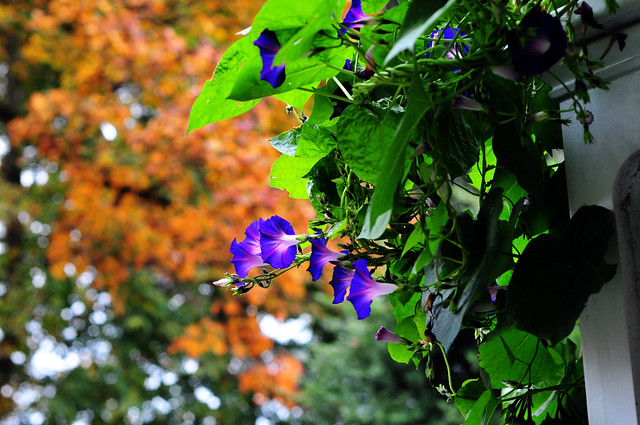
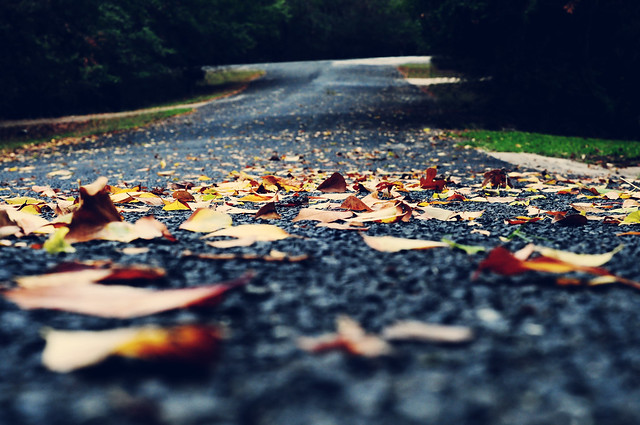
The cherry trees behind our house may be old, but they are scattering yellow leaves like overeager flower girls before a wedding.
It isn’t time yet, I whisper.
But it is time. No matter what the calendar says, it is time. I know because I have seen this once before. On August first, we began our second year at Maplehurst, and this, yellow leaves on green grass, is the first return.
The first year is a surprise. The second is a return.
//
//
She is eleven months going on all-grown-up, and I have unpacked some of her older sister’s clothes. Here is the white dress Lily wore in her one-year-old portrait. Here is the rainbow-striped sunhat she wore our first summer in our 48th Street condo.
We no longer live in that city, though it was the first place that ever felt like home to me.
My first baby girl is also lost (replaced by a nearly-ten-year-old whose legs look impossibly long in their roller skates). Of course, she returns in memory, she returns in the soft curve of her baby sister’s chin, and, who knows, maybe she’ll show up again when I unpack this dress for a grandbaby someday.
Nothing good is ever truly lost (which is another way of saying that all is being made new).
//
Today, I reread my journal. I remember the wandering years. Those drought years when the smoke of Florida wildfires was like a pillar of cloud. Back then, I wrote down the words of Zechariah.
Though I scatter them among the peoples, yet in distant lands they will remember me. They and their children will … return. I will bring them back.
Moving to this place one year ago felt like this return. Once again, we would know the rush of four seasons, the familiarity of a good friend’s face, the comforting rightness of the words this is my home. All this while watching another baby girl grow.
But return is not a one-time thing.
One year in, and I know that life with God is all about return. I am returned. And every day I am returning.
The prophet’s words tell the story of my life. Of my rescue. They also tell the story of the world:
Come, let us return to the Lord. He has torn us to pieces but he will heal us; he has injured us but he will bind up our wounds. After two days he will revive us; on the third day he will restore us, that we may live in his presence (Hosea 6:1-2).
We die so many deaths, but we are never lost. The son of God gives himself up but is returned to us on the third day. And every day this world is made new.
Something new!
If creation sings, then those are the words to her song. It is a song about birth. It is a song about coming home. It is the song of our God and our world.
I have seen these yellow cherry leaves before, yet I have never seen them before.
They have returned. They are new.
At that time I will gather you; at that time I will bring you home.
Zephaniah 3:20
by Christie Purifoy | Aug 5, 2013 | allergies, Family, Food, Grateful, Uncategorized
A week ago Friday, Maplehurst’s kitchen was the scene of a pizza party.
Rice flour crusts turned crisp in the oven while puffy dough rested on the counters. Oregano snipped from the pot on the steps turned tomatoes, garlic, and oil into more than the sum of their parts. We sliced fresh mozzarella on one board. We scattered dairy-free cheese substitute on another. We browned sausage from Axel, our local farmer, in the cast-iron skillet.
We baked and sliced and baked again as seven children held out their hands for more.
The pizzas were delicious, but that doesn’t explain the looks on the faces of two mothers who hovered near the table.
“He’s never shared pizza with a friend,” she whispered.
“Never,” I said.
//
//
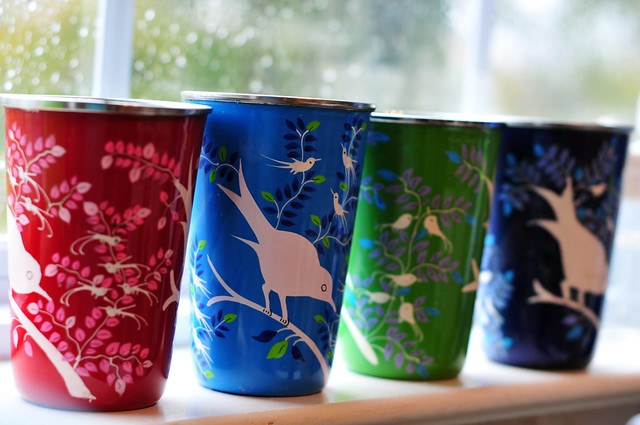
The kitchen table.
It’s a symbol of hospitality. Of togetherness and community. Except, for us, it’s the place where fear draws up a seat. The table doesn’t bridge the divide. It reinforces it.
We say no to potlucks. We decline the invitation to someone else’s Thanksgiving dinner. If we say yes to the birthday party, I bake our own pizza and cupcakes ahead of time.
We don’t often say yes.
A young girl in California is given three injections with the epi-pen but dies anyway. Fear scores one more point.
Always there is another reason to be afraid.
In the daily sifting of life (this is good, this is bad), life-threatening food allergies are our constant Bad Thing.
//
//
The pizza party came during the week we hosted good friends, a mother with two daughters and a son. Our big girls were once babies together in Chicago. Their family left the city soon after that, but our lives have run on parallel tracks ever since. Epi pens and questions. Fear and hives. Uncertain blood tests and frighteningly close calls.
Most importantly, we share little boys. One has a grin slightly wider than the other, but they both carry medicines and their own packed food wherever they go.
This shared Bad Thing brought us together for a week, but it turns out Good and Bad can’t be sifted so neatly.
Our week together was perfect summer weather and long drives over green hills past storybook farms. Our week was three little girls laughing and noisy, nightly sleepovers. It was a week of good conversations. Of childish voices singing together during our own at-home Sunday morning service. We swam in the creek. We visited a new Amish farmstand every day.
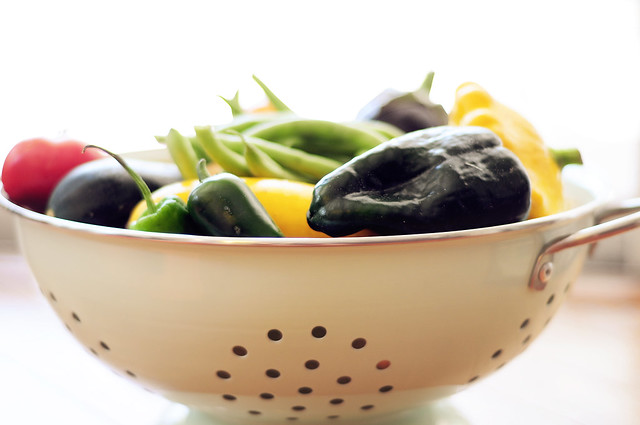
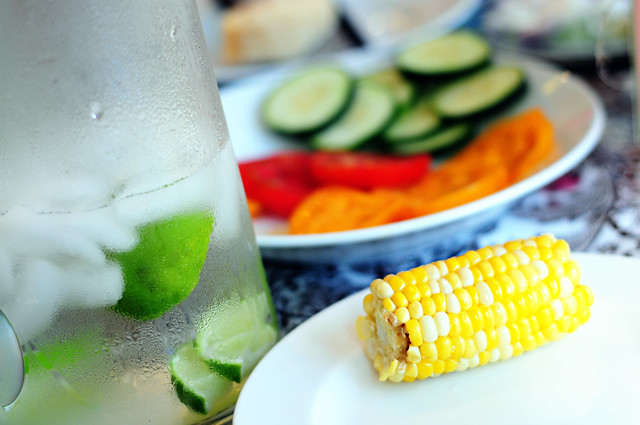
And the food! Two ears of corn for each person at the table. Watermelon for breakfast, afternoon snack, and dessert. Garden squash even the children enjoyed (the secret? Julienne into matchsticks and cook it up in a pancake).
We ate Japanese fried chicken and ribs cooked on the grill. We dipped spring rolls fried in coconut oil into a no-sugar-needed apricot sauce. We licked our fingers over garlicky green beans, and we smiled over a rainbow of tomatoes dusted with salt and cracked pepper.
//
//
I don’t think a week like this would be possible if we handled our fears well. I don’t think it would happen if we tucked them neatly out of sight.
I think we arrived at this week because we felt the full weight of fear on our backs, but we kept on walking. We acknowledged our fear but asked, “Isn’t there more?”
It turns out there is more. Much more.
I’m no longer so confident about naming the good and the bad in my life. What do I know, really? I know that food allergies are terrifying but pizza shared with a friend is the most delicious pizza around, whether or not the cheese is real.
I think even a life lived in the valley of the shadow of death can be beautiful. I don’t fully understand this. I may never be able to explain it or account for it. But I am grateful.
“… the rising sun will come to us from heaven / to shine on those living in darkness / and in the shadow of death, to guide our feet into the path of peace.”
Luke 1:78-79
by Christie Purifoy | Jun 22, 2013 | children, God's Love, grief, healing, motherhood, One Word, Pregnancy, river, Stories, Uncategorized
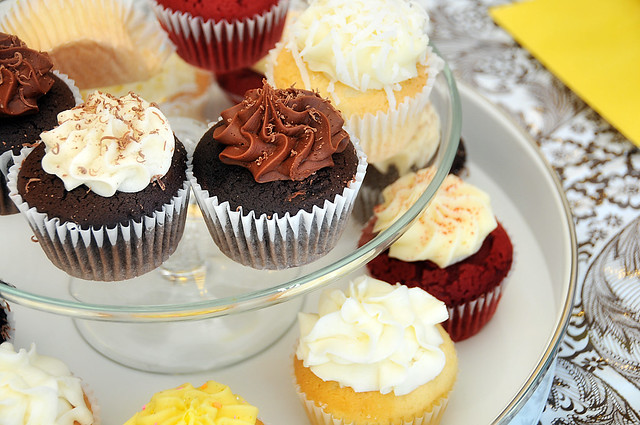
When I turned 29, I ate coconut cupcakes.
They were baked by my mother, in my kitchen, with my daughter. They were brought to my maternity ward hospital room by my pastor and his wife. That day I ate coconut cupcakes and introduced you to my dearest friends.
Tomorrow, June 23, you and I will celebrate.
I made those same coconut cupcakes this week. I shared them with neighbors and sneaked more than a few myself after your bedtime, but, tomorrow, we won’t eat coconut cupcakes. We will share a dairy-free, wheat-free, nut-free birthday cake with Lego-shaped candles.
In the hospital, the day you were born, the nurse looked at the date on my admission bracelet and said, “Here is a son who will never forget his mother’s birthday.”
Tomorrow, I will probably remind you two or three times that it is also my birthday. But you are seven, and I do not mind all that much. Because you are the best birthday gift I have ever been given.
There is a story behind those words. A story to which I return every year on this day.
It is a story first of all about longing. I wanted a baby. I wanted a sibling for our daughter, but my body refused to cooperate. I had thought after our first experience, after the diagnosis and the referral to a good specialist, that the second time would be easy. We understood the problem, we would not wait to pursue the solution.
It was not easy.
It was so much harder. Because the drugs in which I had placed my faith did not work, it was also more hopeless.
Today, I am grateful for every month (months turning over into years) that I waited for you. Because of those months, the words of Job became my own: “My ears had heard of you but now my eyes have seen you.” Now when I imagine, like all the parents in this world, every horrible thing that might happen, I am not afraid. I know that God can meet us in the pain and there is nothing else like that encounter.
But our hearts are not so easily untangled from fear. After the miracle of your conception, fears I didn’t even know I had twisted my thoughts. I felt as if I owed so much to God, and I became convinced there would be some price to pay. I became convinced there was something wrong with you.
Until that day. That day, six months along, when a stranger placed her hand on my shoulder and prayed for me. That day a river was unleashed and when I came up for air the fear was gone. I heard God’s own voice whisper: “This boy is a gift. A good and perfect gift. There is no price to pay.”
You’d think I would have known. Your due date was close enough to my own birthday. Why didn’t I guess?
Somehow, I never dreamed I would meet you for the first time on my birthday. God’s stories are so much better than the ones we imagine for ourselves.
Yes, you were born on my birthday. You were a good and perfect gift, given the day I turned 29.
Since that day, I have had reason to be afraid. So have you. I have given you food with my own hand and seen the fear in your eyes as your throat begins to swell. I have called 911 on your behalf too many times to count. I have seen how tiny you seem lying there on an emergency-room bed.
And yet I have never questioned those whispered words.
There is nothing wrong with you. Not really. You are, indeed, perfectly made. The worst thing can happen, but the Love who made you will take care of you. I pray always that you will be healed, but I know my prayers have been answered before I ever prayed them.
We have journeyed from coconut cupcakes to blue marshmallow cakes to gluten-free bakery cakes with Lego-shaped candles, and now I know these three things:
God is good.
There is no need to be afraid.
And this: our lives are stories, and these stories are written by Love.
by Christie Purifoy | Jun 19, 2013 | Faith, Food, Gardening, God, God's promises, Poetry, Summer, Uncategorized
I see the world through a lens of metaphor and story. The magnolia tree near our chicken coop is a love letter. The window in our stairwell is a promise.
Like a pair of good eyeglasses, metaphor helps me see the world and my life more clearly. It is the tool I use to scratch beneath the surface of things.
These days, I am learning its limits.
Or, maybe, I am learning my own limits.
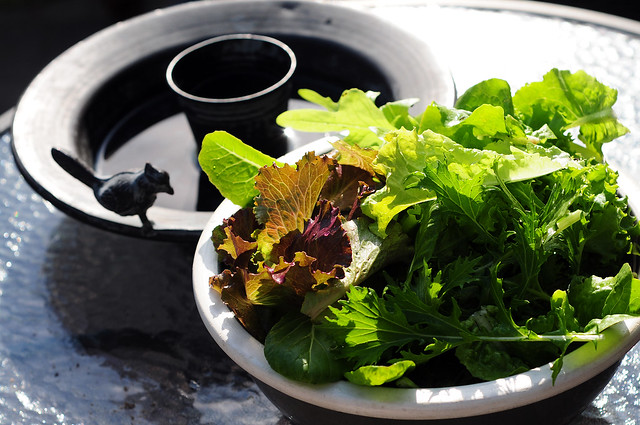
I plunge my arms up to the elbows in a deep farmhouse sink. Snap peas, carrots, a rainbow of swiss chard, and heads of broccoli so richly green they’re also purple. In every moment I can spare, I am harvesting, washing, blanching, freezing, eating, feeding. The kitchen garden we rushed to build and plant this spring has become a fountain. Between the rain and the explosion of good things to eat, that is no metaphor.
Apparently, metaphor has been more than a pair of eyeglasses to me. It has also been my preferred tool for setting up distance between the spiritual world and my own. I have used it to say here are my life and my world and way over there? Can you see it off in the distance? Those are the promises of God. The things that truly matter. We will get there someday.
Except, someday is today.
The things of God are here.
The things of God are now.
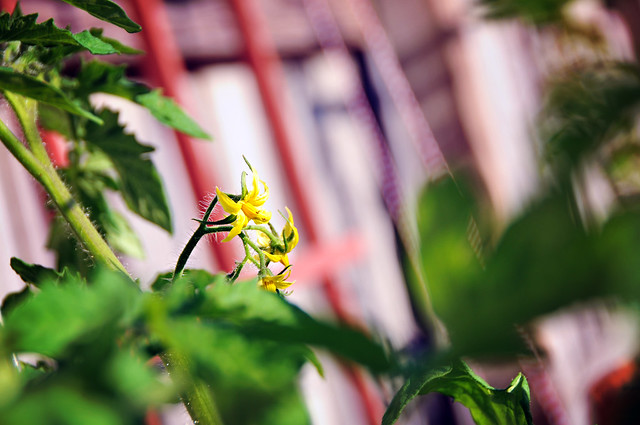
In my Bible, I can point out an inky smear of a date. Also, a little scribble of a star. They remind me that two years ago, I heard God say this, “they will make gardens and eat their fruit.”
Those words felt like a promise, and I held on to them through two very unfruitful years. In other words, I believed them. Yet, I know now that I believed them in a hazy, over-spiritualized kind of way.
What if God means exactly what he says?
What if his metaphors indicate, not distance, but nearness?
He promised, and, today, I am eating those words. I have sautéed them in oil and garlic, roasted them at high heat. I have shredded them and peeled them into ribbons. I have tossed them in salads and shared them with neighbors.
They taste good.
So good.
by Christie Purifoy | May 29, 2013 | children, Community, God, grief, Home, Uncategorized
If you are a parent or teacher or camp counselor, you know the forms I’m talking about.
One for each child. Name, birthdate, address. Mother’s cellphone and father’s cellphone. Mother’s email and father’s email.
It’s the final question that gives me trouble: EMERGENCY CONTACT PERSON. If the parents cannot be reached, who should we call?
For more than three years, I have left that line blank. On school forms and dance studio forms. On swim team forms and class field trip forms.
Empty. Blank. Missing.
There is no one to call.
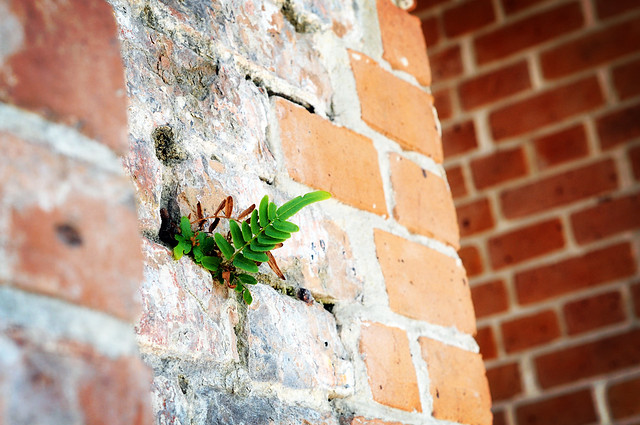
We’ve never lived near family. Grandparents are once-or-twice-a-year treats. My children trade Christmas gifts with cousins they have yet to meet.
When we left Chicago, we said goodbye to more than our third-floor-lake-views-if-you-squint apartment. We said goodbye to neighbors who would knock on our door if our two-year-old escaped during the party and wandered down the stairs toward the front door and the busy street just beyond it. We said goodbye to the family in the basement apartment who could always take in our kids if an emergency came up. We said goodbye to all the friends on the blocks around us – friends whose children we had sheltered while their mothers and fathers welcomed new siblings at the downtown hospital, or, more terribly, said hospital goodbyes to siblings they would never bring home.
We left behind every one of our Emergency Contacts. Since then, I’ve learned you do not easily or quickly replace such things.
When our fourth baby arrived two weeks before grandma’s scheduled visit, we called our realtor. She was the only one who’d met our children or seen the inside of our home.
Yesterday, I filled out four more forms. The final blank lines felt a little blanker, a little emptier. They asked, not for an emergency contact, but for sponsors. These were baptismal forms. Later this summer, we’ll turn our church into a mini waterpark when we baptize four children all at once.
Even if I keep expectations low (this is a sponsor, after all, not necessarily a godparent or guardian), I wish someone could be there. A witness to our lives. Someone to stand in the crack. Someone who will always be there to remember with the firstborn. To tell the story to the fourth. Someone to make us all feel like nothing is missing.
Except, something is always missing. Something is always cracked and broken.
For a long time, I convinced myself that the most broken things and places were out there. Poverty and gun violence. Orphan crises and war. And, for the most part, this is true. There is a terrible darkness in this world, but it doesn’t live in my house. And if I have one goal in life, it’s to make sure that my home is a shelter for anyone looking for relief from the world’s dark places. We all need a place to rest before we head back out again, lights in hand.
However, I’m discovering that aloneness and disconnection are cracks that run just about everywhere. Through every heart. Every relationship. Every home and neighborhood and community. Even my own.
In our house, two sons share a room. With the volume turned low, it is storybook perfect. In real life, it is loud and late and lego-filled. But as much as I sometimes dream of sticking them in separate rooms so I can get a little peace and quiet at the end of the day, God-help-me, this sharing is a good thing. It is a good thing because they are never really alone.
And yet.
The older brother will fall asleep. Then, the little brother lies there, still awake, and it doesn’t matter that his brother’s head is two feet from his own. It doesn’t matter that his parents are right downstairs.
He feels alone, abandoned by a brother who would choose sleep over one more lego creation, and he weeps.
He cries himself to sleep.
The truth is we can be alone in a crowd. We can be alone even when our brother is within reach of our tiny four-year-old arm.
Some people might tell you it’s God or Jesus who fills in those cracks. They might say we’re chasing the wrong things when we look to fill our empty places, our blank lines with other people.
But I think they may be wrong.
The story of Adam and Eve and Eden might not tell us much about the science behind the world’s creation. I do think it tells us everything about these cracks and missing pieces. It tells me that in the beginning of our story we lost something precious. We lost the closeness (so close you might call it oneness) we once enjoyed with other people. We lost the closeness we once had with our Maker.
This story we’re living is all about recovering that precious thing.
I don’t know how to make the blanks and cracks and disconnections disappear. I do know that if we lean in to them – really pay attention to them – we might glimpse the end of our story. The beautiful end. Which will be, of course, a new beginning.
“With all wisdom and understanding, God made known to us the mystery of his will according to his good pleasure, which he purposed in Christ, to be put into effect when the times reach their fulfillment – to bring unity to all things in heaven and on earth under Christ.”
(Ephesians 1:8-10)
Amen. Come, Lord Jesus.
by Christie Purifoy | May 25, 2013 | Books, children, Seasons, Summer, Uncategorized
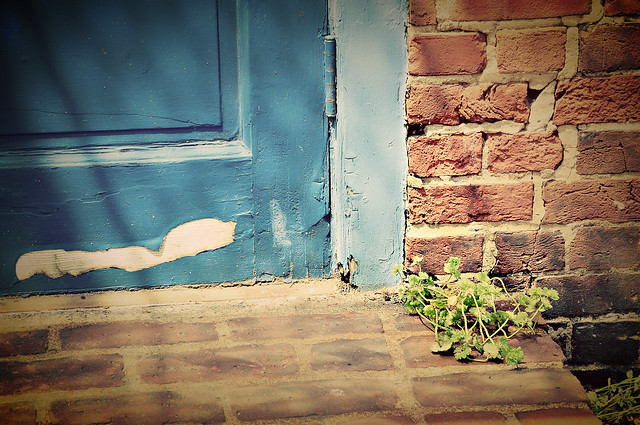
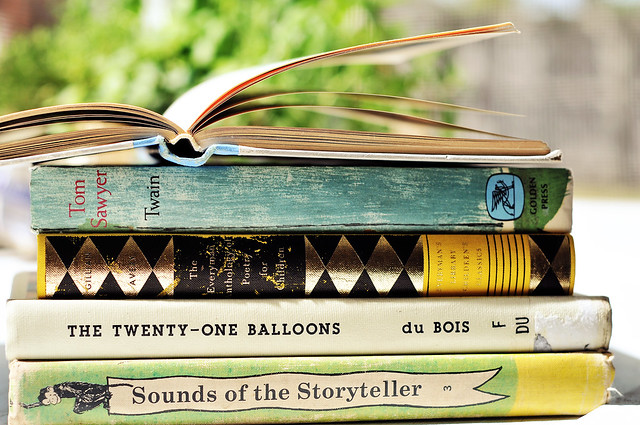
Here is one last peak at my bookshelves before summer.
I think one of these might be just the thing for that afternoon in the hammock, the long car trip, those sweaty hours between events at the swim meet.
I plan to read as much as possible these next few months. I’m imagining quiet afternoons with a sleeping baby and three kids with noses-in-books, but the reality is more likely to be me on my green sofa, one eye on the so-close-to-crawling baby and one on my book, while I try desperately to tune out the shrieks of three children running circles around the room. Yes, I’m trying to be realistic.
Either way, my plan is to bring These Farmhouse Bookshelves back in September with fresh recommendations.
One of my favorite writers (she is a master of the revelatory interior monologue) has a new book. Kate Atkinson’s Life After Life: A Novel is the best thing I’ve read in a long time.
I was skeptical at first. Perhaps you remember my distaste for literary gimmicks? Atkinson’s latest is structured around a stunning gimmick, but this excellent novel doesn’t deserve that pejorative term.
The book’s heroine is Ursula Todd, an Englishwoman who lives (and dies) through the Great War, the Spanish Flu epidemic, World War II and the London Blitz, and all of the upheaval of early twentieth-century European history. She lives, and she dies, and then she is born again, always and, it seems, forever on the same snowy night in 1910.
That is the novel’s literary device, and though it seems to break so many rules (most importantly, the reader’s assumption that the very worst thing cannot befall a novel’s primary character), Atkinson uses it to brilliant effect.
Ursula’s many lives and deaths, and the fascinating ways in which her story changes or does not, add up to a compulsively readable novel (after moving slowly through the first third, I couldn’t put it down) and one that gives us so much to think about: from questions of history and personal fate to the God-like role of novelists themselves.
Life After Life is the coming-of-age novel writ large. Ursula is given chance after chance to live well. We are given only one. We can learn a great deal from a character who knows the depths of the adage that “practice makes perfect.” The important question is, in that tumultuous time and now, what constitutes a well-lived life? What does “perfect” really look like?
Sylvie’s knowledge … was random yet far-ranging, ‘The sign that one has acquired one’s learning from reading novels rather than an education …’
A Time to Keep: The Tasha Tudor Book of Holidays may be the best children’s book I never read as a child. I love it so much, I feel as if I have lived in its pages the way only a young child can.
Featuring Tudor’s beloved illustrations, this picture book shows us twelve months of celebration in a rural, New England family about a hundred years ago. Based on Tudor’s childhood memories, we have beautiful pictures and brief descriptions of a bonfire on New Year’s Eve, a syrup-making party in March, a dance around the Maypole, and a very special August birthday, to name just a few.
This is a book about the special rhythms of the seasons and of family life. It is sweetly nostalgic and inspiring. Enthralled by the book’s August birthday party, my daughter and I have decided that someday, somehow, we will float a candlelit birthday cake down a stream at twilight.
August brought your mother’s birthday which we celebrated at night by the river. The table was set with birch bark plates and gourd drinking cups.
I pulled this last book off my shelf last night and promised myself I’d reread it over the summer. Even the summer months deserve something of high literary value, but I find that short stories are easier to squeeze in between visits to the pool, park, and farmer’s market.
The Springs of Affection: Stories of Dublin is a collection of realist short stories by one of The New Yorker’s most gifted writers, Maeve Brennan. Out of print for decades, these stories were republished four years after Brennan’s death in 1993.
Born in Ireland, Brennan lived in New York from the age of 17, but the stories are each set in Dublin. These are stories about family and affection as well as the uglier emotions which can mar those relationships: emotions like grief, envy and even hatred.
These are stories in which each detail of a character’s dress and environment matters. They suggest that a writer’s primary task is observation. Writers, especially, appreciate Brennan’s work, but I think she has something to teach all of us. Whether we write or not, our lives are enriched when we pay close attention. To the arrangement of dishes on our kitchen shelf. To the face of a friend or child.
… you would think, looking at such an arrangement, that the boxes contained something of interest or of value. And what did they contain? Old bills marked paid thirty years before. Recipes for dinner she had never cooked, dinners so elaborate that she must have been dreaming of a vist from the king and queen of England when she cut the menus out of the magazines in which she had found them.
What do you plan to read this summer?
