by Christie Purifoy | Oct 5, 2013 | Books, children, Poetry, river, Uncategorized
Reading is a solitary activity.
Or, is it?
When we give books (whether tangibly or through a recommendation) a solitary pleasure is transformed into a shared joy.

This is what I thought as I put together these recommendations for you. I remembered the special friend who knew I would love this book of poetry. I remembered how she flew all the way from Chicago to Pennsylvania to stay with me, and I remembered when she put this book in my hand. She was right. I do love it, and it’s the fact of being so well known, as much as the book itself, that I am grateful for.
I also remembered the blogger who posted her love for this novel on facebook. I remembered the Chicago preschool teacher who kept copies of this writer’s books in her classroom. I know that the right books have a way of finding us at just the right time, and I hope I will always be a conduit for that magic.
I don’t believe in the kind of magic in my books. But I do believe something very magical can happen when you read a good book. – J.K. Rowling
At the risk of sounding foolishly repetitious, I want you to know that this is a magical book: The Unlikely Pilgrimage of Harold Fry: A Novel by Rachel Joyce. It’s a quiet book. Even simplistic at times. It flirts with sentimentality. And I loved it so much. This is a book that goes on working its magic in your mind and heart long after you’ve turned the last page.
This is a novel about an accidental pilgrimage. Harold Fry steps out of his front door believing he will go only as far as the mailbox at the end of his street. Whether personal demons come out to chase him or some invisible force pulls him along, the result is that Harold puts one foot in front of the other until he has walked from his southern coastal English village 600 miles to the Scottish seaside.
Though I guessed the plot twist from the beginning, I still found this to be a beautiful, quietly devastating novel. It looks squarely at failure (Harold’s failures, his wife’s failures, our many, human failings) without losing hope. Harold’s story is sweet, clever, enjoyable, and profound.
‘If I just keep putting one foot in front of the other, it stands to reason that I’m going to get there. I’ve begun to think we sit far more than we’re supposed to.’ He smiled. ‘Why else would we have feet?’ – Rachel Joyce
I was introduced to the picture books of Elsa Beskow eight years ago in my daughter’s Waldorf classroom. Waldorf education places a high value on fairy tale and the natural world, and I don’t think you can find that combination more clearly, or more beautifully, expressed anywhere but Beskow’s books.
Beskow was Swedish, and she wrote and illustrated dozens of titles between the 1890s and 1950s. One of my favorites, Peter in Blueberry Land , first appeared in 1901.
This is a story about a little boy searching for wild blueberries and cranberries for his mother’s birthday. Unable to find any berries, he sits forlorn on a stump in the forest until the tiny King of Blueberry Land takes pity on him. By the King’s magic, Peter shrinks in size and enjoys a day of pint-sized adventure with the many sons of the blueberry king and the red-capped daughters of Mrs. Cranberry.
We read this story over and over this summer because, well, blueberries! It’s one of those books that quickly becomes a kind of imaginative shorthand for the whole family. Wouldn’t that fern over there be a giant tree for the blueberry boys? we say. Or, Do you think Mrs. Cranberry shelters under a giant mushroom like that one?
The large format books are beautifully bound, but they can be hard to find. I discovered my copy of Peter sitting next to a display of butterfly-patterned china in a London department store. Last week, I spotted a large format copy of Children of the Forest in the gift shop of our local botanical gardens. The smaller, gift book editions are readily available on Amazon. We own a mini gift edition of The Sun Egg , and we return to it frequently even though it’s small. The baby seems especially enamored of its size, but I won’t let her play with these.
His mother was very pleased and said it was one of the nicest presents she had ever had. ‘Where did you find all those berries?’ she asked. But Peter smiled and shook his head. It was a secret between him and the King of Blueberry Land.
Sounding the Seasons by Malcolm Guite was a gift from a friend last spring. I’ve spent the summer reading and rereading these “seventy sonnets for the Christian year.”
Guite is a poet, priest, and musician from Cambridge, England. His sonnet sequence strongly reminds me of the seventeenth-century devotional poetry of George Herbert (a poet I’ve recommended here before), but it is also modern, cutting right to the heart of our contemporary preoccupations.
These poems stand alone as poems, but they are also beautiful accompaniments to the church calendar and to daily worship. By rights, I shouldn’t even include this title when claiming to give you “a peek at my farmhouse bookshelves,” because this book hasn’t seen a shelf since it arrived. It lives on my coffee table, on my bedside table, and stacked with my Bible on my desk. I carry it around with me, and I read it, at least a little bit, every day.
Some of you may have seen the sonnet I shared yesterday. Here’s one more:
O Oriens
First light and then first lines along the east
To touch and brush a sheen of light on water,
As though behind the sky itself they traced
The shift and shimmer of another river
Flowing unbidden from its hidden source;
The Day-Spring, the eternal Prima Vera.
Blake saw it too. Dante and Beatrice
Are bathing in it now, away upstream …
So every trace of light begins a grace
In me, a beckoning. The smallest gleam
Is somehow a beginning and a calling:
‘Sleeper awake, the darkness was a dream
For you will see the Dayspring at your waking,
Beyond your long last line the dawn is breaking.’
by Christie Purifoy | Oct 1, 2013 | Faith, God, God's Love, Religion, Scripture, Uncategorized
“Sometimes God calls a person to unbelief in order that
faith may take new forms.”
Christian Wiman, My Bright Abyss
I remember the day I stopped believing.
I see that day now for what it was: a doorway. Nothing would ever be the same for me having passed that threshold.
I thank God every day for leading me to that place. I thank God every day for giving me the courage to do what I had never yet done. For the first time, I doubted him.
***

***
I am not a risk-taker. I am a play-it-safe, keep-within-the-lines, follow-the-rules kind of girl. Growing up, they told me God is Love, and I believed them. And then I followed the rules.
Church on Sunday.
Read your Bible daily.
Be good.
Rules which added up in my mind to this: you’ve been bought for a price so now live like you can make it up to him.
But, of course, we can never do that.
Which is why he never asked us to.
***
***
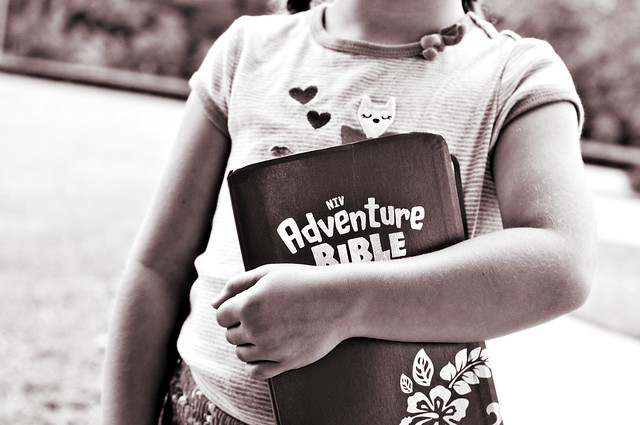
I stood in church one Sunday and sang some song about God’s love. I was in pain, I saw no evidence that God had noticed, so I stopped singing the song. I no longer believed in a God equals Love. I no longer believed that this Love saw me.
Here is the thing about unbelief: it is like a fire. It burns away the truth, yes, but it also burns away the lies.
What is left is a heart like a dead, blackened field.
In other words, what is left is the perfect ground for new life.
***
I do not want to idolize unbelief, no more than I would want to idolize certainty. All I want is to say: Do not be afraid.
On the days when you believe, the days when God is near, do not be afraid. Do not imagine it is up to you to keep the feeling going, like a bicycle that might disappear the moment you become too exhausted to keep peddling.
And on the days when you cannot summon belief, on the days when God is a void, do not be afraid. These days are dark, they may be painful, but they, too, can be a gift.
***
Which came first, my love for God or his love for me? Before I stepped through the door of this day, I’m not sure I could have answered the question. My view of divine love was a mixed-up mess of lessons I’d been taught, songs I had sung, parents who loved well, and my own lonely efforts to be a good person.
Maybe that has been the greatest gift of unbelief. Embracing it, I let go of everything I thought made me lovable.
And then Love found me.
***
***
“We love because he first loved us.”
(I John 4:19)
by Christie Purifoy | Sep 28, 2013 | Books, Gardening, Uncategorized, Writing
Friends, a confession: I read some books this summer.
The bad news is that I forgot to start dinner, I never noticed when the baby ate cat food, and I forced all four children to endure 90 minutes of daily “quiet time.”
The good news is that I have so many books to tell you about. Let’s talk books, again, shall we?
(If you’re new to this Saturday series you can browse my previous recommendations right here and read more about my use of affiliate links.)

Summer, for me, was over the top in every way. Heat, humidity, rain, noise, activity, zucchini. Just Over The Top. I survived by reading novels.
One of my favorites was Where’d You Go, Bernadette: A Novel by Maria Semple.
After reading the first few pages, my expectations were not high. The storytelling is unconventional. Rather than a seamless narrative, you’ll find fragments of communication: emails, texts, letters, newspaper clippings, etc. I worried the book would be some sort of postmodern experiment, more taken with its construction than the story it tells. I have nothing against experiments (Joyce’s Ulysses is one of my favorite books), but, this summer, I wanted something thoughtful and enjoyable.
If Semple’s book is an experiment, it succeeds beautifully. Yes, the form is unusual, but it turns out to be integral to a story that is deeply, warmly human. This is a fun, funny novel, but it makes a serious point: first impressions, even second impressions, might give us entirely flawed ideas about other people.
I loved the hope inherent in this story. I loved knowing that even villains might turn out to be lovable.
Hovering over me was the Chihuly chandelier. Chihulys are the pigeons of Seattle. They’re everywhere and even if they don’t get in your way, you can’t help but build up a kind of antipathy toward them. – Maria Semple
Over the summer, I spent more time gardening than reading, a first for me. Of course, when I wasn’t gardening I was often reading about gardening. I’d read this memoir years ago, but when I found it on the shelf of my local used bookstore, I was happy to read it again.
William Alexander’s The $64 Tomato: How One Man Nearly Lost His Sanity, Spent a Fortune, and Endured an Existential Crisis in the Quest for the Perfect Garden is funny, self-deprecating, and surprisingly informative. Reading about battles with garden pests and plagues should be discouraging, but Alexander’s honesty (and his recipes!) allow us to see just how rewarding life in the garden can be, whether we’re winning those battles or not.
With the kitchen garden established, I decided – in an act of horticultural hubris perhaps not seen since, well, since Yahweh designed the Garden of Eden – to Build a Meadow. – William Alexander
This new book by award-winning memoirist Beth Kephart was one of my great finds of the summer: Handling the Truth: On the Writing of Memoir . If you have even the tiniest dream to write memoir (or even a blog post based on personal experience) this book will be your Bible. It is inspiring, it is instructive, and it is beautifully written.
I think this book deserves a much wider audience than only writers and writers-in-the-making, however. First, Kephart offers lists of must-read memoirs. Some were familiar to me, but many were not. Her descriptions of what makes each memoir valuable would make this book worth its purchase price even if that’s all it offered. But it offers a great deal more.
This is a book to wake us up to our own lives. This is a book to reveal the treasure that is our own experience. This is a book to help us shape the stories that must be shared.
If all your memoir does is deliver story – no sediments, no tidewater, no ambiguity – readers have no reason to return. If you cannot embrace the messy tug of yourself, the inescapable contradictions, the ugly and the lovely, then you are not ready yet. If you can’t make room for us, then please don’t expect us to start making room for you. – Beth Kephart
And you? Read any good books this summer?
by Christie Purifoy | Sep 20, 2013 | children, Family, Grateful, Jesus, motherhood, prayer, Stories, Uncategorized
If this room were hanging on the wall of a museum, like a painting, I would call it “After the Celebration.”
The fabric birthday banner is draped over a dining room chair (having fallen, gracefully, from the top of the china cabinet). A pile of gift bags, in shades of pink and purple, is stacked on the floor waiting for a return trip to the third-floor closet. I think there may still be a few candles, slick with the crumbs of a cinnamon-apple cake, hiding beneath the birthday cards lined up across the tabletop.
I am not yet ready to sweep away the remains of this past year or the party with which we ended it. I am following the trail of these crumbs trying to piece together the story of my baby girl’s first year.
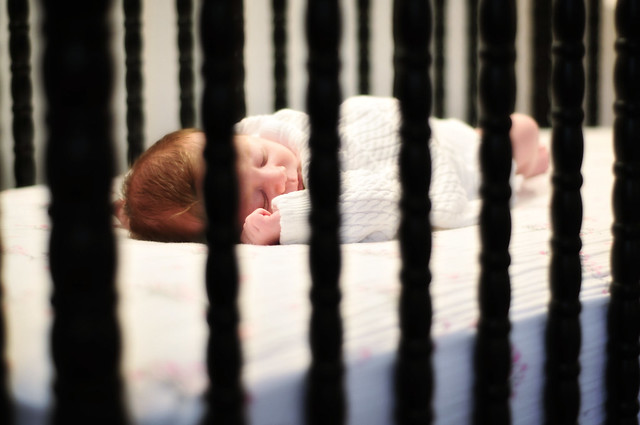
I suppose it is more my story than hers. One day she will look at photos from this day and feel utterly disconnected from the beautiful baby in the pink dress. If I can discover the story, the meaning that lurks in a messy pile of remembered odds and ends, I can pass it on to her.
A better gift, I think, than any doll or keepsake book or slice of cake.
***
I don’t have what it takes (and what does it take? Time? Skill? Dedication?) to pray long or complicated prayers for my children. Instead, I ask for a verse, I write it on an index card, and I pray it just whenever I find myself sitting at my desk.
All year my prayer for this child (my second daughter, my last of four babies) has been less of a prayer and more of a long exhalation of gratitude. I have prayed this: “A longing fulfilled is sweet to the soul” (Proverbs 13:19a).
However, this story doesn’t begin with longing. It begins with my determination not to ask or desire. It begins with a hole in my heart where longing should have been.
***
After the birth of our third, I gave away the baby things. I packed clothes in boxes and mailed them off. I left books at the used-book store. I sold the pricy breast pump on consignment.
This made perfect sense. Having finally earned my PhD, I was embarking on a career that left little space for more babies. I would soon round the corner of my late 30s. But beneath the reasonableness was something much darker: fear.
I had three children, but I had never conceived without doctor visits, invasive tests, medications. Even the surprise of my third pregnancy arrived only after months of tearful prayers.
I had always assumed we’d have another daughter. I sometimes remembered the tiny pink things I had packed away years before, but when I tried to imagine praying for another baby, waiting for another baby, I couldn’t.
Whatever store of desire had fueled my prayers for three children I had used it all up. I was empty, so I gave away every last object that might say hope.
***
Here, then, is the beginning of the story.
It is the quiet, twilit hour of bedtime. I am sitting at the end of my daughter’s turquoise bedspread. Her face is lost in shadow, but I can hear her voice clearly: “I want a sister.”
I have heard these same words before. I have heard them many times. I think it is exasperation that prompts my reply, but I wonder now if it was my own desperation?
I tell her, “I can’t give you a sister. Only Jesus gives babies. If you want a sister, you have to ask him.”
You might think this memory became meaningful only in hindsight. But that is not the truth. I knew something had happened as soon as the words left my mouth. It felt as if a boulder had shifted. Where there had been nothing within me but irritation there was something new.
Was it desire? Was it hope? I’m not sure I can name it, but it felt like this: pain.
My daughter prayed, and here is where hindsight does color this memory. Looking back, I really cannot say whether it was her prayer being offered or my own.
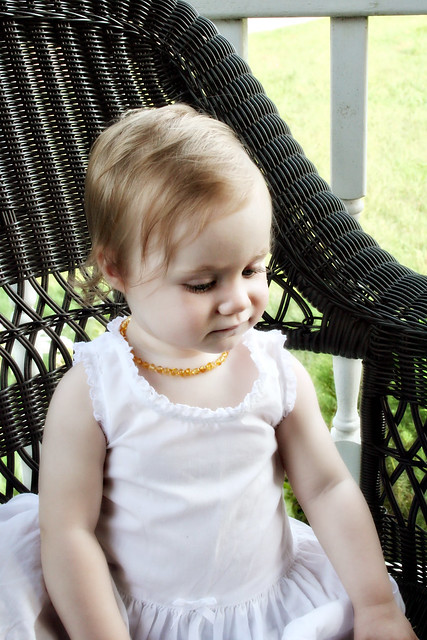
“I prayed for this child, and the Lord has granted me what I asked of him.”
I Samuel 1:27
*first photo by Kelli Campbell, second photo by Christie Purifoy
by Christie Purifoy | Sep 5, 2013 | children, Family, God, God's Love, grief, motherhood, prayer, Uncategorized
Two years ago, I wrote a few words for my son. They added up to something that wasn’t quite a story. I think they were a prayer. Also, a confession.
I meant them for all of my children, but it was this boy who drew them out of me.
The love we have for others – but especially for the weaker ones, like our children – is often laced with fear. That is our lot in this world: to love and to know that loving makes us vulnerable. Vulnerable to loss. To pain. To worry.
Some of our loves are laced with more fear than others. My love for this boy is like that.
However, in loving him, I have seen something strange but beautiful, something hard but good: the worst moments are the ones that wash my love clean of all the fear.
Somehow it takes having our worst fears realized, to know that our worst fears are not worth fearing. Because, ultimately, we are safe. We are loved. We are held.
Recently, my son began a new school year at a new school. He was nervous. I was nervous for him. Despite my prayers, despite my hopes, his first day went about as badly as a first day could go. Possibly, it was even worse than that. At the end of this terrible, no-good, very bad day, I remembered what I had shared two years ago. And I knew this: our worst days may be the answers to our best prayers.
(the following is edited from the archives and was originally titled The Only Thing I Pray My Children Grow Up to Know)

The second-born, my oldest boy, starts kindergarten in just a few weeks. Not only that, but he will ride the bus (which is, possibly, a bigger deal for both of us even than kindergarten itself).
I’ve been a mother long enough to know that the days are long but the years are short. These summer days drag (how to fill the time between dinner and bed?), but I will wake up tomorrow and watch my son graduate from high school. I know this, and it has prompted me to wonder: what do I want this boy to grow up to do? To know? To be?
Like most parents in these enlightened days, I say, “I only want him to be happy. Whatever makes him happy. If that means becoming a doctor, great. If it’s an auto mechanic, fine by me.” Unlike most parents, I suspect, I really do mean it.
I’ve spent enough time around highly-educated Ivy-leaguers to know that the things which spell success in our culture (straight A’s! a University of Chicago degree!) are not necessarily markers of either success or happiness.
Not only that, but I know that there is some kind of Murphy’s law of parenting: whatever I plan for my child, the opposite will happen. My father gave me only this bit of advice as I prepared for college: “Study anything you want, but be practical. Don’t major in English or History.” I was never a rebellious child, but Murphy’s law kicked in and, by the end of college, I was graduating with a double major in English and History.
What then do I want for my boy? For his big sister? His little brother?
Only this: to know deep down in their heart of hearts God loves them. Truly, that is all.
Unfortunately, there is such a big chasm between head knowledge and heart knowledge, between assenting to an idea or concept and feeling the truth of it deep inside. I tell them over and over: you are loved. By me. By others. But, most importantly, you are loved by the Love who created everything beautiful and that Love is vaster and more intimate than you may ever know.
I heard that too as a child. I sang these words in so many Sunday school classes: “Jesus loves me, this I know.” But I didn’t know. I nodded my head and agreed, but I didn’t really know.
Praying that my children know God’s love is sometimes difficult. It is as if I am praying that they suffer. Maybe I’m wrong. Maybe there is some other way in which this knowledge can travel from head to heart, but the enormity of God’s personal love was only revealed to me in some very dark places.
Looked at another way, I am not praying they suffer. I am praying they be comforted.
And this is what I want for my babies? Yes, this is what I want for them: that, like Hagar, they will one day say, “I have now seen the One who sees me.”
This is my prayer:
“I pray that you, being rooted and established in love, may have power, together with all the saints, to grasp how wide and long and high and deep is the love of Christ, and to know this love that surpasses knowledge – that you may be filled to the measure of all the fullness of God” (Ephesians 3:17-19).
I’m afraid that it will hurt, but I promise you: it is worth every tear.
“My ears had heard of you but now my eyes have seen you.” (Job 42: 5)
by Christie Purifoy | Aug 29, 2013 | Amish, Dreams, Florida, Home, Pennsylvania, Uncategorized
When I was young, dreams were easy. I wanted to marry that one boy from the church youth group. I wanted to live in the big city. I wanted a PhD. Later, I wanted (desperately) to have children.
In those days, dreams were like stair steps. One after the other, they fell into place. Some were realized easily, some only after the proverbial blood, sweat, and tears, but they were all my dreams. I could take full credit for the dreaming, and I thanked God when my dreams came true.
Then the day when I exhausted my carefully hoarded stash of dreams. I had thought I carried an endless supply. I imagined I was Mary Poppins reaching deep into her carpet bag. But mine was only an ordinary duffel.
I remember it precisely. I sat at my desk with one dream heavy in my belly and another being typed out word by word on the screen of my computer. I was preparing to defend my PhD dissertation. I was preparing to give birth to my third child. That day, I opened my Bible and read these words: “Delight yourself in the Lord and he will give you the desires of your heart” (Psalm 37:4).
I knew then that I had come to the end of my own dreams.
I wasn’t unhappy. I had plans, though they were disconcertingly vague. I wasn’t ungrateful, though I was nine-months tired and dissertation stressed. The problem was that I read the phrase desires of your heart but saw only emptiness. I was no longer a dreamer. Had I ever been?
A few months after the baby and only days after graduation, we moved to Florida. There I learned that heart desires are born in God’s own throne room. I also learned that the door to the throne room is usually found in the wilderness.
Florida was my wilderness, my wandering place. It was the place where my own small plans were broken and then burned. And what was revealed in those flames? Of course. Desire.
We Christians profess selflessness (though too often we practice it as badly as anyone might). But in our profession we come to fear desire. Isn’t it wrong to pay such close attention to my own heart? Aren’t desires like sirens tempting me from the Way?
And so, like some foolish Ulysses, we stop up our ears, we tie ourselves to the mast of our ship, and we focus only on our plans. I will do this today. I will do that tomorrow. When always God is calling us to let go of our plans and listen to his voice.
His voice.
It is so like the beautiful siren song, but it is calling us, not to our destruction, but to life. The abundance of the wide-awake but dreaming life. A life that will look differently for each of us. A life dreamed up for us alone. Dreamed up by Love and planted within us in the form of desire.
It might take getting lost. It might require fire. It might look like a struggle on the deck of a storm-tossed ship. But the thing that is left is worth everything. Every tear. Every question. Every dark, uncertain day.
The thing that is left is a God-breathed, God-given desire. It reveals the self you were made to be. It turns your gaze toward the One who made you.

The realization of this desire is like coming home after a long, uncertain sea voyage. But this is a home you could never have imagined. It is fully beyond your own capacity for dreaming.
I know this is the way of it when I find myself behind the wheel of a pickup truck. Yes, me. The same me who traded the flat fields and cowboy hats of Texas for skyscrapers and snowflakes. Here I am, driving a truck loaded with mushroom compost and baby trees.
Sitting high in my seat, the view through the tunnel of August corn is washed in golden, late-day light. I can just glimpse a far green hill. It is topped by that perfect couple: a white farmhouse and a red barn.
An Amish family clip-clops by behind their horse, and, for a moment, I cannot fathom how I have come to this place. This beautiful, never-before-imagined place.
And that is a heart’s desire. It is a place prepared for you. A place that satisfies your heart like nothing else.
It is a dream come true, though, walking your own way, you would have never dreamed of it at all.
“The kingdom of God is where our best dreams come from and our truest prayers. … The kingdom of God is where we belong. It is home …”
– Frederick Buechner, The Clown in the Belfry
