by Christie Purifoy | Jul 25, 2015 | Amish, Books, Simplicity, Uncategorized
I’ve been writing about simplicity. This means, of course, that I’ve been reading about it, too.
So here is one more peak at the bookshelves in this old farmhouse. Though, to be honest, most of these books haven’t yet found their place on a shelf. Too new, too needed, they are piled on that one chair in our tiny sunroom or the little bureau I use as a bedside table. I’m fairly sure my almost-three-year-old has already taken a ballpoint pen to one or two of them.
This list is not meant to be exhaustive. Not even comprehensive. Perhaps it isn’t even a good place to begin if you are new to the topic. But these are the books I’ve been reading. These are the books I would pass on to you if you came to visit us at Maplehurst.
These are merely a few books that have found their way to me. And I am trying my best to listen.
(contains affiliate links)
I’ll give you the best right up front. It’s called In Celebration of Simplicity: The Joy of Living Lightly by Penelope Wilcock. Recommended by an internet friend (she and her words are wise and beautiful; I recommend especially this recent post on dimming the lights), I think of this book as a lovely little dagger.
It is a pretty thing, like a gift book. The edges of every single page are devoted to Scripture and inspirational quotations. But don’t be fooled. There is nothing sweet about Wilcock’s message.
This is a book about discipleship. About following Jesus in every part of our lives – our eating, our shopping, our words, our clothing, our hospitality, our entertainment, our work, our everything.
The Way of Christ, The Way of simplicity is narrow. Reading Wilcock I see it. I believe it. I am afraid of it. Yet somehow, reading this book, I want to run in that direction. And never come back.
The discipline of simplicity is the magnifying glass that focuses the sun, so that the concentrated force of the Holy Spirit can be trained upon the insignificant bits and pieces of the common way in which we tread, effecting amid all the dross and distractions the living fire of a kindled life. – Penelope Wilcock
Another book suggested by an internet friend (on my facebook page, are we connected there?), is The Plain Reader: Essays on Making a Simple Life edited by Scott Savage.
I am only halfway through this anthology, but I already know it’s one I want to pass on.
You’ll find at least one well known name (Wendell Berry and his essay on health is excellent) but most of these voices are not often heard outside their small circles. Most are Amish (by choice, not birth), Quaker, or members of other “Plain” communities.
The choices and viewpoints reflected in this book can only rightly be described as extreme. The temptation for many readers, myself included, is to put up defenses, to feel judged, to argue, and so to hold tightly to our usual ways of thinking and living.
But that is a waste.
If we can read this book with openness and curiosity, there is so much to gain. First, there is the benefit of seeing how radically different some live their lives all in the name of Christ. Second, though we may not adopt all, or even very many, of the practices of these writers, their radical choices can help us realize how much of our lives we actually can choose. So much of how we live, work, play, and worship seems already determined. But the essays in this book reveal how very possible it is to change everything about the ways in which we live.
And I find that incredibly inspiring.
In an odd sense, when every taboo has fallen, then the only way to be subversive is to have more fun than other people – to fill your heart and your home with more joy and warmth and pleasure than the frantic, slightly pathetic, ersatz happiness offered by Disney and the mall and the chat room. This is a book, finally, about joy. – Bill McKibben
A book I’ve mentioned before is Plain and Simple: A Woman’s Journey to the Amish by Sue Bender. Bender’s book, part-memoir, part artistic vision, asks whether it is possible for a thoroughly modern woman to live life as beautifully and simply as the handmade Amish quilts she admires.
Must our lives be the crazy quilts we often feel them to be?
The feeling went beyond everyday cleanliness and order. The air felt alive, almost vibrating. Can a room have a heartbeat? Can space be serene and exciting at the same time? I’d never been in a room that felt like that. – Sue Bender
One reason I am feeling beckoned towards this thing we call the simple life, is that I want space in my life for the things that matter.
I want space to breath (to cut flowers every morning, to sit in stillness with a child in my lap). I want space for paying attention (there is trouble and injustice in our world, but if my life is too crowded I cannot notice, and I cannot do anything). And I want space for the absolutely essential non-essentials.
Like poetry.
I don’t want to live a life that has no room for a book like A Timbered Choir: The Sabbath Poems 1979-1997 by Wendell Berry.
I recommend it. Both the space-making and the poetry-reading.
***
by Christie Purifoy | Jul 17, 2015 | guest post, Home, Seasons, Summer, Uncategorized
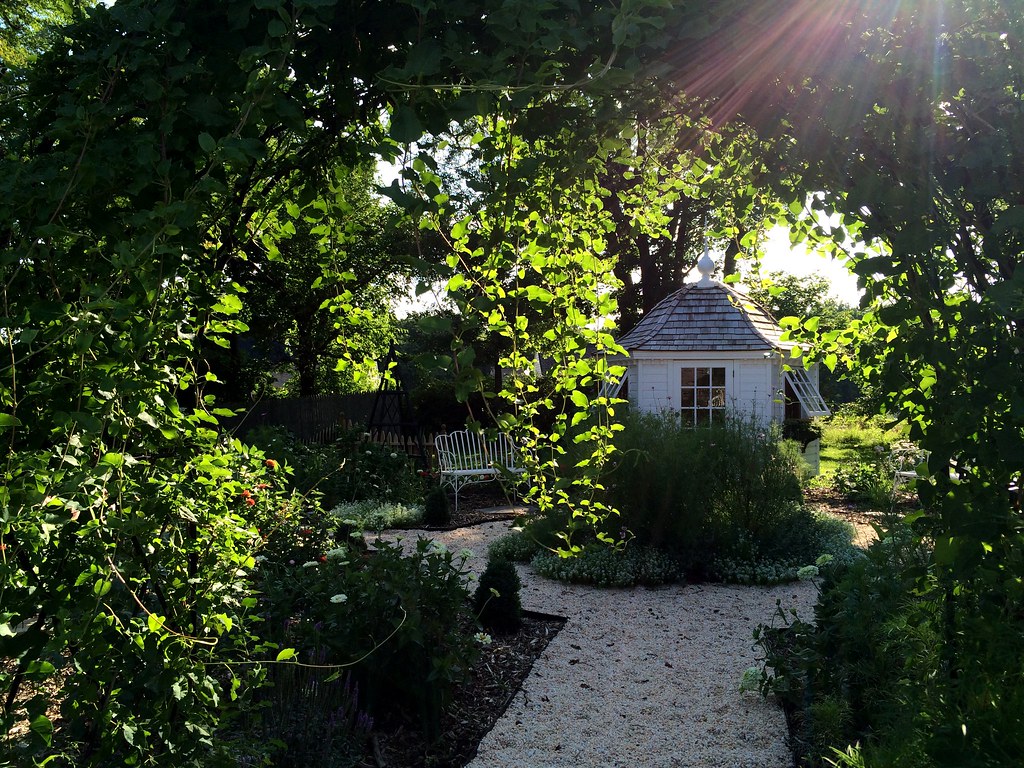
Visiting from Ann Voskamp’s place today? I am glad you are here. My name is Christie Purifoy, and I live in a Pennsylvania farmhouse with my husband, four kids, thirteen chickens, two cats, and rather too many woodchucks. I am always watching for beauty, wonder, and mystery, and I write dispatches from the golden hour. Welcome to Maplehurst.
*
*
What a pleasure it is to have my words and images hosted today by Ann Voskamp at A Holy Experience. This is the first in her new photographic blog series “Unwrapping Summer.”
I’ve never considered myself a photographer, but I have come home to such a beautiful place. Next to such beauty, words feel inadequate. My photographs always feel inadequate, and yet, together? Well, sometimes, words and photos together help me crawl just a little bit closer to the source of everything good. Everything beautiful.
I hope you’ll join me over at Ann’s place to unwrap the great gift, always beautiful but not always easy to receive, of summer at Maplehurst.
*
by Christie Purifoy | Jul 8, 2015 | hospitality, Simplicity, Uncategorized
“Peace is our gift to each other.”
– Elie Wiesel
We hosted a large reunion of old friends for the 4th of July weekend. As usual, the week before found us tackling a long list of neglected home repairs. At one point, while my husband hammered in a nail, I told him we’d probably live in squalor if it weren’t for our house guests.
*

*
Maybe that’s not strictly true, but we do find hospitality to be highly motivating when it comes to maintenance chores.
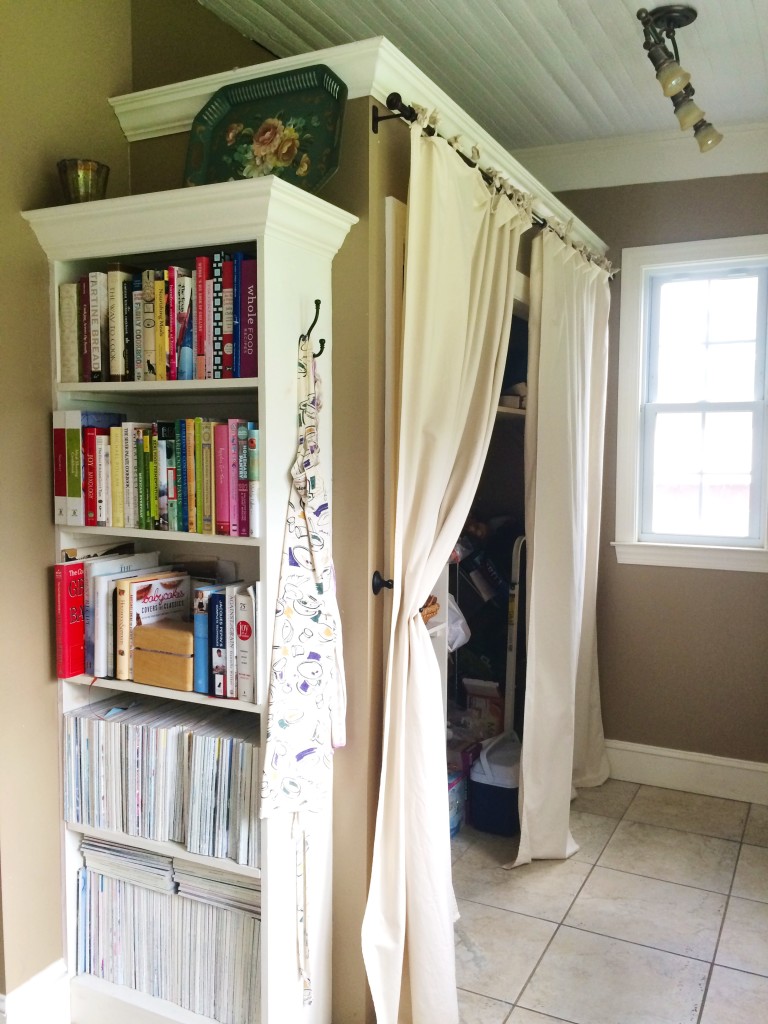
One day before the first guests turned down our long driveway, I decided to do something about the pantry shelves in our kitchen. A few weeks before we’d finally removed the flimsy bi-fold doors that never did stay on their tracks. Somehow I remembered an old pair of cream-colored curtains that my mother had sewed for me years ago. The tie-top panels had covered the sliding glass door in one of our first married homes, but then never quite worked for any of our windows after that. I’d been moving those curtains around, storing them at the back of various closets and drawers, for more than fifteen years.
We installed a curtain rod. We hung the curtains to hide our boxes of Cheerios, our tubs of coconut oil, and my messy collection of recycled glass containers. And they were perfect. As if they’d been made for just this space.
I texted my mom a picture and said do you remember these?
Yes, she said. Maybe it is sometimes a good idea to hold onto things.
*
*
So, yes, mothers do know best and simplicity is complicated. Give it away or hold onto it? I don’t always know.
Maybe it comes down to motivation. Are we holding on to something out of hope or fear?
There is a world of difference between I’m afraid I’ll need this one day and won’t have it and I hope one day I find a place for this beautiful thing.
*
I used to encounter advice on simple living and think won’t work for me. Things like, keep only the number of dishes necessary for each family member and wash after each use.
But what happens when you suddenly have thirty-five extra mouths to feed? Paper plates? That may be simple for me and my jar of dish soap, but it is not so simple for our budget. Or for the earth.
I prefer a large stack of plain white dinner plates collected from Goodwill and IKEA.
In our culture of excess, simplicity and hospitality can seem like oil and water. But I am learning, slowly learning, that they are not. Because what I most desire to share with my guests is peace.
*

*
There is no peace in excess. In overindulgence. In decadence.
Peace needs space in which to grow. It requires surrender and trust. Strangely, too much effort, even too much paper party décor, can snuff it out.
A little emptiness, a little imperfection, a little less … of everything. This is how to carve out space for another person.
There is also, in simplicity, a great deal of not knowing. Do I keep the curtains or not? Do I bake three desserts or will one suffice? To overwhelm someone with the stuff of our hospitality is to assume we know, in advance, what she needs.
But we do not know. So we give a little emptiness instead.
And we watch as emptiness becomes a place where every guest can be seen and heard.
And made welcome.
*

*
by Christie Purifoy | Jul 1, 2015 | Dreams, Simplicity, Uncategorized
Ready or not, I will write about simplicity.
But are you ready to read words on simplicity by a woman who lives in a 7-bedroom farmhouse on four-and-a-half acres?
Because even if I explain that three of those bedrooms are on the third floor. That they don’t all have closets. That the ceilings slope against the eaves of the roof so that it is hard even to stand up in places; even then, I am describing abundance and not simplicity, aren’t I?
*
*
Here is where you might expect me to say that simplicity is a matter of the heart. It’s what’s on the inside that counts!
I am not going to say that.
True simplicity does reach all the way into our hearts, but it is also very much about our stuff. Our houses. Our land. Our clothes and cars and gadgets and machines. Our credit cards and bank accounts and pantries. The number of bedrooms, the size of our kitchens, the bins stuffed with toys.
All of it.
Why did Jesus tell so many, so often to get rid of their belongings? To store up a very different kind of treasure?
He wanted us to live like flowers. Like birds. Free of everything that would weigh us down.
*
*
It isn’t only my freedom at stake.
I recently found an old shirt in my closet. The label said Made in Bangladesh. I remembered the garment factory fire. I remembered how only a few months later, another garment factory collapsed. I wondered if the hands that had made this shirt were still alive, still sewing clothing for western consumers hungry for bargains. How had those hands suffered?
My desire for stuff, and the choices I make when I spend money have far-reaching implications.
You know this. I know this. But who has the time, the energy, the knowledge to make only perfect choices?
It’s all so complicated. So hopelessly complicated. When what I want is peace. What I want is simplicity.
*
*
Of course, there is one easy answer. One simple way to begin: live with less.
Don’t buy it (even though it’s cheap). Give it away (even though I might need it some other day). Let it go (though I wonder who I am without this possession).
I think about letting go, and I suddenly remember something important. How could I have forgotten? It was letting go that led me here. Here, to this abundance of bedrooms and growing gardens.
*
*
I let go of a career. I gave away the dream that had fueled my living for so long. I cast my bread upon the waters and what came back was the bread I longed to eat. The bread I could break over and over and give away: seven bedrooms (every one of which will be full this weekend) and ground to cultivate (food to eat, food to share) and words of life (my book coming to you next February).
So much wisdom on living in simplicity begins with giving stuff away. Clean out your closet, purge the toy bin, carry it all to the thrift store. Feel yourself breathe.
But I never understood. I am not a born minimalist. I like stacks of books (the more the better), I like pretty bits and bobs with sentimental value. I like knowing I can throw a party for a crowd with the contents of those three drawers.
Giving things away also felt like cheating. Isn’t it much harder to stop accumulating things than to give them away once I have?
But giving things away is like a muscle in need of exercise.
Give away the clothes, the toys, some books.
Give away the car, the job, the dream. Break the bread. Spill the oil. Keep giving until you wake up one morning and realize you have given away your life.
Because that is the morning you begin to live.
*
*
by Christie Purifoy | Jun 25, 2015 | Home, Jesus, peace, Pennsylvania, Simplicity, Uncategorized
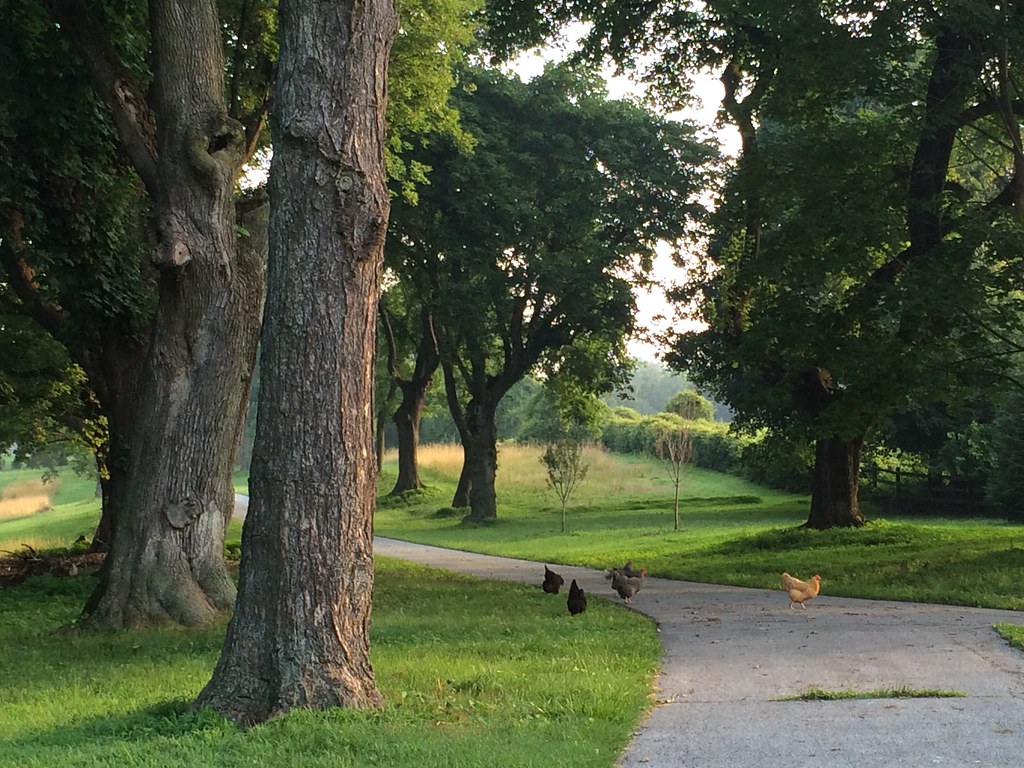
He stood, leaning on a shovel, taking a break from digging out tree roots in my neighbor’s yard. He was on one side of the split-rail fence. I was on the other. He looked past my shoulder, watching the chickens scratch and peck.
He said, “I like your chickens. Your home. It is like my country. It is like my home in Mexico.”
*
He’d been in our home for days. He and his team. Drilling holes. Snaking pipes behind plaster walls. Jonathan told me later what he said as they stood, talking, out in the yard.
He said, “Your home is so peaceful. It reminds me of my country. It reminds me of Vietnam.”
*
*
I doubt that a red-brick farmhouse in Pennsylvania looks like Mexico. It seems unlikely to me that it looks anything like Vietnam. But there is something about this house on a hilltop. This old house with its gardens and chickens and songbirds. Something about it whispers Peace. Something about it sings Home.
Most miraculous of all, to me at least, is that the whispers are louder than the noise of my four children (or my own responses to those children). Louder than brothers fighting or toddlers tantrum-ing.
Whispers so loud, so insistent, they make grown men pause. And remember.
And dream of home.
*
As long as Jonathan and I have been making homes together (whether a tiny apartment, a city high rise, a suburban split-level, or a century-old farmhouse) visitors have said the same thing:
Your home is so peaceful.
I have heard those words with gratitude but also with detachment. Because surely that peace had nothing to do with me? It wasn’t something I created or controlled.
It was a gift. Always and only a gift.
*
*
Peace is not merely the absence of conflict or violence. It is a presence. It is a place.
It has a prince.
It is a gift. But like so many good gifts, it can also be cultivated. Like soil.
We can slap down some concrete and rid ourselves of all that bothersome dust. Or we can grow tomatoes. Or flowers. We can sow peace. We can water it. We can watch it flourish.
Like gardening, it is hard work. It is a daily discipline.
*
How do we cultivate peace? In our hearts, our homes, our communities?
I think we begin by making room for it.
So many of us, myself included, live with too much. Too much in our closets and too much in our day planners. We see an empty shelf, and we fill it. We stumble on an empty moment, and we pounce on our to-do list. We feel some hunger and we rush … to the pantry, to the television, to the computer.
And then we wonder why our lives, why our world, is saturated with conflict and worry. Loneliness and hurry.
*
Peace begins with simplicity. Is simplicity the soil, the water, the sun? I don’t know. My understanding is limited, my metaphor possibly faulty. I don’t yet fully grasp the relationship between the two, but they are related.
I think they may be more deeply related than I have ever known.
I used to think that simplicity was a lifestyle choice. I am beginning to think it is the only way to follow Jesus.
Simplicity is the way of the child. The way of a rich young ruler who says yes and gives everything away. Simplicity just may be the door to the kingdom of God.
*
*
I have in mind a series of posts. Not because I have learned “Ten Lessons” or “Five Secrets.” It is only that I am noticing patterns in my past. Patterns that suggest it is possible to practice simplicity and cultivate peace with more deliberateness and passion.
And I want to talk about that here. With you.
I am more than a little bit afraid. Afraid of the price I must pay to walk this way. Afraid of sounding preachy if I talk about it.
But I am also hopeful. Excited, even. Simplicity is as heavy as a cross on my shoulder. But the kingdom of Jesus, the kingdom of the prince of peace, is an upside-down kingdom. And that heavy burden?
It is the light yoke, the easy burden of freedom.
*
by Christie Purifoy | Jun 17, 2015 | children, grief, prayer, river, Scripture, Uncategorized
Recently, someone wrote a blog post about a terrible injustice happening in our world.
I hear your deep sigh of recognition. Who wrote the post? What was the injustice? You know it almost doesn’t matter.
Aren’t our facebook feeds and blog readers and twitter accounts spilling over with painful stories of injustice? There is so much darkness. In our own small towns. In our own familiar cities. And in countries so far away we sometimes forget that they are more than just the names we hear repeated on the radio news.
When this blog post popped up in my email inbox, I read the title and then quickly shut my laptop. I told myself, I do not want to feel this. I cannot handle any more grief. Any more anger.
Especially when there is nothing I can do.
*
My daughter has been learning about the Holocaust. What began as a teacher-assigned classroom project has shifted into a personal obsession. Her bedroom walls are pale pink, there is still a doll on the center of her bed, but the bedside table is stacked with The Hiding Place and Anne Frank’s The Diary of a Young Girl.
After a difficult beginning, she has been processing it all fairly well. Stories of heroes and rescuers, especially, are helping her navigate the deep waters of our history.
But I am not doing so well.
It is a terrible thing to watch a child’s eyes being opened. Opened to terror. To darkness. To some brokenness in our world that began, I suppose, with Cain and Abel but simply Will. Not. Quit.
She would like to visit the Holocaust museum. I’ve told her no. Not yet. It is possible that she could handle it, but I feel sure that I cannot.
*
Is it ever okay to look away? To close the laptop? Plug up our ears? Maybe yes. Maybe no. I’m not really sure.
I did go back and read that blog post. It was as horrific as I had imagined, but there was also a clear call to action. There was a way for people to help, and many responded with a yes.
As I confronted my own feelings of powerlessness, I remembered that no one who prays is powerless.
I may never be able to rush around the world dispensing sure-thing solutions, but I can pray. And that is not a little thing.
Even prayer gives me hope. I have seen, again and again, that when we feel a tug to pray then God is already at work. He is the source of that tug. It is his invitation to join him in the great and beautiful thing he is already doing.
And as overwhelmed as I am, as weak as I feel, I hope I never say no to that.
*
My daughter’s eyes have been opened. But they have been opened to more than darkness. She is beginning to recognize the seed that has been planted inside of her: the seed of a rescuer. A lover of justice. A champion for rightousness.
Her mother is not those things. You do not want me to lead your campaign.
I am an observer. Once, I might have written that I am only an observer. But I have come to understand that those of us watching, quietly, from the edges, we are the ones who, when the moment is right, climb the high mountain and shout the good news of what we have seen: “Here is your God!” (Is 40:9)
We are unique, and our responses to suffering will be unique.
But may our prayer always be the same:
“… let justice roll on like a river, righteousness like a never-failing stream” (Amos 5:24).
*
There is a river. How does that stream flow through you?
*