by Christie Purifoy | Sep 23, 2015 | Autumn, Gardening, Life Right Now, motherhood, Pennsylvania, Seasons, Uncategorized
(this post contains affiliate links)
Is green edged with gold.
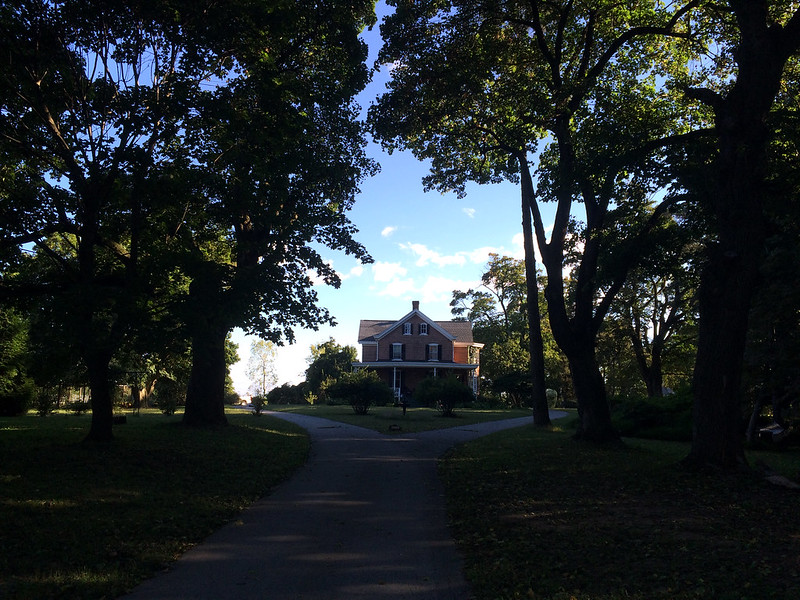
It is the first official day of autumn, but we have been observing its approach for weeks. The lingering heat and humidity made us doubt our eyes. Now that the air has shifted, now that we have retrieved our jackets from the back of the wardrobe, we cannot tell ourselves that the cherry trees with their yellow leaves are overeager.
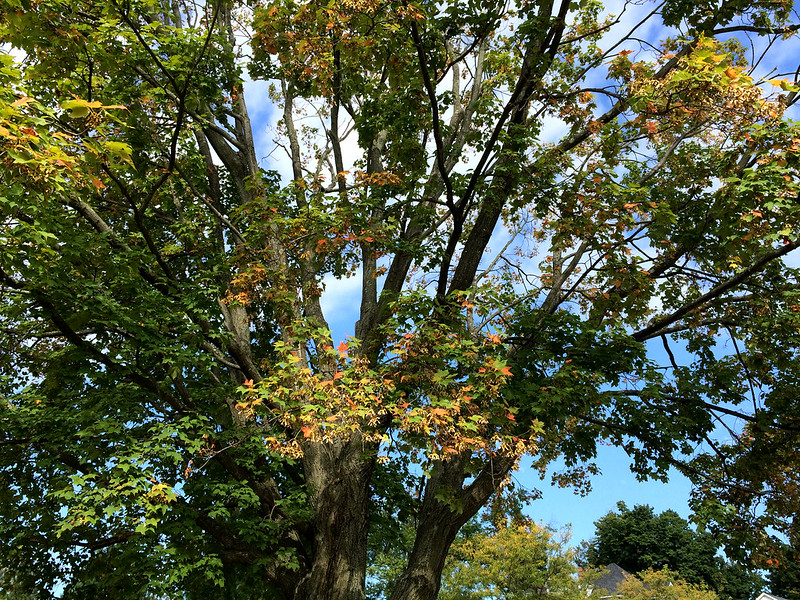
The maples are shaded with color now. The pumpkins lined up outside the grocery store no longer seem presumptuous.
/
/
Last weekend, Jonathan and I buried two hundred daffodil bulbs on the slope above the driveway.
Every year when I trip over a just-delivered box of bulbs on the porch near our back door, I feel beleaguered. Who has time for bulbs when the younger two won’t stop poking one another then screeching and the older two are whining about after-school snacks and someone refuses to meet my eye when asked about his school reading log?
But every year when spring finally breaks through, I wish I had planted more. I always wish for more.
I am trying to remember that winter-weariness. Trying to remember what those bulbs will mean come April.
Two hundred daffodils are only the beginning. I’ll plant at least as many more when another box shows up some time in October. More daffodils, but also alliums for the new flower garden and tulips for the raised beds in the vegetable garden.
If I plant tulips anywhere else they’ll only be eaten by deer, so I fill a bed or two inside the picket fence. When the tulips are finished in May, I can fill those spots with tomatoes or peppers or beans.
/
I am reading Terry Tempest Williams’ beautiful book Refuge: An Unnatural History of Family and Place . Early on, she writes, “Peace is the perspective found in patterns.”
When I came across that line, I put down my book and went in search of a pen. Her words describe something I have been living for years now, but only dimly perceived. The poetry of her sentence, with its alliterative P, has made something invisible in my experience visible to me.
The earth is full of patterns and rhythms. Some we merely observe but others invite collaboration. Like the planting of bulbs in autumn and the picking of flowers in spring.
These back-to-school days have been anxious days for me, but feeling again the net bag of bulbs stretched tight against the palm of my hand is like feeling my head surface above deep water.
I can breathe again. The peace of a larger, more meaningful perspective fills my lungs.
Homework may go unfinished, my children may go on poking and screeching, but wasn’t it only yesterday I was digging in bulbs with a baby strapped to my back? And isn’t it only tomorrow when those bulbs will bloom again?
The earth spins so fast. There is so much to remember (not homework but the feel of a baby on my back). There is so much to anticipate.
The present moment is always what matters most. But it matters most when it is rooted in memory even as it reaches toward that which is still to come.
/
by Christie Purifoy | Sep 19, 2015 | Books, Uncategorized, wilderness, Writing
Alaska is far away.
Maybe you think you know this, but however far away you imagine Alaska to be, double that. Because Alaska is really, really far away.
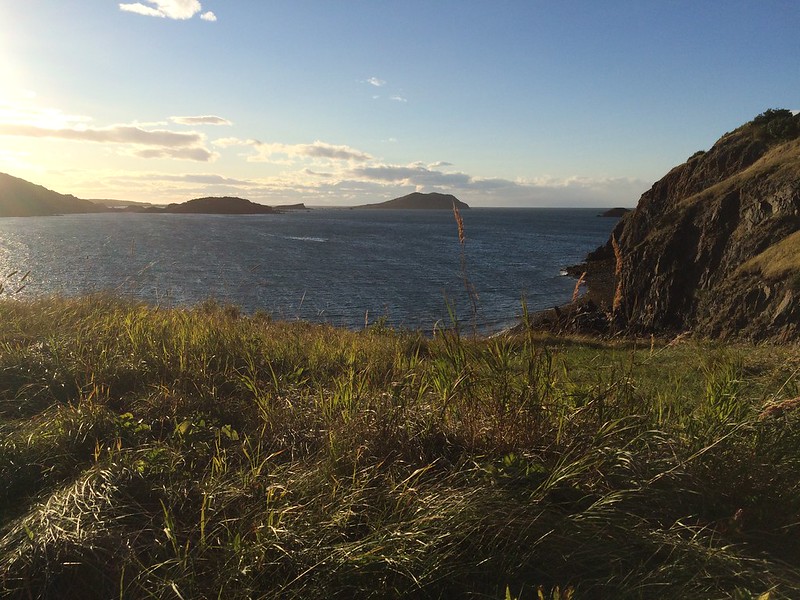
I am so grateful to have had the opportunity to spend a week with other writers on a remote Alaskan island. I wish that each of you could have the chance to be dazzled by the Alaskan sun and scoured by the Alaskan wind. I wish that you could taste King salmon only just pulled from the water.
If a two-day journey isn’t an option for you, what about a book instead?
(the following includes affiliate links)
Here is a memoir of that same remote island. It is also one of the best memoirs I have ever read.
Surviving the Island of Grace: Life on the Wild Edge of America by Leslie Leyland Fields is the story of a young woman from New Hampshire struggling to make a home and a marriage on a primitive and remote island in the Gulf of Alaska.
This is a memoir of marriage, motherhood, spirituality, and poetry. It is also a memoir of wilderness and the dangerous and exhausting work of commercial salmon fishing.
Even if you can’t imagine enjoying a book about fishing (much less actual fishing!) I highly recommend this book. The writing is stellar, the story captivating, and the whole thing is edged with lyricism.
This is the most particular and most universal of stories. Now, I too, am asking the question at the heart of this book: how do we bear the terrible, beautiful grace that sustains our lives?
This was where we unraveled the rest of our lives, it seemed, even as we sewed up the holes in the nets. There was something about this space, about standing out there on the beach under the open sky – the clouds or sun, mountains on every horizon, though it was ocean all the way to the edge. The walls were gone, how could there be a larger space to stand in, and yet, it became a sort of confessional. – Leslie Leyland Fields
I picked up another Alaska memoir in the bookstore at the Anchorage airport: Take Good Care of the Garden and the Dogs: A True Story of Bad Breaks and Small Miracles by Heather Lende. This one reads more like a collection of personal essays than a cohesive memoir. The tone is cozy and, at times, a little too cute, but Lende’s work as an obituary writer for her small-town paper lends the book some serious depth.
Lende organizes her chapters around the Bible and the Book of Common Prayer, but she incorporates other traditions as well, such as Buddhism or Native American spirituality.
I kept this one tucked in the seatback pocket on the long flight from Anchorage to Seattle. At one point, my seatmate asked if she could read it, and I passed it over. She laughed out loud for the rest of the flight.
It’s a good book.
I wonder if to be human is to know that we can’t ever banish pain and ugliness from the world, only learn from it and create something beautiful and good out of it – like the newest totem pole in Sitka, the one called ‘You Are Going to Get Well.’ If you ever see it, you will believe that’s possible. – Heather Lende
One of the guest writers at the Alaska workshop was the novelist Bret Lott. You can’t go wrong picking up any of his fiction (I adore the strange, hilarious, heartbreaking first story in his collection The Difference Between Women and Men: Stories), and his novel Jewel was once an Oprah Book Club pick.
I especially recommend his latest, a collection of essays called Letters and Life: On Being a Writer, On Being a Christian .
.
For writers, his essay “On Precision” is outstanding. For everyone, the final long essay on the death of his father is beautifully crafted. I aspire to write personal essays like this one.
As a writer you must always be striving for that which you cannot yet achieve and for that which you cannot yet know. – Bret Lott
I have two bonus recommendations for you today. The first is Girl Meets Change: Truths to Carry You through Life’s Transitions by Kristen Strong, a pretty and practical book for any woman who struggles with life’s transitions.
The second is the most recent book from Emily P. Freeman: Simply Tuesday: Small-Moment Living in a Fast-Moving World. I don’t think anyone writes Christian formation quite like Emily. Her writing is accessible but also lovely, straightforward but rich and wise.
In my eagerness to read it, I mistakenly ordered two copies. Leave a comment here, and I will enter your name in a drawing to win one of those copies. A winner will be notified by email.
Tell me, friends. Read any good books lately?
***
by Christie Purifoy | Sep 9, 2015 | grief, Home, motherhood, Stories, Uncategorized, wilderness, Writing
In Alaska, there are many ways to die.
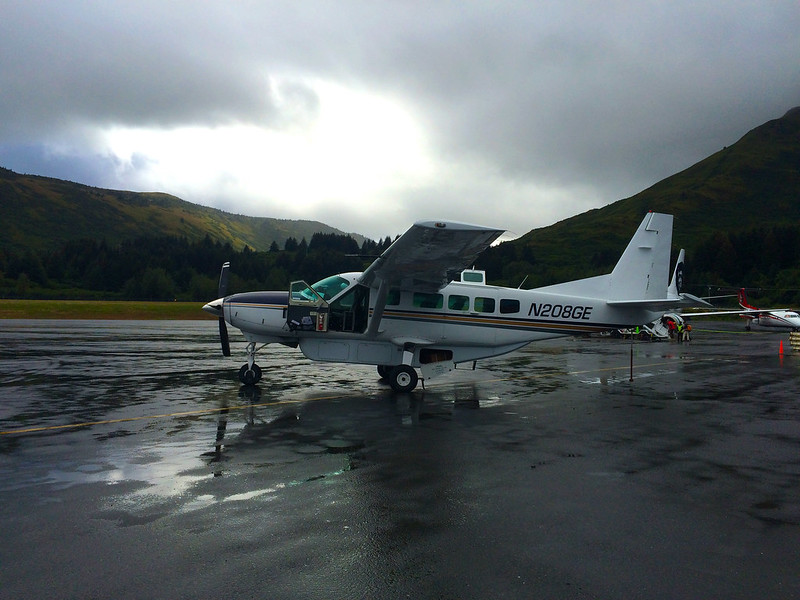
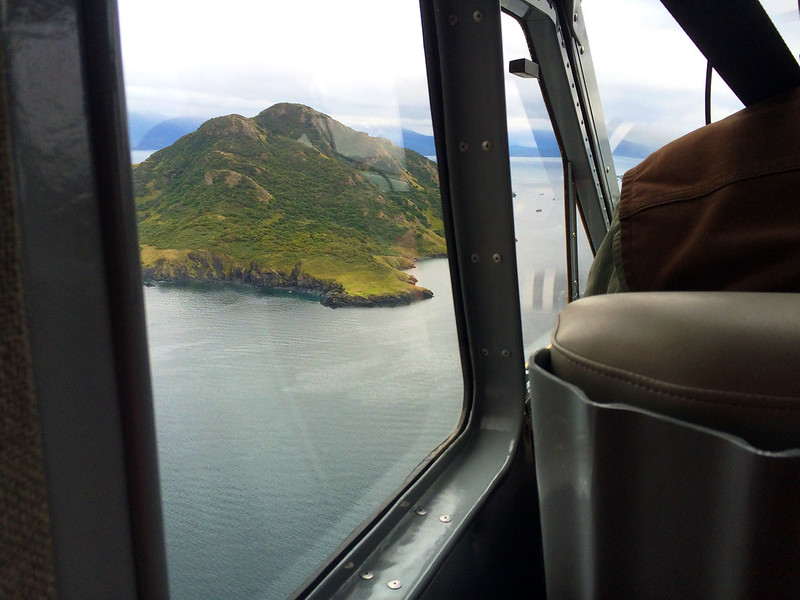
You can die in the air: bush plane, float plane, an airliner in wind and fog. You can die in the sea: barge, skiff, a ferry plunging in the trough. (If you are a sea lion, you can die in the jaws of an orca halfway between your rock and the waves. I have a picture of blood and frenzied sea lions if you are the sort who needs proof.)
You can also die with your feet planted firmly on the ground: bear, cliff, swiftly-shifting weather.
You have come to the edge of the world. The sun is lower. The shadows are longer. Death lurks out in the open here.
/
/
When you become a mother, you count all the ways there are to die: babies sleep but do not wake, daughters fall on the stairs, sons are diagnosed and named incurable.
Later, the ways are counted for you, but they are not the deaths you have already met in your imagination.
One day, you do not recognize how much your boy struggles to breathe, but the pediatrician does. She calls an ambulance from the exam room.
Another day, you forget your child’s epi-pen. Thank God, that stranger in the corner of the shop had one in her purse. You learn, to your sorrow, that death is folded within each moment.
Silent. Hidden. Utterly inseparable from love.
/
In Alaska, there are so many ways to live.
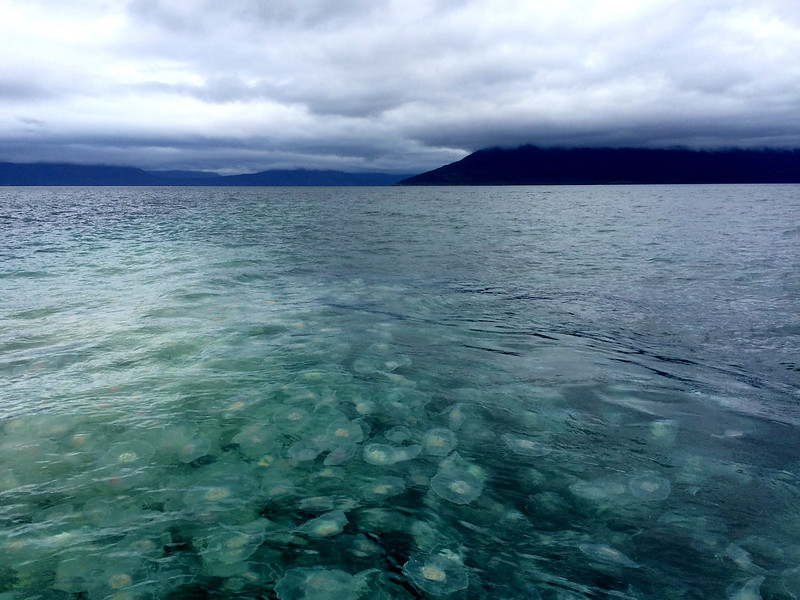
You live in the air: bush planes and float planes fly low. You soar like an eagle, skim mountaintops, explore islands empty except of bears.
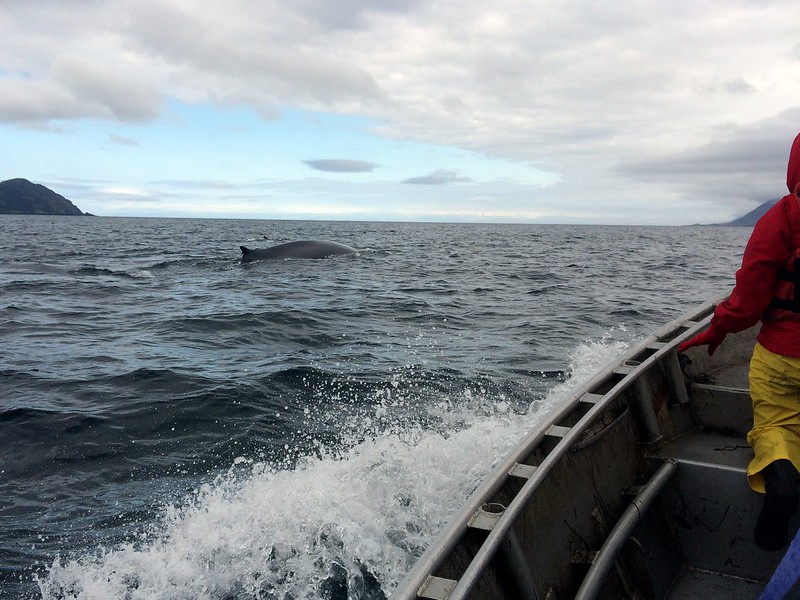
You live on the water: the taste of salt spray on your lips, a diving fin whale almost at your fingertips, sea otters like floating teddy bears.
You live on the land: black-tailed deer who are not afraid of you, tide pools filled with sun stars and blood stars and the deep breathing of anemones.
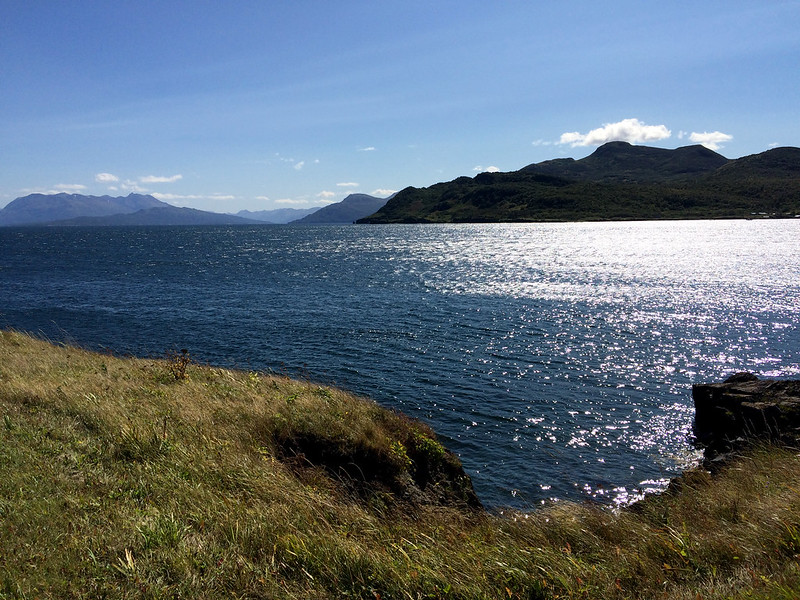
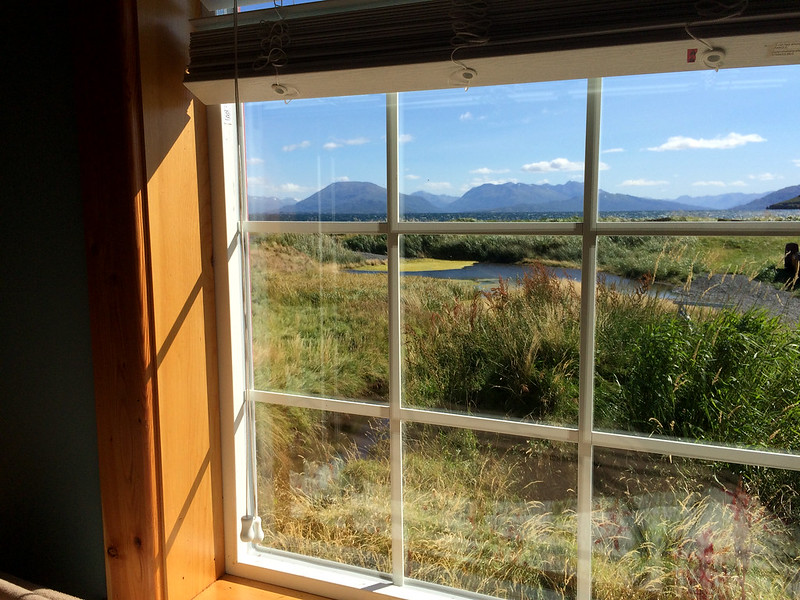
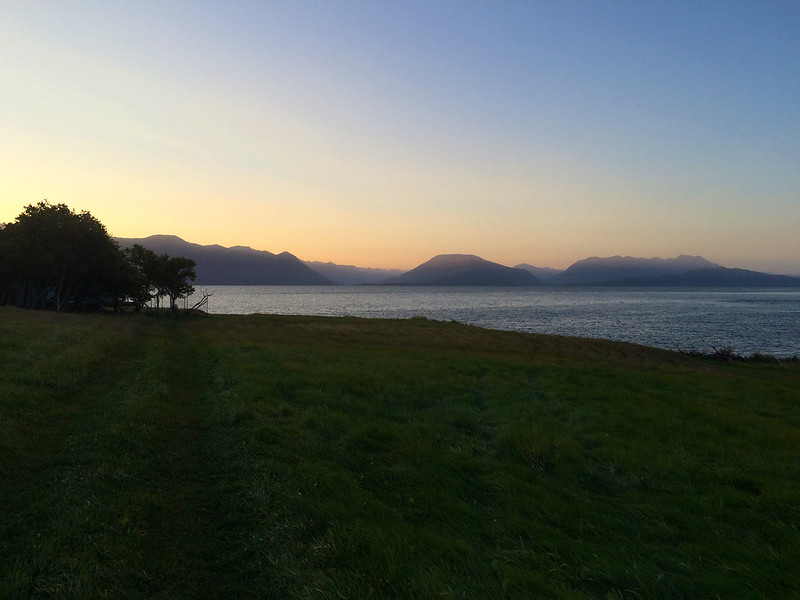
You have come to the edge of the world. The sun is lower. It is a dazzle in your eyes all day long.
Of what consequence is death when the air is like glittering glass?
/
/
If you are a writer, you are often alone. You retreat from family and friends seeking the quiet you need to write.
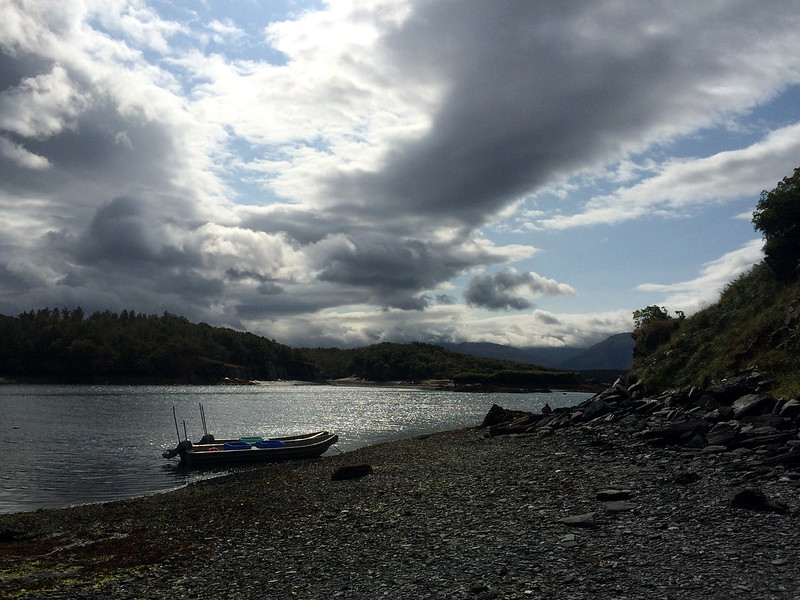
But one day you step on an airliner. One day you step on a bush plane. One day you wade through the water and heave yourself into a skiff. One day you taste salt spray all the way to Harvester, an island like a boulder tossed across the sea.
You journey to the edge of the world, and you discover you are not alone. The world is as full with stories and with storytellers as it is full with the glory of God.
/
The stories you find on Harvester Island are intimate with death.
There is the story of the old man and the young boy. They vanished on the water, leaving behind only a dog in a skiff and so many broken hearts.
There is the story of the unhappy wife standing on the edge of the island rock with a small suitcase in her fist. She has arrived at the end of her road. She is alive, but she has already died.
There are so many ways to die, but in Alaska, you learn what is true in every place on earth: there is only one way to live.
The only way to live is to die.
/
The only way to live is to arrive at the end of yourself and then to keep going (you can do this via bush plane, you can do this via motherhood or marriage or any great attempt at love).
Love is what remains, at the end of yourself, at the end of every beautiful story, at the end of every terrible one, too.
Love is our home. It is the place where death is only a fading legend. A tale we will tell again and again until, like glass smoothed and polished by the waves, it loses every sharp edge.
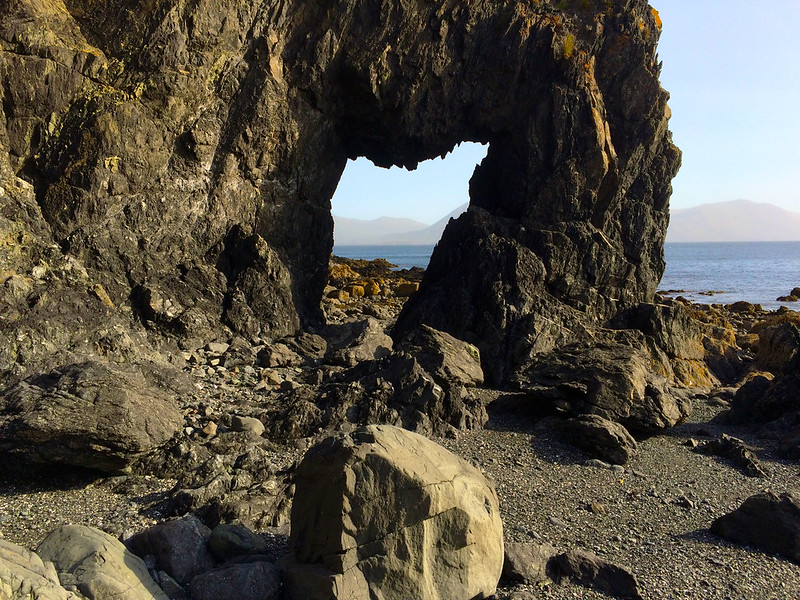
One day, we will let that old story go; we will drop it there, on the black gravel of the beach. For we have traveled 10,000 years, and we are ready for new stories.
/
/
Written in the airport in Anchorage, Alaska. With love for all the writers who traveled to that boulder in the sea. I am glad to have met you, there on that line between rock and water, life and death, stranger and friend.
by Christie Purifoy | Aug 22, 2015 | Books, Home, Roots and Sky, Seasons, Uncategorized, Writing
It’s Saturday morning. High time for another installment in my occasional book recommendation series. But there is one very important book I haven’t yet told you much about.
My book.
Since that first announcement, you have been so supportive. So excited for me. So eager to read this book I have told you almost nothing about. I am grateful.
I want to tell you more.
*
Let’s begin with the details, as if this were one of those announcements I once mailed after the birth of my four babies. Those easy statistics that tell you so much and so little.
Title: Roots and Sky: A Journey Home in Four Seasons
Cover:

Release date: February 2, 2016
Available for pre-order here:
Amazon Barnes & Noble ChristianBook.com
Pre-ordering is convenient for you but critical for the success of new books. Pre-orders tell the booksellers there is interest, and they will stock more copies before the release date. More copies on shelves and in-warehouse translates to more sales in those critical early days.
Thank you for every one of your pre-orders!
*
What is Roots and Sky about?
This book is about our first year in an old farmhouse called Maplehurst. It begins when we came home to a house, but it describes a journey home.
This is a journey through autumn, winter, spring, and summer toward the home first made for us. The home that is in the process of being remade for us.
This dear, beautiful earth.
This dirt. These trees. Those flowers. And faces. And loves. And stars.
Jesus echoed the Psalms when he said that the meek shall inherit the earth. Roots and Sky is about seeking and receiving that inheritance.
It is for anyone who longs for home but worries we can never come home on this side of heaven.
Roots and Sky is about all the ways heaven comes to us.
Today.
In this place.
*
by Christie Purifoy | Aug 17, 2015 | Family, Food, Grace Table, Uncategorized
This summer, I’ve been thinking about that elusive thing called the simple life.
I’ve been asking myself why simplicity sometimes seems so complicated. I’ve been asking myself why bother?
This. This is why.
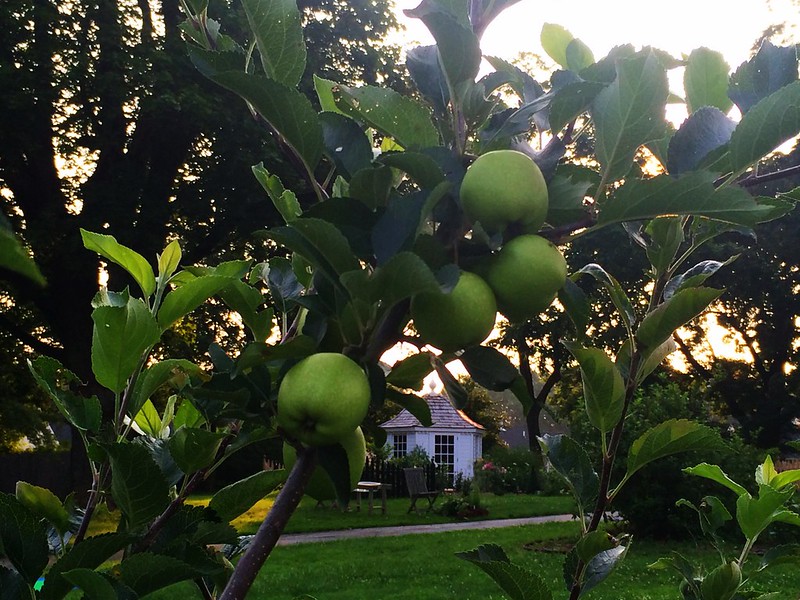
Because these tart green apples, growing on baby trees we planted ourselves, are the best I’ve ever tasted.
Apparently, the simple life is delicious.
Today, I’m sharing about eating well and eating with simplicity at Grace Table. I hope you’ll join me there.
Find my story (and our family’s recipe for simple, homemade yogurt) here.
by Christie Purifoy | Aug 5, 2015 | children, Family, Hope, motherhood, peace, Simplicity, Summer, Uncategorized
It is one thing to choose less for oneself. It is another thing entirely to make that same choice for your children.
We always want more for our children. More than we had. More than we are.
More.
What kind of parent holds their child’s small hand and walks in the direction of less?
*
*
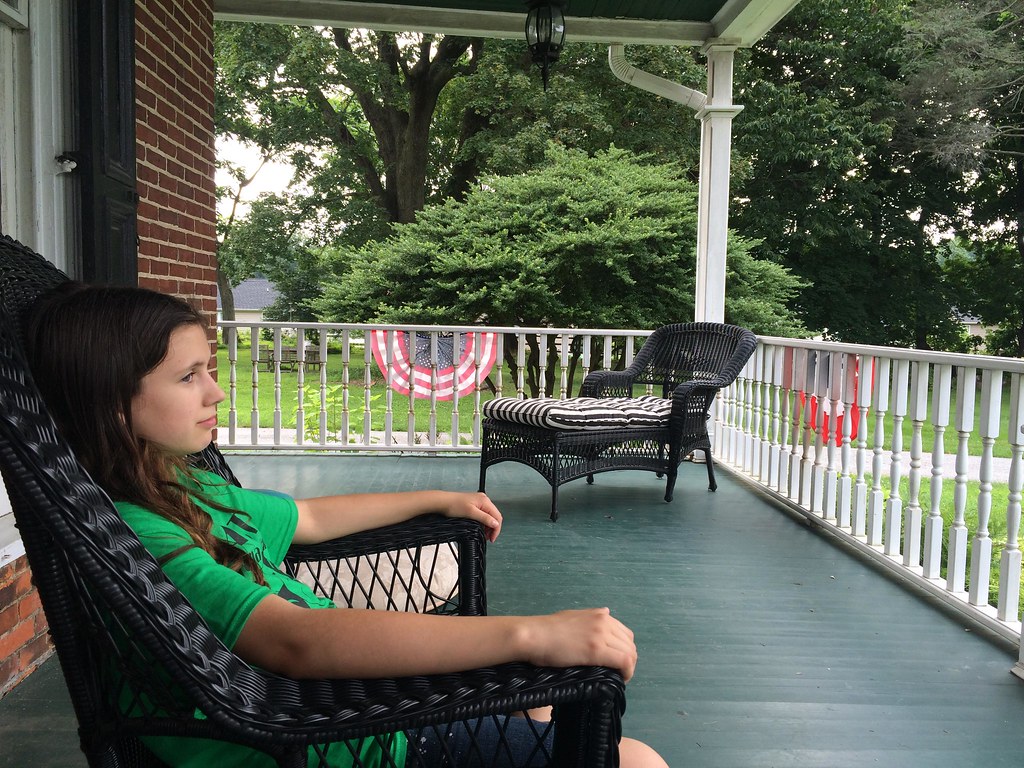
In some ways we have chosen less. We try (and fail, and try again) to choose less noise, less hurry, less stuff. We choose fewer activities, fewer commitments, fewer toys.
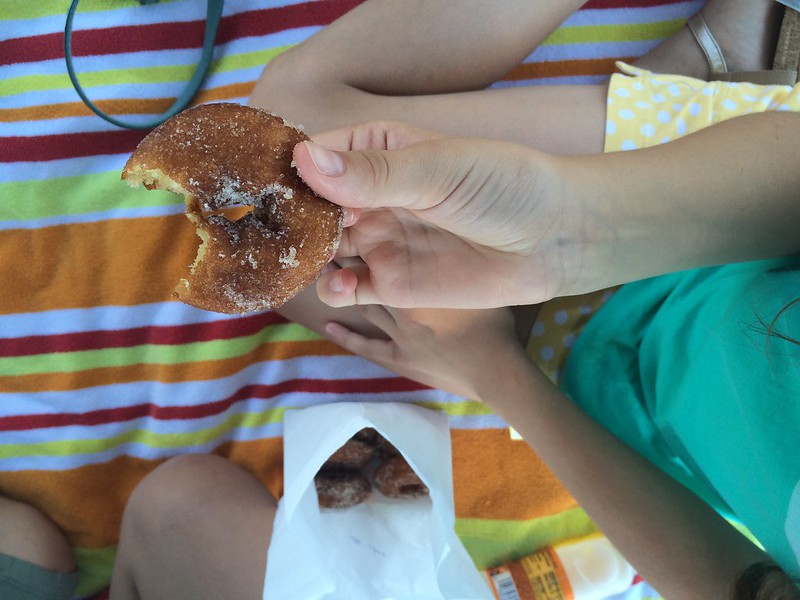
We limit sugar and entertainment (which, paradoxically, makes apple cider doughnuts sweeter and family movie night more fun).
But, mostly, and perhaps most significantly, less is chosen for us.
There is never enough money and there is never enough time for all that I want for my kids.
Yes, I want sewing lessons and music lessons and art lessons. Yes, I want a pool pass and movie tickets and restaurant meals. But I have four children and limited funds, and I say “no” a lot because “no” is the only thing I can say.
When I choose less for myself, I must trust in God’s provision. His protection. His presence. Yet I seem to believe that I am meant to be God for my children. As if I am the one who provides. As if I am the one who protects.
But my provision is faulty. My protection imperfect. Even when present I give myself with impatience rather than love.
Yet I would fill all those gaps with more. I would build a high wall – made of stuff and experiences and extra curricular activities – in order to launch my children into a future I cannot even begin to see.
It turns out that having less to give requires letting go.
Having let go, having placed my children in the hands of the only provider and protector, the one who has secured a future for each of them, I am freed of so much fear.
I am released to love them. Freed, even, to give good gifts without worrying that I must give every gift.
*
Living with less where our children are concerned might sound peaceful. It might sound idyllic. And, at times, it is.
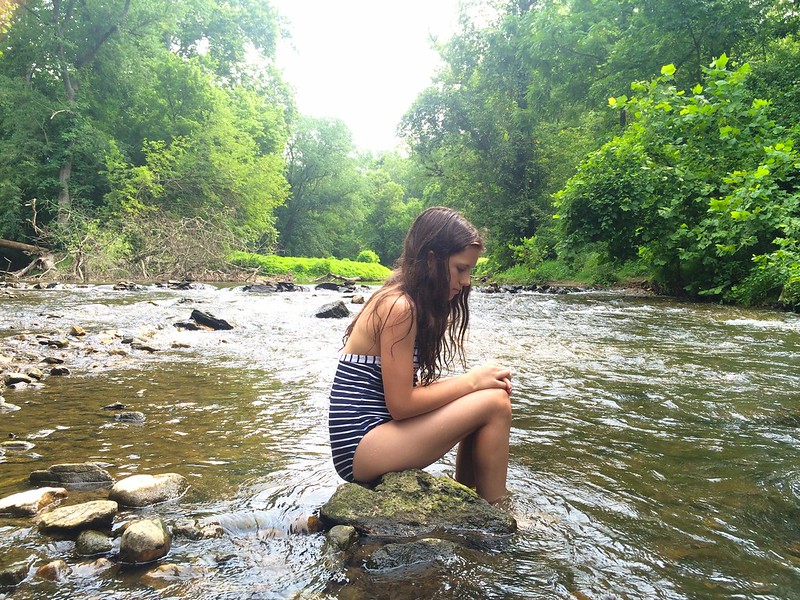
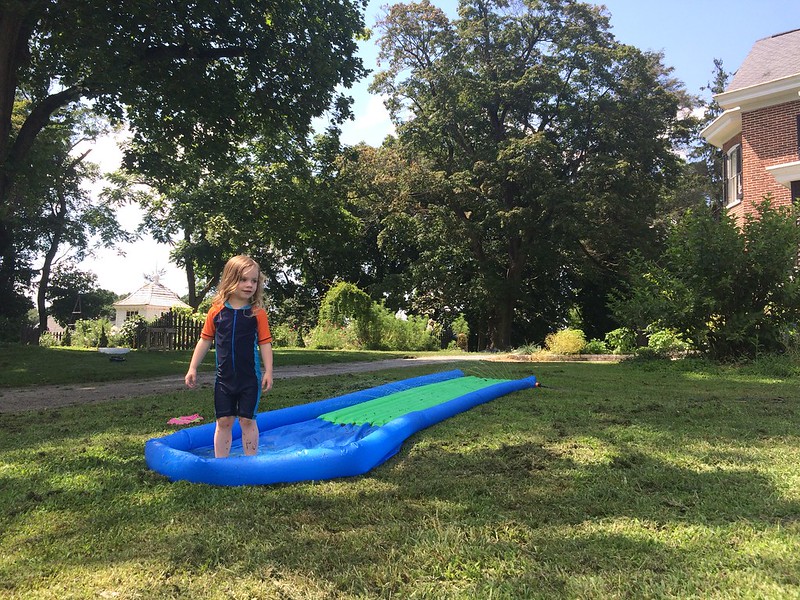
Without the pool pass, there is the creek and the slip ‘n slide. Because of severe food allergies, there is more made-from-scratch food enjoyed together around our own table.
But often it feels as if we are jagged pebbles tossed together in one of those toy rock tumblers.
We cannot escape one another (because there are fewer camps and activities to take us in different directions).
We cannot stop hurting each other (perhaps because we are bored, or because we are not distracted by a screen, or because we are human).
This, then, is my prayer, this is my hope: that through constraints and tears and a thousand petty squabbles, we are becoming gems.
*
*

