by Christie Purifoy | Nov 28, 2011 | Advent, Poetry, Seasons, Waiting
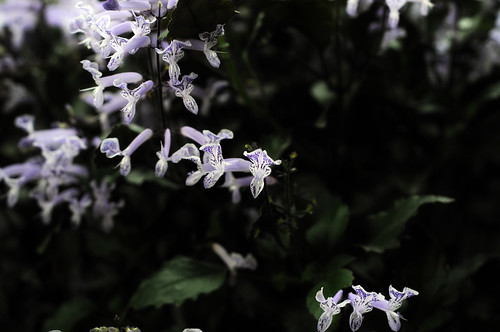
In keeping with my “poem-each-Monday” tradition, here is a poem for you on this first Monday of Advent.
These lines come from T. S. Eliot’s Four Quartets. They remind me of this Advent paradox: in a wintery season of death and darkness we perceive birth and new life. Midwinter spring, indeed.
from “Little Gidding”
Midwinter spring is its own season
Sempiternal though sodden towards sundown,
Suspended in time, between pole and tropic.
When the short day is brightest, with frost and fire,
The brief sun flames the ice, on pond and ditches,
In windless cold that is the heart’s heat,
Reflecting in a watery mirror
A glare that is blindness in the early afternoon.
And glow more intense than blaze of branch, or brazier,
Stirs the dumb spirit: no wind, but Pentecostal fire
In the dark time of the year. Between melting and freezing
The soul’s sap quivers. There is no earth smell
Or smell of living thing. This is the spring time
But not in time’s covenant. Now the hedgerow
Is blanched for an hour with transitory blossom
Of snow, a bloom more sudden
Than that of summer, neither budding nor fading,
Not in the scheme of generation.
Where is the summer, the unimaginable
Zero summer?
– T. S. Eliot
by Christie Purifoy | Nov 25, 2011 | Advent, Seasons

There’s a tension in our hearts and in our culture regarding Christmas.
On the one hand, we walk into a big-box store on October 31 and say, “Oh no. Already?” “Rudoph the Red-Nosed Reindeer” is playing over the loudspeakers, and even the Christmas-lovers amongst us feel resistant.
On the other hand, Halloween, Thanksgiving, and Christmas Eve rush us by in a flurry of to-do lists, shopping lists, and worries over family finances. By the time we find ourselves staring at the dirty dishes of our Christmas dinner, we remember, with surprise and regret, the “reason for the season.” (Sidenote: I solemnly swear that this is the last time I will repeat that annoying rhyme. No more, I promise.)
There is a beautiful middle ground: Advent. But, how to practice it outside of our churches? How to bridge the gap between lighting a candle on Sunday and the pressure to deliver two dozen holiday cupcakes to our child’s classroom on Monday?
To be honest, I’m not exactly sure. What I do know is that I don’t want to frame this season with Black Friday shopping and day-after-Christmas gift returns.
Beginning this Sunday and for the twenty-seven days that follow, I will be posting images (the photographer has been hard at work), reflections, stories and poetry in the hope of walking a middle way.
A way that moves between the too-much-too-soon and the over-and-done-in-a-blur. A way that steps between Sunday’s church service and Monday’s overwhelming to-do list. A way between the sugary sweetness of a televised Christmas movie and the disappointment of a trashbag filled with crumpled wrapping paper.
My intention is to create (and share) a quiet escape from consumerism and the Jingle Bells that only succeed in giving us a headache. Whether you adore Christmas and all of its trappings or you find the forced merriment of this season just too much to bear, you will, I hope, find a respite here.
It won’t be entirely comfortable, however.
I don’t want to consider Mary’s joy without remembering Mary’s pain. Christmas is a birth-day, after all, and I’ve long been convinced that birth and death are strange twins, one always shadowing the other. Our hope, as Christians, is that death does not triumph. One day, death itself will die, and the newness and joy of birth, no longer shadowed by sorrow, will be ours for eternity.
To keep up with each post this Advent season, visit the facebook page for There is a River and click “Like.” You can also receive each post delivered straight to your inbox by clicking here to subscribe by email.
by Christie Purifoy | Nov 16, 2011 | Florida, God's Love, Home, Seasons
My children make lists for Santa (yes, already), and I peer over their shoulders considering the annual dilemma. Which is better, to receive just what you have asked for or to be surprised with the lovely yet utterly unexpected? In other words, the castle Lego set he spied at the big-box store or the box of fairytale Lego figures that I think will inspire more creative play? The book she read at her friend’s house and loved, or the book she’s never heard of that I’m sure she’ll enjoy?
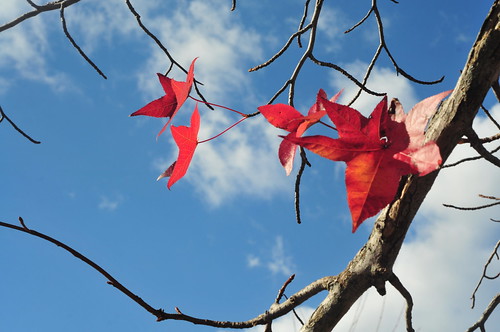
It’s a question I wrestle with particularly during this time of year. Autumn. A season when I long for predictable gifts: falling leaves, cold blue skies, and crisp apples hand-picked by my children.
But these are not the gifts given to me. Instead, as I write this, I can see from my window hot pink camellia blossoms and pale orange tangerines. God, don’t you know that I’m not really a hot-pink kind of girl? Can I exchange the showy flower for something a little more subtle, leaves crackling underfoot, perhaps?
It would be too easy to write that these, tropical flowers and citrus fruits, are the true gifts, and I just need to learn to appreciate them. Who am I to criticize the good things God gives? Who am I to find fault with a creation that is undeniably beautiful and sweet?
And yet … as good as tangerines may be, they do not feel like home to me. Some may taste a personal love note from God in the taste of a just-picked tangerine, but I taste nothing so personal. Good, yes, but not exactly personal.
Still, I can say thank you for the tangerine, and I can mean it. Thank you, God, for speaking a thousand different languages of beauty. Tropical. Desert. Aquatic. Forest. Prairie. Mountain. All good.
Thank you, too, for making me uniquely me. It may look as if I’m hard-to-please. I prefer to think that I am hungry for the love notes that are mine especially. It isn’t that I deserve them, or that I can’t live well without them. It’s simply that I’ve tasted those honey words before, and I trust that there is more, much more.
“… with honey from the rock I would satisfy you.” Psalm 81:16
I remember the sweet taste of things I love best and know that I have tasted God’s goodness. I could spend the rest of my life in the shadow of citrus trees and camellia shrubs, but every day would be drawing me closer to the source of all beauty. Every day would be bringing me towards the love that speaks my language. The love that knows my name.
by Christie Purifoy | Oct 28, 2011 | Chicago, Community, Faith, Florida, Seasons, Stories, Uncategorized
I believe in stories more than advice. In other words, I believe that a light is shined on our way forward, not when we finally hear the exact, right piece of advice, but when someone shares their story with us.
True stories contain all of the messy, untranslateable details of a life. Somehow, they also point us toward the maker of life.
I wish I could tell you how to live without the kind of community I described earlier this week. I wish I could tell you how to get it back. I even wish I could tell you that developing that kind of community in your own setting is the most important use of your time. But I can’t tell you these things.
If this whole Jesus-following-way-of-life is truly a relationship (as I’ve been hearing all my life) then we need to stop comparing our circumstances with everyone else’s. My marriage to Jonathan is fifteen-years-old (or fifteen-years-good), and it makes no sense for me to look at those still-awkward newlyweds and wonder why our lives are so different. Other than the fruits of the spirit, I’m not sure there are many things we can point to in order to say “that is a good Christian life” and “that is not.” At times Jesus walks us through joy and other times he walks us through trouble, but we can be confident in both that he has not and will not abandon us.
I lived in community for ten years, and it was good and it was painful, and I hope I haven’t said goodbye to that way of life forever. I could beat my head against my Bible wondering why my life no longer looks like that and how to get it back, or I can accept that when God empties our lives he also fills them up again. Not with the things we are missing, necessarily, but with himself.
In this world, we are wanderers. And that is not always a bad thing, not always a sin thing. We can wander quite a distance pursuing the good things of God’s kingdom on earth. Still, there’s little rest in wandering, and God knows we need rest. But where to find it?
God’s people “wandered over mountain and hill and forgot their own resting place” (Jeremiah 50:6).
Sometimes we need silence and emptiness, loneliness and barrenness in order to remember. We need winter.
The four walls of my suburban existence can feel like a prison, but they have been just the thing for feeling the heavy, holy pressure of God’s hand on me.
“You hem me in – behind and before; you have laid your hand upon me. Such knowledge is too wonderful for me, too lofty for me to attain.”
Psalm 139: 5-6
by Christie Purifoy | Oct 19, 2011 | Family, Grace, Vacation, Waiting
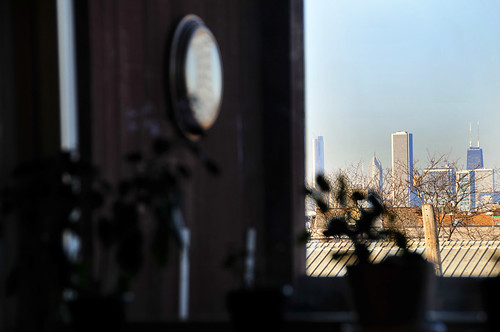
The firstborn and I will be back in Chicago soon. Four days with the people and places we both love best.
I feel an urge to write that we are going home, except that we aren’t.
It isn’t only that we sold our Chicago apartment 18 months ago. It isn’t because we have no family there. We do have many friends, and they were our family for ten good years. Rather, it is that I was once planted in Chicago. I’m not planted there any longer, though I haven’t yet laid down roots in any other place. I feel as if (actually, I hope as if) we are in between homes. (Florida, you are lovely, but I do not think you will ever be home.)
Perhaps I can write of Chicago from my daughter’s point of view. She was born there, after all, and has more of a claim to the place than I do. Here is the hospital where she took her first breath. A few blocks away is the converted hotel (with a tunnel where Al Capone once smuggled gin). It was her first home. Here is the museum that became her own private wonderland; fairy castle, baby chicks, and all. And there is pebble beach, our pebble beach, where we swam in summer and climbed ice dams in winter. Even now when I stand at some water’s edge and look to my left, I half expect to see the glittering wall of a downtown skyline. Perhaps she does, too.
In this life, home is always temporary. In Chicago, I learned that it is possible to feel at home in a temporary place. It is possible to breathe deeply and live thoroughly in a home that won’t always be home.
Possible, yes, but never a given. Or, perhaps I should say that it is exactly that: a given thing. A grace thing.
When God tells his exiled people in Jeremiah that he will bring them home one day, he also says: “Build houses and settle down; plant gardens and eat what they produce. Marry and have sons and daughters; find wives for your sons and give your daughters in marriage …” (Jeremiah 29:5-6). His gift to them is a home in exile. Permission to live, even as they wait.
“For the Lord your God is bringing you into a good land – a land with streams and pools of water, with springs flowing in the valleys and hills.”
(Deuteronomy 8:7)
