by Christie Purifoy | Dec 12, 2011 | Advent, Jesus, Poetry, Seasons
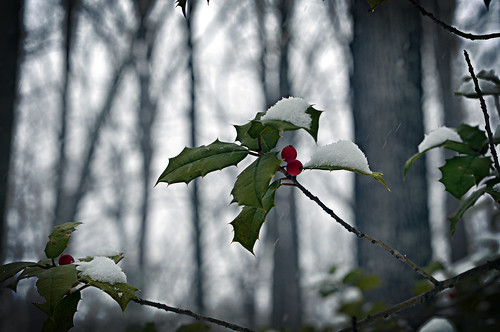
On this third Monday of Advent, a poem by one of my favorite writers, Louise Glück.
Winter can tempt us to despair. Cold, death, endless waiting. It is easy to stop believing in spring.
He did tell us how it would be. “Unless a kernel of wheat falls to the ground and dies,” he said. And he was right. The seeds of resurrection were planted in these dark days before Christmas.
Even our winters are redeemed.
Snowdrops
Do you know what I was, how I lived? You know
what despair is; then
winter should have meaning for you.
I did not expect to survive,
earth suppressing me. I didn’t expect
to waken again, to feel
in damp earth my body
able to respond again, remembering
after so long how to open again
in the cold light
of earliest spring –
afraid, yes, but among you again
crying yes risk joy
in the raw wind of the new world.
– Louise Glück
by Christie Purifoy | Dec 9, 2011 | Advent, Jesus, Waiting

The wintery cold has been sinking lower and lower on the weatherman’s map each night. Finally, the chill of that blue boundary line reaches down to embrace even Florida. The wind feels icy now, though the weatherman says that the still-ripening oranges on our backyard tree are safe.
For me, winter arrives just as this season of waiting begins to feel less than joyful. Not quite two weeks in, waiting feels more like real waiting, less like the thrilling performance of waiting I experience during Advent’s first week. In other words, it feels difficult. Wearying.
Even the words I write come less easily. Like carving them, slowly, out of ice.
The truth is, we spend so much of our lives waiting. For some of us, Advent seems to last for years, rather than days. We cry “Come, Lord, come!” And we keep on crying, caught somewhere in the perpetual coming but not yet here. Always Advent, never Christmas. Or, as Lewis wrote so memorably in The Lion, The Witch, and the Wardrobe, “Always winter and never Christmas; think of that!”
As a writer (well, honestly, as a human being!) it is tempting to set up permanent camp in the land of answers. Somehow, Advent gives me permission to ask questions without worrying whether or not I also have the answers. During Advent, I remember that it is good to voice our most pressing questions aloud and then sit in the quietness that follows.
“My soul faints with longing for your salvation, but I have put my hope in your word. My eyes fail, looking for your promise; I say, ‘When will you comfort me?’ … How long must your servant wait?”
(Psalm 119: 81, 84).
Perhaps because Advent prompts me to reflect on the heavy realities of darkness, silence, and waiting, it also pushes me past my usual zone of comfortable optimism, my I’m-okay-you’re-okay-we’re-all-okay assumption. Truthfully, many of us are not okay.
Some of us are hurting right now, and some of us are not, but during Advent, we join together to sing an ancient refrain. One that is so powerful, so universal, it echoes backwards and forwards in time, from the cross to David and back to us today: “But you, O Lord, be not far off; O my Strength, come quickly to help me” (Psalm 22: 19).
by Christie Purifoy | Dec 6, 2011 | Advent, Jesus, Scripture, Waiting
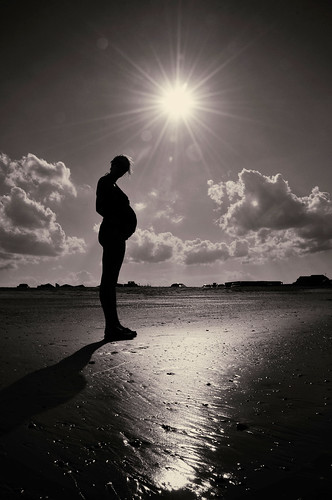
Living in a one-hundred-year-old apartment in the city, we took our baths in a narrow, enameled tub. Back then, I found the idea of a jetted, whirlpool bathtub very appealing. I live in suburbia now, and I have just such a tub. Alas, the reality is less exciting than the fantasy.
I think I tried using the jets once. As it turns out, I don’t much like soaking in bubbles with the sound of a motor in my ears. Now the jets only get turned on when the big kids want to terrify the two-year-old during bathtime.
Even worse, without an apartment-building-sized boiler, we don’t actually have enough hot water to fill this fancy whirlpool bath to the top. I’ve learned the hard way to open only the hot water tap and not to let it run past halfway, lest I find myself with a tub full of lukewarm water.
Still, I do occasionally indulge (minus the jets and with the tub less than full). Recently, my soak was disturbed by the shrieks of my arguing children. I sank down beneath the water hoping to block out the noise and was surprised by the enveloping silence.
Immediately, I was a kid again. At what other stage of life do you spend so much time going pruney beneath the bathwater or shutting out the sounds of Marco-Polo cries at the swimming pool?
I’d forgotten how loud this kind of watery silence actually is. There is a whole other world in this silence: the rush of blood, the wheeze of each breath. It is a noisy world within a world, though it is generally unnoticed, unheard.
I typically imagine silence to be a kind of emptiness. A kind of nothingness.
The gap between Old and New Testaments suggests that God was silent for many, many years before the birth of his son.
I wonder what this silence signified. Emptiness? Distance? Or, could it have been, a world within a world?
When the infant Jesus was presented at the Temple, there were two waiting for him. Two, prepared to recognize and honor him: Simeon and Anna.
In these two we glimpse the truth. God’s silence weighed so heavy on them that they knew he was neither distant nor inactive. They knew their Christ was coming.
One day, he arrives. The silence erupts. The angels sing.
On this day, many can see what had always been there unnoticed and unheard. Songs of joy and prayers of thanksgiving are lifted to the heavens over one tiny head.
But Simeon and Anna are not surprised. They have long been listening to the sound of blood pumping and breath rising. They know that God’s silence is anything but empty.
by Christie Purifoy | Dec 1, 2011 | Advent, Community, Home
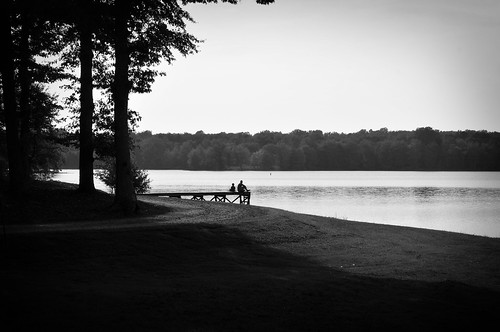
Perhaps the most difficult thing about darkness is that it tells us we are alone.
Darkness, it lies.
Long ago, the church began celebrating its new year during winter’s darkest days. This seems right and good, to me. It’s in times of darkness that we most need to be reminded that we do not wait alone.
Whether or not we’re able to attend church regularly, whether or not we’ve found a place to call our church “home,” and whether or not we truly feel at home there, we do not wait alone.
I believe that this is true, even on the days when it doesn’t feel true. Even on the days when I find community in the pages of a book written decades ago rather than in flesh-and-blood conversation.
In fact, waiting with others is the point of Christian community. One of my favorite writers, Henri Nouwen puts it well:
“The whole meaning of the Christian community lies in offering a space in which we wait for that which we have already seen. Christian community is the place where we keep the flame alive among us and take it seriously, so that it can grow and become stronger in us. In this way we can live with courage, trusting that there is a spiritual power in us that allows us to live in this world without being seduced constantly by despair, lostness, and darkness. That is how we dare to say that God is a God of love even when we see hatred all around us. … We say it together. We affirm it in one another. Waiting together, nurturing what has already begun, expecting its fulfillment – that is the meaning of marriage, friendship, community, and the Christian life.” (from “A Spirituality of Waiting,” as written in my Book of Quotations)
Sometimes I feel lost in the darkness, whether it is a global darkness (famine, crimes against children, poverty) or the darkness that descends when I forget that life is not meant to be as complicated as I sometimes make it (with my buying, my rushing, my worrying).
Advent reminds me to slow down, to light my candle, to find comfort in the many candles lit around me, and to know, again, that if the only thing I do most days is wait patiently, with thanksgiving, then I have lived well.
“The Photographer,” otherwise known as Kelli Campbell, invites each of you to contribute your own Advent images to the Advent Flickr group. If you are not a photographer, we hope you will still join both of us there to watch as the season quietly unfolds in pictures.
by Christie Purifoy | Nov 30, 2011 | Advent, Faith, God's promises, Jesus, Scripture, Waiting

The Bible is an often cacophonous, centuries-long conversation with God about the things of God, but some of its most powerful voices have spoken to us out of darkness.
There is Job, who understood that God himself had “blocked” his way and “shrouded” his paths “in darkness” (Job 19:8).
There is Jeremiah, lifelong witness to unimaginable chaos, suffering, and loss.
Both stared into the darkness of their lives, darkness willed by the God they faithfully served, and saw … something good. But also something so mysterious they could not name it.
God spoke to Job from the darkness of a storm, and Job received wisdom, like a spark of light. “I know that you can do all things; no plan of yours can be thwarted,” Job responded. “Surely I spoke of things I did not understand, things too wonderful for me to know” (Job 42: 2,3).
With the sound of weeping in his ears, Jeremiah received a glorious yet inexplicable vision: “The Lord will create a new thing on earth – a woman will surround a man” (Jeremiah 31: 22).
In darkness, they were given Light.
And we who live on the other side of the mystery, we who are citizens of a kingdom Job and Jeremiah could only dream of, who are we to despair? Who are we to lose hope?
We, too, are promise-bearers. For, we know: He will come again.
“And we have the word of the prophets made more certain, and you will do well to pay attention to it, as to a light shining in a dark place, until the day dawns and the morning star rises in your hearts.”
2 Peter 1:19
To keep up with each post this Advent season, visit the facebook page for There is a River and click “Like.” You can also receive each post delivered straight to your inbox by clicking here to subscribe by email.
