by Christie Purifoy | Jun 14, 2014 | Books, Dreams, Florida, Gardening, Home, Uncategorized
I’ve heard it said that one’s priorities are best observed through the lens of a checkbook register (or credit card statement or budget spreadsheet). Where your money goes, there goes your heart.
I don’t actually speak the language of priorities or goals or budgets (and the spreadsheets they tend to associate with), but I know just a bit about dreams. I know you’ll see my dreams most clearly on my bookshelves.
There are dreams discarded (Marxism and Literature or Silver Poets of the Sixteenth Century) and dreams realized (Taking Charge of Your Fertility). There are dreams ongoing (Homemade Living: Canning & Preserving with Ashley English) and dreams I’m content only to dream (The Palace of the Snow Queen: Winter Travels in Lapland).
Lining up one’s deepest desires for anyone to see (and open and browse and borrow), is a practice with the potential for great embarrassment. I can remember the moment with a graduate school friend cast a quizzical eye over my small collection of children’s books. True, I had no children at the time, but I am currently purchasing books with grandchildren in mind so is it any wonder I was buying children’s books before I had children of my own?
I didn’t have large number of book-browsing friends during our two years in Florida, but, if I had, they would have wondered about the following titles. You see, I was living a typical suburban life in a typical suburban split-level, but I had cast my book-buying dollars out upon the waters and I prayed they’d bring me bread.
I prayed they’d bring me home.
(Find all my book recommendations here as well as more information about my use of affiliate links.)
Our Florida house was about fifteen years old and in good condition, but I bought this book for my husband on his birthday: Renovating Old Houses: Bringing New Life to Vintage Homes (For Pros By Pros) by George Nash. We had no idea when we would be leaving Florida or where we’d go once we did, but this book said everything about our hopes and dreams.
If you live in an old house or want to learn more about old houses, this is your fascinating, informative, go-to guide. Browse it and dream (also, if you are not sure if an old house is for you, reading this book can be quite clarifying. Because, oh my word, so much can go wrong and the fix is rarely simple).
While Jonathan read about repairing plaster and “elegant alternatives to tearing into walls,” I was reading this: The Backyard Homestead: Produce all the food you need on just a quarter acre! by Carleen Madigan.
Now, I can tell you right now, I will never produce all the food I need even on my (nearly) five acres. I am just not that industrious. Also, I like to read far too much. However, this books is fun, inspiring, and (almost) makes me believe that I could. If I really wanted to. Currently, I’m reading the chapters on rabbits and ducks, so … stay tuned. (Also – to clarify – I have no plans to eat my own rabbits or ducks. The rabbits would be to fertilize the garden, and the ducks would be … well, to look cute on a pond, I suppose.)
Lastly, this is the book I read and loved before I even knew it was a book about my dream. Sometimes, we read to discover our dreams.
Merry Hall (Beverley Nichols Trilogy Book 1) by Beverley Nichols is a farcical, funny, exaggerated romp of a memoir from 1951. In it, Nichols describes the restoration of an English Georgian house and garden. This is a book with a wicked sense of humor and a golden heart. I read it regularly.
So I had to buy a house in the country. Buy, not rent. It is ridiculous to rent things if you are a gardener; it fidgets you. Even a very long lease is upsetting. I once owned a house with a 999 years lease, and it gave me an unbearable sense of being a sort of week-end guest; it hardly seemed worth while planting the hyacinths.
by Christie Purifoy | Jun 10, 2014 | Desire, Florida, Gardening, God, motherhood, Pennsylvania, Uncategorized
Step One. Read books. Lots of them.
People will tell you to put down your books and join the real world, for heaven’s sake. They will remind you that you live in a university dorm or an apartment reached by only a sliver of light or a temporary rental and do not even think of wasting time or money on land you do not own, but you would do well to smile and say nothing. Go on. Read. Read your books and dream your dreams. You are storing up treasures in heaven.
Step Two. Pay attention to desire.
When winter wears on and you cannot stand it one more day, lean in to that ache. Accept that the two things you want most in life, a garden and a baby, may never be yours. But take heart. The moment you break under the weight of longing is the moment you wash out an old yogurt container and fill it with dirt and a few grass seeds. When the grass seeds sprout you will run your hand over cool greenness while icy snow tap-taps against the window. The smell of a few blades of grass snipped with kitchen scissors is the smell of hope.
Step Three. Try and fail.
When a friend invites you to share a plot in the neighborhood community garden, say yes. Say yes, even though you don’t actually know anything about growing vegetables. Commit to reading more books with titles like Practical Kitchen Gardens and fewer books with watercolor illustrations and titles like Roses I Have Loved. Say yes even though you are hugely pregnant and you cannot exactly bend over. When your firstborn, your longed-for baby girl, arrives that September, your friend will bring you pasta made with tomatoes and basil you did little to tend. For the rest of your days that combination of flavors will recall your daughter’s sleepy infant smile.
Step Four. Live without.
Trade your community garden plot in a northern city for a Florida backyard dominated by concrete pavers and chlorinated water. Watch your potted flowers shrivel and die beneath the showery splashes of three children. Look at those children and remember that God does sometimes give us the desires of our hearts. Pray for the garden of your dreams. Pray for those impractical, impossible roses.
Step Five. Dig.
When you come home to your own bit of earth at last, dig. Scatter your seeds widely and see what takes root. Do not despair when the groundhog churns holes, rabbits nibble tulips, and two chickens vanish in the night. Despite all that you do not possess (knowledge, time, energy, even, some days, vision), spring will come and seeds will grow. Desire is sometimes deep buried. Rock the baby girl, the fourth-born child you never knew you always wanted, while the snow tap-taps against the window.
Step Six. Rest.
After long days of ripping invasive vines and clearing weed trees, sit still in the shady spot you’ve made. Sit still long enough to notice the smell of memory. It is the almost-forgotten smell of your father’s roses, the roses your mother sent you out to cut just before guests arrived for dinner. Follow that smell around the curve of the just-cleared fence until you find it. A wild rambler, like but not like all the wild roses growing on the edges of this place. This one is not white but blush pink. This one does not sit like a stubborn tangle of thorns, but drapes gracefully across the ruined stones of the old barn. This one does not give out a whisper of spiciness but, rather, smells like rose-with-a-capital-R. It smells like the real deal.
Ask yourself if a garden is a thing made by human hands or a free gift of God.
Wonder, for the first time, if God’s glory can be cultivated. Perhaps it is a gift to be tended a thousand different ways in every place and every season.
For all your days.
by Christie Purifoy | Jun 7, 2014 | Amish, Books, children, Gardening, Uncategorized
I sometimes worry that I have run out of books to recommend. Surely I’ve shown you every single book worth its shelf space in this old farmhouse?
But then I glance at my lap (there is almost always a book in my lap), and I realize that some of the books I love the most, some of the books I am so used to seeing, always at hand, are books I’ve never mentioned in this space.
Over the next few Saturdays, I will tell you about those books. They are the books I trip over on my way to the bathroom in the middle of the night. They are the books I find splayed and dusty underneath my little boy’s bed. Alas, they are the books most likely to sport ink or crayon marks from the budding baby-girl artiste.
They are rarely new or hip or trendy. I probably haven’t bothered to review them on Goodreads. But they are my constant companions.
And I hope you learn to love them, too.
(P.S. These posts contain affiliate links. Find all my book recommendations here.)
Quite a few of these special books are illustrated by Tasha Tudor. I have recommended one of her books before. It may be my favorite picture book I never read as a child. Recently, I pulled our copy of 1 Is One down from the shelf. I’m fairly certain I bought this book as a first birthday gift for my oldest (which means it’s been on our shelves for nearly a decade).
This is a counting book (1 is one duckling swimming in a dish, 2 is two sisters making a wish …), and every child deserves to learn their numbers by counting twinkling stars (18!) and baby birds (12!). It features Tasha’s signature watercolors, old-fashioned settings, and naturalistic details. I am pleased as punch to report that one-year-old Elsa now adores it. We never read it unless we read it three times through.
Tasha Tudor was a prolific illustrator, and her books are fairly easy to find at used bookstores and thrift shops. I still remember the pleasure of finding her edition of Robert Louis Stevenson’s A Child’s Garden of Verses at the Printer’s Row Book Fair in Chicago.
Though she published her first picture book in the 1930s, Tasha and her books seem to come from a much earlier time. Apparently, she believed, only half-jokingly, that after dying she would return to her home in the 1830s, a strange sentiment I’m afraid I can relate with all too well. There is still a small part of my mind that believes, against my better judgement, that life would be so much better if I had twenty-two tiny buttons marching up my boots and was skilled with a button-hook (a romanticism inherited by my daughter who sighs deeply and says she wishes she were Amish every time she spies a little girl wrapped in bonnet and shawl).
These illustrations are like miniature worlds, and they are worlds I long to recreate. This may be why I spend so much time with two books written for adults: The Private World of Tasha Tudor by Tasha Tudor and Tasha Tudor’s Garden
 by Tovah Martin.
These large photography books take you inside the beautiful eddy in time that Tasha created at her Vermont farmhouse. Full of antique clothes and toys and cottage-garden flowers, these books prove that Tasha created her paintings from life. She dreamed it. She cultivated it. And then she painted it.
I do not actually own either of these books, but I have checked them out of my local library so many times that I really should buy both (but I might wait a few weeks since my birthday is June 23, ahem).
I especially love Tasha Tudor’s Garden. The writing is a bit too hero-worshipful, but I could live in the pictures.
Tasha’s ideas about plants are quirky and idiosyncratic, and I find that they give me permission to garden just as personally. I happen to love African violets, but their velvety leaves make Tasha shudder. I’ve always been skeptical of daylilies, so it’s a relief to read that Tasha finds them “raggedy.” And I have shamelessly copied the formula of her peony beds by planting a mass of peonies with lily bulbs to bloom after and edging the whole affair with purple verbena.
In researching this post, I discovered that Tasha illustrated a picture-book version of Psalm 23 (The Lord Is My Shepherd: The Twenty-third Psalm ) and the Lord’s Prayer, or “Our Father” (Give Us This Day
 ). It is possible that I purchased copies of each before finishing this post.
Life isn’t long enough to do all you could accomplish. And what a privilege even to be alive. In spite of all the pollutions and horrors, how beautiful this world is. Supposing you only saw the stars once every year. Think what you would think. The wonder of it!”
by Christie Purifoy | Jun 5, 2014 | Church, Community, Florida, God's promises, Pregnancy, Uncategorized, Waiting
I wrote a version of this post almost exactly two years ago. In early June of 2012, I had been wandering in a Florida wilderness for two years. I was tired of waiting. Tired of rootless living. I was six months pregnant and desperate to leave Florida. I wanted my baby girl to be born wherever home might be. But I had no idea where home might be.
Six weeks after our arrival in Pennsylvania, Elsa Spring was born. Today, that baby girl is rounding the curve on two years old. And we have come home. Every day I breathe “thank you.”
But it is Pentecost again, and I have realized something. We are lost and we are found, we are lost and we are found again, but we never truly leave this song behind. This beautiful ache of a song.
***
Pentecost Sunday is approaching, and I feel stuck in that room. Waiting. Asking this question: how did they survive the long, empty days between Jesus leaving and the Comforter coming?
How did they endure being lifted up by the joy of a promise believed only to drop again into the discouragement of yet another not yet?
And why the gap? Why did they have to wait at all?
We do know that the wait moved them to gather together. I imagine the promise was easier to believe when they could see the hope in one another’s faces. When they could pass around their Jesus stories, like a platter of bread and fish. Stories multiplied into hope. And faith.
And I imagine they worshipped. Sang and prayed.
Was this what it was all for? Was their worship the reason?
Did God wait, strain with holding himself back, because he wanted to hear their songs?
“Call to me,” he had once told them. “And I will answer you and tell you great and unsearchable things you do not know” (Jeremiah 33:3).
Call. My husband tells me this word suggests something organized, something formal. Something created. Like a song. Like a poem. Something more than careless words tossed at the sky.
Maybe you don’t sing songs. Maybe you don’t write poems. But maybe you journal. Maybe you sketch. Maybe you take photographs or bake bread for the neighbors. Maybe you orchestrate elaborate finger-painted messes with the three-year-olds at church and maybe, just maybe, that is a call? A song? A cry of longing for more of God?
And maybe that is the point of it all. The point of waiting. The point of living. To add our call to the many others until a crescendo of sound and beauty and worship rises to heaven and all is unleashed.
Then, just as it was that Pentecost when God’s church was born, wind and fire reveal the great unknowns.
What have we all been waiting for? To hear the mysteries of God’s glory in a language we can comprehend.
Those unsearchable glories we never even knew to seek.
by Christie Purifoy | May 31, 2014 | Books, Gardening, prayer, Spring, Uncategorized
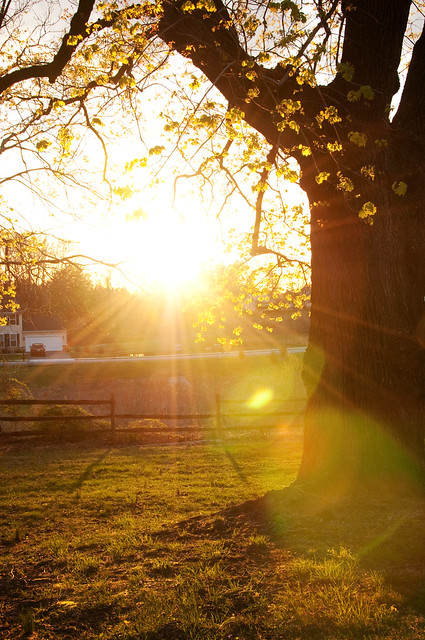
Let’s be honest. My springtime reading looks less like reading and more like one hour spent weeding the perfect reading spot under the sour cherry tree and then fifteen minutes given to sitting under that tree watching the peonies dance and catching my book as it just slips from my lap.
So, not a great deal of actual reading.
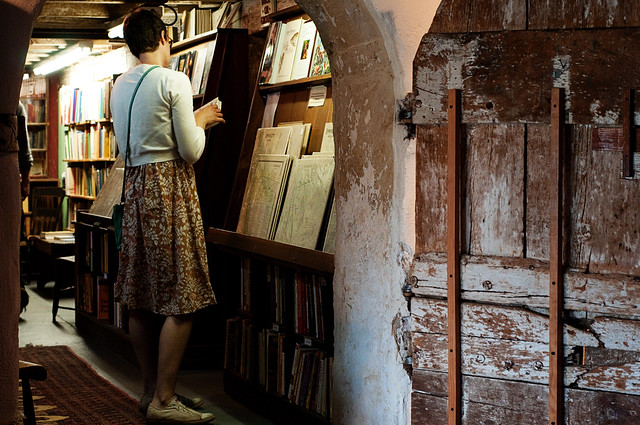
But books are food for me and even in springtime I manage to take a few bites here and there. Lately, these quick bites have been all about the letter P: pruning, poetry, and prayer.
(You can find more information about my occasional Saturday series of book recommendations here. These posts do include affiliate links. Thank you for clicking and buying. Thank you for reading along. And thank you for sharing your own recommendations in the comments!)
***
***
I learned about Lee Reich’s Pruning Book, The: Completely Revised and Updated by listening to a radio call-in gardening show. Since then I’ve seen his name everywhere (well, everywhere you might expect to find mention of a pruning expert). This is an award-winning, highly-praised reference book. It is also beautifully made, comprehensive, and a joy to browse. Best of all? It makes pruning seem easy.
If you’ve ever wondered what to do with that old apple tree (or the apple whip you recently planted), or how to keep your tomatoes from sprawling into a disease-ridden mess, or how to keep your clematis vine blooming then you really should own this book. I first checked out a copy from the library, but it only took me about five minutes of flipping pages to realize I needed this one on my shelf.
***
If anyone could turn pruning into poetry that someone would be Verlyn Klinkenborg. His eloquent observations of life on his New York farm are deservedly famous. The Rural Life is nature writing as poetry.
You might think you don’t have much interest in nature or country living (and I should mention that just the words nature documentary put me straight to sleep), but if you appreciate language and metaphor, if you want to learn how to see to the depths of what is always right in front of our eyes, then you should be reading Klinkenborg.
I haven’t yet read his follow-up collection More Scenes from the Rural Life but simply holding the book makes me happy. Published by Princeton Architectural Press, the jacket design and interior illustrations are perfect. Beautifully old-fashioned but also minimalist and modern. Choose this gorgeous hardcover for yourself and as a gift. It’s that kind of book.
Everyone reaches for fullness in summer, but the fullness that most of us know best belongs to the memory of childhood. What was it that made summer days so long back then and made the future seem so distant? What was the thing we knew or didn’t know? – Verlyn Klinkenborg
***
Phyllis Tickle’s prayer books are year-round favorites of mine, but I love them especially during the busyness of spring and summer. I don’t pray the hours (morning, noon, and night) regularly, but when I only have a few minutes and don’t even know where to begin with prayer or Bible-reading I almost always find myself reading the morning office in Prayers for Springtime.
The Divine Hours (Volume Three): Prayers for Springtime: A Manual for Prayer (Tickle, Phyllis) and The Divine Hours (Volume One): Prayers for Summertime: A Manual for Prayer
 are part of a three-volume set. Whether or not you are familiar with the Benedictine practice of fixed-hour prayer, I think you will find Tickle’s contemporary selections of prayers, psalms, and Scriptures easy to use either regularly or (like me) irregularly as the need or mood strikes.
I sometimes think that fifteen minutes spent sitting under the sour cherry tree observing the birds and noticing the breeze is a form of prayer. Reading a bit from this book as I sit only makes it more official.
And you? Which books are you reading on the patio as the sun begins to set?

by Christie Purifoy | May 28, 2014 | Amish, Books, children, Family, motherhood, Pennsylvania, Seasons, Spring, Uncategorized
… for history is a pattern / Of timeless moments.
– T. S. Eliot, Four Quartets
The kids and I are reading the Little House books. One chapter each night. We began with Farmer Boy and a fire in the old stone hearth. Now we are in the big woods of Wisconsin, and there is birdsong through our open window.
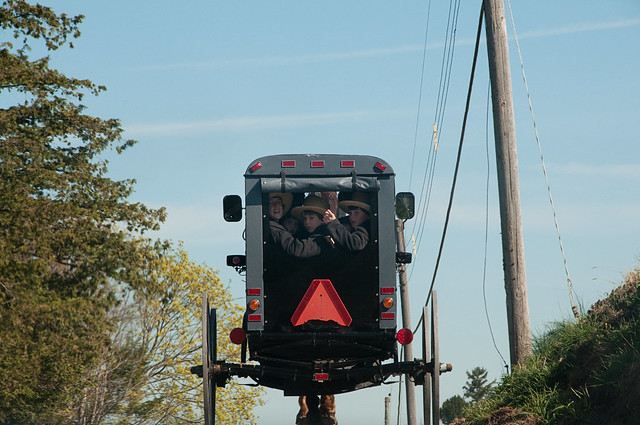
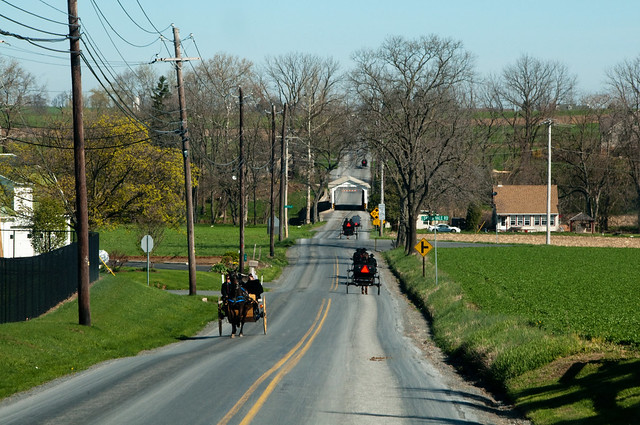
It is also haying time in the fields west of this house. When we drive in that direction, to buy chicken feed from the feed and lumber store or flats of annuals from a greenhouse, we watch teams of muscled, shaggy horses at work in every field. They look as if they have been plowing the same red-clay soil for two hundred years. Day in, day out.
Sometimes there is a young boy holding the reins. He wears suspenders and a straw hat, and together we wriggle to keep from pointing and shout “Look! Farmer Boy!”
***
***
In this place, when the breeze carries the bracing smell of hay, just-cut, I am able to understand something about time that is normally hidden from me.
Time is not a line carrying us always farther from the past. Time is not a thread, and we are not simply biding it until the day ours is cut.
These days, in Lancaster County, I can see that time is a spring. Past and present and future bubble up together, and the sound is like music. Like the clip-clop of horses’ hooves. Like birdsong through an open window.
But my children appear to be lines racing, racing away from me. Willowy is the word that comes to mind when I observe my firstborn girl. For nearly two years, I’ve seen her baby face when I look at my youngest, my second girl, but that face is now lost. Elsa Spring has grown into herself. There is a family resemblance, yes, but more and more she looks only like Elsa. Something has been shed, and the lines of her eyes and chin are now hers alone. No longer her older sister’s.
And thus, two baby girls vanish from every place but memory.
***
I don’t really know if I am living in a country of lost things or a kingdom of restoration and everything made new. I look around, I read the news, and I find both. Hopelessly jumbled.
We lose babies and grandmothers. We lose marriages and homes. We lose our younger selves and friendships and health and peace between nations and on and on forever, it seems.
But every new season is also a return, and the month of May, this pivot between spring and summer, reminds me that it is possible to root myself in that bubbling spring. To live sure of what I cannot always see: that time is not linear but rhythmic. It is a song where every note returns and every note is new.
And this is the living water that sustains me. This is the living water I hold out. To my racing children. To my thirsty neighbor.
Maybe eternity begins when I read a favorite story for the third, fourth, fifth time.
Maybe eternity begins here. Now.
***
***
