by Christie Purifoy | Jul 23, 2014 | children, Gardening, God, motherhood, Scripture, Seasons, Summer, Uncategorized
My youngest, not yet two years old, has begun to say her own name. She has been speaking of other things for quite some time. Important words like “shoe” and “mine” and “chicken.” But apparently one can live perfectly well for many, many months without feeling a pressing need to pronounce your own name.
But if I ask … if I say, “Elsa, where is Elsa?” then she will tap her own chest and say “Elsuh-suh.”
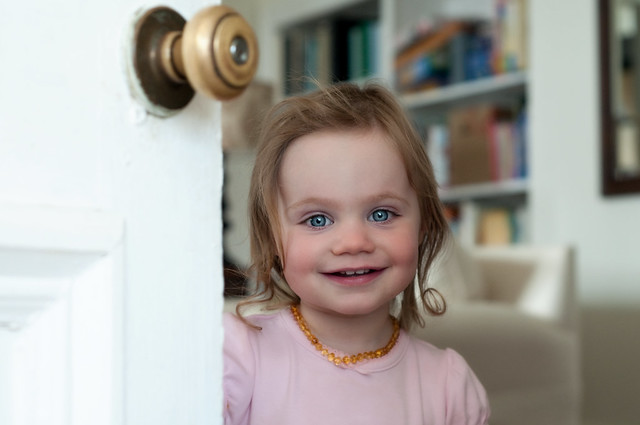
She is my fourth child. This means I am under no illusions. I know that even if I write the memory down in her baby book, even if I manage to capture phonetically the doubled sounds of her pronunciation, I will forget. A day will come, sooner than I imagine, when I will find myself unable to recall the particular cadence of my daughter, naming herself at not-quite-two.
This season, this brief summer at home with my children, seems built entirely of such small things. In five years, I doubt I will be able to recall anything of these weeks.
Scripture speaks repeatedly of a “fountain of life.” I am a mother, and I tend a garden. Raising babies and flowers, I have learned to seek that living, renewing water in things that would seem to be the most fleeting. The most temporary. I have learned that the most important things in life are only rarely weighty enough to settle permanently in our memories.
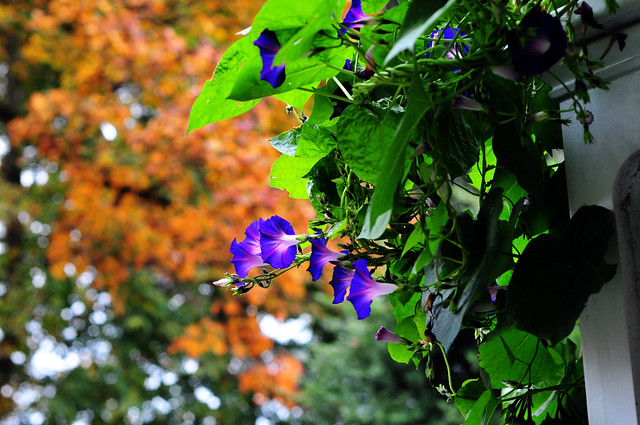
For instance, just when I had entirely forgotten them, the morning glories have returned. Green leaves and deep purple flowers are twining themselves around the spindles of the front porch. Each fall, the vines die. They die utterly, to the tips of their roots, but before the arrival of the first killing freeze, they scatter their seeds.
In early summer, those seeds sprout and stretch and reach for the same spindles of the same front porch. They are the most ephemeral of flowers. Yet, somehow, they are the most enduring. They are, in their way, eternal.
For years I sought eternity by keeping my arms wrapped tightly around solid things. Permanent things. Things known and understood. Things that were sure to last. These were the things I believed had eternal significance.
But years of mothering and years of gardening have taught me to look elsewhere. These years have taught me that I touch the far horizon of forever when I step forward into emptiness, seeking, like a twirling vine, for things unseen. Unknown. Imperfectly understood.
God our maker has “set eternity in the human heart” (Ecclesiastes 3:11). We reach for the far horizon of forever like those vines reaching for the home, the source, they have never actually touched.
It may be that eternity is the home of so many things I have forgotten or misplaced or failed even to notice.
Certainly, eternity is God’s home. The throne room of the One who counts hairs. Bottles tears. Holds sparrows as they fall.
by Christie Purifoy | Jul 14, 2014 | children, Family, motherhood, Scripture, Summer, Uncategorized
In ancient times, the sea was the home of Chaos.
I could write that the sea symbolized chaos, but that word symbol is too easily brushed aside. As if symbols are merely tame bits of literary frippery with no power to unleash the deepest truths of our lives. Like opening the floodgates.
To the sea.
For these ancients, the sea was unfathomable. The sea bedded monsters. The sea could surge forth, at any time, and swallow up land, homes, lives.
Death, darkness, oblivion, terror. This was the sea.

And if you love beach vacations and find it hard to understand how the play of light on dancing waves could ever have been a harbinger of doom, then you will read the twenty-first chapter of the book of Revelation with surprise. And disappointment.
Then I saw “a new heaven and a new earth,” for the first heaven and the first earth had passed away, and there was no longer any sea. (Revelation 21:1)
But if you are like me, you will sigh with longing.
If you are like me, the mere act of sifting through an overfull kitchen drawer for a thermometer hiding somewhere in its depths while the milk you had intended to turn into yogurt boils away on the stove is all it takes for Chaos to begin seeping in.
A moment later and the failed yogurt, the waste of good milk, the scorched pot and the murky kitchen drawer have caught you in their surge. One glance around and you are lost in an ocean of legos and marbles and bits of paper from the morning’s craft and a sticky puddle you cannot explain.
Now you are drowning because it is so humid and your kitchen is a furnace and the baby, the beautiful curly-haired baby, abandoned the slip’n slide after five minutes and is now tracking wet grass and clumps of mud from kitchen to dining room to entryway rug.
One day there will be no sea.
Yes, the sea is a symbol and my kitchen drawer is a symbol and whoever told you a symbol isn’t real? Whoever said it was not possible to drown in symbolic waters?
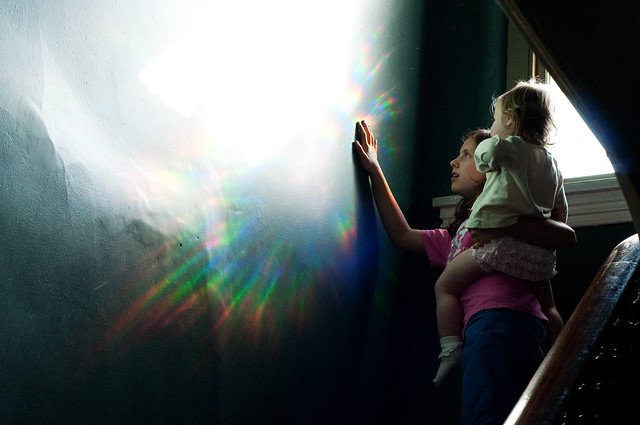
But if it is possible to drown, it must also be possible to swim. It must also be possible to open your eyes and observe the play of light on dancing waves.
To stand before the unknown and the unmanageable and discover, not the hiding place of terror, but the birthplace of beauty.
***
by Christie Purifoy | Jul 12, 2014 | children, Community, Family, God, Uncategorized, Vacation
I’ve written about my extended family before.
These are almost always stories of absence. The cousins we have yet to meet. The grandparents we too rarely hold. Family, for us, is always too much or too little.
I am a foreigner to my own family,
a stranger to my own mother’s children.
(Psalm 69:8).
Our lives are stretched across too many time zones. My father has always said it is a good thing our country is not any larger because then we would only live farther apart. But with one sister’s imminent move to Hawaii, our country has suddenly grown much larger. And we will, indeed, live farther apart.
But summer days are reunion days, and through some miracle of spirit and frequent flier miles, we came together.
They say absence makes the heart grow fonder, and I have found this to be true. But now I know that absence grows other good fruit. Because the holes in our lives where family might be do not stay empty. These gaps and fissures turn out to be fertile ground for things like hospitality and community. Friendship and adventure. Without family to lean on, we become needy, but these needs are always met.
We come together and discover that we do not have less but so much more. We have family, and we have friends. We have family, and we have neighbors. We have family, and we have our communities. We have family, and we have life in abundance.
We have more.
May your deeds be shown to your servants,
your splendor to their children.
(Psalm 90:16)

by Christie Purifoy | Jun 30, 2014 | Gardening, grief, Summer, Uncategorized
We have quite successfully banished grief from our lives.
Dying proceeds in hospitals. It leaves no lingering trace in the pristine spaces of our homes.
Death is sometimes marked in an old-fashioned way. We do occasionally carve the same old stones. Though the ancient words requiescat in pace have been abbreviated and largely limited to Halloween décor.
But then we follow the trail of job offers and changes of scene until the grave stones that matter, the ones we still see with our mind’s eye, lie miles away. We cannot bring flowers. We cannot bring our children and tell them stories of the one we knew and loved.
But somehow grief still finds us. It winds its way in on unexpected paths. And in unexpected places.
For instance, the garden.
An old tree falls, and we are surprised, embarrassed even, by our tears.
We learn practical gardening techniques, and give them misleadingly neutral names like layered gardening or four seasons gardening. Now, we cheerfully interplant our tulips and daffodils with shallow-rooted perennials. See! What fun! You and I need no longer be assaulted by the dying bulb foliage. Death is always camouflaged by the next blooming plant.
Always there is the next thing. We need never look back. Daffodils! Then lilac! Then azaleas! Then roses! Now hydrangeas! And daylilies! And late-summer dahlias!
There is no need to mourn the passing of the daffodils.
But if the gaps still find you … If the empty space in your flowerbed haunts your sleep even in the midst of summer’s blooming bounty … well, the horticulturists can help.
They have tinkered and fiddled (plotted and potted), and now you can purchase the solution to your sorrow.
Every plant now has its reblooming variety.
Reblooming lilac. Reblooming azaleas. Reblooming roses. Reblooming daylilies.
Dry your eyes. Take up your nursery catalog. Look for words like boomerang and knock-out.
Because even in the garden we need never say goodbye. We need never sit in quietness waiting for the return of every beautiful thing we have loved and lost.
*
*
by Christie Purifoy | Jun 25, 2014 | children, Family, Gardening, Home, motherhood, Pennsylvania, river, Seasons, Summer, Uncategorized
It is summer.
Like the season itself, there is no ambiguity in this statement. It is a fact as plain and self-evident as the sun that now rises straight up to the top of the sky or the green tomatoes waiting on their vines.
In one of those rare congruences, the academic calendar and the moon calendar and every kind of calendar we might consult in this house agree that it is now summer. And most convincing of all, the fireflies are back. In the evening, I can see small, dancing pinpricks of light everywhere I turn. They flash and flash, and I imagine a crowd of fairies practicing their nighttime photography.
All month long, I have been tempted to use one particular word. I am tempted by the low humidity and the cool breeze. I am tempted by the first blooms on the rose bushes I planted in March. I am tempted by the orderly lushness of the green garden. Broccoli and carrot tops and kale exploding along their neat rows.
I want to say, but then I do not say: It is perfect.
***
I talk myself down from that word every time. Because tomorrow it will be hot or because the beetles will begin chewing on the rose leaves any day now or that lettuce will surely bolt (and turn bitter) in a week.
But I have confused perfection and permanence. Whoever told me that perfect is only perfect if it lasts?
***
My son and I share a June birthday. He is, has always been, a good and perfect gift. I can remember him at six months old and how I wanted him to just stay. Like that. Forever. I had already seen my daughter, my firstborn, turn from fussy baby to fierce toddler to fiery preschooler, and I had celebrated and mourned each beautiful transition. But I wasn’t sure I had the energy to do it all again. I thought my chill little baby boy was just perfect. Today, he is eight, and that, too, seems just about perfect.
But perfect isn’t permanent.
We celebrated our birthday with a canoe ride down the Brandywine River. The Brandywine River is as sweet and magical as it sounds. We paddled, we drifted, we observed the round stones of the riverbed through a few shallow feet of clear water, and I watched the back of my little boy’s head. From where I sat at the rear of the boat, I could hear him whispering over and over, “This is amazing. This is just great.”
This is perfect, I wanted to say. But I didn’t.
***
***
I used to think that earth was the place of imperfection and heaven the place of perfection. I used to think that this life was imperfect and death was the door toward perfect. I used to think that this world was change and impermanence and that other world? That’s where everything stays the same, forever.
But I no longer think it is quite so neat. I no longer believe the lines are so thickly drawn. And this is good news.
Today, I think that the kingdom of heaven Jesus spoke of so powerfully is more like a river. And that river is breaking out in deserts all over this place. And in so many corners of my shifting, changing life.
And I am determined. When perfect bubbles up, I will no longer avert my eyes. I will no longer bury it in a flurry of doubt and pessimism (it won’t last, it isn’t real, nothing is ever perfect).
Instead, I will dive in. I will say, this river is leading me home.
by Christie Purifoy | Jun 17, 2014 | children, Family, Grateful, motherhood, Summer, Uncategorized, Work
It is June, and I count my blessings.
Vines dripping in snap peas. Bowl after bowl of strawberries. Lettuces grown so large, I cradle one leafy head like a toddler in my arms. And carrots. I’ve never had much luck with carrots, but, this year, carrot tops are waving in the breeze like a dense fern forest.
And these are not my only blessings. Four wild, whooping noisemakers munch on raw peas and hunt for strawberries. Two boys can usually be found up a tree. One small girl runs after the kitties, grabs small green cherries from the low-hanging branches of the sour cherry tree, and never looks back at the big sister who follows, calling, “Elsa, come back. Elsa, are you ready to go inside?”
Yet even blessings can weigh you down and wear you out. Four small faces sticky with berry juice seem to ask more of me than I have to give.
***
***
We like to speak of callings. We acknowledge the dignity of difficult work when we say I am called to this.
And parents do the same. I am called to mother. I am called to father. But I have always imagined a calling to be like the revelation of something already there. God has called me to be a writer. God has called you to be a teacher. Or an encourager. Or a farmer. This is calling as the meeting place of God’s work and your talent.
Which is why I have never said I am called to be a mother. I am blessed, richly blessed, with four young children, but I have no particular talent for the work involved. On tired afternoons, I might even say my need for quiet, alone time makes me especially unsuited for the job.
***
Perhaps I have misunderstood the word. Perhaps a calling has nothing to do with talent or giftedness or any kind of suitability at all. Was a poet shepherd suited to battle giants? Was a young boy asleep in the temple especially gifted at hearing the voice of God?
It seems he wasn’t. Three times Samuel got up from his bed having confused the voice of heaven’s King with the voice of his master Eli.
And so I acknowledge all the ways I can never measure up to the blessings I’ve been given. But I will follow in Samuel’s incompetent but faithful footsteps. I will say, “Speak, for your servant is listening.”
And I will tell of what I hear.
Because our God calls.
