by Christie Purifoy | Jan 17, 2016 | Books, Family, God's promises, grief, Roots and Sky, Scripture, Uncategorized

photo by Kelli Campbell
“Whether we speak of poems or paintings or places, all art acknowledges an absence and dreams of something other, something more. Art is the material form of hope.”
– Christie Purifoy, Roots and Sky
I did not really know what those words meant when I wrote them.
Today, my family is confronted by a terrible grief and a great absence. My brother-in-law, my sister’s husband, is missing at sea. He is a Marine and a pilot, and his aircraft was lost off the coast of Hawaii last Thursday night.
His four young children are waiting for their Daddy to come home. Soon, I will travel to Hawaii to be with them.
I had other words, other stories, planned for these last days before my book is released into the world. Instead, you will most likely find only silence in this online space. I will share any updates on my facebook page and instagram account.
It is likely that many of you will receive my book and begin reading it before I return home to Maplehurst. The only words I would add to the words already written within those pages are these:
The book I wrote is not diminished by this sorrow. It is more true than I knew, and it has become, for me, an anchor outside this grief.
It is, quite literally, the material form of my hope.
If I once thought it was my gift to God then it is a gift he has given back to me. I can hold hope in my hands, even if I fail to see it in these circumstances.
Thank you for your prayers. I speak for so many in my family when I say,
“I remember my affliction and my wandering, the bitterness and the gall. I well remember them, and my soul is downcast within me.
Yet this I call to mind and therefore I have hope:
Because of the Lord’s great love we are not consumed, for his compassions never fail.
They are new every morning: great is your faithfuless.
I say to myself, ‘The Lord is my portion; therefore I will wait for him.'”
– Lamentations 3: 19-24

by Christie Purifoy | Dec 21, 2015 | Advent, Christmas, Community, God's promises, grief, Hope, Jesus, Joy, Scripture, Seasons, Winter
Each December I think it will be different. This will be the year I shake my winter melancholy. This will be the year my delight grows day by day. These are days of ornaments and sugar cookies and twinkling lights. Aren’t they supposed to be happy?
But this year is much like every other year. The ornaments shatter, the cookies crumble, and those new LED bulbs cast a cold-hearted glow.
More than ten years ago, I spent a few December days watching my friend’s little girl. My friend was in the hospital laboring to deliver a baby boy whose heart had already stopped beating. Over the weekend, I took care of another little girl who has no idea her parent’s hearts are broken.
All weekend, in the background, Over the Rhine was singing, “If we make it through December we’ll be fine.”
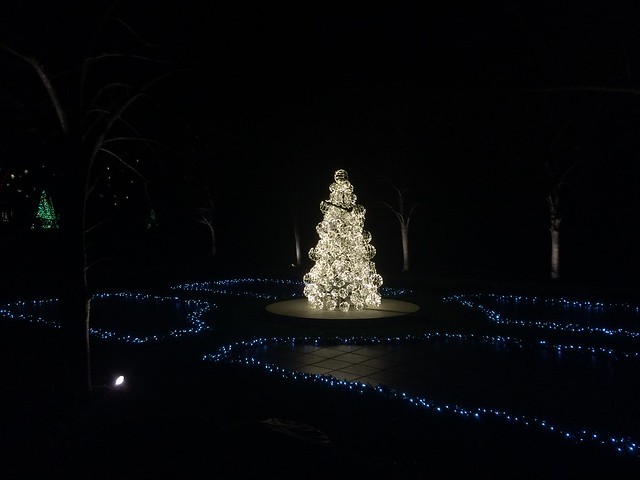
This was going to be the year I would look on the bright side, but I have just about accepted that there is no bright side in December. Only darkness and the pin-prick lights on the Christmas tree, and tonight is the longest night.
At one in the morning on the fourth Sunday of Advent, my friend’s little girl threw up. When I found her, she was crying, and her beautiful curly hair was smeared with vomit. While I bathed her and toweled her dry, I thought two things: Why is this happening tonight? and Thank you, Jesus, that I can do this for my friend.
This is what we do in December. We bake sugar cookies, and we scrub vomit from the sheets. We cry for our friends and we cry for ourselves, and we hand out bars of chocolate tied with red and green bows. We make toasts to the new year, and we wonder how we’ll ever survive another one.
We pray come, Lord Jesus, come, and we remember that he already has and that he’s seen it all before. The vomit and the death. The good food and the hunger. The love and the loss.
I don’t know if I’m angry, or tired, or simply sad, but I will keep baking cookies. I will continue hanging ornaments, and I will make my husband climb up on the barn roof to secure a lighted star.
Because somehow despite it all (or because of it?) I still believe that there is a God up there in heaven who has made us this promise: “I will turn their mourning into gladness; I will give them comfort and joy instead of sorrow” (Jeremiah 31:13).
We live somewhere between the promise and its ultimate fulfillment. It is a land where tears drop onto festive wrapping paper. A place dusted with cookie crumbs and peppermints. It is empty stockings hung by the fire, and it is our hope, perhaps a little shaky and unsure, that one day we will wake and those stockings will be full.
But it isn’t only a one-day hope. Perhaps if we make it through December we will be fine, but I don’t want to be fine. I want more than that. I want better than that.
I want gladness.
Gladness like the taste of sugar cookies and candy canes and the cinnamon rolls I make every Christmas morning.
Gladness like the face of a child when snow finally does fall.
Gladness like every bright, sweet gift that comes to us only in December.
by Christie Purifoy | Dec 18, 2015 | Advent, children, Christmas, God's Love, grief, Jesus, motherhood
I wrote this Advent reflection two years ago. My daughter is twelve now, but she still asks difficult questions. I still have no easy answers.
*
When I began writing these Advent reflections, I had a very general structure in mind. The whole series would move, I thought, from dark to light, from ordinary to extraordinary, from dust and dirt to starlight.
Oh, the best laid plans.
Instead, I have consulted this writing plan each morning and discovered my own emptiness. No words. No stories. No ideas. Which is a desperate place and a very good place to find oneself. It has led me to frantic prayer and constant listening. Finding no stories in the plan, I have listened hard for any hint of story in my day.
Often, I have found my stories in my daughter’s difficult observations.
Yesterday, she said, “I think it must be the worst thing in the world to have a child who dies.”
I am a writer, and I abhor a platitude, an easy answer. The cliché we use to bypass actual thought. Even so, it can be tempting to fall back on those things when we are faced with the unanswerable and the terrible. But I have learned a few things from writing and from reading, and I have learned a few things mothering this daughter.
I fight the pull of the pretty, easy answer and say nothing but “Yes, yes, I know.”
She is only ten, but she already understands love’s terrible shadow. She knows intuitively, without ever being taught, that great love rips us open. Leaves us wounded and bleeding.
I have no good answers for these kinds of questions. I have no band-aid for this degree of pain. Today, I do not even have much of a story. Sometimes, the world looks darker and more ordinary the closer we get to Christmas. Sometimes, there is no perfect, timely trajectory from Advent waiting to Christmas fulfillment.
But if I have no story, I do have this one thing to share with you. A vision of sorts.
After our conversation, I kept seeing a picture in my mind. It was my daughter, so full of difficult questions and a grief too old for her years, and she was wearing the angel costume we once found at a thrift store. It is white and shimmery, and the padded, embroidered wings are gold.
I kept seeing her sad eyes against the white glow of the angel’s dress, and I realized, I think for the first time, how much our Christmas gift was heaven’s loss.
I realized how vast an emptiness the Prince of Heaven left behind him when he poured himself into Mary’s womb.
I looked into angel eyes, and they seemed to say, “We have lost him. We have said goodbye. How long till he returns to us?”
I can’t erase love’s dark shadow, and I’m not sure I would if I could. But I know that the parent heart of God has known it all already. He has passed by a heavenly chamber and found it empty. Heart-breakingly empty. And I know he suffered that pain for love.
And yet, the emptiness of heaven at the moment of incarnation is as much good news as the emptiness of the tomb.
This is the good news of God-with-us. This is the good news of our restoration.
This is the comfort of believing God sees our emptiness, our pain and says, “Yes, yes, I know.”
*
by Christie Purifoy | Oct 23, 2015 | Autumn, Faith, God, grief, Joy, Pennsylvania, Scripture, Seasons, Uncategorized
It was the time between the lights when colours undergo their intensification and purples and golds burn in window-panes like the beat of an excitable heart; when for some reason the beauty of the world … which is so soon to perish, has two edges, one of laughter, one of anguish, cutting the heart asunder. – Virginia Woolf, A Room of One’s Own
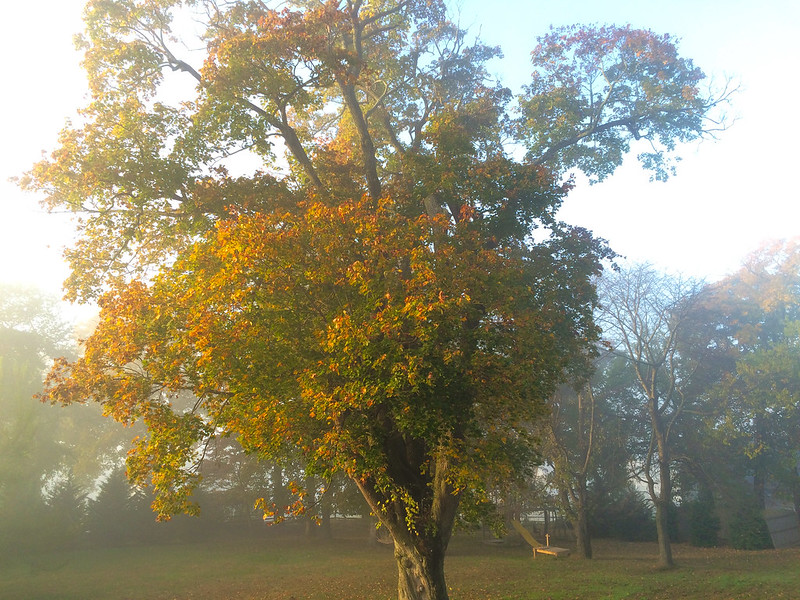
It is October. Blog posts should come easily right now. Beauty upon beauty spins gently from the maple trees. The world is polished to a coppery shine. Yet I have felt anxious. Tongue-tied.
Virginia Woolf was right about the beauty that is particular to October days. Yes, there is laughter (children diving into piles of leaves, Jonathan and I planting daffodil bulbs together), but there is anguish, too.
For weeks now I have been trying to understand why the beauty of October makes me sad. Has it always been this way? Is it more pronounced this year?
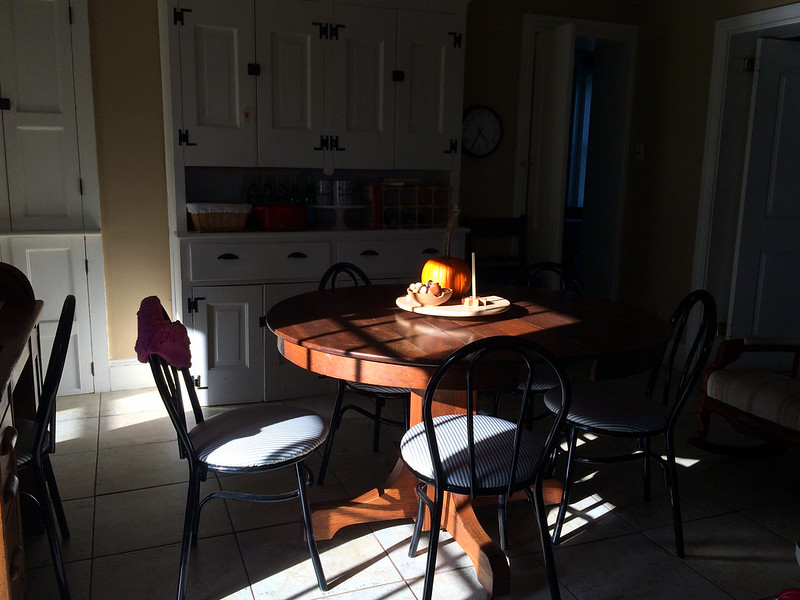
Last spring, I wrote about the beauty of the golden hour. Here at Maplehurst, the whole month of October is golden. There is the glow of all these maple trees, but it is more than that. The light itself has changed. It is rich and thick, like caramel sauce. Or melted butter. Now, even the blue sky has a golden tint.
What is the golden hour? What is this golden, October light?
It is good news from a far country (Proverbs 25:25).
But that country is not yet our possession. It remains just out of reach. During October, it draws near, but it will not stay for long. I never can forget that all these trees will soon be bare.
Perhaps one way we follow in the footsteps of a wounded redeemer is when we do not look away. When we refuse the numbness and distraction of our cellphone or our television show or whatever it is that is so much less beautiful and so much easier to behold.
It isn’t easy to live our lives against the backdrop of rich, ringing gold. The rift between October’s beautiful song and our own tempers and headaches and worries is too great. It would be easier not to look. Not to see.
In October, I understand that I live most of my days with a veil over my eyes.
Will we ever be bold enough to lift our heads towards an October sky and “with unveiled faces contemplate the Lord’s glory?” (2 Cor 3:18).
The cost is anguish, but the prize is laughter.
by Christie Purifoy | Sep 9, 2015 | grief, Home, motherhood, Stories, Uncategorized, wilderness, Writing
In Alaska, there are many ways to die.
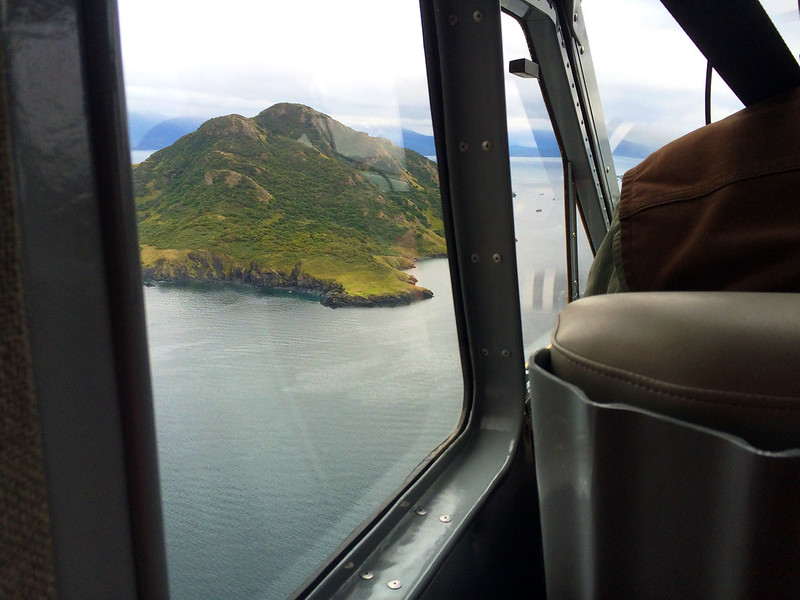
You can die in the air: bush plane, float plane, an airliner in wind and fog. You can die in the sea: barge, skiff, a ferry plunging in the trough. (If you are a sea lion, you can die in the jaws of an orca halfway between your rock and the waves. I have a picture of blood and frenzied sea lions if you are the sort who needs proof.)
You can also die with your feet planted firmly on the ground: bear, cliff, swiftly-shifting weather.
You have come to the edge of the world. The sun is lower. The shadows are longer. Death lurks out in the open here.
/

/
When you become a mother, you count all the ways there are to die: babies sleep but do not wake, daughters fall on the stairs, sons are diagnosed and named incurable.
Later, the ways are counted for you, but they are not the deaths you have already met in your imagination.
One day, you do not recognize how much your boy struggles to breathe, but the pediatrician does. She calls an ambulance from the exam room.
Another day, you forget your child’s epi-pen. Thank God, that stranger in the corner of the shop had one in her purse. You learn, to your sorrow, that death is folded within each moment.
Silent. Hidden. Utterly inseparable from love.
/
In Alaska, there are so many ways to live.
You live in the air: bush planes and float planes fly low. You soar like an eagle, skim mountaintops, explore islands empty except of bears.
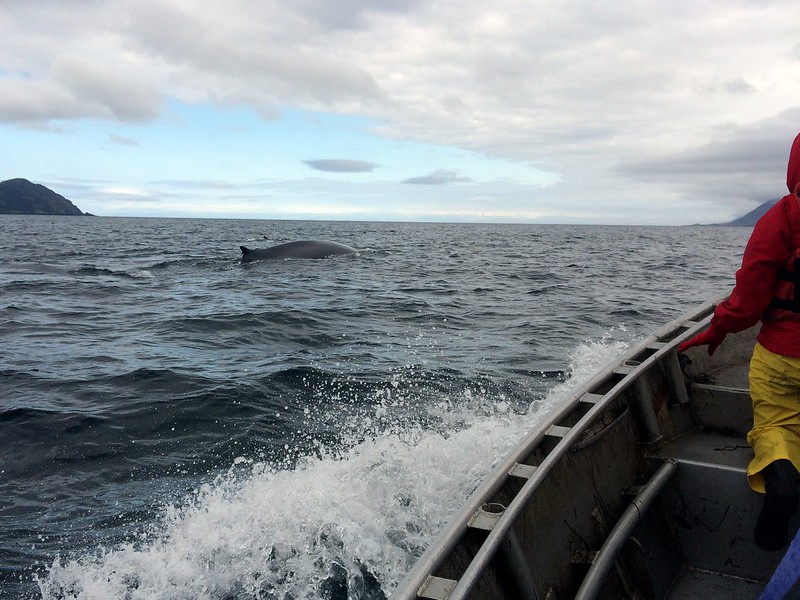
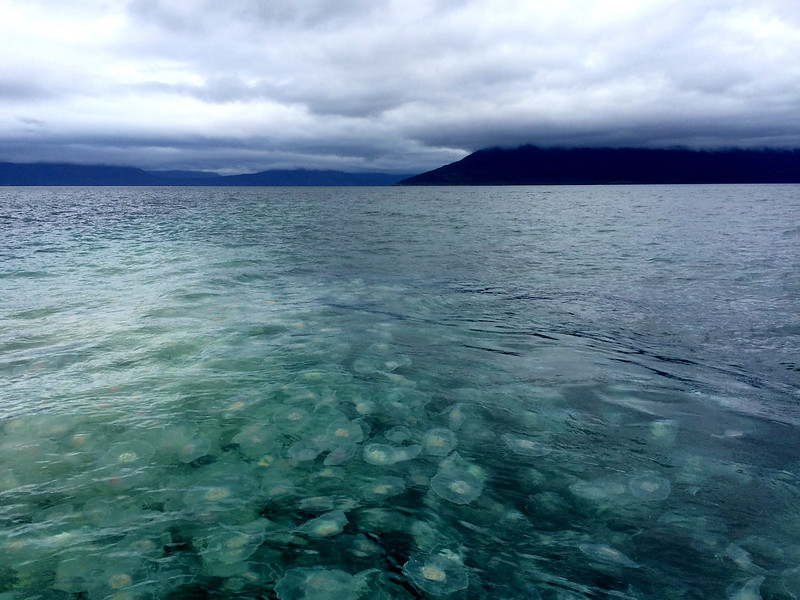
You live on the water: the taste of salt spray on your lips, a diving fin whale almost at your fingertips, sea otters like floating teddy bears.
You live on the land: black-tailed deer who are not afraid of you, tide pools filled with sun stars and blood stars and the deep breathing of anemones.
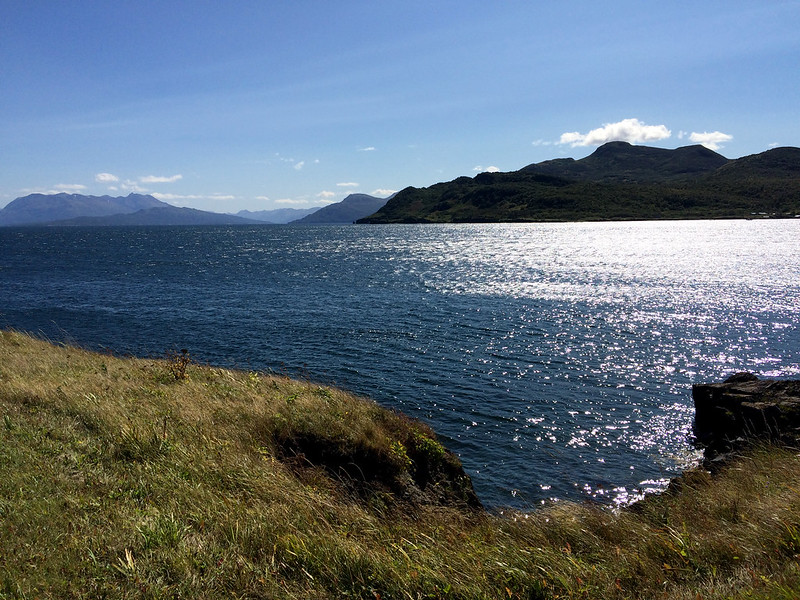
You have come to the edge of the world. The sun is lower. It is a dazzle in your eyes all day long.
Of what consequence is death when the air is like glittering glass?
/
/
If you are a writer, you are often alone. You retreat from family and friends seeking the quiet you need to write.
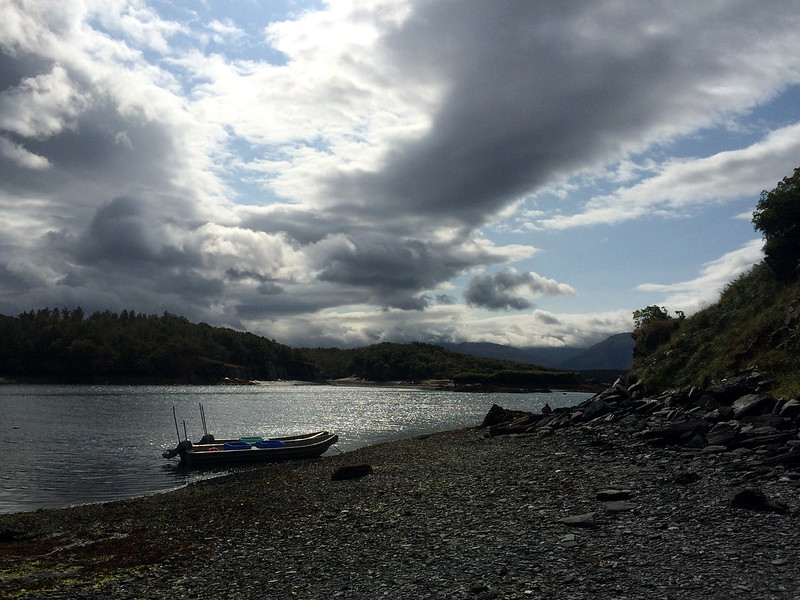
But one day you step on an airliner. One day you step on a bush plane. One day you wade through the water and heave yourself into a skiff. One day you taste salt spray all the way to Harvester, an island like a boulder tossed across the sea.
You journey to the edge of the world, and you discover you are not alone. The world is as full with stories and with storytellers as it is full with the glory of God.
/
The stories you find on Harvester Island are intimate with death.
There is the story of the old man and the young boy. They vanished on the water, leaving behind only a dog in a skiff and so many broken hearts.
There is the story of the unhappy wife standing on the edge of the island rock with a small suitcase in her fist. She has arrived at the end of her road. She is alive, but she has already died.
There are so many ways to die, but in Alaska, you learn what is true in every place on earth: there is only one way to live.
The only way to live is to die.
/
The only way to live is to arrive at the end of yourself and then to keep going (you can do this via bush plane, you can do this via motherhood or marriage or any great attempt at love).
Love is what remains, at the end of yourself, at the end of every beautiful story, at the end of every terrible one, too.
Love is our home. It is the place where death is only a fading legend. A tale we will tell again and again until, like glass smoothed and polished by the waves, it loses every sharp edge.
One day, we will let that old story go; we will drop it there, on the black gravel of the beach. For we have traveled 10,000 years, and we are ready for new stories.
/

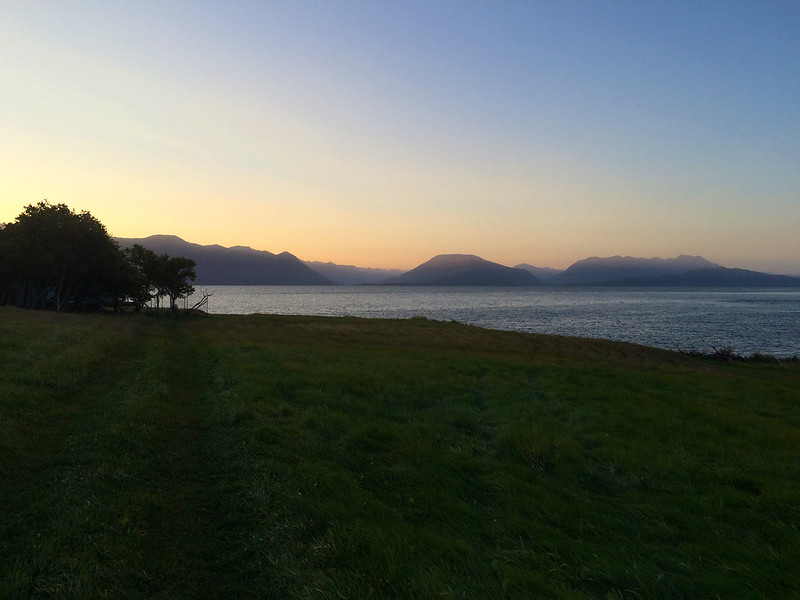
/
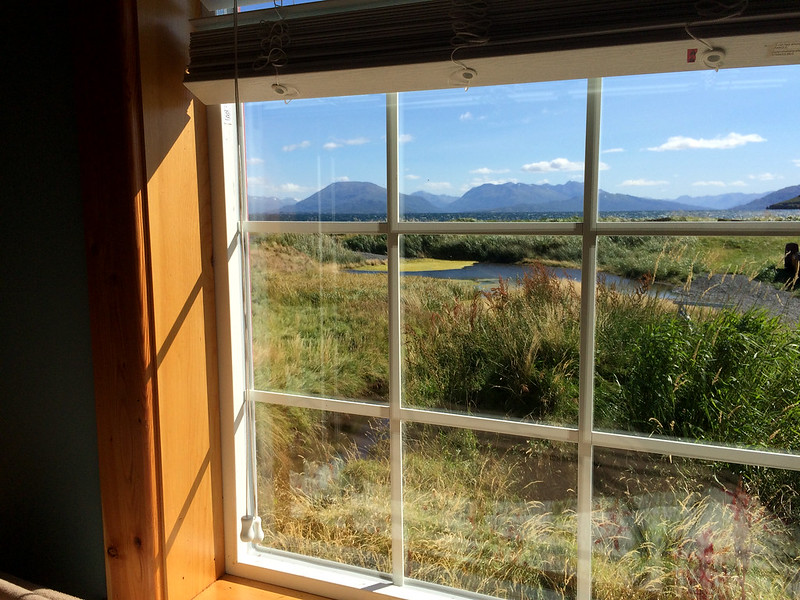
Written in the airport in Anchorage, Alaska. With love for all the writers who traveled to that boulder in the sea. I am glad to have met you, there on that line between rock and water, life and death, stranger and friend.
by Christie Purifoy | Jun 17, 2015 | children, grief, prayer, river, Scripture, Uncategorized
Recently, someone wrote a blog post about a terrible injustice happening in our world.
I hear your deep sigh of recognition. Who wrote the post? What was the injustice? You know it almost doesn’t matter.
Aren’t our facebook feeds and blog readers and twitter accounts spilling over with painful stories of injustice? There is so much darkness. In our own small towns. In our own familiar cities. And in countries so far away we sometimes forget that they are more than just the names we hear repeated on the radio news.
When this blog post popped up in my email inbox, I read the title and then quickly shut my laptop. I told myself, I do not want to feel this. I cannot handle any more grief. Any more anger.
Especially when there is nothing I can do.
*
My daughter has been learning about the Holocaust. What began as a teacher-assigned classroom project has shifted into a personal obsession. Her bedroom walls are pale pink, there is still a doll on the center of her bed, but the bedside table is stacked with The Hiding Place and Anne Frank’s The Diary of a Young Girl.
After a difficult beginning, she has been processing it all fairly well. Stories of heroes and rescuers, especially, are helping her navigate the deep waters of our history.
But I am not doing so well.
It is a terrible thing to watch a child’s eyes being opened. Opened to terror. To darkness. To some brokenness in our world that began, I suppose, with Cain and Abel but simply Will. Not. Quit.
She would like to visit the Holocaust museum. I’ve told her no. Not yet. It is possible that she could handle it, but I feel sure that I cannot.
*
Is it ever okay to look away? To close the laptop? Plug up our ears? Maybe yes. Maybe no. I’m not really sure.
I did go back and read that blog post. It was as horrific as I had imagined, but there was also a clear call to action. There was a way for people to help, and many responded with a yes.
As I confronted my own feelings of powerlessness, I remembered that no one who prays is powerless.
I may never be able to rush around the world dispensing sure-thing solutions, but I can pray. And that is not a little thing.
Even prayer gives me hope. I have seen, again and again, that when we feel a tug to pray then God is already at work. He is the source of that tug. It is his invitation to join him in the great and beautiful thing he is already doing.
And as overwhelmed as I am, as weak as I feel, I hope I never say no to that.
*
My daughter’s eyes have been opened. But they have been opened to more than darkness. She is beginning to recognize the seed that has been planted inside of her: the seed of a rescuer. A lover of justice. A champion for rightousness.
Her mother is not those things. You do not want me to lead your campaign.
I am an observer. Once, I might have written that I am only an observer. But I have come to understand that those of us watching, quietly, from the edges, we are the ones who, when the moment is right, climb the high mountain and shout the good news of what we have seen: “Here is your God!” (Is 40:9)
We are unique, and our responses to suffering will be unique.
But may our prayer always be the same:
“… let justice roll on like a river, righteousness like a never-failing stream” (Amos 5:24).
*
There is a river. How does that stream flow through you?
*