by Christie Purifoy | Mar 17, 2015 | children, Faith, grief, Lent, Scripture, Uncategorized, Winter
“you will be called Repairer of Broken Walls”
Isaiah 58:12
*
*
We have arrived at those muddy, brown days between winter and spring. When I cross the yard to the chicken coop, it feels as if I am walking on a sponge. We have had a few warmer days and a few sunnier days, but it is not yet clear to me if the damage of this winter can be undone.
Somehow I find it harder to believe in spring the closer it comes.
*
My daughter is learning about the Holocaust in school. Every afternoon she shows me some newly acquired fact, as if she half believes that this time, this time, I will contradict her teacher. I will say, No, no, it wasn’t as bad as that. Instead, I only ever say yes. Yes, it’s true.
Here is what she does not say: How do you go on living in a world where such things have happened? Still happen?
Here is what I do not say: I don’t know.
*
As a writer, I pick up the pieces. Even the ugly, broken pieces. I arrange them and rearrange them, and I search for hidden meaning. I find patterns, and they always say the same thing. They say, Look! Here is something beautiful. Here is good news.
Except that recently, I can’t seem to find the pattern. The broken pieces remain only broken pieces.
They are so many. They are so sharp.
*
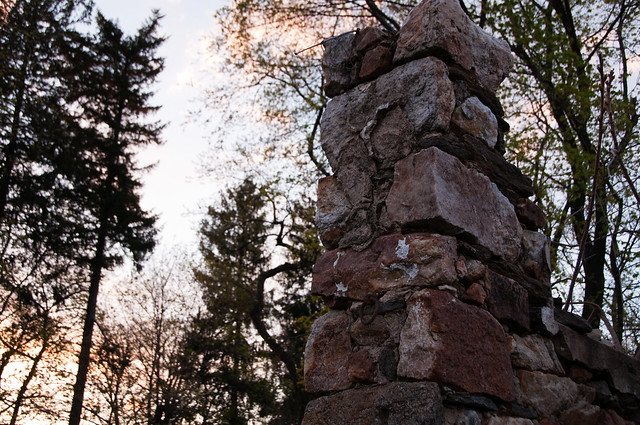
Because it is Lent, we begin each Sunday service with The Decalogue rather than a hymn. We hear the list of God’s ten commands, and they are like stones that form a wall that enclose a garden.
Gardens grow best within the shelter of a wall, but we have torn down the wall with our own hands.
*
Perhaps we must first listen to the bad news if we hope ever to hear the good.
Perhaps it is sorrow for all the broken pieces and all the tumbled stones that gives us courage to stand up. To rise up, leave the sackcloth and ashes, and go searching for our new name.
*
by Christie Purifoy | Nov 13, 2014 | children, Family, God, grief, Jesus, motherhood, prayer, Seasons, Spring, Winter
I know that the killing freeze arrived later this year because I checked last year’s date in my journal. I understand that the cold air pouring in even as I type is, if anything, overdue, and yet I wish it had held off longer still.
Winter approaches, and I find myself afraid.
Most of the maple leaves have fallen, but the trees still wear a few. They look like dabs of watercolor paint. It is autumn’s last deep breath before the descent of winter’s gray veil.
Last winter was long, and the memory is still heavy. I love snow falling past the window, and I love pulling my children on a sled through the Christmas tree farm, but winter is not only that. Winter is also dark afternoons and ice in the chicken’s water and snow turned to mud.
*
We have all been sick for weeks, and I keep getting better only to get worse again. The baby’s eyes are red and infected, and our whole house shakes with bone-deep coughs.
I am too weary for bad news, I have kept the radio turned off, but terrible tidings slink in, like that draft around my office window. First there was a text from my friend. Such a devastating loss. A week later there was a phone call from family, and that one was so much worse.
They aren’t my stories to tell. Perhaps they aren’t stories at all. They are ruptures. Faultlines.
But you don’t need the details. I’m afraid you’ve heard them before. You, too, have received a text. You, too, have picked up that phone. These are the things that should never happen.
These are the stories every atheist mentions when he or she says they cannot, cannot believe in a good and loving and all-powerful God.
And I find I have no desire to argue with them. Such things should not happen. My atheist friends are absolutely right about that.
*
When the text came in, I started praying a prayer I’ve never prayed before. I think every true prayer is given, but the given-ness of this one was more apparent than most.
I prayed Let there be light.
I was still praying that prayer when the phone call came. And now I see no reason to stop. Lord, let there be some light. Dear God, please.
It is a winter prayer, and it beckons me toward spring promises:
For as the days of a tree, so will be the days of my people …
They will not labor in vain, nor will they bear children doomed to misfortune.
– Isaiah 65:22-23
I want to believe that these words are true, but I am thinking of two mothers. One labored in vain. One bore a child doomed to misfortune. At least, that is what appears to be so.
But what if death was no more the end than winter is the end? What if these words are yet true for these mothers and their children? All hope seems lost, but maybe that is a lie.
After the cross came an empty tomb in a springtime garden.
Winter is near. They say it will be long and cold. I know for certain that it will be dark. But I also know that on the other side of winter is spring.
On the other side of death is life.
*
by Christie Purifoy | Aug 13, 2014 | Autumn, Faith, Grateful, grief, healing, Joy, motherhood, Pregnancy, Scripture, Seasons, Stories, Summer, Uncategorized
The world is loud and terrible this summer. It is as if the entire planet has tilted on its axis and dipped us all in nightmare.
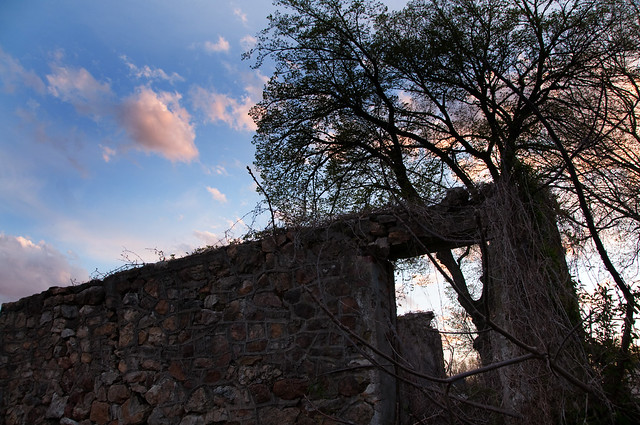
The grass outside my bedroom window is dotted with yellow maple leaves. I don’t know if this is because summer is already ending or because the largest and oldest of the maple trees is dying. Perhaps it is both.
Land and growing things are broken, nations are broken, bodies and minds are broken. And we respond by shouting at one another.

I indulge in shouting some days, but, mostly, I respond by retreating into silence.
When my children explode over cracked Legos and the last popsicle, I struggle to stay with them in the noise. I want only to slip away, to climb the steps to my bedroom, to sit in the curve of the bow window noticing yellow leaves on the lawn outside.
The world grows louder, and I grow quieter. Sometimes, this feels like wisdom, but I know it is also weakness.
It requires strength to share our stories. To risk being misunderstood.
It requires faith to tell small stories. To believe that what seems to be inadequate is of value.
When my fourth child was born, my body struggled to make milk for her. The hormonal peaks and valleys of that process seemed to switch a lever in my brain.
I became depressed.
I had so many reasons to be happy, but depression sucked all emotion from my mind and filled the emptiness with anxiety. I can remember sitting in my comfortable, soft rocking chair, holding my baby, and trying to remember why I had once cared about babies or repairing old farmhouses or ordering seeds for the spring garden or anything at all. I could no longer remember why it mattered if any of us ever got out of bed.
When I stopped trying to nurse my baby, and the last of my milk dried up, the depression lifted. A severe mercy.
It meant that I knew happiness again.
It meant that I knew sadness again.
Healing looked like a renewed capacity for both joy and sorrow.
This morning I read these words from Psalm 105:
Give thanks to the Lord, call on his name;
make known among the nations what he has done.
Sing to him, sing praise to him;
tell of all his wonderful acts.
And I remembered what had happened to me after my daughter’s birth and knew that I did have a song of praise.
Thank you, Lord. Thank you for healing me enough to grieve.
by Christie Purifoy | Jun 30, 2014 | Gardening, grief, Summer, Uncategorized
We have quite successfully banished grief from our lives.
Dying proceeds in hospitals. It leaves no lingering trace in the pristine spaces of our homes.
Death is sometimes marked in an old-fashioned way. We do occasionally carve the same old stones. Though the ancient words requiescat in pace have been abbreviated and largely limited to Halloween décor.
But then we follow the trail of job offers and changes of scene until the grave stones that matter, the ones we still see with our mind’s eye, lie miles away. We cannot bring flowers. We cannot bring our children and tell them stories of the one we knew and loved.
But somehow grief still finds us. It winds its way in on unexpected paths. And in unexpected places.
For instance, the garden.
An old tree falls, and we are surprised, embarrassed even, by our tears.
We learn practical gardening techniques, and give them misleadingly neutral names like layered gardening or four seasons gardening. Now, we cheerfully interplant our tulips and daffodils with shallow-rooted perennials. See! What fun! You and I need no longer be assaulted by the dying bulb foliage. Death is always camouflaged by the next blooming plant.
Always there is the next thing. We need never look back. Daffodils! Then lilac! Then azaleas! Then roses! Now hydrangeas! And daylilies! And late-summer dahlias!
There is no need to mourn the passing of the daffodils.
But if the gaps still find you … If the empty space in your flowerbed haunts your sleep even in the midst of summer’s blooming bounty … well, the horticulturists can help.
They have tinkered and fiddled (plotted and potted), and now you can purchase the solution to your sorrow.
Every plant now has its reblooming variety.
Reblooming lilac. Reblooming azaleas. Reblooming roses. Reblooming daylilies.
Dry your eyes. Take up your nursery catalog. Look for words like boomerang and knock-out.
Because even in the garden we need never say goodbye. We need never sit in quietness waiting for the return of every beautiful thing we have loved and lost.
*
*
by Christie Purifoy | Dec 20, 2013 | Advent, children, God's Love, grief, Jesus, Uncategorized
Before I began writing these Advent reflections, I had a very general structure in mind. The whole series would move, I thought, from dark to light, from ordinary to extraordinary, from dust and dirt to starlight.
Oh, the best laid plans.
Instead, I have consulted this writing plan each morning and discovered my own emptiness. No words. No stories. No ideas. Which is a desperate place and a very good place to find oneself. It has led me to frantic prayer and constant listening. Finding no stories in the plan, I have listened hard for any hint of story in my day.
Often, I have found my stories in my daughter’s difficult observations.
Yesterday, she said, “I think it must be the worst thing in the world to have a child who dies.”
***

***
I am a writer, and I abhor a platitude. An easy answer. The cliché we use to bypass actual thought. Even so, it can be tempting to fall back on those things when we are faced with the unanswerable and the terrible. But I have learned a few things from writing and from reading, and I have learned a few things mothering this daughter.
I fight the pull of the pretty, easy answer and say nothing but “Yes, yes, I know.”
She is only ten, but she already understands love’s terrible shadow. She knows intuitively, without ever being taught, that great love rips us open. Leaves us wounded and bleeding.
I have no good answers for these kinds of questions. I have no band-aid for this degree of pain. Today, I do not even have much of a story. And the writing plan? Well, that has been entirely abandoned. Sometimes, the world looks darker and more ordinary the closer we get to Christmas. Sometimes, there is no perfect, timely trajectory from Advent waiting to Christmas fulfillment.
But if I have no story, I do have this one thing to share with you. A vision of sorts.
After our conversation, I kept seeing a picture in my mind. It was my daughter, so full of difficult questions and a grief too old for her years, and she was wearing her angel costume. It is white and shimmery, and the padded, embroidered wings are gold.
I kept seeing her sad eyes against the white glow of the angel’s dress, and I realized, I think for the first time, how much our Christmas gift was heaven’s loss.
I realized how vast an emptiness the Prince of Heaven left behind him when he poured himself into Mary’s womb.
I looked into angel eyes, and they seemed to say, “We have lost him. We have said goodbye. How long till he returns to us?”
I can’t erase love’s dark shadow, and I’m not sure I would if I could. But I know that the parent heart of God has known it all already. I know he has passed by a heavenly chamber and found it empty. Heart-breakingly empty. And I know he suffered that pain for love.
And yet, the emptiness of heaven at the moment of incarnation is as much good news as the emptiness of the tomb.
This is the good news of God-with-us. This is the good news of our restoration.
This is the comfort of believing God sees our emptiness, our pain and says, “Yes, yes, I know.”
by Christie Purifoy | Dec 4, 2013 | Advent, children, Faith, grief, Jesus, Uncategorized
“… the weary world rejoices …”
We are baking together, the little boy and I, but I am also listening to the radio.
It is 75 years since the kindertransport brought German Jewish refugee children to England. An elderly man is speaking. He was only seven when he boarded that train. Only seven when his mother and father made a promise they would not be able to keep. They promised they would join him.
He still has the small hairbrush his mother tucked into his case.
I am listening to the refined voice of this now elderly man, but I am seeing the face of my own seven-year-old son. I do not think I can bear it.
What are Christmas candies and frosted cookies to a world with so much pain?
“Fall on your knees! O hear the angel voices! ”
Some of the old maple trees that gave this home its name are waving pink, plastic ribbons. They are marked for removal. This week the tree man will come with heavy machinery and sharp blades, and we will say goodbye.
I will find it easy to say goodbye to the headless trunk covered in poison ivy vines. I will not find it so easy to witness the fall of the other tree. This tree is crowned with green leaves in summer, yellow leaves in fall, but it is hollow. Standing in front of it, I can see blue sky through a hole that is shaped just like a child’s drawing of a heart.
I feel a kinship with this tree. I know this is what love does. It rips you right open.
We are discussing Christmas gift ideas when my friend suddenly confesses that she can’t stop imagining the loss of her two-year-old daughter, her much-loved only daughter. I tell her I understand. This pain is love’s shadow.
It sends us to our knees.
I am blessed with four children. Which means I have been on my knees for a very long time. It isn’t such a bad place. There are angel voices here.

“Behold your King! Before Him lowly bend!”
The shrieking radio, that bearer of bad news, is on again, and my daughter says, “More war? Why is there always more war?”
She places her frosted angel back on the table. I lay my own sugared bell beside it.
I think about that interview. How the little boy grew up. How he visited a Holocaust museum in Israel. There, on the wall, he found a photograph of prisoners in a concentration camp. Among those gaunt, wounded faces he discovered the face of his own father. A man he had not seen since that day when promises were made.
It occurs to me only now that my Father is also among the wounded. I can’t seem to articulate to my daughter why it matters. Why it makes such a difference.
I only know that it does.
Ours is a world of violence and loss. It is also a world of small hairbrushes packed with love. A world of Christmas cookies baked with love.
A world being healed by the wounds of a king.
“And in his name all oppression shall cease.”
