by Christie Purifoy | Apr 8, 2014 | Easter, Gardening, Jesus, Lent, Scripture, Seasons, Spring, Uncategorized
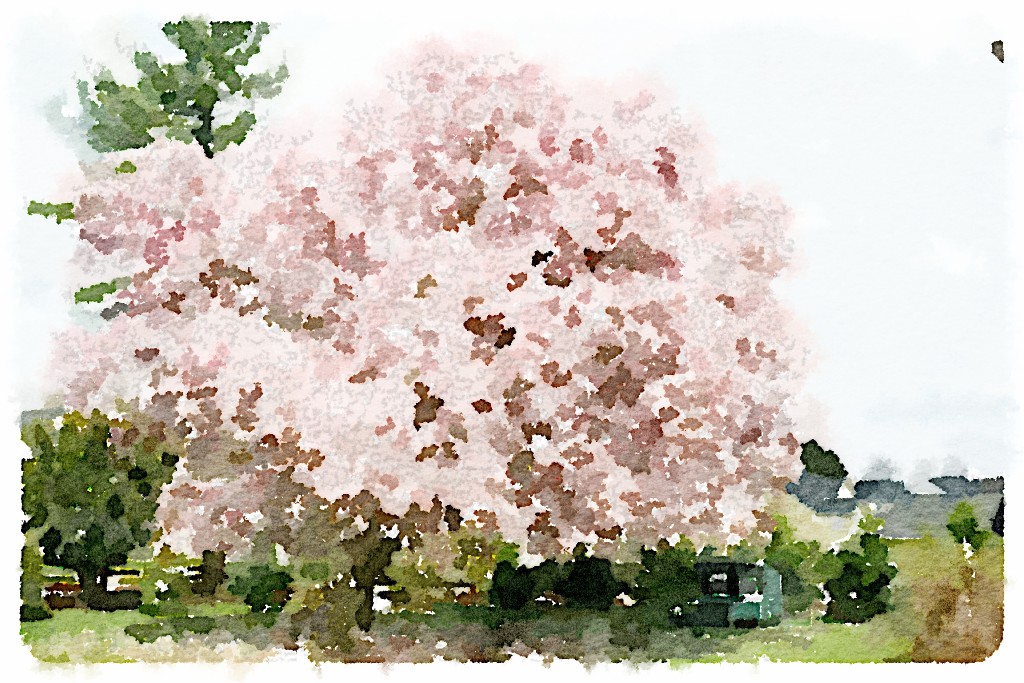
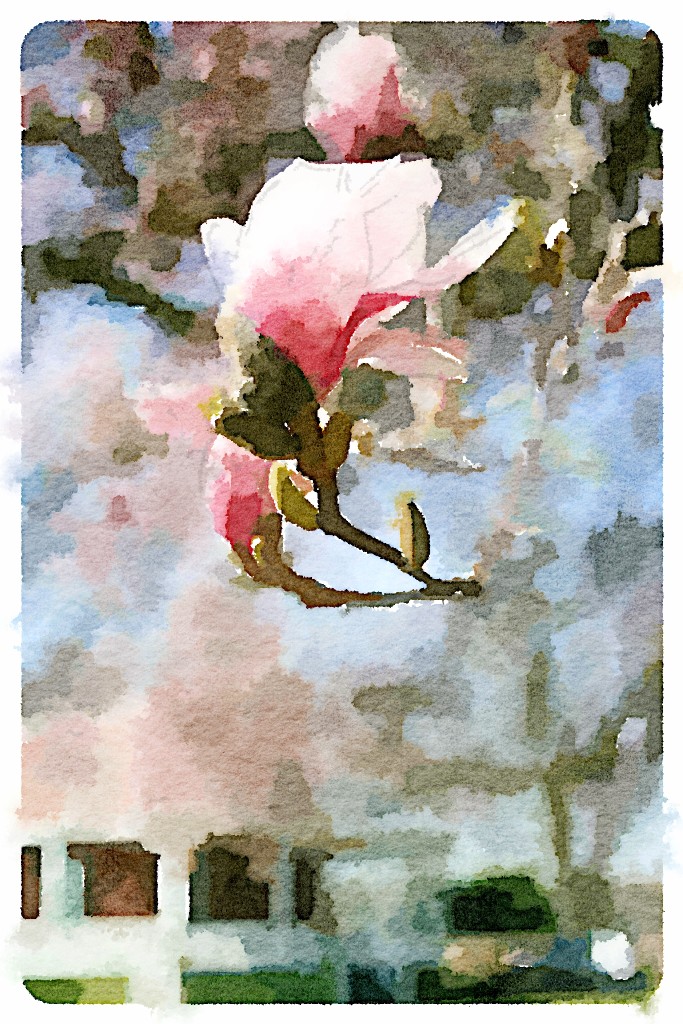
Today, I glimpsed the first haze of pink on the old magnolia tree that towers over one corner of our yard. It is a magnolia tree worthy of a fairy-tale palace, but it presides over a chicken coop and a child’s yellow plastic swing. In summer it becomes the world’s largest shade umbrella, but in April it is a miracle. Too impossibly beautiful to be true.
I have witnessed this tree in bloom only once. I have waited eleven months to bear witness for a second time, but I am scheduled to leave town tomorrow for five days.
I can hardly bear it. Five days of good books and good talk and good friends, but I would trade all of it to be there the very moment the first pink flower opens. I imagine that if I am there I will finally solve a great mystery. If I stand still, and I do not blink, perhaps I can determine once and for all whether the flowers open or whether they alight on the branches like a flock of pink birds.
Last year, I blinked and became sure a great crowd of delicate rose-tinted wings had settled in the branches overnight.
***
***
Set your mind on things above. Those were the words I remember printed on the postcards and posters, magnets and bookmarks in the Christian bookstore I used to visit as a child. I do not remember any books in that store. But I remember Precious Moments figurines, and I remember those words.
Even as a child, I mistrusted them. And not only because they showed up on magnets meant to secure grocery lists to refrigerator doors.
They are good and true words. They are Scripture words, but they seemed at odds with my own way of seeing. As long as I can remember, I have been taken with the miniature flowers blooming in the crack of a sidewalk. With acorn caps like fairy hats. With the hollow spot in the trunk of the mulberry tree, just the right size for my small china dog.
In other words, I have always seen worlds at my feet. I have always seen infinity under a magnifying glass.
And if this great “above” is the blankness of the sky, if it is only a screen onto which I project my preconceived ideas about the Christ who is holding everything together, then I will stick with the things below. Not money or plans. Not ambition or to-dos. But the things we pass by in our rush toward all that does not matter.
Dead, brown grass beginning to creep with green.
Daffodil leaves like bunny ears reaching just a bit higher every day.
And even the heartbreak of tulip leaves chewed to the quick by hungry deer.
***
If I must set my mind on some thing above, I will not let it float too high. I will set it just there, no higher than the highest branch of the world’s most beautiful magnolia tree.
I will set it there, and remember what the stories say. That we began to walk with God in a garden. That Jesus the Christ gave the thief on the cross a great promise: Today you will walk with me in a walled garden, a paradise.
And I will turn my eye toward eternity in the very spot where eternity begins.
Which is the ground, the ever-flowing, ever-renewing, ground beneath my feet.
***
***
by Christie Purifoy | Feb 14, 2014 | children, Community, Gardening, motherhood, Uncategorized
It’s Valentine’s Day, and I’m sharing a story of friendship. Really, though, I’m telling you that carrots are the new roses, and I want to give 250 South African orphans and vulnerable children a garden. A garden! Of course, I can’t do it on my own. But Valentine’s Day is just the day for acknowledging that I am not alone, and you are not alone, and those children? Not alone. Not forgotten. Join me?
When I first met Lisa-Jo, she was an attorney at a powerful Chicago law firm and I was a PhD candidate at an elite university. We were both pursuing Big Plans, and we were both very far from home. Though, admittedly, Lisa-Jo’s family in South Africa were just a wee bit farther away than my own in Texas.
Recently, she and I talked about those long ago young women and what they would think of our current lives. We agreed they would be horrified.
Which is only one more reason why I’m glad I don’t have final control over my life. Left to my own devices, I would never even have discovered my dreams, let alone seen them realized.

(photos courtesy of Lisa-Jo Baker)
Back then Lisa-Jo was determined never to be a mother. I was desperate for kids but couldn’t get pregnant. We got to know one another in a church small group for young married couples. Over the course of only a few weeks, most of those couples, two by two, announced unexpected pregnancies. Lisa-Jo and I became like storm-tossed survivors clinging to the same life preserver.
I will always be grateful for the wreck of those days, for the way unhappiness tossed us together. And I will always be grateful for the many ways in which Lisa-Jo held on to me, and to our friendship, despite the travels and adventures, the heartaches and the joys to come.
Today, she is not an attorney and I am not a professor, and when we spend time together, there are seven children tugging at our elbows. I don’t think either one of us will ever stop feeling surprised at the way things have turned out. I know we will never stop being grateful.
In fact, surprise and gratitude are at the heart of Lisa-Jo’s new book. You can pre-order a copy of Surprised by Motherhood: Everything I Never Expected about Being a Mom , and I highly recommend that you do. I am lucky enough to have read an early copy, and it is a powerful story, beautifully told.
It is a memoir of motherhood, and there is a lot of pink on the cover, but I hope that many men will find this book as well. Lisa-Jo’s is a story that speaks especially to mothers, but, like all good stories, it is for everyone.
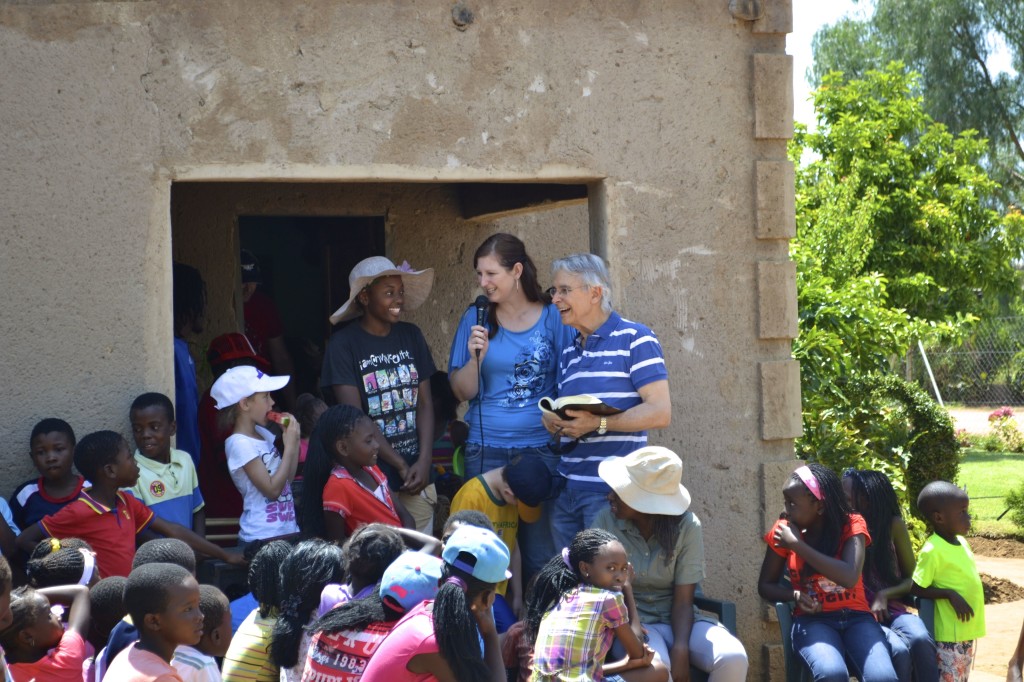
Today is Valentine’s Day, and I can’t think of a better way to mark that holiday on this blog than by telling you about the great big love flash mob being organized by my friend Lisa-Jo. Thanks to her vision and hard work, you and I have the opportunity to send – not roses – but an entire garden. And we get to send that garden to a community in South Africa eager to plant and cultivate and harvest.
We want to give a garden to the orphans and vulnerable children of the Maubane Community Center. The cost is $5000. We want to do this in one day.
It’s happening here.
by Christie Purifoy | Jan 21, 2014 | Dreams, Florida, Gardening, Pennsylvania, rest, Seasons, Uncategorized, Waiting, Winter
In late December, the seed and nursery catalogs began arriving. I dove in. When I came up for air, I tried to remind myself I was planning a vegetable plot, not an eight-hundred square foot formal rose garden.
It is easy to get a little lost in a pile of seed catalogs.
These are the days for rest, both for you and your garden. Unless you live in Florida.
I’ve heard it said that southern gardeners should take their winter break in late summer. Which is sort-of true. No one can grow tomatoes in Florida in August. But, it is also not true at all. You may give your vegetable beds a break, but the grass, the weeds, and those horrible invasive vines covered in thorns do not take a break. Unless you want your house to disappear back into the primeval jungle, you had better not neglect the August garden entirely.
I only gardened in Florida for two years, but I am still recovering. As it turns out, I need a good long break from working my bit of ground.
I need a season for rest. I need a season for dreams.
Rest can be painful. A persistant ache. Dreaming hurts.
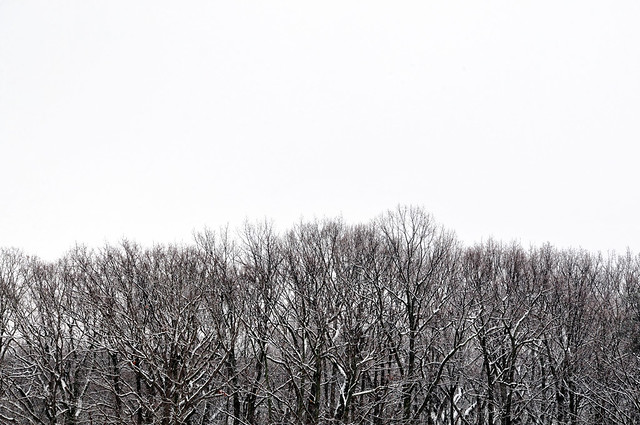
I love winter in the north, but I don’t find it easy. I long for sunshine. For warm air on the skin of my arms. For flowers and green grass and those little breezes that feel like a caress. It is a season for rest, but this means it is also a season for waiting, for desiring, for pressing hard against the blunt edges of everything you dream about but do not yet hold in your arms.
It is a season of emptiness.
True rest means returning to God. But this is not as easy nor as pretty as it sounds. It is often anguish that sends us back.
Back to the source of dreams, back to the source of every good and new thing.
Back to the only One who can renew our hope.
by Christie Purifoy | Jan 4, 2014 | Books, Gardening, Uncategorized, Winter
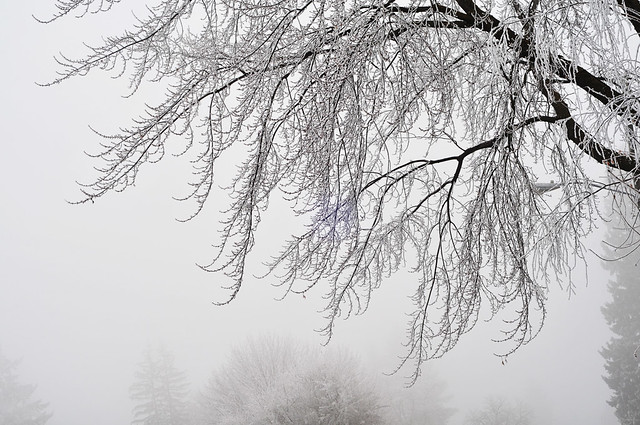
I love winter. I love snow.
I love them for themselves, but, let’s be honest, I love that they give me more time for my books.
Is your driveway buried in as much snow as mine? Here are a few books perfect for snowy days.
Now, if only the library delivered …
(You can find all my Saturday book recommendations here and some explanation about my use of affiliate links.)
*
*
Lately, I’ve kept my nose buried in seed and plant catalogs rather than books. I open one up determined to find just the right cucumber for pickling and within minutes I am planning a quarter-acre rose garden. These catalogs are just a little dangerous for me.
Almost the only thing with the power to pull me away from the catalogs (and the daydreams) is a book by Louise Penny. Her Chief Inspector Gamache detective novels are my new favorite thing. One by one, I am devouring them. I’ve started treating them like chocolate. I am always greedy for more, but I’m desperately concerned I’ll run out.
Yes, they are that good.
You’ll want to begin with the first: Still Life (Chief Inspector Armand Gamache Mysteries, No. 1) . Today, I’m reading # 6: Bury Your Dead: A Chief Inspector Gamache Novel
 . These books just keep getting better.
Number Six is perfect snow day reading. Inspector Gamache is wandering the snowy streets of old Quebec City, and it is Winter Carnival time. Everything that makes this series so special is present and accounted for: a charming and brave hero, tangled mysteries, delicious food and drink (I can’t read one of these books without craving fresh-baked croissants and creamy cafe au lait), history, spirituality, and a beautiful setting.
Have I mentioned I love these books?
Another book I love is Winter Solstice by Rosamunde Pilcher. I’d never read this one before December, but, like one of my favorite book bloggers, I plan to reread it every December from now on.
This novel is beautifully written but easy to read. It is deeply thoughtful but light and fun. It is set in Scotland. There’s a snowstorm. The characters are wonderful.
And the ending? Beautiful.
Here is a book for the little skiers and sledders: It’s Snowing! by Olivier Dunrea. This sweet little picture book captures the joy of a mama and her baby playing in the snow. It’s simple and lovely and quiet, and I love it very much.
I bought it while living in Florida and just about cried the first time I read it, but now? I read it with a smile on my face.
Tell me, which books keep you company in winter?
by Christie Purifoy | Sep 28, 2013 | Books, Gardening, Uncategorized, Writing
Friends, a confession: I read some books this summer.
The bad news is that I forgot to start dinner, I never noticed when the baby ate cat food, and I forced all four children to endure 90 minutes of daily “quiet time.”
The good news is that I have so many books to tell you about. Let’s talk books, again, shall we?
(If you’re new to this Saturday series you can browse my previous recommendations right here and read more about my use of affiliate links.)
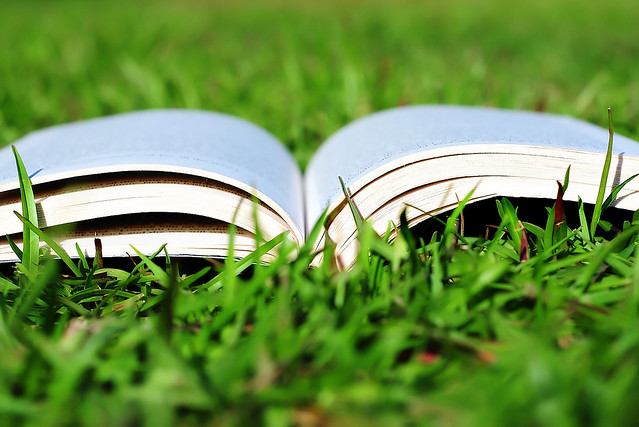
Summer, for me, was over the top in every way. Heat, humidity, rain, noise, activity, zucchini. Just Over The Top. I survived by reading novels.
One of my favorites was Where’d You Go, Bernadette: A Novel by Maria Semple.
After reading the first few pages, my expectations were not high. The storytelling is unconventional. Rather than a seamless narrative, you’ll find fragments of communication: emails, texts, letters, newspaper clippings, etc. I worried the book would be some sort of postmodern experiment, more taken with its construction than the story it tells. I have nothing against experiments (Joyce’s Ulysses is one of my favorite books), but, this summer, I wanted something thoughtful and enjoyable.
If Semple’s book is an experiment, it succeeds beautifully. Yes, the form is unusual, but it turns out to be integral to a story that is deeply, warmly human. This is a fun, funny novel, but it makes a serious point: first impressions, even second impressions, might give us entirely flawed ideas about other people.
I loved the hope inherent in this story. I loved knowing that even villains might turn out to be lovable.
Hovering over me was the Chihuly chandelier. Chihulys are the pigeons of Seattle. They’re everywhere and even if they don’t get in your way, you can’t help but build up a kind of antipathy toward them. – Maria Semple
Over the summer, I spent more time gardening than reading, a first for me. Of course, when I wasn’t gardening I was often reading about gardening. I’d read this memoir years ago, but when I found it on the shelf of my local used bookstore, I was happy to read it again.
William Alexander’s The $64 Tomato: How One Man Nearly Lost His Sanity, Spent a Fortune, and Endured an Existential Crisis in the Quest for the Perfect Garden is funny, self-deprecating, and surprisingly informative. Reading about battles with garden pests and plagues should be discouraging, but Alexander’s honesty (and his recipes!) allow us to see just how rewarding life in the garden can be, whether we’re winning those battles or not.
With the kitchen garden established, I decided – in an act of horticultural hubris perhaps not seen since, well, since Yahweh designed the Garden of Eden – to Build a Meadow. – William Alexander
This new book by award-winning memoirist Beth Kephart was one of my great finds of the summer: Handling the Truth: On the Writing of Memoir . If you have even the tiniest dream to write memoir (or even a blog post based on personal experience) this book will be your Bible. It is inspiring, it is instructive, and it is beautifully written.
I think this book deserves a much wider audience than only writers and writers-in-the-making, however. First, Kephart offers lists of must-read memoirs. Some were familiar to me, but many were not. Her descriptions of what makes each memoir valuable would make this book worth its purchase price even if that’s all it offered. But it offers a great deal more.
This is a book to wake us up to our own lives. This is a book to reveal the treasure that is our own experience. This is a book to help us shape the stories that must be shared.
If all your memoir does is deliver story – no sediments, no tidewater, no ambiguity – readers have no reason to return. If you cannot embrace the messy tug of yourself, the inescapable contradictions, the ugly and the lovely, then you are not ready yet. If you can’t make room for us, then please don’t expect us to start making room for you. – Beth Kephart
And you? Read any good books this summer?
by Christie Purifoy | Jun 19, 2013 | Faith, Food, Gardening, God, God's promises, Poetry, Summer, Uncategorized
I see the world through a lens of metaphor and story. The magnolia tree near our chicken coop is a love letter. The window in our stairwell is a promise.
Like a pair of good eyeglasses, metaphor helps me see the world and my life more clearly. It is the tool I use to scratch beneath the surface of things.
These days, I am learning its limits.
Or, maybe, I am learning my own limits.
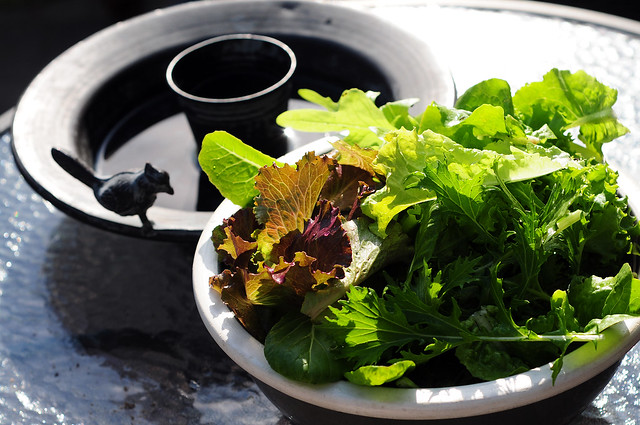
I plunge my arms up to the elbows in a deep farmhouse sink. Snap peas, carrots, a rainbow of swiss chard, and heads of broccoli so richly green they’re also purple. In every moment I can spare, I am harvesting, washing, blanching, freezing, eating, feeding. The kitchen garden we rushed to build and plant this spring has become a fountain. Between the rain and the explosion of good things to eat, that is no metaphor.
Apparently, metaphor has been more than a pair of eyeglasses to me. It has also been my preferred tool for setting up distance between the spiritual world and my own. I have used it to say here are my life and my world and way over there? Can you see it off in the distance? Those are the promises of God. The things that truly matter. We will get there someday.
Except, someday is today.
The things of God are here.
The things of God are now.
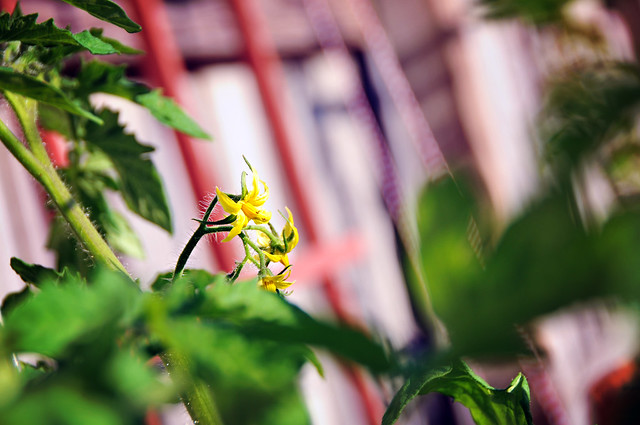
In my Bible, I can point out an inky smear of a date. Also, a little scribble of a star. They remind me that two years ago, I heard God say this, “they will make gardens and eat their fruit.”
Those words felt like a promise, and I held on to them through two very unfruitful years. In other words, I believed them. Yet, I know now that I believed them in a hazy, over-spiritualized kind of way.
What if God means exactly what he says?
What if his metaphors indicate, not distance, but nearness?
He promised, and, today, I am eating those words. I have sautéed them in oil and garlic, roasted them at high heat. I have shredded them and peeled them into ribbons. I have tossed them in salads and shared them with neighbors.
They taste good.
So good.


