by Christie Purifoy | Apr 24, 2013 | children, Grateful, Pennsylvania, Uncategorized
Here is one thing I know: the world will keep on falling apart.
Sometimes it’s terrible, and you think you can’t go on. Bombs explode and guns are aimed at children, and the unimagined thing becomes our new reality.
Sometimes it’s a pebble in your shoe, a child apparently born without an indoor voice, and the discovery that you can, in fact, ruin brown rice even when you make it with an automatic rice cooker.
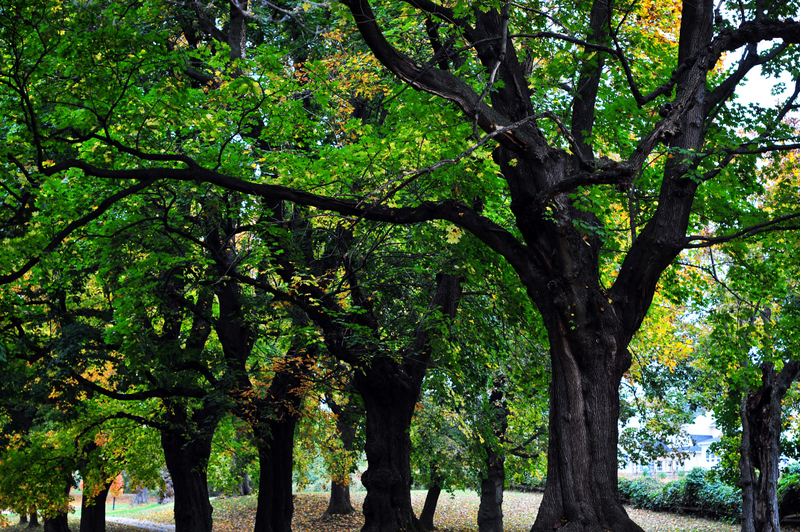
Sometimes it’s a Friday night thunderstorm that sounds terrible but lasts only fifteen minutes. You wake the next morning to blue skies and sunshine and the sight of a once-beautiful and massive maple tree lying stricken across your lawn.
The gloomy face of your chain-saw wielding husband annoys you. The tears of your firstborn both sadden and exasperate.
You move swiftly to combat both gloom and grief.
The tree was already at the end of its life! It was only a matter of time! It’s the circle of life! Nothing to cry about!
But you are wrong.
It is worth the gloom. It is even worth the grief.
The young girl is right, and you consider that even flowers were not created to fade. Life was never intended for death.
If we numb ourselves to the loss of one great tree, do we lose our capacity to grieve the harsher pain? The less explainable calamities?
Can our optimism become a kind of blindness? A refusal to see and acknowledge that all is not as it should be?

You are grateful your Saturday story does not end here. You consider that pain rarely seems to signal The End. In your (admittedly) limited experience, there is always something more.
Joy does come in the morning.
On this morning it appears in the form of a half-dozen teenagers. Needing to earn money for summer camp, you had agreed weeks ago (and quickly second-guessed your agreement) to give them odd jobs. You’d spent too much of the previous week worrying about the tall ladders involved in window washing and the poison ivy involved in brush clearing.
But here they are, and there, you have only just discovered, is the tree, and for that entire Saturday morning and the next Sunday afternoon, they will haul and carry and load. They will be your very own, unasked-for, tree-clearing work team, and your children will only occasionally slow their progress by treating the log pile like a jungle gym.
The tree is lost, and that is a terrible thing.
But it is not the only thing.
by Christie Purifoy | Mar 6, 2013 | Faith, God, God's promises, prayer, Scripture, Uncategorized, Waiting
There were years when a little flag would start waving in my head any time I heard someone say God told me to do this or God told me to do that.
A red flag.
It sounded too much like crazy-talk. I’d never heard God’s voice, so what makes you sure? What makes you special?
//

//
Now I am that crazy person.
I’m the one setting eyes to roll with my casual God told us this and God gave us a dream, and, the boldest of all, God promised …
That’s the big one, isn’t it? Talk of promises is crazy and dangerous all at once. To talk about promises is to set oneself up as special and risk looking like a fool.
I am that fool.
//
This is how I got here: desperation. It was the not having, the hurting, the longing, and the pain.
It was that one time I threw my Bible against the wall. I could see the pages bent and the cover smashed, but I could also see words that were so comforting, so particular, I was tempted to make Bible-throwing a regular spiritual discipline.
It was that time I screamed at heaven, until I turned the corner around the clump of trees and saw an optical-illusion moon so enormous and fiery I couldn’t tell what it was. But I heard it. It said, “I’m here. You’ve been heard.”
Sometimes, it wasn’t pain so much as utter emptiness. When there are no friends and no activities, when the phone never rings and you’ve given up the job you pursued for ten years, small things begin to sound very loud.
Like the verse that pastor shared from the front. I was one of a crowd, but those words were an arrow and I was the mark.
Like the song that came over the speakers just as I asked my question aloud. That song with the answer.
Or, all those times (so many times) when all I could do was open my Bible on my lap.
And that’s all it took. Because there it was. Right there.
//
I’m wary of prescriptions, of three-step plans. But if you want to hear the voice of God (and think very, very carefully whether or not you do), then this is what I suggest:
Lean in to the pain.
Listen to the silence.
Let the emptiness be just what it is.
And wait.

by Christie Purifoy | Aug 27, 2012 | allergies, God's Love, Jesus, Pennsylvania, Seasons, Uncategorized

Just the other night, I sat on the front porch and wished I had a sweater. The calendar may still say August, but, around here, summer is definitely tipping over into fall. Our weekly delivery from the local CSA orchard is shifting more and more from peaches to apples.
My daughter says, “I smell fall!” I tell her, “I can hear it,” curled, yellow leaves crunching under my feet.
During our two years in Florida, I missed autumn most of all. We still had summer (beautiful but long). There was spring, just more gradual and gentle than any northern spring. Our first year there we even had a winter, of sorts. But there is no autumn in Florida.
Each season has something important to say. Right now, the world is still very green, but, when the wind blows and the air suddenly fills with yellow leaves, this truth is revealed: there is no escaping death.
This is a season for dying.
It’s also my favorite season.
Maybe that’s because it tells me that death is a lie. We may imagine death as the end, but in fall we know that this dying is leading us toward a blaze of glory. In dying, we are walking toward beauty.
Our new home is beautiful. In the evenings we go for drives through a vibrant green, rumpled-quilt sort of landscape. There are creeks, tunnels formed by trees, old stone, Quaker farmhouses at every crossroads, and road signs that say, “Caution! Horses and hounds.”
We drive for the beauty, but, in honesty, we also drive to put our 3-year-old to sleep. Put him in a bed and he’ll stay awake for hours. Put him in a carseat, no matter the time of day, and he’s snoring within minutes.
A sleep-deprived preschooler isn’t my only frustration. There are also allergies. And asthma, that same nemesis that kept me bed-bound all last winter in Florida.
Nearly every breath I’ve taken in this new place has hurt. The baby doesn’t wake me up at night, but the coughing does. And I wonder, why this serpent in my Eden?
But, if death is a liar, so is trouble of every kind. Sickness, disappointment, difficulty: they all say God is not so good.
Here is something wonderful about having walked through deserts and having enjoyed the good, green places: Paul’s words in Philippians 4 finally make some sort of sense.
“I know what it is to be in need, and I know what it is to have plenty. I have learned the secret of being content in any and every situation, whether well fed or hungry, whether living in plenty or in want. I can do all this through him who gives me strength.”
He is the secret. Our God of peace.
In the end, it doesn’t really matter if this jar of clay has failing lungs. It is Christ who lives in me. Lives!
And nothing touches me without passing through his hands.
So I can live unafraid. I can live grateful.
by Christie Purifoy | Oct 28, 2011 | Chicago, Community, Faith, Florida, Seasons, Stories, Uncategorized
I believe in stories more than advice. In other words, I believe that a light is shined on our way forward, not when we finally hear the exact, right piece of advice, but when someone shares their story with us.
True stories contain all of the messy, untranslateable details of a life. Somehow, they also point us toward the maker of life.
I wish I could tell you how to live without the kind of community I described earlier this week. I wish I could tell you how to get it back. I even wish I could tell you that developing that kind of community in your own setting is the most important use of your time. But I can’t tell you these things.
If this whole Jesus-following-way-of-life is truly a relationship (as I’ve been hearing all my life) then we need to stop comparing our circumstances with everyone else’s. My marriage to Jonathan is fifteen-years-old (or fifteen-years-good), and it makes no sense for me to look at those still-awkward newlyweds and wonder why our lives are so different. Other than the fruits of the spirit, I’m not sure there are many things we can point to in order to say “that is a good Christian life” and “that is not.” At times Jesus walks us through joy and other times he walks us through trouble, but we can be confident in both that he has not and will not abandon us.
I lived in community for ten years, and it was good and it was painful, and I hope I haven’t said goodbye to that way of life forever. I could beat my head against my Bible wondering why my life no longer looks like that and how to get it back, or I can accept that when God empties our lives he also fills them up again. Not with the things we are missing, necessarily, but with himself.
In this world, we are wanderers. And that is not always a bad thing, not always a sin thing. We can wander quite a distance pursuing the good things of God’s kingdom on earth. Still, there’s little rest in wandering, and God knows we need rest. But where to find it?
God’s people “wandered over mountain and hill and forgot their own resting place” (Jeremiah 50:6).
Sometimes we need silence and emptiness, loneliness and barrenness in order to remember. We need winter.
The four walls of my suburban existence can feel like a prison, but they have been just the thing for feeling the heavy, holy pressure of God’s hand on me.
“You hem me in – behind and before; you have laid your hand upon me. Such knowledge is too wonderful for me, too lofty for me to attain.”
Psalm 139: 5-6
by Christie Purifoy | Sep 26, 2011 | Family, grief, motherhood, Poetry, Seasons
This comes from one of my favorite poets, the Irish writer Eavan Boland.
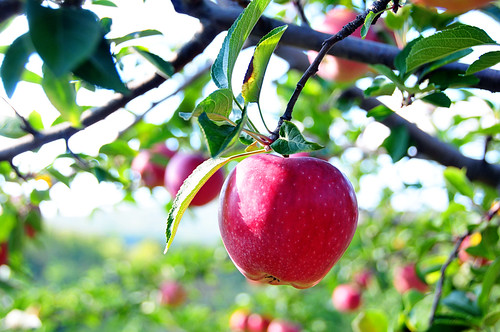
Reading it again this morning, I remember that myths are some of the truest stories we tell. The myth of Persephone is not merely a way of explaining the change of seasons before our age of scientific discovery. More than this, it is a story of loss and restoration. This poem reminds me that I have been Persephone. It also reminds me that my oldest child is swiftly becoming Persephone. I say, with Boland, that I will not deny her her own unique life story, though no good story is without pain.
The Pomegranate
The only legend I have ever loved is
The story of a daughter lost in hell.
And found and rescued there.
Love and blackmail are the gist of it.
Ceres and Persephone the names.
And the best thing about the legend is
I can enter it anywhere. And have.
As a child in exile in
A city of fogs and strange consonants,
I read it first and at first I was
An exiled child in the crackling dusk of
The underworld, the stars blighted. Later
I walked out in a summer twilight
Searching for my daughter at bedtime.
When she came running I was ready
To make any bargain to keep her.
I carried her back past whitebeams.
And wasps and honey-scented buddleias.
But I was Ceres then and I knew
Winter was in store for every leaf
On every tree on that road.
Was inescapable for each one we passed.
And for me.
It is winter
And the stars are hidden.
I climb the stairs and stand where I can see
My child asleep beside her teen magazines,
Her can of Coke, her plate of uncut fruit.
The pomegranate! How did I forget it?
She could have come home and been safe
And ended the story and all
Our heartbroken searching but she reached
Out a hand and plucked a pomegranate.
She put out her hand and pulled down
The French sound for apple and
The noise of stone and the proof
That even in the place of death,
At the heart of legend, in the midst
Of rocks full of unshed tears
Ready to be diamonds by the time
The story was told, a child can be
Hungry. I could warn her. There is still a chance.
The rain is cold. The road is flint-coloured.
The suburb has cars and cable television.
The veiled stars are above ground.
It is another world. But what else
Can a mother give her daughter but such
Beautiful rifts in time?
If I defer the grief I will diminish the gift.
The legend must be hers as well as mine.
She will enter it. As I have.
She will wake up. She will hold
The papery, flushed skin in her hand.
And to her lips. I will say nothing.
– Eavan Boland
