by Christie Purifoy | Nov 13, 2014 | children, Family, God, grief, Jesus, motherhood, prayer, Seasons, Spring, Winter
I know that the killing freeze arrived later this year because I checked last year’s date in my journal. I understand that the cold air pouring in even as I type is, if anything, overdue, and yet I wish it had held off longer still.
Winter approaches, and I find myself afraid.
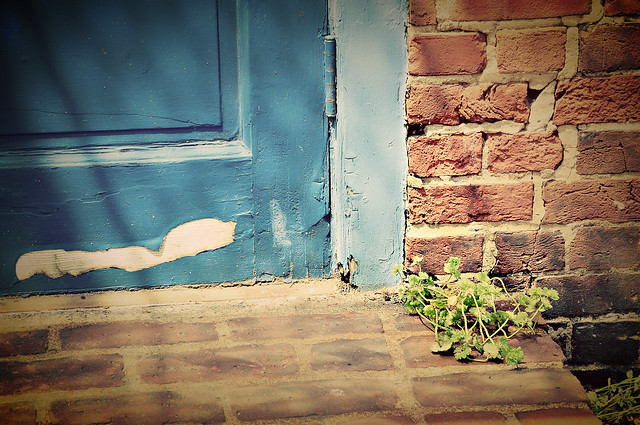
Most of the maple leaves have fallen, but the trees still wear a few. They look like dabs of watercolor paint. It is autumn’s last deep breath before the descent of winter’s gray veil.
Last winter was long, and the memory is still heavy. I love snow falling past the window, and I love pulling my children on a sled through the Christmas tree farm, but winter is not only that. Winter is also dark afternoons and ice in the chicken’s water and snow turned to mud.
*
We have all been sick for weeks, and I keep getting better only to get worse again. The baby’s eyes are red and infected, and our whole house shakes with bone-deep coughs.
I am too weary for bad news, I have kept the radio turned off, but terrible tidings slink in, like that draft around my office window. First there was a text from my friend. Such a devastating loss. A week later there was a phone call from family, and that one was so much worse.
They aren’t my stories to tell. Perhaps they aren’t stories at all. They are ruptures. Faultlines.
But you don’t need the details. I’m afraid you’ve heard them before. You, too, have received a text. You, too, have picked up that phone. These are the things that should never happen.
These are the stories every atheist mentions when he or she says they cannot, cannot believe in a good and loving and all-powerful God.
And I find I have no desire to argue with them. Such things should not happen. My atheist friends are absolutely right about that.
*
When the text came in, I started praying a prayer I’ve never prayed before. I think every true prayer is given, but the given-ness of this one was more apparent than most.
I prayed Let there be light.
I was still praying that prayer when the phone call came. And now I see no reason to stop. Lord, let there be some light. Dear God, please.
It is a winter prayer, and it beckons me toward spring promises:
For as the days of a tree, so will be the days of my people …
They will not labor in vain, nor will they bear children doomed to misfortune.
– Isaiah 65:22-23
I want to believe that these words are true, but I am thinking of two mothers. One labored in vain. One bore a child doomed to misfortune. At least, that is what appears to be so.
But what if death was no more the end than winter is the end? What if these words are yet true for these mothers and their children? All hope seems lost, but maybe that is a lie.
After the cross came an empty tomb in a springtime garden.
Winter is near. They say it will be long and cold. I know for certain that it will be dark. But I also know that on the other side of winter is spring.
On the other side of death is life.
*
by Christie Purifoy | Aug 13, 2014 | Autumn, Faith, Grateful, grief, healing, Joy, motherhood, Pregnancy, Scripture, Seasons, Stories, Summer, Uncategorized
The world is loud and terrible this summer. It is as if the entire planet has tilted on its axis and dipped us all in nightmare.
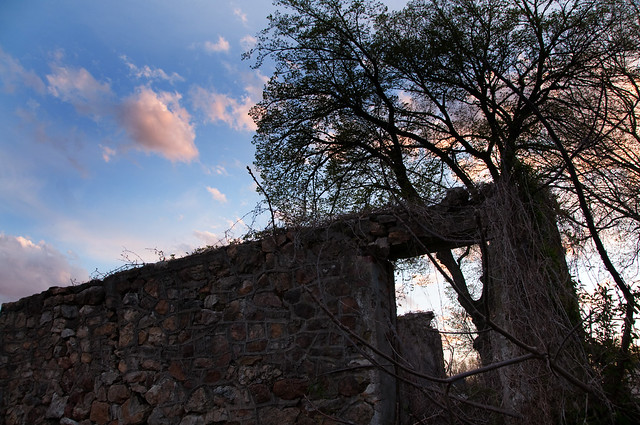
The grass outside my bedroom window is dotted with yellow maple leaves. I don’t know if this is because summer is already ending or because the largest and oldest of the maple trees is dying. Perhaps it is both.
Land and growing things are broken, nations are broken, bodies and minds are broken. And we respond by shouting at one another.

I indulge in shouting some days, but, mostly, I respond by retreating into silence.
When my children explode over cracked Legos and the last popsicle, I struggle to stay with them in the noise. I want only to slip away, to climb the steps to my bedroom, to sit in the curve of the bow window noticing yellow leaves on the lawn outside.
The world grows louder, and I grow quieter. Sometimes, this feels like wisdom, but I know it is also weakness.
It requires strength to share our stories. To risk being misunderstood.
It requires faith to tell small stories. To believe that what seems to be inadequate is of value.
When my fourth child was born, my body struggled to make milk for her. The hormonal peaks and valleys of that process seemed to switch a lever in my brain.
I became depressed.
I had so many reasons to be happy, but depression sucked all emotion from my mind and filled the emptiness with anxiety. I can remember sitting in my comfortable, soft rocking chair, holding my baby, and trying to remember why I had once cared about babies or repairing old farmhouses or ordering seeds for the spring garden or anything at all. I could no longer remember why it mattered if any of us ever got out of bed.
When I stopped trying to nurse my baby, and the last of my milk dried up, the depression lifted. A severe mercy.
It meant that I knew happiness again.
It meant that I knew sadness again.
Healing looked like a renewed capacity for both joy and sorrow.
This morning I read these words from Psalm 105:
Give thanks to the Lord, call on his name;
make known among the nations what he has done.
Sing to him, sing praise to him;
tell of all his wonderful acts.
And I remembered what had happened to me after my daughter’s birth and knew that I did have a song of praise.
Thank you, Lord. Thank you for healing me enough to grieve.

by Christie Purifoy | Jun 30, 2014 | Gardening, grief, Summer, Uncategorized
We have quite successfully banished grief from our lives.
Dying proceeds in hospitals. It leaves no lingering trace in the pristine spaces of our homes.
Death is sometimes marked in an old-fashioned way. We do occasionally carve the same old stones. Though the ancient words requiescat in pace have been abbreviated and largely limited to Halloween décor.
But then we follow the trail of job offers and changes of scene until the grave stones that matter, the ones we still see with our mind’s eye, lie miles away. We cannot bring flowers. We cannot bring our children and tell them stories of the one we knew and loved.
But somehow grief still finds us. It winds its way in on unexpected paths. And in unexpected places.
For instance, the garden.
An old tree falls, and we are surprised, embarrassed even, by our tears.
We learn practical gardening techniques, and give them misleadingly neutral names like layered gardening or four seasons gardening. Now, we cheerfully interplant our tulips and daffodils with shallow-rooted perennials. See! What fun! You and I need no longer be assaulted by the dying bulb foliage. Death is always camouflaged by the next blooming plant.
Always there is the next thing. We need never look back. Daffodils! Then lilac! Then azaleas! Then roses! Now hydrangeas! And daylilies! And late-summer dahlias!
There is no need to mourn the passing of the daffodils.
But if the gaps still find you … If the empty space in your flowerbed haunts your sleep even in the midst of summer’s blooming bounty … well, the horticulturists can help.
They have tinkered and fiddled (plotted and potted), and now you can purchase the solution to your sorrow.
Every plant now has its reblooming variety.
Reblooming lilac. Reblooming azaleas. Reblooming roses. Reblooming daylilies.
Dry your eyes. Take up your nursery catalog. Look for words like boomerang and knock-out.
Because even in the garden we need never say goodbye. We need never sit in quietness waiting for the return of every beautiful thing we have loved and lost.
*
*
by Christie Purifoy | Dec 20, 2013 | Advent, children, God's Love, grief, Jesus, Uncategorized
Before I began writing these Advent reflections, I had a very general structure in mind. The whole series would move, I thought, from dark to light, from ordinary to extraordinary, from dust and dirt to starlight.
Oh, the best laid plans.
Instead, I have consulted this writing plan each morning and discovered my own emptiness. No words. No stories. No ideas. Which is a desperate place and a very good place to find oneself. It has led me to frantic prayer and constant listening. Finding no stories in the plan, I have listened hard for any hint of story in my day.
Often, I have found my stories in my daughter’s difficult observations.
Yesterday, she said, “I think it must be the worst thing in the world to have a child who dies.”
***

***
I am a writer, and I abhor a platitude. An easy answer. The cliché we use to bypass actual thought. Even so, it can be tempting to fall back on those things when we are faced with the unanswerable and the terrible. But I have learned a few things from writing and from reading, and I have learned a few things mothering this daughter.
I fight the pull of the pretty, easy answer and say nothing but “Yes, yes, I know.”
She is only ten, but she already understands love’s terrible shadow. She knows intuitively, without ever being taught, that great love rips us open. Leaves us wounded and bleeding.
I have no good answers for these kinds of questions. I have no band-aid for this degree of pain. Today, I do not even have much of a story. And the writing plan? Well, that has been entirely abandoned. Sometimes, the world looks darker and more ordinary the closer we get to Christmas. Sometimes, there is no perfect, timely trajectory from Advent waiting to Christmas fulfillment.
But if I have no story, I do have this one thing to share with you. A vision of sorts.
After our conversation, I kept seeing a picture in my mind. It was my daughter, so full of difficult questions and a grief too old for her years, and she was wearing her angel costume. It is white and shimmery, and the padded, embroidered wings are gold.
I kept seeing her sad eyes against the white glow of the angel’s dress, and I realized, I think for the first time, how much our Christmas gift was heaven’s loss.
I realized how vast an emptiness the Prince of Heaven left behind him when he poured himself into Mary’s womb.
I looked into angel eyes, and they seemed to say, “We have lost him. We have said goodbye. How long till he returns to us?”
I can’t erase love’s dark shadow, and I’m not sure I would if I could. But I know that the parent heart of God has known it all already. I know he has passed by a heavenly chamber and found it empty. Heart-breakingly empty. And I know he suffered that pain for love.
And yet, the emptiness of heaven at the moment of incarnation is as much good news as the emptiness of the tomb.
This is the good news of God-with-us. This is the good news of our restoration.
This is the comfort of believing God sees our emptiness, our pain and says, “Yes, yes, I know.”
by Christie Purifoy | May 29, 2013 | children, Community, God, grief, Home, Uncategorized
If you are a parent or teacher or camp counselor, you know the forms I’m talking about.
One for each child. Name, birthdate, address. Mother’s cellphone and father’s cellphone. Mother’s email and father’s email.
It’s the final question that gives me trouble: EMERGENCY CONTACT PERSON. If the parents cannot be reached, who should we call?
For more than three years, I have left that line blank. On school forms and dance studio forms. On swim team forms and class field trip forms.
Empty. Blank. Missing.
There is no one to call.
We’ve never lived near family. Grandparents are once-or-twice-a-year treats. My children trade Christmas gifts with cousins they have yet to meet.
When we left Chicago, we said goodbye to more than our third-floor-lake-views-if-you-squint apartment. We said goodbye to neighbors who would knock on our door if our two-year-old escaped during the party and wandered down the stairs toward the front door and the busy street just beyond it. We said goodbye to the family in the basement apartment who could always take in our kids if an emergency came up. We said goodbye to all the friends on the blocks around us – friends whose children we had sheltered while their mothers and fathers welcomed new siblings at the downtown hospital, or, more terribly, said hospital goodbyes to siblings they would never bring home.
We left behind every one of our Emergency Contacts. Since then, I’ve learned you do not easily or quickly replace such things.
When our fourth baby arrived two weeks before grandma’s scheduled visit, we called our realtor. She was the only one who’d met our children or seen the inside of our home.
Yesterday, I filled out four more forms. The final blank lines felt a little blanker, a little emptier. They asked, not for an emergency contact, but for sponsors. These were baptismal forms. Later this summer, we’ll turn our church into a mini waterpark when we baptize four children all at once.
Even if I keep expectations low (this is a sponsor, after all, not necessarily a godparent or guardian), I wish someone could be there. A witness to our lives. Someone to stand in the crack. Someone who will always be there to remember with the firstborn. To tell the story to the fourth. Someone to make us all feel like nothing is missing.
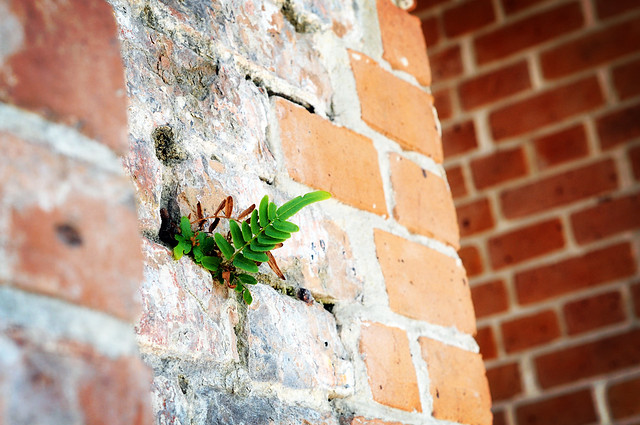
Except, something is always missing. Something is always cracked and broken.
For a long time, I convinced myself that the most broken things and places were out there. Poverty and gun violence. Orphan crises and war. And, for the most part, this is true. There is a terrible darkness in this world, but it doesn’t live in my house. And if I have one goal in life, it’s to make sure that my home is a shelter for anyone looking for relief from the world’s dark places. We all need a place to rest before we head back out again, lights in hand.
However, I’m discovering that aloneness and disconnection are cracks that run just about everywhere. Through every heart. Every relationship. Every home and neighborhood and community. Even my own.
In our house, two sons share a room. With the volume turned low, it is storybook perfect. In real life, it is loud and late and lego-filled. But as much as I sometimes dream of sticking them in separate rooms so I can get a little peace and quiet at the end of the day, God-help-me, this sharing is a good thing. It is a good thing because they are never really alone.
And yet.
The older brother will fall asleep. Then, the little brother lies there, still awake, and it doesn’t matter that his brother’s head is two feet from his own. It doesn’t matter that his parents are right downstairs.
He feels alone, abandoned by a brother who would choose sleep over one more lego creation, and he weeps.
He cries himself to sleep.
The truth is we can be alone in a crowd. We can be alone even when our brother is within reach of our tiny four-year-old arm.
Some people might tell you it’s God or Jesus who fills in those cracks. They might say we’re chasing the wrong things when we look to fill our empty places, our blank lines with other people.
But I think they may be wrong.
The story of Adam and Eve and Eden might not tell us much about the science behind the world’s creation. I do think it tells us everything about these cracks and missing pieces. It tells me that in the beginning of our story we lost something precious. We lost the closeness (so close you might call it oneness) we once enjoyed with other people. We lost the closeness we once had with our Maker.
This story we’re living is all about recovering that precious thing.
I don’t know how to make the blanks and cracks and disconnections disappear. I do know that if we lean in to them – really pay attention to them – we might glimpse the end of our story. The beautiful end. Which will be, of course, a new beginning.
“With all wisdom and understanding, God made known to us the mystery of his will according to his good pleasure, which he purposed in Christ, to be put into effect when the times reach their fulfillment – to bring unity to all things in heaven and on earth under Christ.”
(Ephesians 1:8-10)
Amen. Come, Lord Jesus.