by Christie Purifoy | Feb 8, 2016 | children, Family, God's Love, grief, Roots and Sky, Scripture, Seasons, Uncategorized
For years, my children have sung the same old tired song. It goes like this: it isn’t fair, it isn’t fair, it isn’t fair.
I used to argue with them. I tried banning those words, altogether. But for the past year or so, I have said only this:
In our house, we don’t do fair. We do love. Do you want fairness or do you want love?
I heard the familiar complaint again as we sat around the dinner table Sunday night. My mind was elsewhere, my body tired, so I let the conversation take it’s course. The kids didn’t argue. They traded ideas with more civility than is typical. But they never could decide what a fair distribution of the baguette might have been. The baguette they had already polished off between them. Four pieces, each? Wait, no, that doesn’t work.
I hesitated before I spoke. I hesitated because I wasn’t sure if it was right to say it. I wasn’t sure if I could say it without tears. But I said it:
Do you think what happened to your cousins in Hawaii was fair?
They looked at me with wide eyes and said, No.
Do you think God loves you more than them?
They lowered their heads. They whispered, No.
No one at the table said anything for a long while. We know the truth, we hold it in our hands like the shell my daughter brought home from the beach, but that doesn’t mean we understand it.

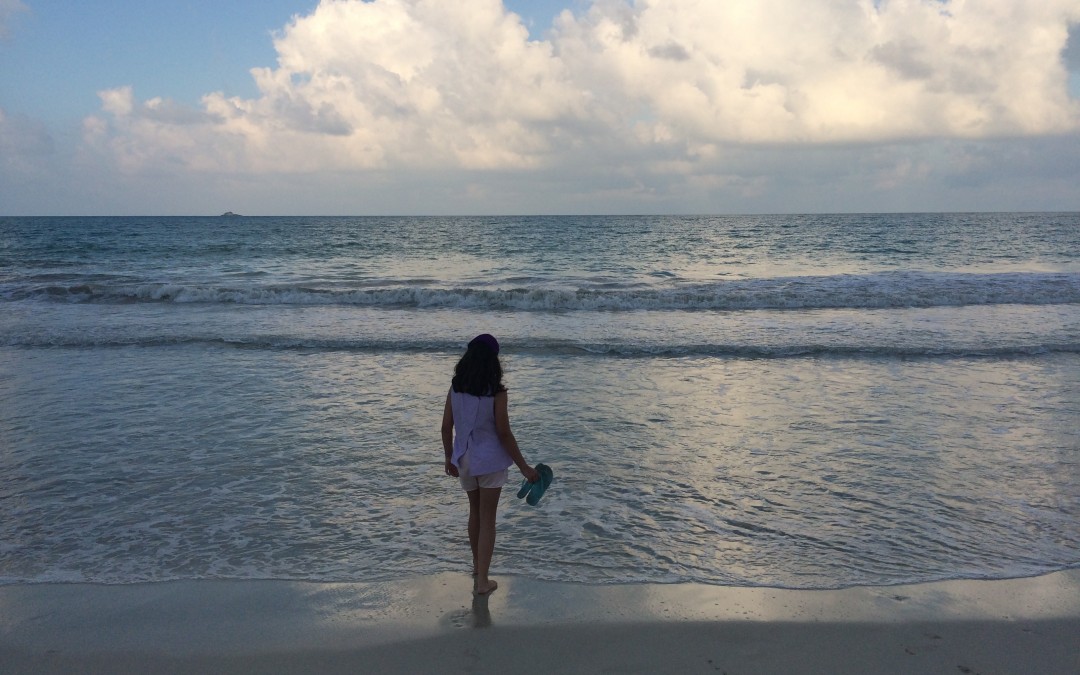
While I was in Hawaii, I heard a young child cry, It isn’t fair.
And she’s right. It isn’t fair.
“Why do the wicked live on, growing old and increasing in power?” Job 21:7
Why would such a good man, such a loving and much-loved man, die young? I don’t know the answer, but I know that the God of heaven and earth is something better than fair. He is love.
So many have asked. How are you? How is your sister? How are the kids? I can only speak for myself, but I think that we are all walking the wild, unfamiliar edges of a very great love.
We are discovering that God’s love is deeper than the great depths of the ocean only a mile off Oahu’s North Shore. We are finding that God’s love is higher than the mountains that climb like great green fingers to a crumbling, volcanic rim. We can see that God’s love is wider even than a rainbow so wide it embraces the horizon.
This loss, this sorrow, is enormous. It stretches out as far as we can see. But, there, too, matching it, overtaking it, is this love.
“Surely I spoke of things I did not understand, things too wonderful for me to know.” Job 42:3

Every day God gives good gifts. He gives those ordinary miracles of day and night, work and rest, bread and wine and laughter. But, too often, we receive those gifts as if we were waiting for the other shoe to drop. The irony is that when life is good, when life seems easy, too many of us do not feel loved. And we do not feel safe.
I have long believed that life is a journey of love. More and more, I am becoming convinced that some days are for love’s gentleness. Other days for its wildness.
There is evening, and we sleep in love’s quietness. There is morning, and our eyes are opened to love’s vast, almost unfathomable borders.
Today, we are wide awake.
“I am walking every day nearer to the edge. I committed myself almost with a running leap … but there is always this edge running through our lives and our days. … it is the cliff edge between winter and spring. The fault line between death and life. … I am realizing how frequently we are invited to dive into the unknown. To make a flying leap toward light and life and love. How frightening it always is. And how necessary. And also how well cared for we always are, even if we are never, at least not exactly, safe.” – Christie Purifoy, Roots and Sky

It is true that we are loved, but it is also true that we are not safe. Not in the way we take that word to mean. Shoes do drop. Suffering knocks on our door, but this isn’t because some cosmic scale has tipped. This isn’t because we have reached the end of God’s goodness. Or of our supply of good gifts.
To have your soul awakened. To have your eyes opened.
Those are also good gifts.
“My ears had heard of you but now my eyes have seen you.” Job 42:5
If you pray for us, perhaps you might pray for sleep. If wakefulness is a gift, it is one we cannot bear for long. We need at least a few hours when our eyes can close.
We need, sometimes, to forget. We need darkness, especially when, all day long, we cannot seem to stop staring straight into the sun.

by Christie Purifoy | Oct 30, 2015 | Autumn, children, Community, Faith, motherhood, Religion
I wrote these words exactly one year ago. Today, we will carve pumpkins, adjust costumes, and pull the old decorations from the basement. The boys made a scarecrow last week, but he still needs a pumpkin head.
The kids are so much taller, and Elsa is old enough now to refuse the costume we chose for her. But so much is the same. These words are still true.
*
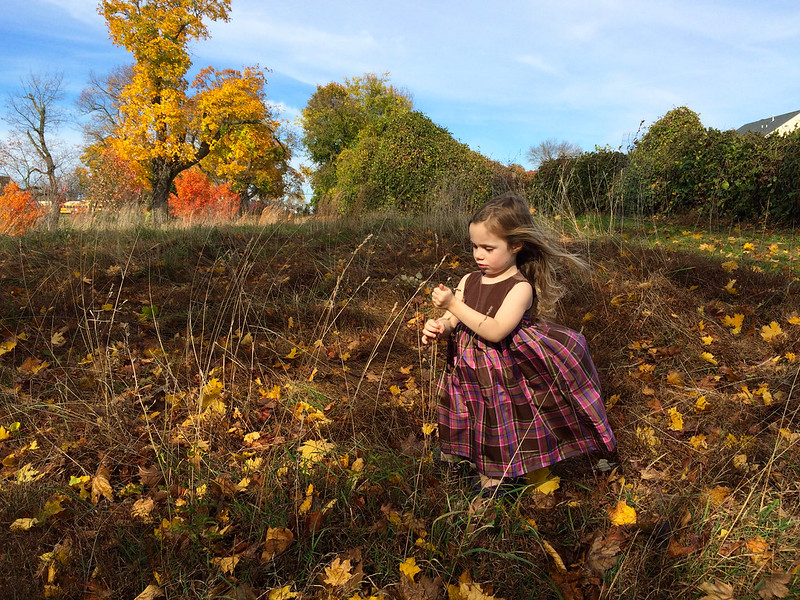
My friend looks up toward the trees and says I had forgotten how graceful dying can sometimes be.
I follow her glance and know that she is right. I, too, have forgotten. I remember autumn through snapshots. Which means, I remember the brilliance of that one sugar maple down the road. Or, I remember the startling red of a Burning Bush shrub against a deep blue sky.
The snapshots help me to remember true moments, fiery moments, but they do not give an accurate picture of the whole.
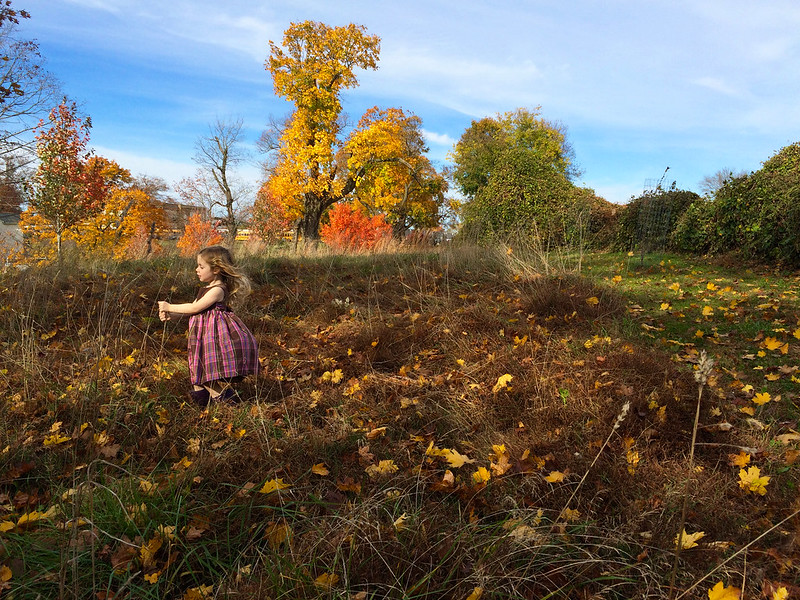
Autumn, taken as a whole, does not look like clear, bright brilliance. Here in my corner of Pennsylvania, it is gentle. Faded. It is burnished gold and copper. It is gray clouds and wet pavement.
This autumn world does not rage against the dying of the light. It smolders, quietly.
Gracefully.
Christians like to talk about Halloween on the internet. I have usually abstained from those “conversations.” So much depends upon context. Like the context of our own memories. Like the context of our own communities. Often, the internet is a conversation without a context.
Here is a bit of mine. In the church of my childhood, Halloween was ever-so-slightly taboo. We wore costumes, but we wore them to collect candy at our church’s “Harvest Fair.”
As new parents, we discovered the great adventure of escorting a temperamental two-year-old ladybug down city streets. We stole her candy when she wasn’t watching, and we hugged our neighbors. We tried to catch the eye of their over-tired Dorothy or Scarecrow. To tell each one we had no idea it was them.
Still, decorating my home for Halloween always seemed like a step too far. Until we came here. Now we live in the farmhouse on the hill and how else can we entice our neighbors and their children to climb our hill, to receive our gift of love and candy, but with a few smiling ghosts and candle-lit pumpkins?
Context. It changes things. Changes us.
We live in a culture that largely ignores death.
Our children no longer walk to church through churchyards dotted with graves. Our own church is that rare thing with its own cemetery, but it is all the way around by the back door. My children often ask to walk that way, but I am in a hurry. Another time, I say, as I rush them through the front door.
I am sorry for this. And so, this year, I am grateful for Halloween. I am grateful for the space it opens up. I am less grateful for the gory zombie poster set at a child’s eye level at the local Wal Mart, but mostly I am grateful for the opportunity to talk about death. About dying. About our baptism and what it might mean that we have already died with Christ.
Which is, to say, we will have a conversation about living.
Soon, we will bring out the plywood grave markers my husband made last year. Our kids painted them gray with black crosses and the letters R I P. We will tuck them near the crumbling stone foundations of the old farm buildings, and we will drape them with twinkly lights.
As we outline a path for candy-seeking neighbors, my daughter will ask me again about those letters R I P. And as darkness settles, and the lights begin to flicker and gain strength, she will tell me, It’s beautiful.
So beautiful.
by Christie Purifoy | Jun 17, 2015 | children, grief, prayer, river, Scripture, Uncategorized
Recently, someone wrote a blog post about a terrible injustice happening in our world.
I hear your deep sigh of recognition. Who wrote the post? What was the injustice? You know it almost doesn’t matter.
Aren’t our facebook feeds and blog readers and twitter accounts spilling over with painful stories of injustice? There is so much darkness. In our own small towns. In our own familiar cities. And in countries so far away we sometimes forget that they are more than just the names we hear repeated on the radio news.
When this blog post popped up in my email inbox, I read the title and then quickly shut my laptop. I told myself, I do not want to feel this. I cannot handle any more grief. Any more anger.
Especially when there is nothing I can do.
*
My daughter has been learning about the Holocaust. What began as a teacher-assigned classroom project has shifted into a personal obsession. Her bedroom walls are pale pink, there is still a doll on the center of her bed, but the bedside table is stacked with The Hiding Place and Anne Frank’s The Diary of a Young Girl.
After a difficult beginning, she has been processing it all fairly well. Stories of heroes and rescuers, especially, are helping her navigate the deep waters of our history.
But I am not doing so well.
It is a terrible thing to watch a child’s eyes being opened. Opened to terror. To darkness. To some brokenness in our world that began, I suppose, with Cain and Abel but simply Will. Not. Quit.
She would like to visit the Holocaust museum. I’ve told her no. Not yet. It is possible that she could handle it, but I feel sure that I cannot.
*
Is it ever okay to look away? To close the laptop? Plug up our ears? Maybe yes. Maybe no. I’m not really sure.
I did go back and read that blog post. It was as horrific as I had imagined, but there was also a clear call to action. There was a way for people to help, and many responded with a yes.
As I confronted my own feelings of powerlessness, I remembered that no one who prays is powerless.
I may never be able to rush around the world dispensing sure-thing solutions, but I can pray. And that is not a little thing.
Even prayer gives me hope. I have seen, again and again, that when we feel a tug to pray then God is already at work. He is the source of that tug. It is his invitation to join him in the great and beautiful thing he is already doing.
And as overwhelmed as I am, as weak as I feel, I hope I never say no to that.
*
My daughter’s eyes have been opened. But they have been opened to more than darkness. She is beginning to recognize the seed that has been planted inside of her: the seed of a rescuer. A lover of justice. A champion for rightousness.
Her mother is not those things. You do not want me to lead your campaign.
I am an observer. Once, I might have written that I am only an observer. But I have come to understand that those of us watching, quietly, from the edges, we are the ones who, when the moment is right, climb the high mountain and shout the good news of what we have seen: “Here is your God!” (Is 40:9)
We are unique, and our responses to suffering will be unique.
But may our prayer always be the same:
“… let justice roll on like a river, righteousness like a never-failing stream” (Amos 5:24).
*
There is a river. How does that stream flow through you?
*
by Christie Purifoy | Oct 30, 2014 | Autumn, children, Community, Jesus, Pennsylvania, Seasons, Uncategorized
My friend looks up toward the trees and says I had forgotten how graceful dying can sometimes be.
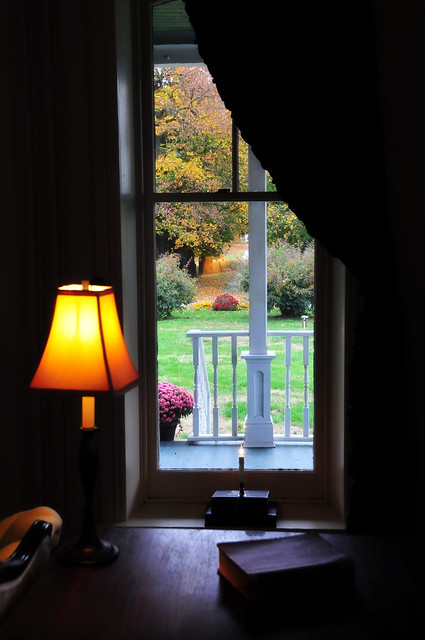
I follow her glance and know that she is right. I, too, have forgotten. I remember autumn through snapshots. Which means, I remember the brilliance of that one sugar maple down the road. Or, I remember the startling red of a Burning Bush shrub against a deep blue sky.
The snapshots help me to remember true moments, fiery moments, but they do not give an accurate picture of the whole.
Autumn, taken as a whole, does not look like clear, bright brilliance. Here in my corner of Pennsylvania, it is gentle. Faded. It is burnished gold and copper. It is gray clouds and wet pavement.
This autumn world does not rage against the dying of the light. It smolders, quietly. Gracefully.
*
*
This time of year, it seems Christians like to talk about Halloween on the internet. I tend to abstain from those “conversations.” So much depends upon context. Like the context of our own memories. Like the context of our own communities. Often, the internet is a conversation without a context.
Here is a bit of mine.
In the church of my childhood, Halloween was ever-so-slightly taboo. We wore costumes, but we wore them to collect candy at our church’s “Harvest Fair.”
As new parents, we discovered the great adventure of escorting a tempermental two-year-old ladybug down city streets. We stole her candy when she wasn’t watching, and we hugged our neighbors. We tried to catch the eye of their over-tired Dorothy or Scarecrow. To tell each one we had no idea it was them.
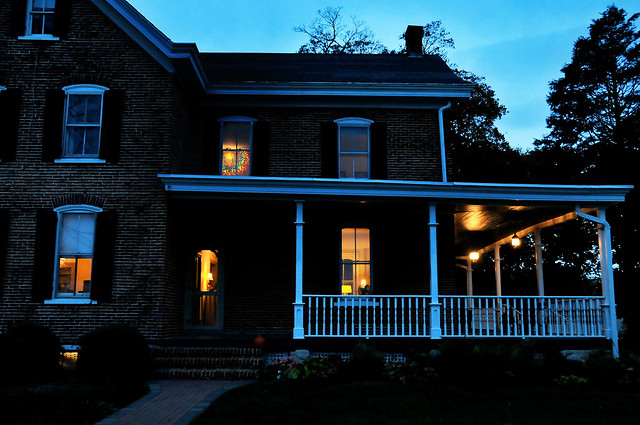
Still, decorating my home for Halloween always seemed like a step too far. Until we came here. Now we live in the farmhouse on the hill and how else can we entice our neighbors and their children to climb our hill, to receive our gift of love and candy, but with a few smiling ghosts and candle-lit pumpkins?
Context. It changes things.
Changes us.
*
*
We live in a culture that largely ignores death. Our children no longer walk to church through churchyards dotted with graves.
Our own church is that rare thing with its own cemetery, but it is all the way around by the back door. My children often ask to walk that way, but I am in a hurry. Another time, I say, as I rush them through the front door.
I am sorry for this. And so, this year, I am grateful for Halloween. I am grateful for the space it opens up. I am less grateful for the gory zombie poster set at a child’s eye level at the local Wal Mart, but mostly I am grateful for the opportunity to talk about death. About dying. About our baptism and what it might mean that we have already died with Christ.
Which is, to say, we will have a conversation about living.
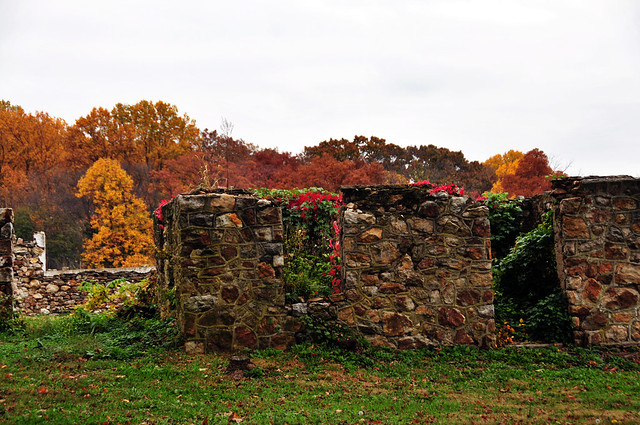
Soon, we will bring out the plywood grave markers my husband made last year. Our kids painted them gray with black crosses and the letters R I P. We will tuck them near the crumbling stone foundations of the old farm buildings, and we will drape them with twinkly lights.
As we outline a path for candy-seeking neighbors, my daughter will ask me again about those letters R I P. And as darkness settles, and the lights begin to flicker and gain strength, she will tell me It’s beautiful, Mom. So beautiful.
*
*
by Christie Purifoy | Aug 26, 2014 | Autumn, children, Family, motherhood, Seasons, Summer, Uncategorized
Summer came to an end at approximately five pm on Sunday night.
At five pm on Sunday night, I was sauteeing squash ribbons (that four out of four children would not eat) and flipping cheese quesadillas (that two out of four children would not eat) while hollering at the boys to clean their room and listening to the firstborn debate first-day-of-school outfits.
I was mentally prepping school lunches, signing an emergency-contact form for the oldest, and telling the youngest that now was not a good time for playing in the sink.
The youngest threw herself across the floor while I two-stepped toward the dinner plates.
And there, at utter loose ends in my kitchen, is when I knew summer was over.
***

***
Summer may be chaotic and intense, but in summer there is less pressure to chase down every last loose end.
Did we eat popcorn for dinner instead of vegetables? Well, it’s summer. Tomorrow we shall raid the garden.
Did the five-year-old hop into bed with dirty feet? Well, maybe we’ll wash off with a visit to the creek tomorrow.
In Fall, we remember the calendar and the budget and the email inbox.
In Fall, the overgrown garden looks sad rather than abundant. In Fall, the baby’s hair is plastered to her forehead with applesauce instead of sweet baby sweat.
In Summer, loose ends twine like pea vines on lattice. They tempt us to stay up past our bedtimes. They draw us on to look deeply at sunsets and the freckles on our loved one’s nose.
In Fall, loose ends scatter themselves like beads from a broken necklace. We scramble and cry, but we know we will never find them all. We will never manage to gather the details. We will fail to live up to at least a few of our responsibilities.
***
I long for my own little chore chart. With three neat rows and a gold star for each grid.
But there are no gold stars waiting for me at the end of my email inbox. No gold stars when I have packed three healthy, nut-free, school-approved snacks.
So here is a reminder – for me, for you – to hold on to summer’s lessons.
Let us remember where the gold stars live.
They live in sunsets and freckles.
They live at the ends of every loose strand of a young girl’s hair.
They shine in the darkness, and the darkness has not overcome them.
***
***


