
Why You Should Let Go of Your Dream
I’ve spent the past five years wondering, “Where will I be this time next year? What will I be doing? Where will I be living?”
I’ve been like a neglected houseplant, my leaves slowly curling. I had no roots.
Here at Maplehurst, we are in the freeze/thaw ugliness of midwinter, but I am fixated on the particular beauty of golden, late-afternoon winter light. I stretch toward the light and feel just how deep these roots can grow.
/
/
There are dreams planted everywhere here. Specific dreams about the vegetable garden and the blueberry bushes. Vague dreams about community and hospitality.
How did I get to this place? This place called Home? This place where dreams are realized?
I have no formulas to offer you. No guarantees. I suppose there are no shortcuts. All I have is this one thing: when I look back I see all the dreams we let go.
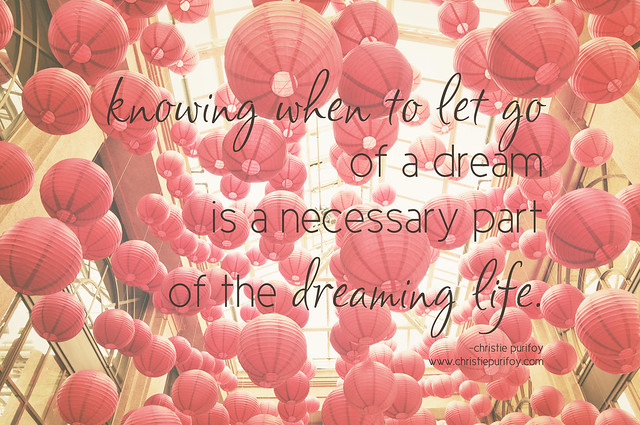
It turns out knowing when to let go of a dream is a necessary part of the dreaming life.
/
Jonathan and I fell in love at an inconveniently young age. He had always planned to attend medical school. He gave up that dream so we could marry. So I could earn a PhD.
We dreamed of moving overseas. We imagined living in Scotland or Ireland. We let the dream go and moved to Chicago. Spent two weeks hiking Ireland’s west coast, instead.
We dreamed of moving closer to family. Maybe a farmhouse in the Midwest? Close to grandparents in Kansas, not too far from grandparents in Texas. Instead, we moved to Pennsylvania.
/
When I tell you that my dreams are coming true, I do not mean I saw this life in advance. What I mean is this: life unfolds and something deep within us says, “Yes. This. Yes.”
A dream-come-true is a thing both surprising and deeply familiar.
It is the future you were made for before you even knew enough about yourself to dream it.
/
I have these words starred and underlined in my Bible, “May he give you the desire of your heart” (Psalm 20:4). One day I read those words, and it felt as if I’d tipped my head beneath a stream of warm water. That warm-water-feeling was real enough that I wrote the date, too. The ink is a bit smudged, but I can still read this: “So I pray / 12-14-2008.”
I didn’t write anything else, because, at that time, I had nothing else to write. I had no dreams. I had no desires. I couldn’t picture the future at all.
Now I know the most incredible thing. God not only gives us the desire of our hearts, he plants it there too.
He gives us the dream. He gives us the desire. He makes it come true.
And our hearts say, “Yes.”
These Farmhouse Bookshelves (Downton Abbey Edition!)

Another Saturday, another peak at my bookshelves … this time with a little Downton Abbey inspiration.
Now, Sybil, dear, this sort of thing is all very well in novels, but in reality, it can prove very uncomfortable. (Violet Crawley, Dowager Countess of Grantham)
I’m a lucky lady. Not only will my husband happily watch hour after hour of PBS Masterpiece Classics like Downton Abbey, but he’ll put up with my distracting, far-too-knowledgeable-for-my-own-good asides.
I spent ten years of my life studying the literature and culture of early twentieth-century Great Britain, so I get a tad opinionated about historical accuracy (for instance, Downton’s portrayal of master/servant relations is decidedly rosy, and no one would have disapproved of Edith’s marriage to an older man, there simply were not enough eligible men left alive after the war).
A bit of Ireland’s tumultuous history is reflected in the Tom/Sybil plotline. If you’d like to take a closer look, I’d recommend Elizabeth Bowen’s novel The Last September
Bowen wrote her novel only a few years after the historical events she describes, but in those years the entire culture of Anglo-Irish landed gentry had all but vanished. For the Anglo-Irish, whose Protestant ancestors had arrived from England hundreds of years before to claim Irish land in the name of the British government, it really was the “last” September. Irish independence left them, metaphorically and often literally, homeless.
Here, there were no more autumns, except for the trees. … Next year, the chestnuts and acorns pattered unheard on the avenues, that, filmed over with green already, should have been dull to the footsteps – but there were no footsteps. Leaves … banked formless, frightened,
against the too clear form of the ruin. (from The Last September)
Interested in a country house novel for the beginning reader? Yes, there is such a thing! Of course, the main characters are, as one would expect, not people but mice. My daughter loves Tumtum & Nutmeg: Adventures Beyond Nutmouse Hall
No list of country house fiction would be complete without a ghost story. The Little Stranger
This novel about a declining family, their haunted manor house, and the village doctor who becomes entangled in their fate is smart, subtle, and atmospheric. Like most good, literary ghost stories the ghost itself is almost beside the point. In this portrayal of post-WWII Britain and the decline of the old family homes, it’s easy to imagine a Downton Abbey sequal in which that formerly bustling estate is inhabited only by Lady Mary, one aging servant, and the ghosts of a once-glittering past.
Find earlier book recommendations here: Week One, Week Two, Week Three, and Week Four.
This Cloak of Invisibility: A Guest Post
Are you visiting from Deidra’s place today? You are welcome here.
I’m an English PhD who recently traded the university classroom
for an old farmhouse and a writing desk.
I write about motherhood, I write about Jesus, I write about books.
I write to remember that life is magical.
//
//
We all have questions. We each have stories to share. We need safe places to ask those questions, to tell those stories. When it comes to experiences of race those safe places can seem rare. Perhaps nonexistent.
I am grateful to be sharing this story at Jumping Tandem. I am grateful that Deidra Riggs has created a safe place.
//
I am an introvert, and I am white.
I grew up in a technically desegregated, too-often-still segregated south, and whiteness eased my way.
It was my camouflage. My cloak of invisibility. It meant I never stood out in a crowd. Never felt all eyes on me. I was just part of the scenery, and I took the easiness of that for granted.
Until the day I stood in line for a new driver’s license.
//
You can read the rest of this story here.
Will you take the time to leave me a comment while you’re there? I’d love to hear your thoughts, your questions, your stories.
//