
Our Beautiful Hunger
“It is our desire, after all, that makes us most like God.”
(Fred Bahnson, Soil and Sacrament)
We are, all of us, so hungry.

My children dream of sugar, and I crave hot, buttery toast. I spied the first white flowers in the strawberry bed, and now all I can think about is warm, rich red.
We hunger for food and drink. Not once or twice but every day with regularity, like well-loved timepieces. Our hunger is new every morning.
We hunger for touch and for love and for happiness. We hunger for purpose and meaning and beauty.
But we are so terrified of our appetites. So afraid of our hunger. Desire is a dirty word.
Maybe we are terrified by thoughts of sin and shame and selfishness. Maybe we are haunted by a fear of scarcity. My hunger is too big. There can never be enough.
But the Bread of Life has appeared to us, and he has told us: Do not be afraid.
*
“This is the Lord’s doing, and it is marvelous in our eyes!” (Psalm 118:23)
*
Our constant hunger bears the image of an even greater hunger. A beautiful, generative, truly terrifying hunger. This is the hunger that gave birth to spring. To stars. To nations.
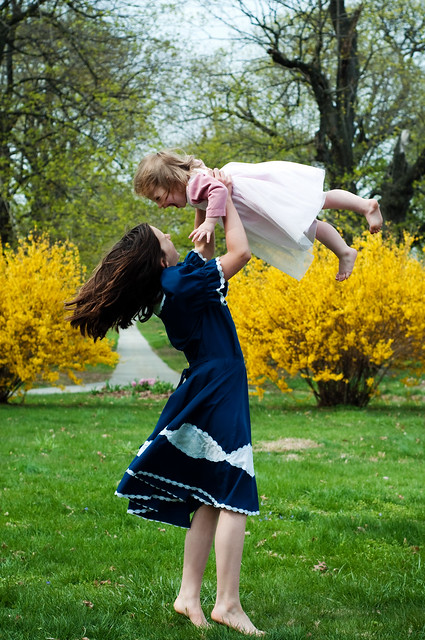
Within the small boundaries of my own backyard fence, this hunger birthed wild, waving forsythia and two spinning daughters. Unleashed, this hunger envisioned nodding daffodils and wild violets that pour themselves out like a river.
This hunger spoke a tree so shocking, so pink, it burns my eyes like a sun.
*
“This is the Lord’s doing, and it is marvelous in our eyes!” (Psalm 118:23)
*
*
The sour cherry tree beyond my kitchen window is in bloom. The flowers are dainty. They are white ghosted with silvery green.
But the smell … it is nectar and roses and honey on the wind.
The air, like the breath of God himself, teases us. Tempts us. This is purposeful scent. This is devious scent. We can close our eyes and stop up our ears. We can harden our hearts with walls of fear, but the breeze slides past all of it.
And nectar and roses and honey say what are you hungry for?
What is your heart’s desire?
*

*
These Farmhouse Bookshelves (and a Giveaway!)
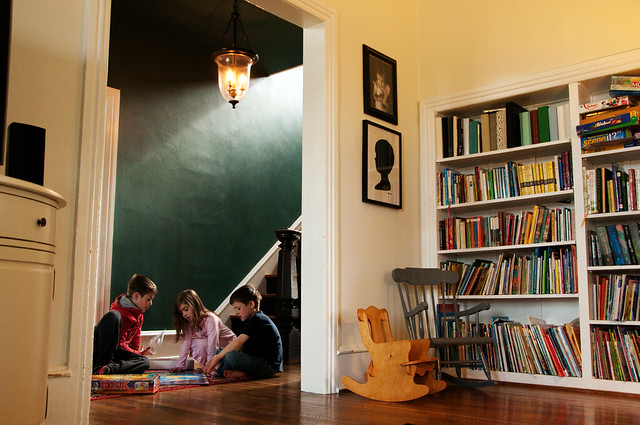
Let’s all spread a blanket on some fresh spring grass and read a book, shall we?
Not sure what to read? Let’s see if I can help you with that. Not only am I recommending a few of my favorite recent reads (books with this season very much in mind), but I am GIVING AWAY FREE BOOKS.
Do I have your attention? Read to the end for all the details. And, as always, remember that I use affiliate links in each new edition of These Farmhouse Bookshelves. You can find more information about that right here.
*
*
Recently, my sister Kelli sent us this first book as a gift (yes, the same sister of photography fame). It’s a picture book, but it was pretty much my lifeline during those last few horribly brown pre-spring days. The kids love it, too.
And Then It’s Spring (Booklist Editor’s Choice. Books for Youth (Awards))
This is a far cry from captain-underpants and diary-of-a-wimpy-kid humor, but it had my own kids howling. And then breathing very quietly and asking questions about the seasons and how plants grow. So, pretty much a winner.
… it is still brown, but a hopeful, very possible sort of brown … – Julie Fogliano
I discovered this next writer, and her debut book, at the recent Festival of Faith and Writing at Calvin College in Grand Rapids, MI. This book may have been the very best thing about that festival (though I hesitate to quantify an experience that was full to overflowing with Very Good Things).
Things That Are
First, it is a beautiful book. Lovely to hold and with elegant, whimsical illustrations. A book-lover’s book.
Second, the writing is startling. Every single word is surprising and unanticipated. Hilarious and wise. Leach makes me laugh out loud and reminds me of the power words have to stab me straight through the heart. This book is a marvel.
What is it, exactly? It’s like a cross between a PBS nature documentary and Lewis Carroll. Except, so much better. So much wiser. Leach writes about nature – everything from panda bears and sea cucumbers to caterpillars and pea vines. She isn’t writing about people, except that she is. This is a book about the beautiful strangeness of our world and how much we can learn by taking a very close look at the creatures all around us.
Things That Are stretches the English language to its most delightful limits. This is nature writing as poetry, and each essay deserves to be read out loud.
Haywire personalities like peas, wobbly personalities with loose ends, iffy ends, result not from having no aim, no object in life, but from having an extrasensory object. What they want is beyond their powers of apprehension – until they hold it in their acute green wisps- so their manner is vagabond. The personality that longs only for perceptible things is down-to-earth, like a dung eater. But the teetery-pea kind send out aerial filaments to hound the yonder, tending every which way, guessing themselves into arabesques, for they are fixed on the imperceptible. – Amy Leach
Amy Leach sat right next to Fred Bahnson for one of my favorite panel presentations of the festival. I am also recommending his book Soil and Sacrament: A Spiritual Memoir of Food and Faith

In Bahnson’s words, this book is written from the perspective of a “pilgrim” and an “immersion journalist.” He tells his own stories, but he tells the stories of many others around the world who have discovered the sacredness of the dirt under our feet. This is a diverse bunch. There are mushroom-cultivating monks, metal-head, ex-con coffee roasters, maiz-growers in Mexico and Honduras, Pentecostal farmers, and Jewish growers of organic vegetables.
Gardeners and foodies will automatically appreciate this book, but I think it deserves a much wider audience. This book is also for all those interested in peacemaking and justice.
Beyond even that, this is a book about our spiritual origins. As Bahnson describes so eloquently, one of humanity’s oldest stories tells us something about ourselves that remains vitally important: we are the Adam who was created from the adamah. We are humans made of humus. Our spiritual and physical lives depend on the soil too many of us find it easy to ignore and abuse.
Our ecological problems are a result of having forgotten who we are – soil people, inspired by the breath of God. – Fred Bahnson
Now, on to the details you’ve been waiting for … free books.
The first giveaway is straight from me to you. I want to say thank you for reading these book recommendation posts, for sharing your own recommendations with me, and for clicking on those amazon affiliate links!
Also, I love Amy Leach’s book so much I want to share it with one of you. Leave a comment on this post, and you are automatically entered to win a copy. It will be very professional and unbiased and probably involve names in a hat.
The second giveaway is courtesy of Moody Publishers and my fellow writer Hannah Anderson. I’ve appreciated Hannah’s contributions at Pick Your Portion (we are both regular contributors there), and she has just written an eloquent and important book.
Conversations about women, the church, and identity tend to focus on roles or categories or accomplishments. I happen to think that those are very important topics of debate, and I love the books that shine new light on old conversations. But Anderson sets up camp somewhere else entirely, and we need that too. Made for More: An Invitation to Live in God’s Image
This is an inspiring, encouraging, beautifully written book. Again, leave a comment on this post, and I’ll stick your name in the hat for a chance to win your own copy.
I’ll leave comments open for a week. Leave your comment before Friday, May 9 at 11:59 pm.
Good luck and happy reading!
Our Stories Come From Hunger
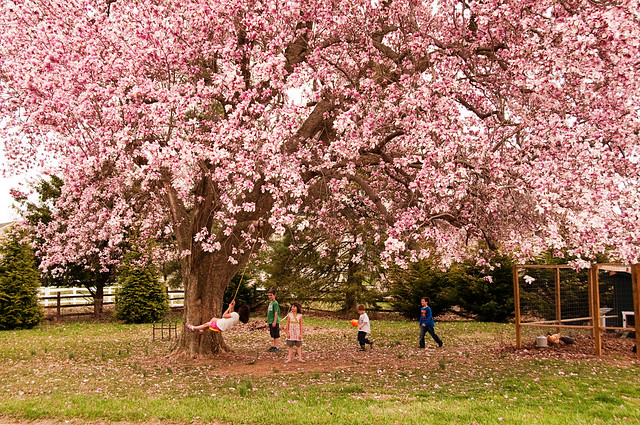
Our Easter feast began the day before, on Saturday morning. One hundred or so neighbors. Two thousand or so eggs. Warm sunshine and hot coffee. Conversation and sticky children.
Or maybe it began earlier that week. When my sister and her four children tumbled, along with the crayons and crumpled napkins, from their minivan. A three-day road trip from Florida suddenly ended.
It is Easter, and we have feasted. On cousins sprouting like weeds and epic games of Monopoly. On baby chickens discovering bugs and grass and baby lettuces discovering rain.
We have feasted on hard-boiled eggs turned somewhat unappetizing shades of blue and my mother’s recipe for Greek chicken.
But mostly, we have feasted on time. On moments stretching into days spent at the table side-by-side with family.
***
***
Family, for us, has always been feast or famine. Separated by miles, our mailing addresses like stars in a far-flung constellation, we do not relate casually. There is no dropping by. No Sunday lunches then home again. No Christmas gifts delivered in person. No grandparents to babysit for date night.
We have only not enough (telephone calls and emails) or too much (three daily cycles of the dishwasher and four of laundry just to keep the show running).
We know Lenten hunger, and we know Easter fullness.
***
Feast days leave little space for story-making. Not storytelling. There is time for that as we sit at table. Storytelling is a necessary part of celebration.
But story-making is born of hunger rather than plenty. It is our longing that reveals the contours of new dreams and new stories. Because we hunger, because we do not have, because we suffer, we search for meaning like desperate sailors search for land.
We search for cool blue in desert wastes. We search for Kelly green in stubborn snow.
In winter, we toss in our sleep, and we dream of spring.
In spring, we sleep dreamlessly and wake refreshed.
***
***
“For everyone who asks receives; the one who seeks finds; and to the one who knocks, the door will be opened.”
Matthew 7:8