by Christie Purifoy | Nov 4, 2013 | Autumn, Community, guest post, Pennsylvania, Seasons, Stories, Uncategorized
There is something about autumn in this Pennsylvania countryside that turns my mind to ghost stories.
When the fog curls around the trunk of the weeping willow, I half expect to see the headless horseman ride by.
When I pass the field where the Hessian soldiers camped before they joined the redcoats, I think I almost see their faded muskets between the trees.
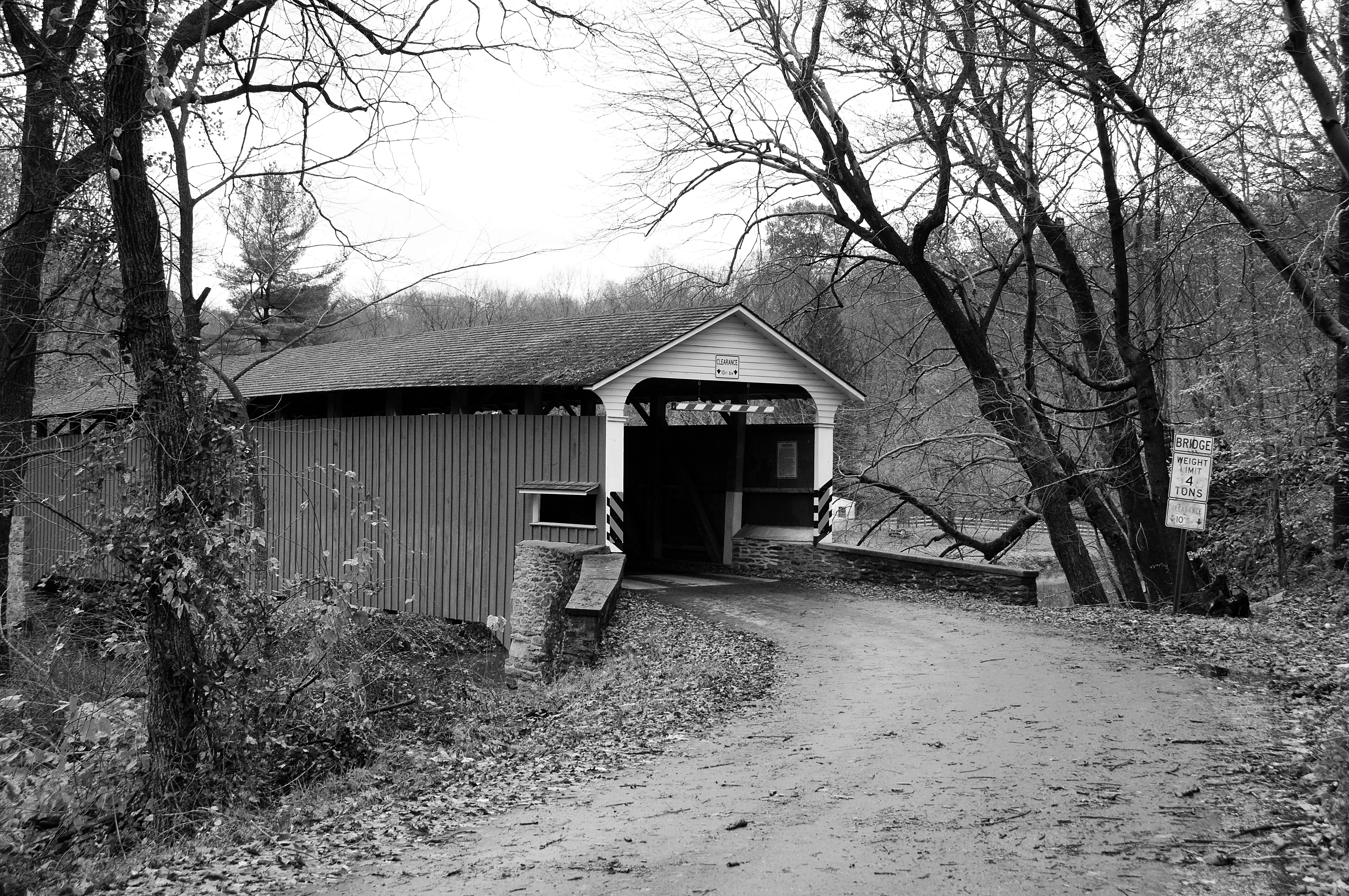
There aren’t many places left in our world where the past feels so near. So everpresent.
Truthfully, I’m not sure I believe in death when I cross vast parking lots or stand beneath fluorescent lights. But I am learning. This place of somber black horse-drawn buggies, covered bridges, and old stone farmhouses is working a change in me.
I am learning that fluorescent light and concrete don’t tell the truth. I am learning that some realities can only be glimpsed in the low, golden light of Autumn.
I’m sharing a story about a covered bridge and a cloud of witnesses. I hope you’ll click through to read it at Living the Story (via BibleDude.net).
by Christie Purifoy | Aug 15, 2013 | Chicago, children, Dreams, Florida, Home, Jesus, motherhood, One Word, Pennsylvania, Seasons, Uncategorized
The cherry trees behind our house may be old, but they are scattering yellow leaves like overeager flower girls before a wedding.
It isn’t time yet, I whisper.
But it is time. No matter what the calendar says, it is time. I know because I have seen this once before. On August first, we began our second year at Maplehurst, and this, yellow leaves on green grass, is the first return.
The first year is a surprise. The second is a return.
//
//
She is eleven months going on all-grown-up, and I have unpacked some of her older sister’s clothes. Here is the white dress Lily wore in her one-year-old portrait. Here is the rainbow-striped sunhat she wore our first summer in our 48th Street condo.
We no longer live in that city, though it was the first place that ever felt like home to me.
My first baby girl is also lost (replaced by a nearly-ten-year-old whose legs look impossibly long in their roller skates). Of course, she returns in memory, she returns in the soft curve of her baby sister’s chin, and, who knows, maybe she’ll show up again when I unpack this dress for a grandbaby someday.
Nothing good is ever truly lost (which is another way of saying that all is being made new).
//
Today, I reread my journal. I remember the wandering years. Those drought years when the smoke of Florida wildfires was like a pillar of cloud. Back then, I wrote down the words of Zechariah.
Though I scatter them among the peoples, yet in distant lands they will remember me. They and their children will … return. I will bring them back.
Moving to this place one year ago felt like this return. Once again, we would know the rush of four seasons, the familiarity of a good friend’s face, the comforting rightness of the words this is my home. All this while watching another baby girl grow.
But return is not a one-time thing.
One year in, and I know that life with God is all about return. I am returned. And every day I am returning.
The prophet’s words tell the story of my life. Of my rescue. They also tell the story of the world:
Come, let us return to the Lord. He has torn us to pieces but he will heal us; he has injured us but he will bind up our wounds. After two days he will revive us; on the third day he will restore us, that we may live in his presence (Hosea 6:1-2).
We die so many deaths, but we are never lost. The son of God gives himself up but is returned to us on the third day. And every day this world is made new.
Something new!
If creation sings, then those are the words to her song. It is a song about birth. It is a song about coming home. It is the song of our God and our world.
I have seen these yellow cherry leaves before, yet I have never seen them before.
They have returned. They are new.
At that time I will gather you; at that time I will bring you home.
Zephaniah 3:20
by Christie Purifoy | May 25, 2013 | Books, children, Seasons, Summer, Uncategorized
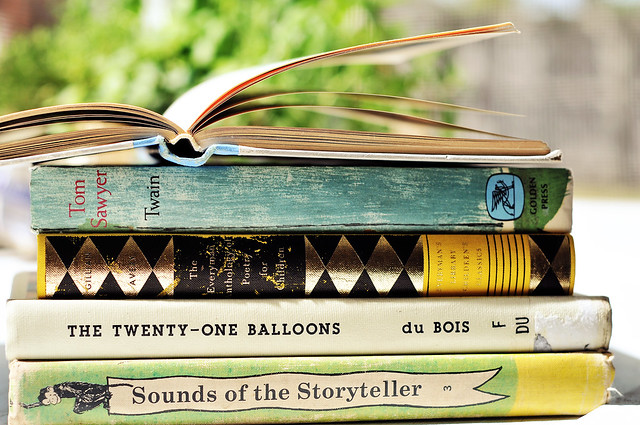
Here is one last peak at my bookshelves before summer.
I think one of these might be just the thing for that afternoon in the hammock, the long car trip, those sweaty hours between events at the swim meet.
I plan to read as much as possible these next few months. I’m imagining quiet afternoons with a sleeping baby and three kids with noses-in-books, but the reality is more likely to be me on my green sofa, one eye on the so-close-to-crawling baby and one on my book, while I try desperately to tune out the shrieks of three children running circles around the room. Yes, I’m trying to be realistic.
Either way, my plan is to bring These Farmhouse Bookshelves back in September with fresh recommendations.
One of my favorite writers (she is a master of the revelatory interior monologue) has a new book. Kate Atkinson’s Life After Life: A Novel is the best thing I’ve read in a long time.
I was skeptical at first. Perhaps you remember my distaste for literary gimmicks? Atkinson’s latest is structured around a stunning gimmick, but this excellent novel doesn’t deserve that pejorative term.
The book’s heroine is Ursula Todd, an Englishwoman who lives (and dies) through the Great War, the Spanish Flu epidemic, World War II and the London Blitz, and all of the upheaval of early twentieth-century European history. She lives, and she dies, and then she is born again, always and, it seems, forever on the same snowy night in 1910.
That is the novel’s literary device, and though it seems to break so many rules (most importantly, the reader’s assumption that the very worst thing cannot befall a novel’s primary character), Atkinson uses it to brilliant effect.
Ursula’s many lives and deaths, and the fascinating ways in which her story changes or does not, add up to a compulsively readable novel (after moving slowly through the first third, I couldn’t put it down) and one that gives us so much to think about: from questions of history and personal fate to the God-like role of novelists themselves.
Life After Life is the coming-of-age novel writ large. Ursula is given chance after chance to live well. We are given only one. We can learn a great deal from a character who knows the depths of the adage that “practice makes perfect.” The important question is, in that tumultuous time and now, what constitutes a well-lived life? What does “perfect” really look like?
Sylvie’s knowledge … was random yet far-ranging, ‘The sign that one has acquired one’s learning from reading novels rather than an education …’
A Time to Keep: The Tasha Tudor Book of Holidays may be the best children’s book I never read as a child. I love it so much, I feel as if I have lived in its pages the way only a young child can.
Featuring Tudor’s beloved illustrations, this picture book shows us twelve months of celebration in a rural, New England family about a hundred years ago. Based on Tudor’s childhood memories, we have beautiful pictures and brief descriptions of a bonfire on New Year’s Eve, a syrup-making party in March, a dance around the Maypole, and a very special August birthday, to name just a few.
This is a book about the special rhythms of the seasons and of family life. It is sweetly nostalgic and inspiring. Enthralled by the book’s August birthday party, my daughter and I have decided that someday, somehow, we will float a candlelit birthday cake down a stream at twilight.
August brought your mother’s birthday which we celebrated at night by the river. The table was set with birch bark plates and gourd drinking cups.
I pulled this last book off my shelf last night and promised myself I’d reread it over the summer. Even the summer months deserve something of high literary value, but I find that short stories are easier to squeeze in between visits to the pool, park, and farmer’s market.
The Springs of Affection: Stories of Dublin is a collection of realist short stories by one of The New Yorker’s most gifted writers, Maeve Brennan. Out of print for decades, these stories were republished four years after Brennan’s death in 1993.
Born in Ireland, Brennan lived in New York from the age of 17, but the stories are each set in Dublin. These are stories about family and affection as well as the uglier emotions which can mar those relationships: emotions like grief, envy and even hatred.
These are stories in which each detail of a character’s dress and environment matters. They suggest that a writer’s primary task is observation. Writers, especially, appreciate Brennan’s work, but I think she has something to teach all of us. Whether we write or not, our lives are enriched when we pay close attention. To the arrangement of dishes on our kitchen shelf. To the face of a friend or child.
… you would think, looking at such an arrangement, that the boxes contained something of interest or of value. And what did they contain? Old bills marked paid thirty years before. Recipes for dinner she had never cooked, dinners so elaborate that she must have been dreaming of a vist from the king and queen of England when she cut the menus out of the magazines in which she had found them.
What do you plan to read this summer?
by Christie Purifoy | Apr 17, 2013 | Florida, Gardening, God's promises, Grateful, Home, Joy, Pennsylvania, Seasons, Spring, Uncategorized, Waiting
Spring has finally come to Maplehurst, and we are living in a watercolor world. Trees are smudged with the almost-neon green of new buds. The ground is blurred by the purple and white of wild violets. Move your head too quickly, and the brilliant yellow of the dandelions might just look like a lightning strike.
For several days, I have noticed a spot of garish orangey-red near the laundry room steps. I assumed it was a child’s toy. Something awful and plastic. Today, I realized it was a patch of tulips striped orange and yellow. They have large, black polka-dots in their middles. They are the tackiest flowers I have ever seen, more like circus clowns than plants. These tulips, bursting out near the propane tank, prove spring does, in fact, have a sense of humor.

I was twenty-one before I witnessed a real spring, the kind that only comes after a long, cold winter. We were living near Washington D.C.. I had never seen redbuds and forsythia, cherry blossoms and tulips. And the dogwoods. Oh, the dogwoods.
I’d been raised by a farmer-turned-gardener, but I’d never paid much attention to plants. That first spring, something woke up in my twenty-one-year-old soul, and I’ve been paying attention to plants ever since.
On a walk to see the cherry blossoms near the Jefferson Memorial that spring, I noticed a spectacular flowering tree. It looked as if a hundred thousand delicate, pink-winged birds had come to rest on its branches. I took a closer look at the flowers, and I knew they resembled magnolia blooms.
I may not have paid much attention to Texas flora beyond the justifiably famous bluebonnets, but I, like any southern girl, knew that magnolias never lost their dark, glossy green leaves. I also knew that magnolia blooms are pure white, as big (or bigger) than a baby’s head, and they merely dot the tree, like ornaments placed just so.
In other words, this brilliant pink explosion of a tree could not be a magnolia.
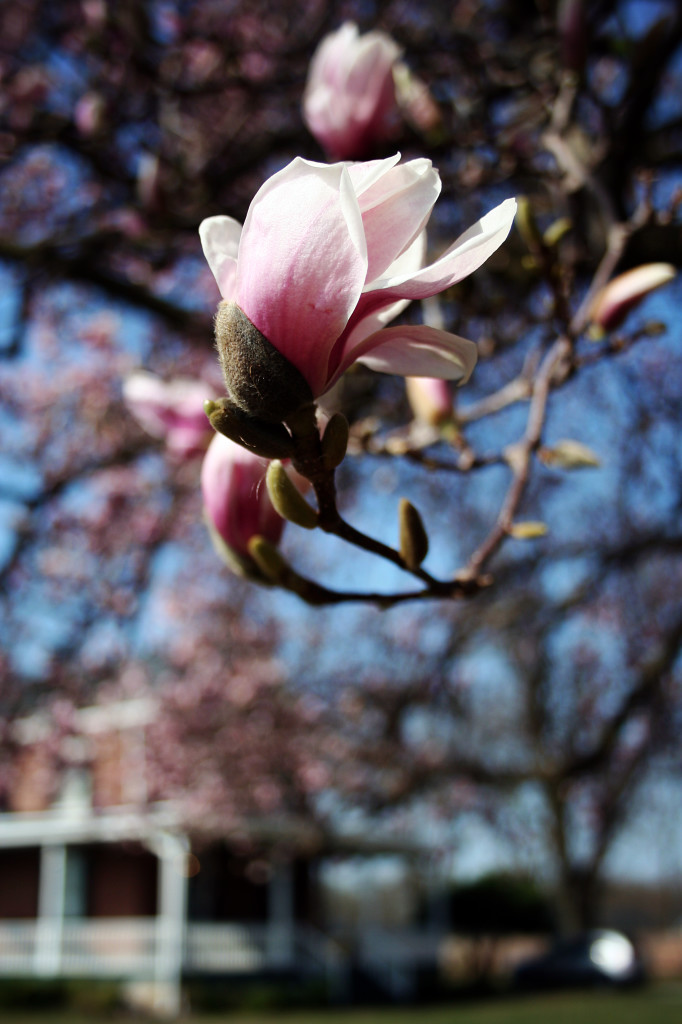
But it was. That year, that first spring, I learned the difference between the south’s evergreen magnolias and the deciduous varieties grown farther north. I learned the difference, and I chased it.
After two years in Virginia, it was time to choose a graduate school. I took one look at the blooming pink magnolias lined up against the gothic grey of quadrangle walls and knew I’d be moving to Chicago.
After Chicago, I lived for two years in a Florida house with an evergreen magnolia centered proudly in the front yard. It was lovely, yes, but it reminded me that I was living in an eddy. My life had turned backwards and sideways. For two years, I had no spring.
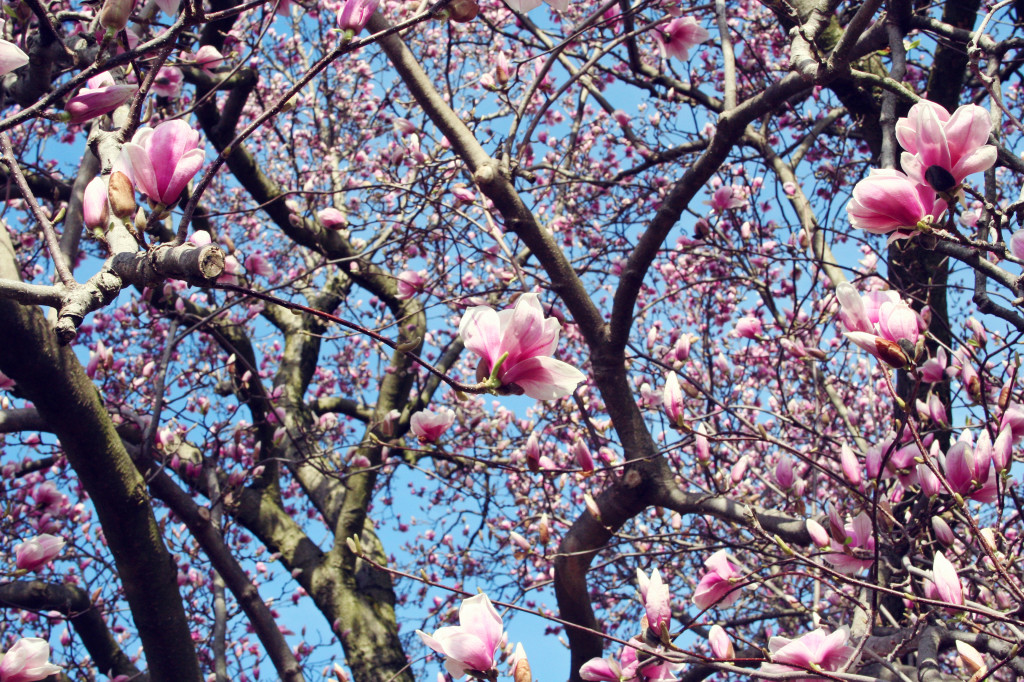
Nine months ago, we moved to Pennsylvania, to this Victorian farmhouse called Maplehurst. I knew the old tree planted north of our front porch (a tree that must be as old as the house itself) was a magnolia. A deciduous magnolia. The largest I have ever seen.
And I’ve been waiting.
Waiting for God to keep his promises, waiting for life to get a little easier, waiting for spring – spring like we haven’t seen for three years – to come.
This was waiting as it is meant to be. Waiting with hope. Waiting with full expectation. This, not because I’ve finally mastered the spiritual discipline of waiting, but only because I have lived through a few winters, and I have seen them all end.
I have been waiting with eyes wide open because I could see the tree always outside my window. I knew what it had in store for me because I’ve seen it before.
But never this big.
Never this beautiful.
Never this good.
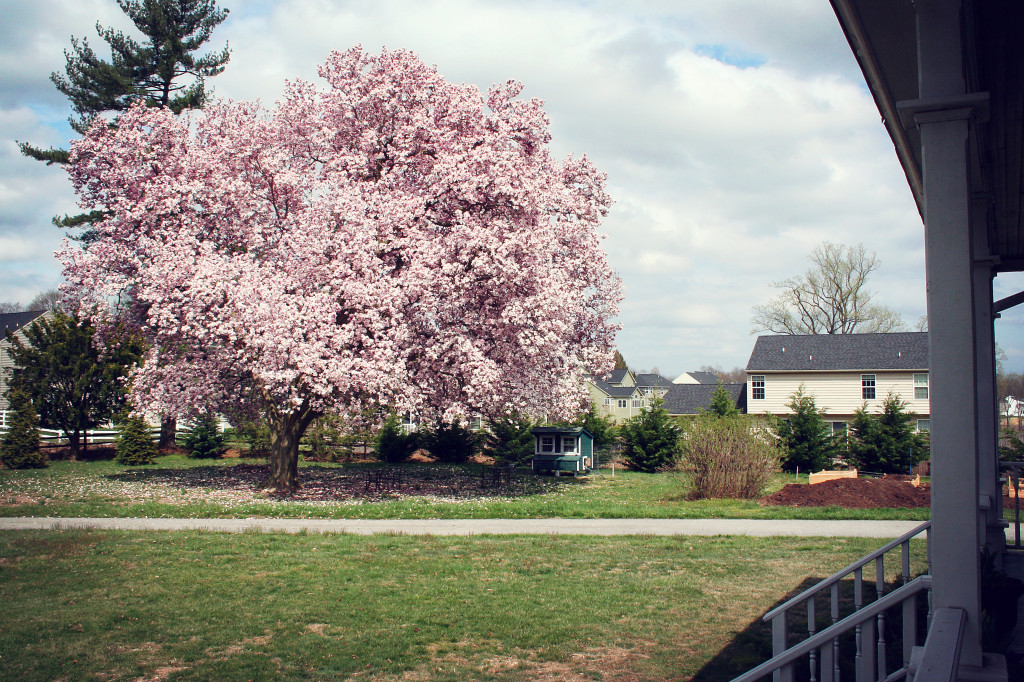
“Flowers appear on the earth; the season of singing has come.”
Song of Songs 2: 12

by Christie Purifoy | Mar 22, 2013 | Blog, Family, Lent, Seasons, Spring, Uncategorized
These last awe-full days of Lent are upon us.
To be honest, the past few weeks seem to me like a blur of pictures and noise. The world is spinning faster now than it was just a month ago (something the poets know even if the scientists haven’t yet discovered it), and I feel the need to stop and steady myself.
And then … the headlong rush into a world made new.
I want to be ready. Or more precisely – I want to notice where it is already springing up.
I don’t want to miss any of it.

I’ll be opening my laptop a little less and stepping outside a little more.
Look for me in this space after Easter.
Thanks to our Photographer Kelli Campbell for this image of
my daughter on one of the most beautiful spring days I can remember.
Find more of Kelli’s photography here.
by Christie Purifoy | Mar 19, 2013 | Faith, Gardening, healing, Jesus, Lent, Seasons, Spring, Uncategorized, Waiting, Winter
Today is the day for a miracle …
Today the calendar says spring, but when has the calendar ever told us anything true?
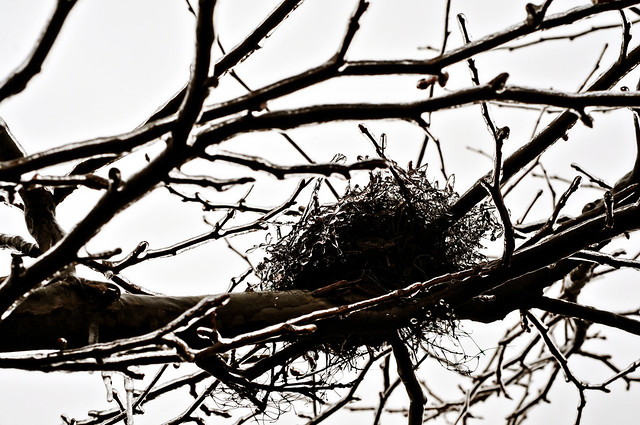
As I write, darkness has dropped, the wind is howling, and the hanging porch lights are twisting like terrified animals on their chains.
The sound of this wild March wind does not make me feel cozy. It sounds too much like someone in pain.
Today is the day for a miracle …
I keep telling myself spring is already here. I’ve known for days that it was time to plant. Peas, lettuce, radishes, beets, spinach, swiss chard … so much needs to be in the ground.
But who has faith for gardening in the midst of snow flurries and sleet?
Today is the day for a miracle …
The apple trees we ordered months ago have arrived. They look like apple sticks. The children do not believe me when I tell them we’ll bake pies. I’m not sure I believe myself.
But I’ve seen more winters than my children, and I do know this: the day when daffodils emerge is not the day for hope. The day when seedlings show the bright green of new life is not the day for faith. That day came and went.
This is the day for a miracle. This day. The dark day. The cold day. The day when all you can see is mud and broken things, like so many toys strewn across the backyard.
Easter Sunday is not the day for miracles. It is the day for praise.
Every miracle we ever needed, every miracle we ever wanted begins on Good Friday.
“See, I am doing a new thing! Now it springs up; do you not perceive it?”
Isaiah 43:19
*Today I am listening to this song by Hans Kraenzlin


