by Christie Purifoy | Jan 17, 2015 | Books, Gardening, Seasons, Uncategorized, Writing
Books have always felt like bread and water to me. Necessary. Daily. Delicious.
I am finding that to be even more true as I round the final bend of book writing. There seems to be an almost exact correlation between words in and words out.
These days, I am reading in order to keep the sounds and rhythms of good writing foremost in my mind. I am reading to jolt new ideas. I am reading to learn. I am reading to rest. It usually takes a book to shut my own book out of my head for a while.
Here is a little bit of what I’ve been reading.
You can find all the book recommendations in my occasional Saturday series right here. These posts contain affiliate links.
*
I never, ever recommend books I haven’t actually finished, but I’m making an exception for Jean Hersey’s The shape of a year . This book is a vintage gem, and I think I bought my copy for one dollar plus shipping. It’s worth fifty times that.
Hersey was a garden writer, and this book observes the four seasons on her rural Connecticut property with curiosity and joy. This is a book all about the simple pleasures of the seasons. It begins in January, and I have only allowed myself to read through March (because I want to walk through all of this year with this book nearby).
Some might complain that nothing much happens. It’s true that this isn’t a book full of human dramas. But Hersey knows what everyone with eyes to really see the world around them has discovered. There is always something happening.
*
I am afraid that the lady doth protest too much because I find myself recommending one more book I haven’t quite finished. Perhaps that is the true theme of this post: Books I’ve Partly Read! But the new nonfiction book by the novelist Ann Patchett is another one for savoring. I could sit down and read it in one gulp, but it’s January. Self-control and discipline are in the air this time of year.
This Is the Story of a Happy Marriage is a collection of essays and magazine pieces. Together they explore everything from how and why Patchett became a writer to what it’s like to try out for the Los Angeles police department. There’s a great bit about an RV road trip.
Patchett’s book is funny and fun. It hits all the buttons for me right now. Good writing that prompts new thinking in a collection that makes a restful, distracting escape.
*
This third book I not only finished but finished quickly. It is that mythical beast known as a page-turner. Fortunately, it is also well written and gives you a great deal to think about. It is Elizabeth Is Missing by Emma Healey.
This is a psychological mystery with a dose of historical fiction, but, mostly, it is a powerful portrait of growing older and of care-giving. I dare anyone to read this book without growing in empathy and compassion for the elderly.
What are you reading these days? And, perhaps more importantly, why?
*
by Christie Purifoy | Nov 8, 2014 | Books, Food, Gardening, Seasons, Uncategorized
We had our first hard freeze of the season last night. This morning, the sky is a deeper blue than I have seen in quite some time. The sky seems to respond well to freezing temperatures, as if making up for the dreariness of the earth. Though the dreariness will only come later. Right now the leaves on the ground are traced in frost, and the dahlias haven’t yet registered that they have reached their end. Their colors are still vivid.
I am grateful for our long, pleasant fall, but I am also breathing more deeply today. I recorded the date of the first freeze in my garden journal and felt a weight slide from my mind. I can close the page on this growing season. I do still have garlic to plant and a few more daffodil bulbs, but the seasons have taken a decisive turn. Around this bend lie dog-eared seed catalogs and sketches for the new flower garden. Piles of books, too.
When it is cold and dark, we read books in front of the fire like it is our job.
*
*
I recently finished a stunning new novel. I’ve never been in a book club, but when I closed this book for the last time, I wanted only to talk about this book. It’s that good. That thought-provoking. That beautiful. It’s Station Eleven: A novel by Emily St. John Mandel.
I once wrote about books I don’t know why I read but am so glad I did. Station Eleven would certainly qualify as one of these. First, I tend to avoid anything “dystopian,” and “post-apocalyptic” is even less appealing. Finally, I have never read any of Cormac McCarthy’s highly praised but violent novels, and I don’t think I ever will. When I heard Mandel likened to McCarthy, I had serious doubts about picking up this book. Yes, this is a book about the collapse of civilization after a serious flu bug kills most of the world’s population, but, I promise you, it’s really not about that at all.
All I can say is to forget everything I just wrote and go read this book. It isn’t violent, so we sensitive-flower types need not fret, but it is disturbing. It is disturbing in the way of excellent art. It gives you new eyes to see your life, your family, our world. It’s a book to wake up your soul. I don’t think it’s possible to read a book like this and stay just the same as you were.
But if that doesn’t convince you, it’s a compelling story. A pager-turner. The writing is beautiful, the characters are rich. And days after finishing it, I am still haunted by a single image. There is a moment when we come upon a group of survivors who have made their home in a building that was once a Wendy’s fast-food restaurant. This new world has no fast-food (and, on the flip side, no antibiotics), but humans still flourish. The old restaurant door must have worn out and needed replacing because the door on this former Wendy’s is hand-cut from heavy wood. Also, someone has carved the front with delicate flowers and vines. A work of art in a place once devoted to everything fast, cheap, and plastic.
Because survival is insufficient. – Emily St. John Mandel
Another recently finished, dearly loved book is Receiving the Day: Christian Practices for Opening the Gift of Time by Dorothy Bass.
It’s a lovely, wise book. You’ll find a mixture of accessible scholarship and personal storytelling. You’ll find a bit about Sabbath and a bit about the Christian church calendar. But, mostly, you’ll find lost wisdom. Time is not our enemy. And each day is a gift. Live in it, and be glad. It isn’t always an easy or intuitive way to live, especially in our harried culture. But this book will help. It is helping me.
Preparing and eating is a major component of our days, isn’t it? As much as I love food, I struggle with that. I struggle with the time required to plan and shop and cook and clean. I resent the hard work, and I resent the time it asks. I’m praying to let go of resentment. I’m praying to grow in gratitude for the daily gift of food.
A good cookbook helps. I know one reason I have struggled with preparing meals for my family is the challenge of my son’s many food allergies. Anaphylaxis really takes the fun out of things.
Against All Grain: Delectable Paleo Recipes to Eat Well & Feel Great by Danielle Walker is saving my life in the kitchen. Paleo recipes don’t all work for us (my son can eat almonds but no other tree nuts or peanuts), but most of these recipes are for foods we can and want to eat. I’m recommending this book to anyone with allergies or food sensitivities, but I also think this is a great cookbook for anyone who thinks they should cut back on wheat and dairy and refined sugar. Which, if we’re honest, is probably most of us.
There is a lot I could tell you about these recipes, but I will only share one story: I have tried and failed to make or purchase a dairy-free, gluten-free, nut-free birthday cake for my son for eights years. They have all been disappointments, some bigger than others. This past summer, I made the chocolate layer cake from this book. It was easy, used ingredients we already had on hand (though mine is the sort of kitchen where coconut oil and almond flour are always on hand), looked beautiful, and … well, my husband took one bite and looked at me with huge eyes.
“This actually tastes good.” I nodded in agreement. “No. I mean it. I would serve this to people! This tastes real.”
So. It’s good. You should check it out.
Tell me, what’s on your reading list for the dark days ahead?
by Christie Purifoy | Oct 11, 2014 | Books, Dreams, Gardening, Pennsylvania, Seasons, Uncategorized
Today, I am not giving you a peek at the bookshelves lining the walls of this old farmhouse.
Instead, I am giving you a peek at what you’ll find spilling out of baskets and boxes. What you’ll find stacked beside my bed and by my armchair near the fireplace. I’m showing you my pile of dreams. My paper stack of wishes.
I am recommending plant and seed catalogs.
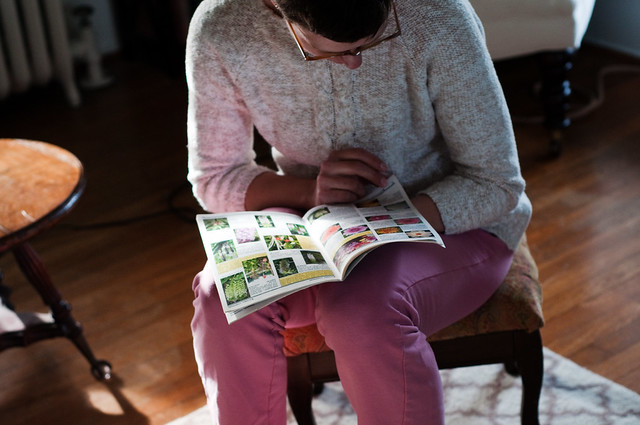
Why now? Why now as I put my vegetable garden to bed and watch for the first hard freeze?
Because gardens are born in winter. And this is the perfect time to sign up for at least a few (free) catalogs. They’ll be the guides to your dreams come December.
A garden should make you feel you’ve entered privileged space – a place not just set apart but reverberant – and it seems to me that, to achieve this, the gardener must put some kind of twist on the existing landscape, turn its prose into something nearer poetry. – Michael Pollan
The vegetable and flower seed catalog from Seed Savers Exchange is always a glossy, full-color treasure trove. This one is perfect for winter browsing, almost as good as a collection of short stories. You’ll read about the real “Grandpa Ott” behind “Grandpa Ott’s Morning Glories,” and the fascinating history of the “Moon and Stars” watermelon. Even better, by ordering heirloom seeds from the exchange you are also supporting the biodiversity of our planet.
The supermarket produce shelf offers a tiny slice – not even that, perhaps a pin drop – of the variety of creation. If a blight shows up this year favoring the (tasteless) grocery-story tomato, it will be the home-gardening seed savers and networks like Seed Savers Exchange who save tomatoes for future generations.
I don’t save many of my own seeds beyond a few dried flower heads. I’ve listed that activity under things I’ll do when I no longer have children underfoot. Until then, I do my part by ordering from Seed Savers.
Gardening is akin to writing stories. No experience could have taught me more about grief or flowers, about achieving survival by going, your fingers in the ground, the limit of physical exhaustion. – Eudora Welty
If you ever buy bulbs through the mail, especially daffodils and tulips, your mailbox will be flooded with catalogs claiming direct links to Dutch tulip fields. They will have phrases like “fine purveyors” on their covers. Brent and Becky’s Bulbs, a family operation based in Virginia, is pretty much the opposite of that. And I love them.
Brent and Becky (yes, they are real people) offer excellent service, quality bulbs, and fair prices. You can buy all the classic varieties, and you can find homegrown varieties they have named for a favorite relative or friend. Their catalog is full of advice and inspiration, and you can enjoy it at least twice a year. They send out separate catalogs for spring and fall-planted bulbs.
I buy my daffodil and tulips bulbs here every year. Last year I filled a bed with their lily bulbs. And I’ll soon be planting a few of their purple alliums.
I am intrigued by writers who garden and gardeners who write. The pen and the trowel are not interchangeable, but seem often linked. – Marta McDowell
The Antique Rose Emporium in Independence, Texas is a magical place. I grew up visiting it with my father, a farmer-turned-gardener, yet I somehow never dreamed of growing roses myself. Until, I came to Maplehurst.
Our little corner of Pennsylvania was once well-known for the roses Quaker farmers grew here for city markets. That heritage is still evident in street names and in long memories. Last year, it seemed important to me to bring roses back to Maplehurst. Of course, now I’m hooked.
I used to hear “antique roses” and imagine fussy, hard-to-please plants. If caring for antique furniture was more complicated than dusting a piece from IKEA, then surely plants were the same. Strangely, the opposite is true. If you are looking for a rose that is easy to grow, less susceptible to diseases and insects, and (bonus!) highly scented, then it is an antique rose that you want.
You can also find them described as “Old Garden Roses,” and the catalog from the Antique Rose Emporium is one of the best ways to learn about these wonderful plants. Thanks to this catalog and other books published by its founder, I have gorgeous, cabbage-y pink roses still blooming in my garden today. In the middle of October. Yes, you can call me a fan.
Also, I think it very important to support any business with “emporium” in its name. Just a personal pledge of mine.
I love my garden, and I love working in it. To potter with green, growing things, watching each day to see the dear, new sprouts come up, is like taking a hand in creation, I think. Just now my garden is like faith – the substance of things hoped for. – L.M. Montgomery, Anne’s House of Dreams
I grew dahlias for the first time this year, and I am hooked. My gardens all look a bit shabby by October, but the flower bed across from our front door has exploded with beautiful, bouncy, mop-headed dahlias. You can find a million pictures (approximately) of my dahlias on instagram. Like this one. And this one. I can’t seem to stop taking their pictures.
I’ve done little dahlia comparison shopping, but Swan Island Dahlias was recommended to me, and I will be ordering from them again. Their catalog is beautiful and extensive, and every one of the tubers they sent grew and thrived. My favorite bit? They stamp each tuber with the name of the variety. This made it easy to remember what I was planting and where.
Dahlias always intimidated me because I knew they weren’t cold-hardy. The thought of planting something only to dig it up again in the fall seemed ridiculous. Why would I do that? Well, now I know exactly why. (Also, here’s a tip. If you aren’t sure you can handle that amount of effort: plant them anyway. No one will ever know if you just leave them in the ground. And if it’s a mild winter? They may just come blooming back again.)
However many years she lived, Mary always felt that “she should never forget that first morning when her garden began to grow.” – Frances Hodgson Burnett
Now I’d love to know, do any of you garden? What are your favorite sources? Please share them in the comments!
by Christie Purifoy | Aug 2, 2014 | Books, Family, Gardening, Seasons, Summer, Uncategorized
(This is a summer installment in my occasional series of book recommendations. The following post contains affiliate links. You can find previous recommendations right here.)
*
I adore summer, but I was not made for summer.
I was made for curling up with a book on snowy days. I was made for the slow, careful glide across ice. I was made for the silence of the whole world hushed by snow.
But I love summer. I love raised beds for vegetables and 3 chickens fighting for one worm. I love sun-warmed tomatoes with cracked pepper and babies sticky with a first popsicle. I love that one white lily picked from my flowerbed fills nearly the entire house with its scent.
*
*
Summer is sensory overload.
Which means I am having a hard time reading. A novel, especially, is a whole new world of sights and sounds and emotions and ideas. But my small world is full to bursting with those things. At least in summer. And I can’t handle any more.
I tried reading The Expats: A Novel by Chris Pavone. Someone recommended it to me, though I’ve forgotten who. It seems clever and thrilling. Hip and suspenseful. I only managed a chapter (maybe half?) before I set it aside. It’s summer, and I have no room in myself for cleverness or hipness. I’ve taken to rereading my favorite essays in Amy Leach’s wonderful Things That Are
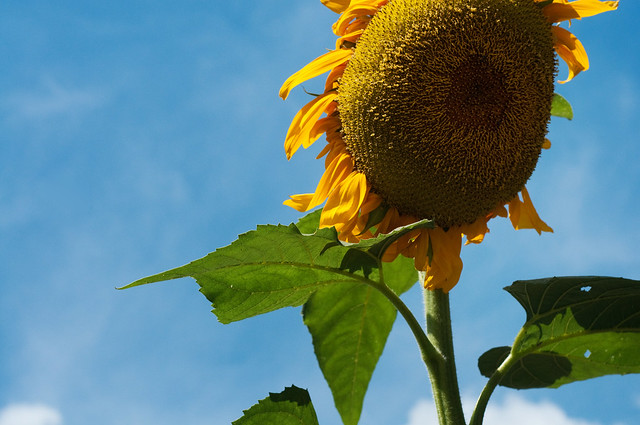
 , instead. Somehow, they are clever in a way that moves me deeper into what is right in front of me, like sunflowers grown taller than my husband and a woodchuck who nibbles my daylilies despite the cat stalking him from behind the baby plum tree.
Jonathan and I watch the cat/woodchuck drama while we rinse and load the dinner dishes. Then we go and watch British television shows on YouTube. Comfort-food television like Restoration Home and Great British Garden Revival.
*
*
My nightly reading with the kids is also a serving of comfort and nostalgia. Tumtum & Nutmeg: Adventures Beyond Nutmouse Hall by Emily Bearn is a new book, but it reads like an old favorite. This is an English countryhouse novel for kids, and even my boys love it. The firstborn and I dream of genteel mice making a kind of summer home in a child’s dollhouse, and the boys cheer on General Marchmouse as he advances against the cartoonishly evil Aunt Ivy.
The baby and I are reading Adventures with Barefoot Critters by Teagan White. The illustrations and typography are lovely in this just-released picture book. With its adorable animals in adorable clothes doing adorably fun things, you might call it Tumtum & Nutmeg for the toddler set.
And when everyone is in bed? No, they aren’t asleep. It is summer, after all. But as long as they are in their rooms, and the door is muffling all the not-so-subtle sounds of a sibling “sleep-over,” then you will find me curled up with Empress of the Garden by G. Michael Shoup (an enormous coffee-table book of antique roses) or Private Edens: Beautiful Country Gardens
 by Jack Staub (another coffee-table-sized treasury of garden inspiration), or maybe The Layered Garden: Design Lessons for Year-Round Beauty from Brandywine Cottage
 by David Culp (this one weighs a little less and is as practical as it is inspiring).
In other words, in summer, you will either find me in the garden or reading about gardens.
Because there are three other seasons for smart novels and broadening your horizons and ticking items off of must-read lists.
Happy summer, friends.
*
by Christie Purifoy | Jul 23, 2014 | children, Gardening, God, motherhood, Scripture, Seasons, Summer, Uncategorized
My youngest, not yet two years old, has begun to say her own name. She has been speaking of other things for quite some time. Important words like “shoe” and “mine” and “chicken.” But apparently one can live perfectly well for many, many months without feeling a pressing need to pronounce your own name.
But if I ask … if I say, “Elsa, where is Elsa?” then she will tap her own chest and say “Elsuh-suh.”
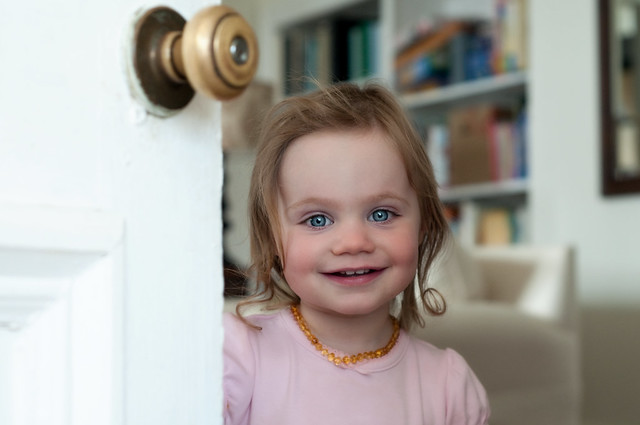
She is my fourth child. This means I am under no illusions. I know that even if I write the memory down in her baby book, even if I manage to capture phonetically the doubled sounds of her pronunciation, I will forget. A day will come, sooner than I imagine, when I will find myself unable to recall the particular cadence of my daughter, naming herself at not-quite-two.
This season, this brief summer at home with my children, seems built entirely of such small things. In five years, I doubt I will be able to recall anything of these weeks.
Scripture speaks repeatedly of a “fountain of life.” I am a mother, and I tend a garden. Raising babies and flowers, I have learned to seek that living, renewing water in things that would seem to be the most fleeting. The most temporary. I have learned that the most important things in life are only rarely weighty enough to settle permanently in our memories.
For instance, just when I had entirely forgotten them, the morning glories have returned. Green leaves and deep purple flowers are twining themselves around the spindles of the front porch. Each fall, the vines die. They die utterly, to the tips of their roots, but before the arrival of the first killing freeze, they scatter their seeds.
In early summer, those seeds sprout and stretch and reach for the same spindles of the same front porch. They are the most ephemeral of flowers. Yet, somehow, they are the most enduring. They are, in their way, eternal.
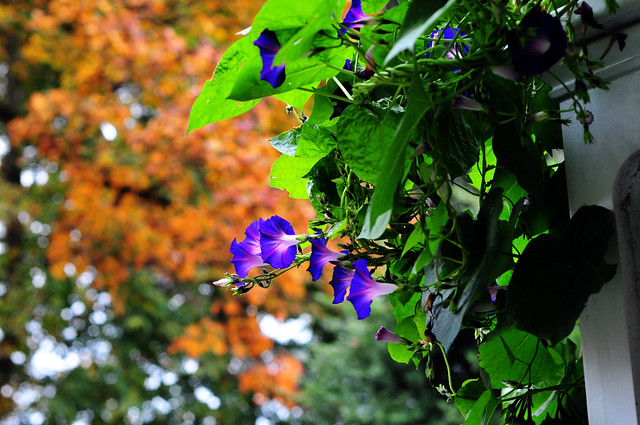
For years I sought eternity by keeping my arms wrapped tightly around solid things. Permanent things. Things known and understood. Things that were sure to last. These were the things I believed had eternal significance.
But years of mothering and years of gardening have taught me to look elsewhere. These years have taught me that I touch the far horizon of forever when I step forward into emptiness, seeking, like a twirling vine, for things unseen. Unknown. Imperfectly understood.
God our maker has “set eternity in the human heart” (Ecclesiastes 3:11). We reach for the far horizon of forever like those vines reaching for the home, the source, they have never actually touched.
It may be that eternity is the home of so many things I have forgotten or misplaced or failed even to notice.
Certainly, eternity is God’s home. The throne room of the One who counts hairs. Bottles tears. Holds sparrows as they fall.
by Christie Purifoy | Jun 30, 2014 | Gardening, grief, Summer, Uncategorized
We have quite successfully banished grief from our lives.
Dying proceeds in hospitals. It leaves no lingering trace in the pristine spaces of our homes.
Death is sometimes marked in an old-fashioned way. We do occasionally carve the same old stones. Though the ancient words requiescat in pace have been abbreviated and largely limited to Halloween décor.
But then we follow the trail of job offers and changes of scene until the grave stones that matter, the ones we still see with our mind’s eye, lie miles away. We cannot bring flowers. We cannot bring our children and tell them stories of the one we knew and loved.
But somehow grief still finds us. It winds its way in on unexpected paths. And in unexpected places.
For instance, the garden.
An old tree falls, and we are surprised, embarrassed even, by our tears.
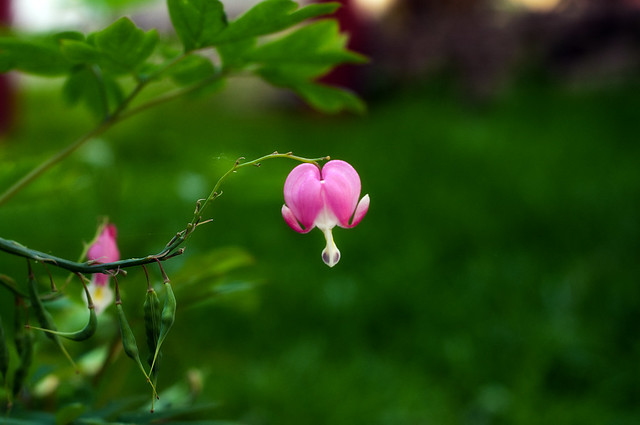
We learn practical gardening techniques, and give them misleadingly neutral names like layered gardening or four seasons gardening. Now, we cheerfully interplant our tulips and daffodils with shallow-rooted perennials. See! What fun! You and I need no longer be assaulted by the dying bulb foliage. Death is always camouflaged by the next blooming plant.
Always there is the next thing. We need never look back. Daffodils! Then lilac! Then azaleas! Then roses! Now hydrangeas! And daylilies! And late-summer dahlias!
There is no need to mourn the passing of the daffodils.
But if the gaps still find you … If the empty space in your flowerbed haunts your sleep even in the midst of summer’s blooming bounty … well, the horticulturists can help.
They have tinkered and fiddled (plotted and potted), and now you can purchase the solution to your sorrow.
Every plant now has its reblooming variety.
Reblooming lilac. Reblooming azaleas. Reblooming roses. Reblooming daylilies.
Dry your eyes. Take up your nursery catalog. Look for words like boomerang and knock-out.
Because even in the garden we need never say goodbye. We need never sit in quietness waiting for the return of every beautiful thing we have loved and lost.
*
*

