by Christie Purifoy | Feb 2, 2013 | Books, Uncategorized

Another Saturday, another peak at my bookshelves … this time with a little Downton Abbey inspiration.
Now, Sybil, dear, this sort of thing is all very well in novels, but in reality, it can prove very uncomfortable. (Violet Crawley, Dowager Countess of Grantham)
I’m a lucky lady. Not only will my husband happily watch hour after hour of PBS Masterpiece Classics like Downton Abbey, but he’ll put up with my distracting, far-too-knowledgeable-for-my-own-good asides.
I spent ten years of my life studying the literature and culture of early twentieth-century Great Britain, so I get a tad opinionated about historical accuracy (for instance, Downton’s portrayal of master/servant relations is decidedly rosy, and no one would have disapproved of Edith’s marriage to an older man, there simply were not enough eligible men left alive after the war).
A bit of Ireland’s tumultuous history is reflected in the Tom/Sybil plotline. If you’d like to take a closer look, I’d recommend Elizabeth Bowen’s novel The Last September . Bowen was, herself, the daughter of an Irish Big House. Many of her neighbors and friends lost their great houses in the literal flames of Ireland’s struggle for independence from British colonial rule.
Bowen wrote her novel only a few years after the historical events she describes, but in those years the entire culture of Anglo-Irish landed gentry had all but vanished. For the Anglo-Irish, whose Protestant ancestors had arrived from England hundreds of years before to claim Irish land in the name of the British government, it really was the “last” September. Irish independence left them, metaphorically and often literally, homeless.
Here, there were no more autumns, except for the trees. … Next year, the chestnuts and acorns pattered unheard on the avenues, that, filmed over with green already, should have been dull to the footsteps – but there were no footsteps. Leaves … banked formless, frightened,
against the too clear form of the ruin. (from The Last September)
Interested in a country house novel for the beginning reader? Yes, there is such a thing! Of course, the main characters are, as one would expect, not people but mice. My daughter loves Tumtum & Nutmeg: Adventures Beyond Nutmouse Hall by Emily Bearn. Again, this is that rare combination: funny, clever, and easy-to-read.
No list of country house fiction would be complete without a ghost story. The Little Stranger by Sarah Waters was a finalist for the Man Booker Prize (I almost always love the Booker Prize winners).
This novel about a declining family, their haunted manor house, and the village doctor who becomes entangled in their fate is smart, subtle, and atmospheric. Like most good, literary ghost stories the ghost itself is almost beside the point. In this portrayal of post-WWII Britain and the decline of the old family homes, it’s easy to imagine a Downton Abbey sequal in which that formerly bustling estate is inhabited only by Lady Mary, one aging servant, and the ghosts of a once-glittering past.
Find earlier book recommendations here: Week One, Week Two, Week Three, and Week Four.
by Christie Purifoy | Jan 30, 2013 | Chicago, guest post, Stories, Uncategorized
Are you visiting from Deidra’s place today? You are welcome here.
I’m an English PhD who recently traded the university classroom
for an old farmhouse and a writing desk.
I write about motherhood, I write about Jesus, I write about books.
I write to remember that life is magical.
//
//
We all have questions. We each have stories to share. We need safe places to ask those questions, to tell those stories. When it comes to experiences of race those safe places can seem rare. Perhaps nonexistent.
I am grateful to be sharing this story at Jumping Tandem. I am grateful that Deidra Riggs has created a safe place.
//
I am an introvert, and I am white.
I grew up in a technically desegregated, too-often-still segregated south, and whiteness eased my way.
It was my camouflage. My cloak of invisibility. It meant I never stood out in a crowd. Never felt all eyes on me. I was just part of the scenery, and I took the easiness of that for granted.
Until the day I stood in line for a new driver’s license.
//
You can read the rest of this story here.
Will you take the time to leave me a comment while you’re there? I’d love to hear your thoughts, your questions, your stories.
//
by Christie Purifoy | Jan 26, 2013 | Art, Books, Religion, Stories, Uncategorized
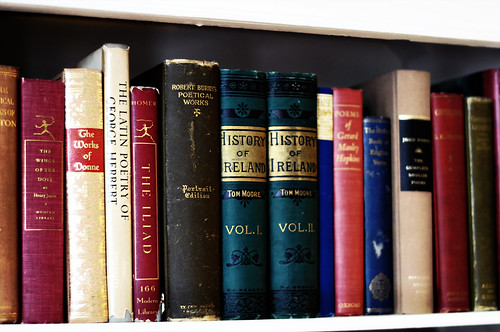
I began this Saturday series, this weekly glimpse of my over-stuffed bookshelves, because it seemed like fun. Just fun.
But now I’ve read House of Prayer No. 2: A Writer’s Journey Home by Mark Richard, and the word fun doesn’t come close. To share a book like this is something far beyond fun. It is serious. It is sacred. It almost feels like worship, and what can I possibly say to convince you to read this book? I don’t know what to say, but I feel desperate to say it.
This is a writer’s memoir. It is the story of a life, of a boy sinned against and sinning, and it is the story of God’s grace for this broken world. It is a work of art.
Unlike almost every other memoir you will read, Richard never uses the first person singular, never writes the word I. He refers to himself as you, and that choice draws his reader in and propels us through the pages.
It is as if a drowning man has lured us into the chaos of deep water. With him we are nearly overcome by the Southern Gothic horrors of his childhood, the wandering waste of his young adulthood, and, with him, we are saved. We are pulled from the water just as his father once pulled him from a swirling stream, and we see God.
By the end of this book we, like Richard, have long stopped believing in coincidence. Instead, through the words of an artist we are able to see the work of that Artist who takes the broken pieces of our lives, our bodies, our stories and fits them perfectly together. The result is something beautiful.
Richard’s memoir reminds me of the memoir trilogy by the poet Mary Karr, a series that began with The Liars’ Club: A Memoir . These are not easy books to read. Karr’s story takes Richard’s horrific Southern Gothic childhood and kicks it up a few notches. However, like Richard’s, this is memoir as poetry. Both books make me think that maybe the surest path to God is to run as hard and fast as you can in the opposite direction. Just maybe.
Next to memoirs by writers, I most enjoy memoirs by midwives. Baby Catcher: Chronicles of a Modern Midwife by Peggy Vincent is the best I’ve found. Each birth story she shares could stand alone, but there’s an overarching narrative that will make you catch your breath. Organized with brief quotations from The Book of Common Prayer, Vincent’s story prompts me to believe there may be no work more holy than that of a midwife.
I only wish we had a memoir from those heroic Hebrew midwives Shiphrah and Puah, women brave enough to deliver babies and tell tales to Pharaoh himself.
If books get written in heaven (and why not?), then no doubt we’ll read their stories someday. I, for one, can’t wait.
Find earlier book recommendations here, here, and here.
by Christie Purifoy | Jan 23, 2013 | children, Family, Grateful, motherhood, Seasons, Uncategorized

(photo by yours truly)
One of my favorite comedians has a bit about life with four young children. “Bedtime is a crisis!” he says.
I can relate. In our house breakfast is a crisis (the three-year-old is NOT a morning person), homework after school is a crisis (I’ve forgotten 9 times 7, and I can’t find a calculator), dinner is a crisis (food allergies + general pickiness = misery for mama the cook), and bathtime is always a crisis.
Not long ago, a friend (and father of one small child) stood in my kitchen as I prepared and served a quick lunch for the kids. I take it for granted that feeding so many small children can feel like wrestling a tornado, but my friend had, apparently, never seen anything like it. “Is it always like that? How do you do it?”
Most days I wake up feeling as if waves are crashing just at my heels, and I must rush, rush, rush to keep my head above the water.
Except I know it doesn’t have to be this way. I know this. I’ve felt it.
Sometimes I remember these words of Laura Ingalls Wilder: “She was glad that the cozy house, and Pa and Ma and the firelight and the music, were now. They could not be forgotten, she thought, because now is now. It can never be a long time ago.”
When the waves threaten to overwhelm me, I stand very still and tell myself, “Now is now.” The beautiful thing about my life in this season is that my now is almost always good. When I let go of the ten next steps, when I give up trying to manage the crisis, I can recognize just how good and just how magical my life is.
When I feed the baby in the rocking chair, I tell myself “This is now.” Suddenly, I notice those big blue eyes, and I give up deciding which job I’ll tackle next.
When the firstborn shrieks about the blood and why oh why did her brother have to lose his tooth while sitting on her white quilt, I hold that baby tooth in my hand and say “This is now.” I remember the moment I first felt its sharpness in his baby gums. Like Laura says, it cannot be forgotten. It can never be a long time ago.
And when the quilt is washed, and the tooth placed beneath his pillow, I go back into their bedrooms. I whisper, “Come and see.”
While we ate dinner, and found lost pajamas, and yelled, and wiped up blood, the world outside was transformed.
We never saw the snow clouds that came and went, but this is now: the whole world washed clean and sparkling. The whole world shining in moonlight.
This is now, and it can never be a long time ago.

(photo by yours truly)
by Christie Purifoy | Jan 19, 2013 | Books, children, Gardening, Uncategorized
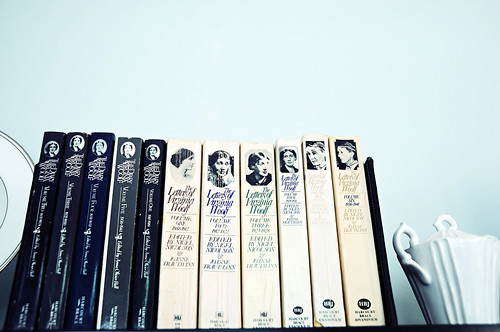
This week I’ve been knee-deep in gardening books and seed catalogs.
I love winter gardening. It’s all about dreaming.
This is one of my new favorites. Free-Range Chicken Gardens: How to Create a Beautiful, Chicken-Friendly Yard is practical and inspirational. The photography is lovely, and the ideas are especially well-suited for small, suburban yards.
Another book discovered with my third-grade daughter (actually this is the first of an eight-book series) is Moonsilver (The Unicorn’s Secret #1) by Kathleen Duey. This is a very rare kind of book. Written for beginning readers, it still manages to tell a beautiful, sophisticated story.
My first-grade son is currently obsessed with The Magic Treehouse series of books. I can hardly stand to read those aloud because the simplistic language and choppy sentence structure drive me nuts. Duey’s series proves that it doesn’t have to be this way. Buy her series for yourself to enjoy. If you feel awkward reading a “beginning chapter book,” just say you’ll pass it on to a young reader when you’re finished.
I especially love memoir, and one of my favorites is Martha Beck’s Expecting Adam: A True Story of Birth, Rebirth, and Everyday Magic . Here is my true story: I actually brought this book home more than ten years ago from a white elephant gift exchange. No one else seemed to want it, but I knew I’d rather go home with a paperback than a cassette of bad 80s music or a withered house plant. Just before I left the party, a young man came up to me. Very seriously he told me that others may have thought the book was a joke, but he wanted me to know that I would love it.
He was right.
This is the story of how two Harvard academics unlearn almost everything Harvard had taught them. It is the story of a devastating diagnosis, an almost unbelievably difficult pregnancy, and an encounter with Love. I give that word a capital letter, because through this nightmarish yet somehow magical experience, Beck meets Someone. She doesn’t name him, but I recognized him immediately. He’s the one I call Jesus.
What books are keeping you company this winter?
(You can find my earlier book recommendations here and here.)


