by Christie Purifoy | Oct 14, 2013 | children, guest post, motherhood, rest, Stories, Uncategorized, Waiting, Work, Writing
And I am sorry. I wanted to give you metaphors that sing, but I have only this empty page and a blinking cursor. This is doubly unfortunate because today’s essay was intended for the column at Living the Story. In other words, today’s essay had a deadline.
I feel embarrassed by this blank page, as if it exposes something of which I am deeply ashamed. It seems to matter more than a blank page should.
This page is my life, I think. I rush and worry, trying to fill it up with words. I am terrified that I might run out of words.
Typically, I fill my empty pages quickly. So quickly, in fact, I rarely notice their emptiness. That this page has stayed blank longer than most, I blame on my ragged throat and tissue-burned nose. I blame it on my flexible work-from-home husband who was not, this week at least, able to work from home. I blame it on the baby girl whose cough matches my own.
She knows the baby signs for “milk” and “more” and “banana” but not for “sick.” I have to read it in the way she clings to me, the way she asks for food then tosses it down, the way she makes it impossible for me to live. Because isn’t my life composed of tasks ticked off, essays written, deadlines met? Which means today my life is not being lived. It means today this essay is not being written.
Or is it?
Perhaps even our blank pages have stories to tell?
I hope you’ll click through to read the rest of this one for the Living the Story column at the website BibleDude.
While you’re there, I hope you’ll leave a comment and let me know you stopped by.
by Christie Purifoy | Oct 12, 2013 | Books, children, Faith, God, motherhood, Poetry, Religion, Uncategorized
Ours is a house full of invalids. Which means this week little has been written but much has been read.
Really, the hardest part of a cold for me may be the burning, tired eyes. I should probably just close them, but I don’t want to waste all of this lying-abed time with actual resting. Reading, that’s where it’s at.
Do not read, as children do, to amuse yourself, or like the ambitious, for the purpose of instruction. No, read in order to live. – Gustave Flaubert
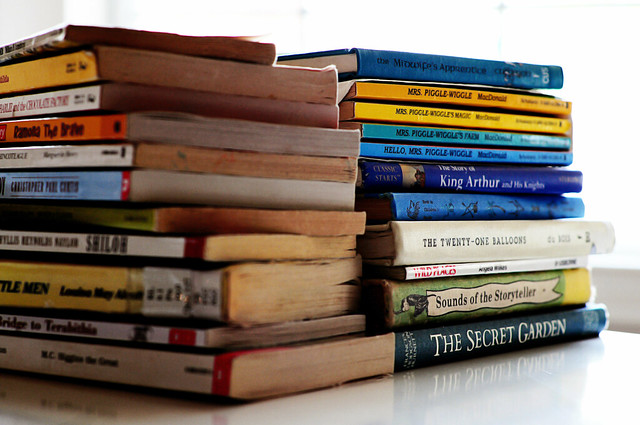
A friend recently gave me a copy of the new memoir by Kimberlee Conway Ireton: Cracking Up: A Postpartum Faith Crisis . I gobbled it up. Though, I should tell you, this is a book worth taking slow. In fact, the short chapters and brief, fragmentary interludes ask for it (but I was being greedy).
This is a simple story, simply told. I don’t mean that it’s simplistic. Rather, it is beautifully spare. Sometimes funny, sometimes heartbreaking.
Ireton hangs the story of the faith crisis she endured after the birth of twins on the scaffolding of the liturgical church calendar. The result is an exploration of one soul’s dark night that is both unique and universal.
This is the big story of Christ written very small. And that is something worth praising and worth seeking out. Advent, Lent, Easter … those are big stories, and we can become too much accustomed to their familiar contours. Sometimes we need to read them again in small ways. I am grateful to have read them here, in the small story of one year in one woman’s life.
How glad I am that I didn’t miss those cherry blossoms, that they caught at the corner of my vision, that I turned my head and saw. ‘They’re pretty,’ Doug said. But they were more than pretty. They were the color of hope. – Kimberlee Conway Ireton
Speaking of babies (oh dear, I am sometimes not very good with transitions), if you have had a baby within the past few years then you probably know this next book. You know it because I sent you a copy. Yes, this is my go-to gift for new babies: Psalms for Young Children by Marie-Helene Delval.
We are so skilled at introducing our children to Bible stories. We decorate their nurseries with Noah’s-Ark-themed prints. We talk about Jesus while they glue cotton balls to pictures of sheep. But the Psalms? Sadly, the book I spend the most time reading can be the one I spend the least time sharing with my kids.
Of course, I do think children should be introduced to the actual Psalms. During Lent last year, my daughter read the same Psalm to us every night at dinner. The repetition was powerful and needful. However, I also think children, especially young children, can benefit from an age-appropriate introduction to the questions, concerns, and poetry of the Psalms.
What you will find in Psalms for Young Children are paraphrases written in child-friendly language. But they are not watered-down, exactly. They are Psalms from a child’s point-of-view, and they are lovely and prayerful even for the adult reading them at bedtime.
God, when I’m in my bed / at night, I think about you. / And then I’m not scared of / anything. I can fall asleep / quietly and in peace. – Psalms for Young Children
I hesitate to make this next recommendation. It is almost as if I want to pause, to make sure you are ready to appreciate a book like this. I’m afraid that sounds selfish, prideful. Really, I think my motivation is only this: I love this book and I feel so very protective of it. It is one of the most powerful, most devastating books I have read in a long time.
The book is Christian Wiman’s My Bright Abyss: Meditation of a Modern Believer . Wiman is an accomplished poet and was, until recently, editor of Poetry magazine. Seven years ago, he was diagnosed with an incurable cancer. This is a reflective book about life, art, and belief, and it was written in the valley of the shadow of death.
I’m afraid putting it like that makes it sound rather lovely, but Wiman will not let us forget this valley is made up of hospital rooms, searing pain, and medications almost worse than the disease they’re meant to fight.
It would be wrong to say that Wiman returned to the Christian faith of his childhood after being diagnosed with cancer. Though, on the face of it at least, this is true. Rather, I think Wiman would say that cancer revealed to him the God who had always been there, a presence revealed through absence..
This is not a book for those who feel quite comfortable with the Christian faith. This is a book for anyone who finds the language of belief too often a hindrance rather than a help. This is a book for mystics and lovers of poetry.
This is an uncomfortable, even difficult book. It’s central emblem is not the empty tomb, but Christ crying out his forsakenness on the cross.
It is also a book I found to be so wise and true, I copied whole pages into my journal. The paperback edition doesn’t arrive till spring. I suggest buying the hardcover. If you are like me, you will fill it with notes. You will look forward to reading it again, wrestling with it again, even before you’ve read it through once.
To fling yourself into failure; to soar into the sadness by which you’ve lived; to die with neither defiance nor submission, but in some higher fusion of the two; to walk lost at the last into the arms of emptiness, crying the miracles of God. – Christian Wiman
by Christie Purifoy | Oct 5, 2013 | Books, children, Poetry, river, Uncategorized
Reading is a solitary activity.
Or, is it?
When we give books (whether tangibly or through a recommendation) a solitary pleasure is transformed into a shared joy.

This is what I thought as I put together these recommendations for you. I remembered the special friend who knew I would love this book of poetry. I remembered how she flew all the way from Chicago to Pennsylvania to stay with me, and I remembered when she put this book in my hand. She was right. I do love it, and it’s the fact of being so well known, as much as the book itself, that I am grateful for.
I also remembered the blogger who posted her love for this novel on facebook. I remembered the Chicago preschool teacher who kept copies of this writer’s books in her classroom. I know that the right books have a way of finding us at just the right time, and I hope I will always be a conduit for that magic.
I don’t believe in the kind of magic in my books. But I do believe something very magical can happen when you read a good book. – J.K. Rowling
At the risk of sounding foolishly repetitious, I want you to know that this is a magical book: The Unlikely Pilgrimage of Harold Fry: A Novel by Rachel Joyce. It’s a quiet book. Even simplistic at times. It flirts with sentimentality. And I loved it so much. This is a book that goes on working its magic in your mind and heart long after you’ve turned the last page.
This is a novel about an accidental pilgrimage. Harold Fry steps out of his front door believing he will go only as far as the mailbox at the end of his street. Whether personal demons come out to chase him or some invisible force pulls him along, the result is that Harold puts one foot in front of the other until he has walked from his southern coastal English village 600 miles to the Scottish seaside.
Though I guessed the plot twist from the beginning, I still found this to be a beautiful, quietly devastating novel. It looks squarely at failure (Harold’s failures, his wife’s failures, our many, human failings) without losing hope. Harold’s story is sweet, clever, enjoyable, and profound.
‘If I just keep putting one foot in front of the other, it stands to reason that I’m going to get there. I’ve begun to think we sit far more than we’re supposed to.’ He smiled. ‘Why else would we have feet?’ – Rachel Joyce
I was introduced to the picture books of Elsa Beskow eight years ago in my daughter’s Waldorf classroom. Waldorf education places a high value on fairy tale and the natural world, and I don’t think you can find that combination more clearly, or more beautifully, expressed anywhere but Beskow’s books.
Beskow was Swedish, and she wrote and illustrated dozens of titles between the 1890s and 1950s. One of my favorites, Peter in Blueberry Land , first appeared in 1901.
This is a story about a little boy searching for wild blueberries and cranberries for his mother’s birthday. Unable to find any berries, he sits forlorn on a stump in the forest until the tiny King of Blueberry Land takes pity on him. By the King’s magic, Peter shrinks in size and enjoys a day of pint-sized adventure with the many sons of the blueberry king and the red-capped daughters of Mrs. Cranberry.
We read this story over and over this summer because, well, blueberries! It’s one of those books that quickly becomes a kind of imaginative shorthand for the whole family. Wouldn’t that fern over there be a giant tree for the blueberry boys? we say. Or, Do you think Mrs. Cranberry shelters under a giant mushroom like that one?
The large format books are beautifully bound, but they can be hard to find. I discovered my copy of Peter sitting next to a display of butterfly-patterned china in a London department store. Last week, I spotted a large format copy of Children of the Forest in the gift shop of our local botanical gardens. The smaller, gift book editions are readily available on Amazon. We own a mini gift edition of The Sun Egg , and we return to it frequently even though it’s small. The baby seems especially enamored of its size, but I won’t let her play with these.
His mother was very pleased and said it was one of the nicest presents she had ever had. ‘Where did you find all those berries?’ she asked. But Peter smiled and shook his head. It was a secret between him and the King of Blueberry Land.
Sounding the Seasons by Malcolm Guite was a gift from a friend last spring. I’ve spent the summer reading and rereading these “seventy sonnets for the Christian year.”
Guite is a poet, priest, and musician from Cambridge, England. His sonnet sequence strongly reminds me of the seventeenth-century devotional poetry of George Herbert (a poet I’ve recommended here before), but it is also modern, cutting right to the heart of our contemporary preoccupations.
These poems stand alone as poems, but they are also beautiful accompaniments to the church calendar and to daily worship. By rights, I shouldn’t even include this title when claiming to give you “a peek at my farmhouse bookshelves,” because this book hasn’t seen a shelf since it arrived. It lives on my coffee table, on my bedside table, and stacked with my Bible on my desk. I carry it around with me, and I read it, at least a little bit, every day.
Some of you may have seen the sonnet I shared yesterday. Here’s one more:
O Oriens
First light and then first lines along the east
To touch and brush a sheen of light on water,
As though behind the sky itself they traced
The shift and shimmer of another river
Flowing unbidden from its hidden source;
The Day-Spring, the eternal Prima Vera.
Blake saw it too. Dante and Beatrice
Are bathing in it now, away upstream …
So every trace of light begins a grace
In me, a beckoning. The smallest gleam
Is somehow a beginning and a calling:
‘Sleeper awake, the darkness was a dream
For you will see the Dayspring at your waking,
Beyond your long last line the dawn is breaking.’
by Christie Purifoy | Oct 1, 2013 | Faith, God, God's Love, Religion, Scripture, Uncategorized
“Sometimes God calls a person to unbelief in order that
faith may take new forms.”
Christian Wiman, My Bright Abyss
I remember the day I stopped believing.
I see that day now for what it was: a doorway. Nothing would ever be the same for me having passed that threshold.
I thank God every day for leading me to that place. I thank God every day for giving me the courage to do what I had never yet done. For the first time, I doubted him.
***
***
I am not a risk-taker. I am a play-it-safe, keep-within-the-lines, follow-the-rules kind of girl. Growing up, they told me God is Love, and I believed them. And then I followed the rules.
Church on Sunday.
Read your Bible daily.
Be good.
Rules which added up in my mind to this: you’ve been bought for a price so now live like you can make it up to him.
But, of course, we can never do that.
Which is why he never asked us to.
***
***
I stood in church one Sunday and sang some song about God’s love. I was in pain, I saw no evidence that God had noticed, so I stopped singing the song. I no longer believed in a God equals Love. I no longer believed that this Love saw me.
Here is the thing about unbelief: it is like a fire. It burns away the truth, yes, but it also burns away the lies.
What is left is a heart like a dead, blackened field.
In other words, what is left is the perfect ground for new life.
***
I do not want to idolize unbelief, no more than I would want to idolize certainty. All I want is to say: Do not be afraid.
On the days when you believe, the days when God is near, do not be afraid. Do not imagine it is up to you to keep the feeling going, like a bicycle that might disappear the moment you become too exhausted to keep peddling.
And on the days when you cannot summon belief, on the days when God is a void, do not be afraid. These days are dark, they may be painful, but they, too, can be a gift.
***
Which came first, my love for God or his love for me? Before I stepped through the door of this day, I’m not sure I could have answered the question. My view of divine love was a mixed-up mess of lessons I’d been taught, songs I had sung, parents who loved well, and my own lonely efforts to be a good person.
Maybe that has been the greatest gift of unbelief. Embracing it, I let go of everything I thought made me lovable.
And then Love found me.
***
***
“We love because he first loved us.”
(I John 4:19)
by Christie Purifoy | Sep 28, 2013 | Books, Gardening, Uncategorized, Writing
Friends, a confession: I read some books this summer.
The bad news is that I forgot to start dinner, I never noticed when the baby ate cat food, and I forced all four children to endure 90 minutes of daily “quiet time.”
The good news is that I have so many books to tell you about. Let’s talk books, again, shall we?
(If you’re new to this Saturday series you can browse my previous recommendations right here and read more about my use of affiliate links.)
Summer, for me, was over the top in every way. Heat, humidity, rain, noise, activity, zucchini. Just Over The Top. I survived by reading novels.
One of my favorites was Where’d You Go, Bernadette: A Novel by Maria Semple.
After reading the first few pages, my expectations were not high. The storytelling is unconventional. Rather than a seamless narrative, you’ll find fragments of communication: emails, texts, letters, newspaper clippings, etc. I worried the book would be some sort of postmodern experiment, more taken with its construction than the story it tells. I have nothing against experiments (Joyce’s Ulysses is one of my favorite books), but, this summer, I wanted something thoughtful and enjoyable.
If Semple’s book is an experiment, it succeeds beautifully. Yes, the form is unusual, but it turns out to be integral to a story that is deeply, warmly human. This is a fun, funny novel, but it makes a serious point: first impressions, even second impressions, might give us entirely flawed ideas about other people.
I loved the hope inherent in this story. I loved knowing that even villains might turn out to be lovable.
Hovering over me was the Chihuly chandelier. Chihulys are the pigeons of Seattle. They’re everywhere and even if they don’t get in your way, you can’t help but build up a kind of antipathy toward them. – Maria Semple
Over the summer, I spent more time gardening than reading, a first for me. Of course, when I wasn’t gardening I was often reading about gardening. I’d read this memoir years ago, but when I found it on the shelf of my local used bookstore, I was happy to read it again.
William Alexander’s The $64 Tomato: How One Man Nearly Lost His Sanity, Spent a Fortune, and Endured an Existential Crisis in the Quest for the Perfect Garden is funny, self-deprecating, and surprisingly informative. Reading about battles with garden pests and plagues should be discouraging, but Alexander’s honesty (and his recipes!) allow us to see just how rewarding life in the garden can be, whether we’re winning those battles or not.
With the kitchen garden established, I decided – in an act of horticultural hubris perhaps not seen since, well, since Yahweh designed the Garden of Eden – to Build a Meadow. – William Alexander
This new book by award-winning memoirist Beth Kephart was one of my great finds of the summer: Handling the Truth: On the Writing of Memoir . If you have even the tiniest dream to write memoir (or even a blog post based on personal experience) this book will be your Bible. It is inspiring, it is instructive, and it is beautifully written.
I think this book deserves a much wider audience than only writers and writers-in-the-making, however. First, Kephart offers lists of must-read memoirs. Some were familiar to me, but many were not. Her descriptions of what makes each memoir valuable would make this book worth its purchase price even if that’s all it offered. But it offers a great deal more.
This is a book to wake us up to our own lives. This is a book to reveal the treasure that is our own experience. This is a book to help us shape the stories that must be shared.
If all your memoir does is deliver story – no sediments, no tidewater, no ambiguity – readers have no reason to return. If you cannot embrace the messy tug of yourself, the inescapable contradictions, the ugly and the lovely, then you are not ready yet. If you can’t make room for us, then please don’t expect us to start making room for you. – Beth Kephart
And you? Read any good books this summer?
