by Christie Purifoy | Jul 14, 2014 | children, Family, motherhood, Scripture, Summer, Uncategorized
In ancient times, the sea was the home of Chaos.
I could write that the sea symbolized chaos, but that word symbol is too easily brushed aside. As if symbols are merely tame bits of literary frippery with no power to unleash the deepest truths of our lives. Like opening the floodgates.
To the sea.
For these ancients, the sea was unfathomable. The sea bedded monsters. The sea could surge forth, at any time, and swallow up land, homes, lives.
Death, darkness, oblivion, terror. This was the sea.

And if you love beach vacations and find it hard to understand how the play of light on dancing waves could ever have been a harbinger of doom, then you will read the twenty-first chapter of the book of Revelation with surprise. And disappointment.
Then I saw “a new heaven and a new earth,” for the first heaven and the first earth had passed away, and there was no longer any sea. (Revelation 21:1)
But if you are like me, you will sigh with longing.
If you are like me, the mere act of sifting through an overfull kitchen drawer for a thermometer hiding somewhere in its depths while the milk you had intended to turn into yogurt boils away on the stove is all it takes for Chaos to begin seeping in.
A moment later and the failed yogurt, the waste of good milk, the scorched pot and the murky kitchen drawer have caught you in their surge. One glance around and you are lost in an ocean of legos and marbles and bits of paper from the morning’s craft and a sticky puddle you cannot explain.
Now you are drowning because it is so humid and your kitchen is a furnace and the baby, the beautiful curly-haired baby, abandoned the slip’n slide after five minutes and is now tracking wet grass and clumps of mud from kitchen to dining room to entryway rug.
One day there will be no sea.
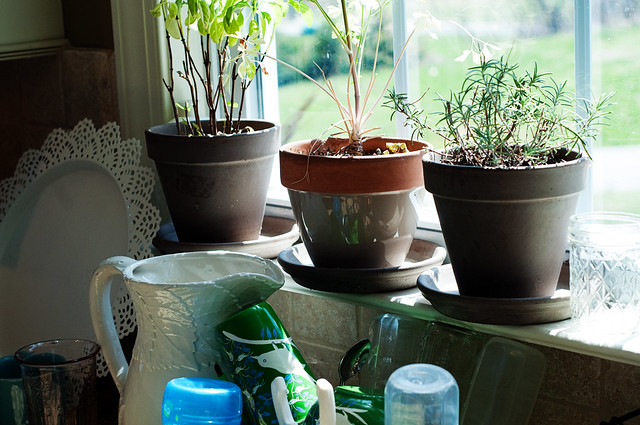
Yes, the sea is a symbol and my kitchen drawer is a symbol and whoever told you a symbol isn’t real? Whoever said it was not possible to drown in symbolic waters?
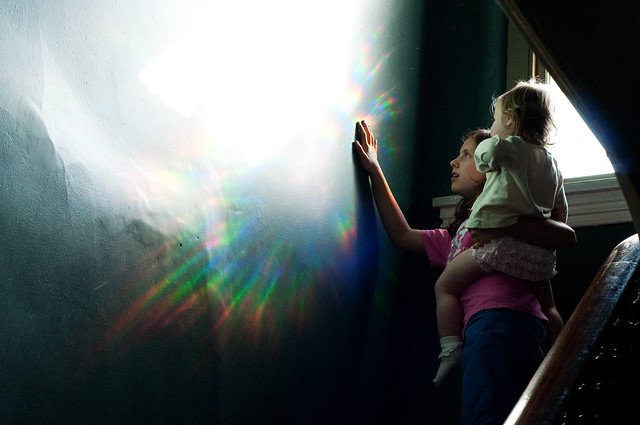
But if it is possible to drown, it must also be possible to swim. It must also be possible to open your eyes and observe the play of light on dancing waves.
To stand before the unknown and the unmanageable and discover, not the hiding place of terror, but the birthplace of beauty.
***
by Christie Purifoy | Jun 30, 2014 | Gardening, grief, Summer, Uncategorized
We have quite successfully banished grief from our lives.
Dying proceeds in hospitals. It leaves no lingering trace in the pristine spaces of our homes.
Death is sometimes marked in an old-fashioned way. We do occasionally carve the same old stones. Though the ancient words requiescat in pace have been abbreviated and largely limited to Halloween décor.
But then we follow the trail of job offers and changes of scene until the grave stones that matter, the ones we still see with our mind’s eye, lie miles away. We cannot bring flowers. We cannot bring our children and tell them stories of the one we knew and loved.
But somehow grief still finds us. It winds its way in on unexpected paths. And in unexpected places.
For instance, the garden.
An old tree falls, and we are surprised, embarrassed even, by our tears.
We learn practical gardening techniques, and give them misleadingly neutral names like layered gardening or four seasons gardening. Now, we cheerfully interplant our tulips and daffodils with shallow-rooted perennials. See! What fun! You and I need no longer be assaulted by the dying bulb foliage. Death is always camouflaged by the next blooming plant.
Always there is the next thing. We need never look back. Daffodils! Then lilac! Then azaleas! Then roses! Now hydrangeas! And daylilies! And late-summer dahlias!
There is no need to mourn the passing of the daffodils.
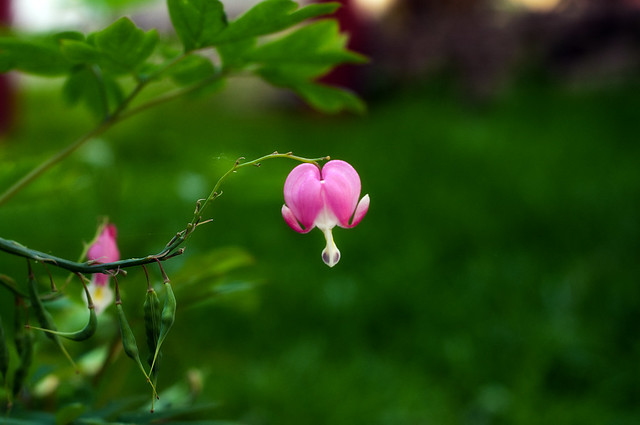
But if the gaps still find you … If the empty space in your flowerbed haunts your sleep even in the midst of summer’s blooming bounty … well, the horticulturists can help.
They have tinkered and fiddled (plotted and potted), and now you can purchase the solution to your sorrow.
Every plant now has its reblooming variety.
Reblooming lilac. Reblooming azaleas. Reblooming roses. Reblooming daylilies.
Dry your eyes. Take up your nursery catalog. Look for words like boomerang and knock-out.
Because even in the garden we need never say goodbye. We need never sit in quietness waiting for the return of every beautiful thing we have loved and lost.
*
*
by Christie Purifoy | Jun 17, 2014 | children, Family, Grateful, motherhood, Summer, Uncategorized, Work
It is June, and I count my blessings.
Vines dripping in snap peas. Bowl after bowl of strawberries. Lettuces grown so large, I cradle one leafy head like a toddler in my arms. And carrots. I’ve never had much luck with carrots, but, this year, carrot tops are waving in the breeze like a dense fern forest.
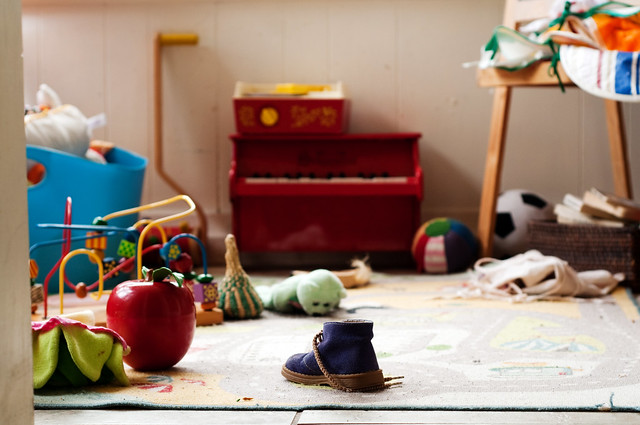
And these are not my only blessings. Four wild, whooping noisemakers munch on raw peas and hunt for strawberries. Two boys can usually be found up a tree. One small girl runs after the kitties, grabs small green cherries from the low-hanging branches of the sour cherry tree, and never looks back at the big sister who follows, calling, “Elsa, come back. Elsa, are you ready to go inside?”
Yet even blessings can weigh you down and wear you out. Four small faces sticky with berry juice seem to ask more of me than I have to give.
***
***
We like to speak of callings. We acknowledge the dignity of difficult work when we say I am called to this.
And parents do the same. I am called to mother. I am called to father. But I have always imagined a calling to be like the revelation of something already there. God has called me to be a writer. God has called you to be a teacher. Or an encourager. Or a farmer. This is calling as the meeting place of God’s work and your talent.
Which is why I have never said I am called to be a mother. I am blessed, richly blessed, with four young children, but I have no particular talent for the work involved. On tired afternoons, I might even say my need for quiet, alone time makes me especially unsuited for the job.
***
Perhaps I have misunderstood the word. Perhaps a calling has nothing to do with talent or giftedness or any kind of suitability at all. Was a poet shepherd suited to battle giants? Was a young boy asleep in the temple especially gifted at hearing the voice of God?
It seems he wasn’t. Three times Samuel got up from his bed having confused the voice of heaven’s King with the voice of his master Eli.
And so I acknowledge all the ways I can never measure up to the blessings I’ve been given. But I will follow in Samuel’s incompetent but faithful footsteps. I will say, “Speak, for your servant is listening.”
And I will tell of what I hear.
Because our God calls.
by Christie Purifoy | Jun 4, 2012 | Chicago, Family, Florida, motherhood, Seasons, Uncategorized, Vacation
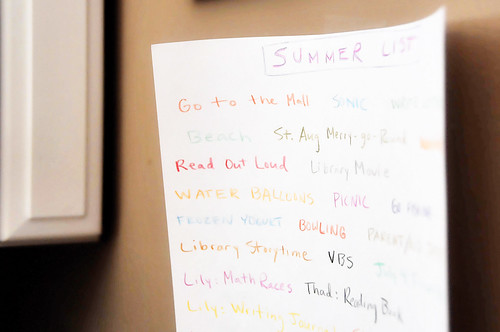
I’ve been thinking about my Summer List.
This once-favorite tradition hasn’t traveled well. I started writing Summer Lists in Chicago. At first, they were just for me, but my oldest child did contribute an item or two in recent years.
A Summer List is exactly what it sounds like: a list of activities and experiences you want to do and have before September arrives. It might sound sentimental and overly precious, but my Chicago Summer Lists were deadly serious things.
Having endured months of bitter cold and forced hibernation, I often felt a little stressed at the beginning of Chicago’s second season (you know, don’t you, that Chicago is called the Second City because it has two newspapers, two baseball teams, and two seasons? You don’t need me to tell you what those seasons are, do you?). A Chicago summer offers so much goodness, I actually worried about fitting it all in.
What if Labor Day arrived and I hadn’t seen a film on the grass in Grant Park? What if the wind turned cold, and I hadn’t yet eaten apricots and just-made goat cheese on a blanket at the Green City Market? What if busyness or laziness kept me from packing up the kids and the snacks and listening to music under the stars at Millennium Park? What if we said “yes” to too many weekend birthday parties and forgot to leave time for blueberry picking in Michigan City?
Thus, the Summer List.
Those lists helped me to make the most of a glorious but, ultimately, fleeting season. It felt like an antidote for the to-do lists that kept me rushing and preoccupied the other nine months of the year.
The problem with a Florida Summer List is that the season is not fleeting. I’ve discovered that this part of our country also has two seasons: hot and not so hot. Everything I could think of to write on my list today caused me to think, “Well, but I’d rather do that when it’s not so hot.”
Beach? I prefer to collect seashells in February sunshine. Pool? Yes, of course, but we’ve been swimming since March, and I’m already a little tired of wet swimsuits. The zoo? It was beautiful in January. Disney? Not if you paid me. Too many tourists this time of year. And did I mention the heat? Maybe fruit picking? Beau’s two favorite episodes of Caillou are the one in which Caillou picks strawberries and the one in which Caillous picks apples (which makes me very, very happy). Oh, but Florida’s strawberry season ended months ago.
So many people love Florida because the joys of summer last for most of the year. And even I can’t complain about weather like this. After all, I enjoyed those grilled pizzas in January. But what do I make of summer now? Is there anything special about June, July, and August when our activities and experiences are mostly the same? What is summer, anyway? A date? A point of view?
For now, I’m focusing on the one thing I have in abundance only during these months: time. I’m not teaching, baby girl isn’t due to arrive until the end of September, my two oldest are out of school, even the two-days-a-week preschool is on summer break. We have time.
We’ll get bored. We’ll get hot. No doubt, tempers will flare. But, unlike summer itself, these hours will never come around again. Once crossed off the list, they’re gone for good. I do not know what they’re for or why they’ve been given, but I’m glad that, for now, they’re still mine to anticipate. Each hour listed neatly on pristine paper.
Edited and reposted from the archive.
by Christie Purifoy | Aug 1, 2011 | Florida, Religion
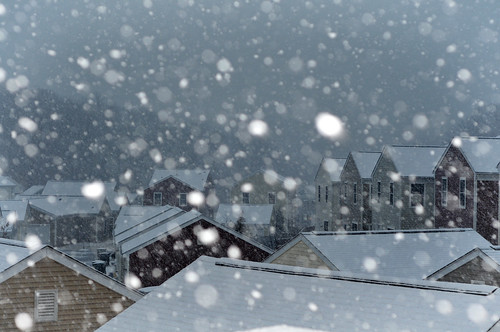
Understandably, winters in Chicago were long and hard. Still, I enjoyed them more than most of my friends and neighbors. I’ve always imagined that my Texas childhood created a snow deficit deep inside of me that no amount of Midwestern cold could fill up. As much as we all longed for spring come March, I was never sad, even then, to see snowflakes fall.
The hardest thing about winter for me was always the thaw. Those of you with experience living in frigid climates know what I’m talking about. The thaw is that period (maybe it comes once, maybe it comes and goes repeatedly, every winter is different) in which the sidewalks and streets are impassable. Snow has melted and refrozen until not even a polar bear could walk the ice safely. Or, layers of snow have turned to slush all the way through, and it’s impossible to move without icy meltwater pouring over the tops of my boots. Pushing a stroller through the muck and mess of a thaw? Absolutely impossible.
The hardest thing about winters in Chicago? Not being able to (safely) leave the house.
The hardest thing about summers in Florida? Not being able to (safely) leave the house.
Obviously, we’re no longer in danger of breaking our bones as we slip and slide on the sidewalks. But when my daughter asks at noon whether we can go for a bike ride, all I can think is “heat stroke.” It’s 95 degrees and very humid and I actually convince my kids to watch another half hour of tv rather than take them outside.
There are bright spots in both seasons. Here, swimming pools dot the landscape like weeds and as long as I’m willing to walk the gauntlet of sunscreen application (which always requires chasing the two-year-old around the house and listening to the seven-year-old whine that her face is white), we can enjoy being outside without too much pain.
In Chicago, the compensation came with sledding and snowman building. As long as I was willing to bundle up three children in snowsuits and long underwear, we could forget the discomfort of cold noses and tender fingers for an hour of fun.
In Chicago, I loved to sit directly on the warm radiator cover and watch snow fall past our third-story window. In Florida, I sit on the small sofa and watch that day’s thunderstorm pile up in the west. Seeing the palm fronds flatten in the wind and sensing the house go dark, I like to imagine that it’s cold outside. The reality feels more like getting hit in the face with solid swamp, but I keep the door shut and pretend. It’s very cozy.
More than cabin-fever and long hours spent indoors, these two seasons in these two places share a mood of longing. In Chicago, I yearned for warmth and color. In Florida, I want crisp air and sunshine that doesn’t burn like fire.
I’ve often felt guilty about giving in to this mood. As if desire is always an altogether bad thing, a temptation to ignore the good gifts right in front of us.
I think that is sometimes the case.
However, occasionally we only recognize the best things in life because we’ve longed for them and waited for them. Tulips in spring. The first day in fall when the humidity plunges.
The goal, I’ve decided, should not be some stay-in-the-moment mental trick we play on ourselves, but a more straightforward acceptance of goodness in the present and desire for something else. And why should these be mutually exclusive?
I love Florida’s daily summer thunderstorms. I love the wind, the dark clouds, and thunder rumbling all afternoon. But I am also eager for cooler temperatures and hours that can be spent outdoors. Summer, here, is about enjoying and longing.
And when the cooler days come, I’ll say goodbye to the thunderstorms with no regrets, knowing that I loved them in their time, but the thing I’ve really wanted, the thing I am now prepared to enjoy, has finally come.
Hope justifies longing.
“But hope that is seen is no hope at all. Who hopes for what he already has?” (Romans 8:24)

