by Christie Purifoy | Oct 12, 2013 | Books, children, Faith, God, motherhood, Poetry, Religion, Uncategorized
Ours is a house full of invalids. Which means this week little has been written but much has been read.
Really, the hardest part of a cold for me may be the burning, tired eyes. I should probably just close them, but I don’t want to waste all of this lying-abed time with actual resting. Reading, that’s where it’s at.
Do not read, as children do, to amuse yourself, or like the ambitious, for the purpose of instruction. No, read in order to live. – Gustave Flaubert
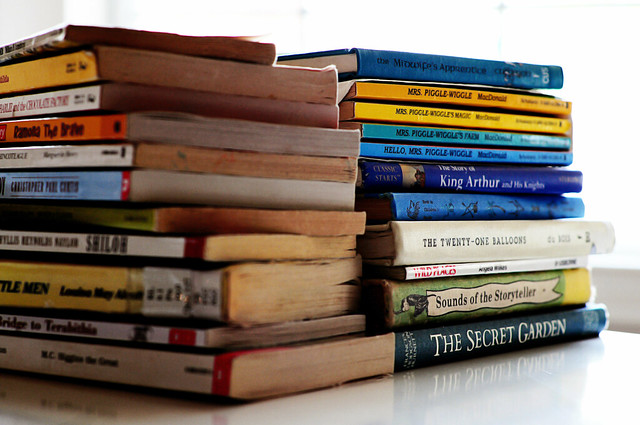
A friend recently gave me a copy of the new memoir by Kimberlee Conway Ireton: Cracking Up: A Postpartum Faith Crisis . I gobbled it up. Though, I should tell you, this is a book worth taking slow. In fact, the short chapters and brief, fragmentary interludes ask for it (but I was being greedy).
This is a simple story, simply told. I don’t mean that it’s simplistic. Rather, it is beautifully spare. Sometimes funny, sometimes heartbreaking.
Ireton hangs the story of the faith crisis she endured after the birth of twins on the scaffolding of the liturgical church calendar. The result is an exploration of one soul’s dark night that is both unique and universal.
This is the big story of Christ written very small. And that is something worth praising and worth seeking out. Advent, Lent, Easter … those are big stories, and we can become too much accustomed to their familiar contours. Sometimes we need to read them again in small ways. I am grateful to have read them here, in the small story of one year in one woman’s life.
How glad I am that I didn’t miss those cherry blossoms, that they caught at the corner of my vision, that I turned my head and saw. ‘They’re pretty,’ Doug said. But they were more than pretty. They were the color of hope. – Kimberlee Conway Ireton
Speaking of babies (oh dear, I am sometimes not very good with transitions), if you have had a baby within the past few years then you probably know this next book. You know it because I sent you a copy. Yes, this is my go-to gift for new babies: Psalms for Young Children by Marie-Helene Delval.
We are so skilled at introducing our children to Bible stories. We decorate their nurseries with Noah’s-Ark-themed prints. We talk about Jesus while they glue cotton balls to pictures of sheep. But the Psalms? Sadly, the book I spend the most time reading can be the one I spend the least time sharing with my kids.
Of course, I do think children should be introduced to the actual Psalms. During Lent last year, my daughter read the same Psalm to us every night at dinner. The repetition was powerful and needful. However, I also think children, especially young children, can benefit from an age-appropriate introduction to the questions, concerns, and poetry of the Psalms.
What you will find in Psalms for Young Children are paraphrases written in child-friendly language. But they are not watered-down, exactly. They are Psalms from a child’s point-of-view, and they are lovely and prayerful even for the adult reading them at bedtime.
God, when I’m in my bed / at night, I think about you. / And then I’m not scared of / anything. I can fall asleep / quietly and in peace. – Psalms for Young Children
I hesitate to make this next recommendation. It is almost as if I want to pause, to make sure you are ready to appreciate a book like this. I’m afraid that sounds selfish, prideful. Really, I think my motivation is only this: I love this book and I feel so very protective of it. It is one of the most powerful, most devastating books I have read in a long time.
The book is Christian Wiman’s My Bright Abyss: Meditation of a Modern Believer . Wiman is an accomplished poet and was, until recently, editor of Poetry magazine. Seven years ago, he was diagnosed with an incurable cancer. This is a reflective book about life, art, and belief, and it was written in the valley of the shadow of death.
I’m afraid putting it like that makes it sound rather lovely, but Wiman will not let us forget this valley is made up of hospital rooms, searing pain, and medications almost worse than the disease they’re meant to fight.
It would be wrong to say that Wiman returned to the Christian faith of his childhood after being diagnosed with cancer. Though, on the face of it at least, this is true. Rather, I think Wiman would say that cancer revealed to him the God who had always been there, a presence revealed through absence..
This is not a book for those who feel quite comfortable with the Christian faith. This is a book for anyone who finds the language of belief too often a hindrance rather than a help. This is a book for mystics and lovers of poetry.
This is an uncomfortable, even difficult book. It’s central emblem is not the empty tomb, but Christ crying out his forsakenness on the cross.
It is also a book I found to be so wise and true, I copied whole pages into my journal. The paperback edition doesn’t arrive till spring. I suggest buying the hardcover. If you are like me, you will fill it with notes. You will look forward to reading it again, wrestling with it again, even before you’ve read it through once.
To fling yourself into failure; to soar into the sadness by which you’ve lived; to die with neither defiance nor submission, but in some higher fusion of the two; to walk lost at the last into the arms of emptiness, crying the miracles of God. – Christian Wiman
by Christie Purifoy | Oct 5, 2013 | Books, children, Poetry, river, Uncategorized
Reading is a solitary activity.
Or, is it?
When we give books (whether tangibly or through a recommendation) a solitary pleasure is transformed into a shared joy.

This is what I thought as I put together these recommendations for you. I remembered the special friend who knew I would love this book of poetry. I remembered how she flew all the way from Chicago to Pennsylvania to stay with me, and I remembered when she put this book in my hand. She was right. I do love it, and it’s the fact of being so well known, as much as the book itself, that I am grateful for.
I also remembered the blogger who posted her love for this novel on facebook. I remembered the Chicago preschool teacher who kept copies of this writer’s books in her classroom. I know that the right books have a way of finding us at just the right time, and I hope I will always be a conduit for that magic.
I don’t believe in the kind of magic in my books. But I do believe something very magical can happen when you read a good book. – J.K. Rowling
At the risk of sounding foolishly repetitious, I want you to know that this is a magical book: The Unlikely Pilgrimage of Harold Fry: A Novel by Rachel Joyce. It’s a quiet book. Even simplistic at times. It flirts with sentimentality. And I loved it so much. This is a book that goes on working its magic in your mind and heart long after you’ve turned the last page.
This is a novel about an accidental pilgrimage. Harold Fry steps out of his front door believing he will go only as far as the mailbox at the end of his street. Whether personal demons come out to chase him or some invisible force pulls him along, the result is that Harold puts one foot in front of the other until he has walked from his southern coastal English village 600 miles to the Scottish seaside.
Though I guessed the plot twist from the beginning, I still found this to be a beautiful, quietly devastating novel. It looks squarely at failure (Harold’s failures, his wife’s failures, our many, human failings) without losing hope. Harold’s story is sweet, clever, enjoyable, and profound.
‘If I just keep putting one foot in front of the other, it stands to reason that I’m going to get there. I’ve begun to think we sit far more than we’re supposed to.’ He smiled. ‘Why else would we have feet?’ – Rachel Joyce
I was introduced to the picture books of Elsa Beskow eight years ago in my daughter’s Waldorf classroom. Waldorf education places a high value on fairy tale and the natural world, and I don’t think you can find that combination more clearly, or more beautifully, expressed anywhere but Beskow’s books.
Beskow was Swedish, and she wrote and illustrated dozens of titles between the 1890s and 1950s. One of my favorites, Peter in Blueberry Land , first appeared in 1901.
This is a story about a little boy searching for wild blueberries and cranberries for his mother’s birthday. Unable to find any berries, he sits forlorn on a stump in the forest until the tiny King of Blueberry Land takes pity on him. By the King’s magic, Peter shrinks in size and enjoys a day of pint-sized adventure with the many sons of the blueberry king and the red-capped daughters of Mrs. Cranberry.
We read this story over and over this summer because, well, blueberries! It’s one of those books that quickly becomes a kind of imaginative shorthand for the whole family. Wouldn’t that fern over there be a giant tree for the blueberry boys? we say. Or, Do you think Mrs. Cranberry shelters under a giant mushroom like that one?
The large format books are beautifully bound, but they can be hard to find. I discovered my copy of Peter sitting next to a display of butterfly-patterned china in a London department store. Last week, I spotted a large format copy of Children of the Forest in the gift shop of our local botanical gardens. The smaller, gift book editions are readily available on Amazon. We own a mini gift edition of The Sun Egg , and we return to it frequently even though it’s small. The baby seems especially enamored of its size, but I won’t let her play with these.
His mother was very pleased and said it was one of the nicest presents she had ever had. ‘Where did you find all those berries?’ she asked. But Peter smiled and shook his head. It was a secret between him and the King of Blueberry Land.
Sounding the Seasons by Malcolm Guite was a gift from a friend last spring. I’ve spent the summer reading and rereading these “seventy sonnets for the Christian year.”
Guite is a poet, priest, and musician from Cambridge, England. His sonnet sequence strongly reminds me of the seventeenth-century devotional poetry of George Herbert (a poet I’ve recommended here before), but it is also modern, cutting right to the heart of our contemporary preoccupations.
These poems stand alone as poems, but they are also beautiful accompaniments to the church calendar and to daily worship. By rights, I shouldn’t even include this title when claiming to give you “a peek at my farmhouse bookshelves,” because this book hasn’t seen a shelf since it arrived. It lives on my coffee table, on my bedside table, and stacked with my Bible on my desk. I carry it around with me, and I read it, at least a little bit, every day.
Some of you may have seen the sonnet I shared yesterday. Here’s one more:
O Oriens
First light and then first lines along the east
To touch and brush a sheen of light on water,
As though behind the sky itself they traced
The shift and shimmer of another river
Flowing unbidden from its hidden source;
The Day-Spring, the eternal Prima Vera.
Blake saw it too. Dante and Beatrice
Are bathing in it now, away upstream …
So every trace of light begins a grace
In me, a beckoning. The smallest gleam
Is somehow a beginning and a calling:
‘Sleeper awake, the darkness was a dream
For you will see the Dayspring at your waking,
Beyond your long last line the dawn is breaking.’
by Christie Purifoy | May 25, 2013 | Books, children, Seasons, Summer, Uncategorized
Here is one last peak at my bookshelves before summer.
I think one of these might be just the thing for that afternoon in the hammock, the long car trip, those sweaty hours between events at the swim meet.
I plan to read as much as possible these next few months. I’m imagining quiet afternoons with a sleeping baby and three kids with noses-in-books, but the reality is more likely to be me on my green sofa, one eye on the so-close-to-crawling baby and one on my book, while I try desperately to tune out the shrieks of three children running circles around the room. Yes, I’m trying to be realistic.
Either way, my plan is to bring These Farmhouse Bookshelves back in September with fresh recommendations.
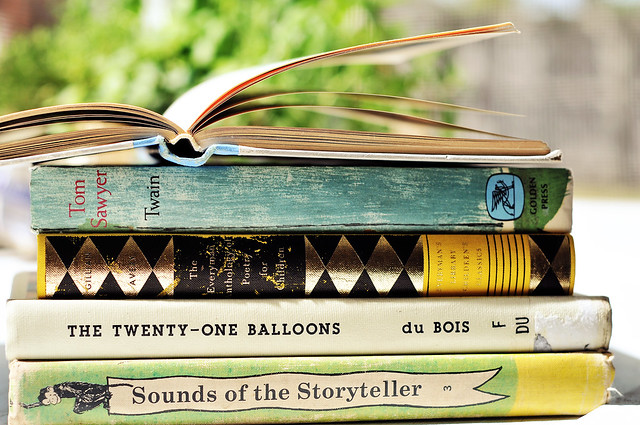
One of my favorite writers (she is a master of the revelatory interior monologue) has a new book. Kate Atkinson’s Life After Life: A Novel is the best thing I’ve read in a long time.
I was skeptical at first. Perhaps you remember my distaste for literary gimmicks? Atkinson’s latest is structured around a stunning gimmick, but this excellent novel doesn’t deserve that pejorative term.
The book’s heroine is Ursula Todd, an Englishwoman who lives (and dies) through the Great War, the Spanish Flu epidemic, World War II and the London Blitz, and all of the upheaval of early twentieth-century European history. She lives, and she dies, and then she is born again, always and, it seems, forever on the same snowy night in 1910.
That is the novel’s literary device, and though it seems to break so many rules (most importantly, the reader’s assumption that the very worst thing cannot befall a novel’s primary character), Atkinson uses it to brilliant effect.
Ursula’s many lives and deaths, and the fascinating ways in which her story changes or does not, add up to a compulsively readable novel (after moving slowly through the first third, I couldn’t put it down) and one that gives us so much to think about: from questions of history and personal fate to the God-like role of novelists themselves.
Life After Life is the coming-of-age novel writ large. Ursula is given chance after chance to live well. We are given only one. We can learn a great deal from a character who knows the depths of the adage that “practice makes perfect.” The important question is, in that tumultuous time and now, what constitutes a well-lived life? What does “perfect” really look like?
Sylvie’s knowledge … was random yet far-ranging, ‘The sign that one has acquired one’s learning from reading novels rather than an education …’
A Time to Keep: The Tasha Tudor Book of Holidays may be the best children’s book I never read as a child. I love it so much, I feel as if I have lived in its pages the way only a young child can.
Featuring Tudor’s beloved illustrations, this picture book shows us twelve months of celebration in a rural, New England family about a hundred years ago. Based on Tudor’s childhood memories, we have beautiful pictures and brief descriptions of a bonfire on New Year’s Eve, a syrup-making party in March, a dance around the Maypole, and a very special August birthday, to name just a few.
This is a book about the special rhythms of the seasons and of family life. It is sweetly nostalgic and inspiring. Enthralled by the book’s August birthday party, my daughter and I have decided that someday, somehow, we will float a candlelit birthday cake down a stream at twilight.
August brought your mother’s birthday which we celebrated at night by the river. The table was set with birch bark plates and gourd drinking cups.
I pulled this last book off my shelf last night and promised myself I’d reread it over the summer. Even the summer months deserve something of high literary value, but I find that short stories are easier to squeeze in between visits to the pool, park, and farmer’s market.
The Springs of Affection: Stories of Dublin is a collection of realist short stories by one of The New Yorker’s most gifted writers, Maeve Brennan. Out of print for decades, these stories were republished four years after Brennan’s death in 1993.
Born in Ireland, Brennan lived in New York from the age of 17, but the stories are each set in Dublin. These are stories about family and affection as well as the uglier emotions which can mar those relationships: emotions like grief, envy and even hatred.
These are stories in which each detail of a character’s dress and environment matters. They suggest that a writer’s primary task is observation. Writers, especially, appreciate Brennan’s work, but I think she has something to teach all of us. Whether we write or not, our lives are enriched when we pay close attention. To the arrangement of dishes on our kitchen shelf. To the face of a friend or child.
… you would think, looking at such an arrangement, that the boxes contained something of interest or of value. And what did they contain? Old bills marked paid thirty years before. Recipes for dinner she had never cooked, dinners so elaborate that she must have been dreaming of a vist from the king and queen of England when she cut the menus out of the magazines in which she had found them.
What do you plan to read this summer?
by Christie Purifoy | May 11, 2013 | Books, children, Uncategorized
The very best writers are also readers.
No wonder there are so many good books about books (and bookstores and libraries). Here are three: a novel for grownups, a picture book for the littles, and a read-aloud for both.

I finished the new novel Mr. Penumbra’s 24-Hour Bookstore: A Novel by Robin Sloan just last week, and I could hardly wait to tell you about it.
In some ways this pick is an obvious one for me: a cozy, creepy bookstore and a bookish mystery wrapped up in a sweet story of friendship and community.
In other ways, my appreciation for this book doesn’t make much sense at all: a fanatical Google employee, geeky computer-talk, and characters who are adorably cartoonish rather than fully human.
But I loved it. This is why: optimism and joy.
This is a novel to make us love the old ways and the new (dusty books and the latest e-readers). This is a story to fill us with admiration for quirky, independent bookstores and the corporate giants who rule the internet.
Sloan reminds us that printed books were once the very latest in technological innovation. Remembering that helps me to feel so much more at ease in a world that often seems to be leaving books behind.
… this is exactly the kind of store that makes you want to buy a book about a teenage wizard. This is the kind of store that makes you want to be a teenage wizard.
This next pick is the kind of old-fashioned picture book I love. Library Lion by Michelle Knudsen and Kevin Hawkes is lovely to see and lovely to hear. This is one you won’t mind reading again and again (which is really the only kind of picture book worth having at all). It makes me long for the familiar shelves of my own childhood library.
I’m afraid that in our zeal to see our children develop into readers we move them too quickly from picture books to easy chapter books. The very best picture books are works of art. They are as important for adults and older children as they are for the preschool set.
Not only that, but the ideas and the language of most picture books (remember those “soporific” lettuces in the Beatrix Potter tale?) are far more challenging than anything you’ll find in a beginning reader.
Spend a few dollars and support a great artist. Buy a picture book.
One day, a lion came to the library.
I’m sure you’ve all read this last title. Matilda by Roald Dahl is a classic. I wasn’t going to mention it at all, but this hardcover edition is so pretty, and … well … what if some of you haven’t read it?? I can’t be held responsible for that, now can I?
Matilda just might be my favorite little reader. Her parents are horrible, her home life is tragically comedic, but Matilda finds the strength and love she requires in books. Good books turn Matilda into a heroine, and the book which bears her name is very, very good.
‘I’m wondering what to read next.’ Matilda said. ‘I’ve finished all the children’s books.’
by Christie Purifoy | May 4, 2013 | Books, children, Family, motherhood, Uncategorized
Another Saturday, another peak at my bookshelves. This one is for the mothers.
I know what you’re thinking. Who has time for reading once they have children? Admittedly, this is how I feel about exercise, but I do know a few moms who make the time. Me, I make time for reading. Every Single Day.
The secret? Lower Your Standards.
It is not possible to keep a pristine kitchen floor and read a novel a week. Priorities, people. It’s about priorities.
With that in mind, here are a few books for Mom.
I gave this one to my own mother a few years ago: Apples for Jam: A Colorful Cookbook (No) by Tessa Kiros.
This is a cookbook by a mom for moms (or anyone who cooks for a family). It doesn’t try to tempt children with smiley faces on pancakes. It doesn’t try to trick children by sneaking spinach purees into the brownies. This is a simple but beautiful book full of comforting, delicious, family-friendly food with a European flare.
This cookbook is all about memories. Creating them. Cherishing them. This is a cookbook that knows family happens around the table.
Apples for Jam is a satisfyingly hefty hardcover book full of beautiful photographs and the author’s own family memories.
Something else: the recipes in this cookbook are organized by color. Pink. Brown. White. And so on. It is wildly impractical and utterly enchanting. Kiros understands that many of us go looking for a recipe, not because we need an “entree” or an “appetizer,” but because we want to feed someone. We want to take care of ourselves and others. Maybe that requires an entree. But maybe that requires something white and beautiful. Or something rich and brown.
My Greek friends remember coming home from school to a piece of white bread, lightly broiled and splashed with olive oil, then sprinkled with some beautiful oregano, crushed between their mamma’s fingers.
This year I sent my mother-in-law Everything That Makes You Mom: A Bouquet of Memories by Laura Lynn Brown. Laura is a friend, but I’ve been excited about her book ever since she shared the concept with me.
This is a gift book, but I hesitate to call it that. Aren’t most “gift books” horrible? Do they ever get pulled from their place on the bookshelf? I’m willing to bet not often.
Everything That Makes You Mom is different. Full of great (read: not sentimental) quotations about motherhood and structured around the author’s own memories of her mother, this beautiful little book asks questions and offers prompts to help us record the big and little things we remember about our Moms.
Complete with your written memories, this would make a great gift for your mother. If your mother is no longer living, this book would make a wonderful keepsake for the next generation.
Mom bought a gravy whisk that we saw in a specialty kitchen store not so much because she needed a gravy whisk, but because its packaging claimed, ‘It scoffs at lumps.’ She gave it a new name: lump scoffer. When she made gravy, she whisked with glee, scoffing at those lumps herself with a single ‘Ha!’
Finally, here is the only parenting book I ever recommend: Parenting Is Your Highest Calling: And Eight Other Myths That Trap Us in Worry and Guilt by Leslie Leyland Fields.
I could tell you all about this one, but, really, isn’t the title enough? This book will set you free: free to live, to love, to be a whole person as well as a Mom or Dad.
If you or someone you know is feeling overwhelmed by parenthood itself or overwhelmed by all of the guilt-inducing advice send them this book. Trust me. When I first read this book I whispered thank you, thank you, thank you with every page I turned.
We want so badly to get it all right – our marriages, our parenting, our family dynamics. We want to meet all the requirements of a good Christian family. But God takes every hour of our home life, as well as every hour outside of it, and he uses the mistakes, the flaws, the pain as much, if not more, than he uses the good.
