by Christie Purifoy | Oct 5, 2013 | Books, children, Poetry, river, Uncategorized
Reading is a solitary activity.
Or, is it?
When we give books (whether tangibly or through a recommendation) a solitary pleasure is transformed into a shared joy.

This is what I thought as I put together these recommendations for you. I remembered the special friend who knew I would love this book of poetry. I remembered how she flew all the way from Chicago to Pennsylvania to stay with me, and I remembered when she put this book in my hand. She was right. I do love it, and it’s the fact of being so well known, as much as the book itself, that I am grateful for.
I also remembered the blogger who posted her love for this novel on facebook. I remembered the Chicago preschool teacher who kept copies of this writer’s books in her classroom. I know that the right books have a way of finding us at just the right time, and I hope I will always be a conduit for that magic.
I don’t believe in the kind of magic in my books. But I do believe something very magical can happen when you read a good book. – J.K. Rowling
At the risk of sounding foolishly repetitious, I want you to know that this is a magical book: The Unlikely Pilgrimage of Harold Fry: A Novel by Rachel Joyce. It’s a quiet book. Even simplistic at times. It flirts with sentimentality. And I loved it so much. This is a book that goes on working its magic in your mind and heart long after you’ve turned the last page.
This is a novel about an accidental pilgrimage. Harold Fry steps out of his front door believing he will go only as far as the mailbox at the end of his street. Whether personal demons come out to chase him or some invisible force pulls him along, the result is that Harold puts one foot in front of the other until he has walked from his southern coastal English village 600 miles to the Scottish seaside.
Though I guessed the plot twist from the beginning, I still found this to be a beautiful, quietly devastating novel. It looks squarely at failure (Harold’s failures, his wife’s failures, our many, human failings) without losing hope. Harold’s story is sweet, clever, enjoyable, and profound.
‘If I just keep putting one foot in front of the other, it stands to reason that I’m going to get there. I’ve begun to think we sit far more than we’re supposed to.’ He smiled. ‘Why else would we have feet?’ – Rachel Joyce
I was introduced to the picture books of Elsa Beskow eight years ago in my daughter’s Waldorf classroom. Waldorf education places a high value on fairy tale and the natural world, and I don’t think you can find that combination more clearly, or more beautifully, expressed anywhere but Beskow’s books.
Beskow was Swedish, and she wrote and illustrated dozens of titles between the 1890s and 1950s. One of my favorites, Peter in Blueberry Land , first appeared in 1901.
This is a story about a little boy searching for wild blueberries and cranberries for his mother’s birthday. Unable to find any berries, he sits forlorn on a stump in the forest until the tiny King of Blueberry Land takes pity on him. By the King’s magic, Peter shrinks in size and enjoys a day of pint-sized adventure with the many sons of the blueberry king and the red-capped daughters of Mrs. Cranberry.
We read this story over and over this summer because, well, blueberries! It’s one of those books that quickly becomes a kind of imaginative shorthand for the whole family. Wouldn’t that fern over there be a giant tree for the blueberry boys? we say. Or, Do you think Mrs. Cranberry shelters under a giant mushroom like that one?
The large format books are beautifully bound, but they can be hard to find. I discovered my copy of Peter sitting next to a display of butterfly-patterned china in a London department store. Last week, I spotted a large format copy of Children of the Forest in the gift shop of our local botanical gardens. The smaller, gift book editions are readily available on Amazon. We own a mini gift edition of The Sun Egg , and we return to it frequently even though it’s small. The baby seems especially enamored of its size, but I won’t let her play with these.
His mother was very pleased and said it was one of the nicest presents she had ever had. ‘Where did you find all those berries?’ she asked. But Peter smiled and shook his head. It was a secret between him and the King of Blueberry Land.
Sounding the Seasons by Malcolm Guite was a gift from a friend last spring. I’ve spent the summer reading and rereading these “seventy sonnets for the Christian year.”
Guite is a poet, priest, and musician from Cambridge, England. His sonnet sequence strongly reminds me of the seventeenth-century devotional poetry of George Herbert (a poet I’ve recommended here before), but it is also modern, cutting right to the heart of our contemporary preoccupations.
These poems stand alone as poems, but they are also beautiful accompaniments to the church calendar and to daily worship. By rights, I shouldn’t even include this title when claiming to give you “a peek at my farmhouse bookshelves,” because this book hasn’t seen a shelf since it arrived. It lives on my coffee table, on my bedside table, and stacked with my Bible on my desk. I carry it around with me, and I read it, at least a little bit, every day.
Some of you may have seen the sonnet I shared yesterday. Here’s one more:
O Oriens
First light and then first lines along the east
To touch and brush a sheen of light on water,
As though behind the sky itself they traced
The shift and shimmer of another river
Flowing unbidden from its hidden source;
The Day-Spring, the eternal Prima Vera.
Blake saw it too. Dante and Beatrice
Are bathing in it now, away upstream …
So every trace of light begins a grace
In me, a beckoning. The smallest gleam
Is somehow a beginning and a calling:
‘Sleeper awake, the darkness was a dream
For you will see the Dayspring at your waking,
Beyond your long last line the dawn is breaking.’
by Christie Purifoy | Mar 9, 2013 | Art, Books, Poetry, Uncategorized
We don’t read poetry any longer, do we?
Oh, a bit here and there, and some of us more than others, but we’re much more likely to end our days with reality television than The Oxford Book of English Verse, aren’t we?
I often wonder why this is. Is it because we are so accustomed to the easy and comfortable we avoid using our spare time for anything that requires real effort? And I won’t fool you. Poetry requires effort. It asks that we meet it at least halfway.
We must quiet our minds (and our stereo speakers). We must slow down (no one ever speed-read a poem). We must re-read (a good poem can’t ever be checked as “read” on our reading lists and tracking apps; poetry happens in the re-reading).
All I really know is that I’ve hesitated to recommend poetry books in this space. I want to make you happy, and I’ve decided happiness means novels, memoirs, cookbooks, and picture books.

I read this article and realized that poetry is worth more than life to some people. They will risk everything for what it gives.
The least I can do is share a few recommendations with you.
Also, I can make this promise – tonight, when my children are (finally) asleep, I will not turn on my television. I will not pick up my big, fat novel. Instead, I will re-read, and I will remember. I will remember that my life is something different, something better, because I have read Yeats and Auden, Bishop and Heaney.
And these. I have read these:
I have read George Herbert.
One of the great English metaphysical poets (poets known for their elaborate imagery), Herbert was a priest in the Church of England and a friend of John Donne. His religious poetry is beautiful, desperate, and honest. But this is not confession (or not merely); it is art. It is art that dramatizes and explores the encounter between the flawed, sinful self and a God who is Love.
Herbert’s poems are intricately crafted. They reward the time we spend with them.
A verse may finde him, who a sermon flies, / And turn delight into a sacrifice. – George Herbert
I have read Eavan Boland.
I can’t recommend poetry without recommending the work of this contemporary Irish poet. Boland writes about home, about motherhood, about what it means to create beautiful art out of the raw materials of violence, loss, and the various troubles of history. Her work is accessible, but it is not superficial. It rewards our first reading, but it gives more with subsequent readings.
I suggest picking up a single volume of her work (rather than a collection or the few poems you might find in an anthology). Reading poetry is like music in this regard – poets write poems the way musicians create albums. It is one thing to know a hit single in isolation; it is entirely another to know what has been created when the artist gathers their work into a whole.
I often return to her volume In a Time of Violence. You might start there.
Write us out of the poem. Make us human / in cadences of change and mortal pain / and words we can grow old and die in. – Eavan Boland
I have read everything ever published by T. S. Eliot. But, always and especially, I have read Four Quartets.
Eliot was the first poet who ever made me love poetry. I was a teenager, and I was mesmerized by the rhythms of “The Love Song of J. Alfred Prufrock.” Now I don’t often go back to Prufrock and his coffee spoons (though the first lines of that poem are impossible for me to forget), but I return, more and more often, in fact, to Four Quartets.
There are times when an imperfect little art (like a quirky little poem) will suffice. It is like us: small yet precious, strange but lovely. There are other times when we need an art that hints at something much bigger and more perfect. Four Quartets is like that for me. It is big enough to move in, big enough to dream in, big enough to inspire your own creativity. It is Art-with-a-capital-A, and some days that is what my own little life needs most of all.
With the drawing of this Love and the voice of this Calling // We shall not cease from exploration / And the end of all our exploring / Will be to arrive where we started / And know the place for the first time. – T. S. Eliot
Do you read poetry? Why? Why not? I’d love to know.
by Christie Purifoy | Jan 26, 2013 | Art, Books, Religion, Stories, Uncategorized
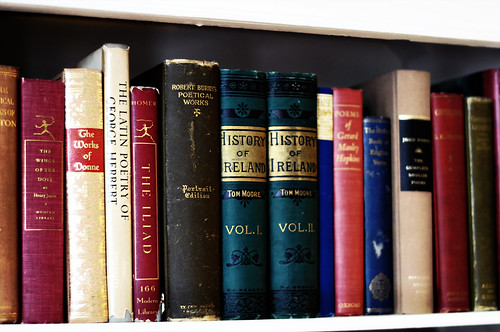
I began this Saturday series, this weekly glimpse of my over-stuffed bookshelves, because it seemed like fun. Just fun.
But now I’ve read House of Prayer No. 2: A Writer’s Journey Home by Mark Richard, and the word fun doesn’t come close. To share a book like this is something far beyond fun. It is serious. It is sacred. It almost feels like worship, and what can I possibly say to convince you to read this book? I don’t know what to say, but I feel desperate to say it.
This is a writer’s memoir. It is the story of a life, of a boy sinned against and sinning, and it is the story of God’s grace for this broken world. It is a work of art.
Unlike almost every other memoir you will read, Richard never uses the first person singular, never writes the word I. He refers to himself as you, and that choice draws his reader in and propels us through the pages.
It is as if a drowning man has lured us into the chaos of deep water. With him we are nearly overcome by the Southern Gothic horrors of his childhood, the wandering waste of his young adulthood, and, with him, we are saved. We are pulled from the water just as his father once pulled him from a swirling stream, and we see God.
By the end of this book we, like Richard, have long stopped believing in coincidence. Instead, through the words of an artist we are able to see the work of that Artist who takes the broken pieces of our lives, our bodies, our stories and fits them perfectly together. The result is something beautiful.
Richard’s memoir reminds me of the memoir trilogy by the poet Mary Karr, a series that began with The Liars’ Club: A Memoir . These are not easy books to read. Karr’s story takes Richard’s horrific Southern Gothic childhood and kicks it up a few notches. However, like Richard’s, this is memoir as poetry. Both books make me think that maybe the surest path to God is to run as hard and fast as you can in the opposite direction. Just maybe.
Next to memoirs by writers, I most enjoy memoirs by midwives. Baby Catcher: Chronicles of a Modern Midwife by Peggy Vincent is the best I’ve found. Each birth story she shares could stand alone, but there’s an overarching narrative that will make you catch your breath. Organized with brief quotations from The Book of Common Prayer, Vincent’s story prompts me to believe there may be no work more holy than that of a midwife.
I only wish we had a memoir from those heroic Hebrew midwives Shiphrah and Puah, women brave enough to deliver babies and tell tales to Pharaoh himself.
If books get written in heaven (and why not?), then no doubt we’ll read their stories someday. I, for one, can’t wait.
Find earlier book recommendations here, here, and here.
by Christie Purifoy | Jan 3, 2013 | God's promises, Home, Joy, motherhood, One Word, Pennsylvania, river, Uncategorized

There is a river, and it has washed my slate clean.
New home. New baby. New friends. New church. New weather. The year is new, and my days are full of new things.
Strangely, not one bit of it feels new. These are déjà vu days, and everything in them feels familiar and comfortable. As if I have already worn deep grooves into this daily life.
My baby daughter looks exactly like her sister, my firstborn. Holding this baby, nine years disappear, and I am a new mother again. I sit in the same rocking chair, she wears the same pink dress, and I sometimes can’t tell who is in my arms, the first baby or the last.
I tuck her into the same blue pram, and we walk beneath maple trees on our way to meet the school bus. I remember this stroller cutting through the icy winds on Chicago’s sidewalks, and I think I must have always known, somewhere deep within, that I was headed to this good place.
It is simply too familiar. I am not surprised by any of it. Only grateful. Deeply grateful.
I once wrote that I was living the first half of this verse: “Just as I watched over them to uproot and tear down … so I will watch over them to build and to plant” (Jeremiah 31:28).
Now I am living the second half.
My firstborn was a firecracker of a baby, and she broke me. In so many good and necessary ways, she broke me.
My fourth is like gentle rain in spring. One fierce and one gentle, they have both been good gifts.
There were years when all was uprooted. Now new things are growing. Both are necessary. Both are good.
I have been hearing this whisper for months, but now it is a shout: “Return! Return!”
I have said, “Yes, Lord, I am coming,” again and again I have said it until this moment, having just tipped over into this new year, I know I have arrived. I have returned.
And every day of this year, I will wake with one word in mind: return.
The poet T. S. Eliot says “We shall not cease from exploration / And the end of all our exploring / Will be to arrive where we started / And know the place for the first time.”
I have journeyed to my own beginning, and there is no surprise in this. Haven’t I always felt most at home with the One who names himself Alpha and Omega?
He is my beginning, and he is my end, and I have come home. I have returned; I am, every day, returning.
“My eyes will watch over them for their good, and I will bring them back to this land. I will build them up and not tear them down; I will plant them and not uproot them. I will give them a heart to know me, that I am the Lord. They will be my people, and I will be their God, for they will return to me with all their heart.”
Jeremiah 24:6-7
by Christie Purifoy | Dec 10, 2012 | Advent, Books, Poetry, Uncategorized
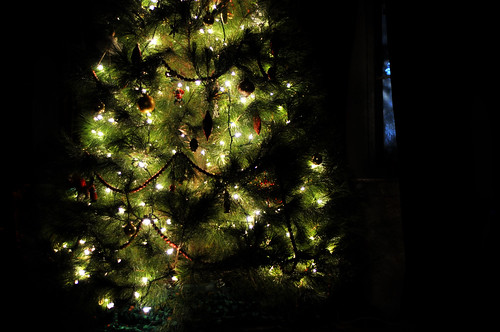
If there is one thing I am sure of after two years of desert living, it is that darkness can be a gift. It is often (perhaps always?) the only possible beginning for new life.
After all, the very darkest night is the night of the new moon.
Here is one more poem from one of my favorite collections, Luci Shaw’s Accompanied by Angels: Poems of the Incarnation.
The Overshadow
“… the power of the Most High will overshadow you …”
Luke 1:35
When we think of God, and
angels, and the Angel,
we suppose ineffable light.
So there is surprise in the air
when we see him bring to Mary,
in her lit room, a gift of darkness.
What is happening under that
huge wing of shade? In that mystery
what in-breaking wildness fills her?
She is astonished and afraid; even in
that secret twilight she bends her head,
hiding her face behind the curtain
of her hair; she knows that
the rest of her life will mirror
this blaze, this sudden midnight.
– Luci Shaw
Explore the growing collection of Advent imagery here.
Click here to subscribe to There is a River and here to connect with There is a River on facebook.
