
by Christie Purifoy | Dec 24, 2014 | Advent, Christmas, guest post, Jesus, motherhood, Uncategorized
I have wanted to share a guest post from my friend Laura for a long time. That I am finally able to do that, and on Christmas Eve, is one more good gift of a season that is full of them.
Laura is a dear friend. She is also a writer of rare talent. I sit up and take notice whenever I read something of hers.
Read the following reflection and then search out her gem of a book Everything That Makes You Mom: A Bouquet of Memories , and you will understand why.
*

After an evening meeting last spring, I turned on my phone and saw messages from my daughter. She wanted to Skype. The last time she asked, two years earlier, it was to announce her engagement. I figured this had to be job or baby. I drove home through the silent night with a sense of wonder, hope, anticipation. I tried not to speed.
Once I got to the desk and logged on, we chatted for a moment. Then she said, “We have some news,” and slid a grainy black and white image up into the frame.
::
The church tribe I grew up in didn’t observe the liturgical year. I knew Christmas carols from school music time and TV. Advent was a countdown calendar, a surprise picture or bit of chocolate behind each day’s cardboard doorflaps.
This past Sunday — same tribe, decades later — we sang some carols. The lyrics are projected on big screens, but not the notes. When we got to the chorus of “Angels We Have Heard on High,” as I sang the alto “Glo-o-o-o-o-o-o-o-o-o-ri-a” (which has six fewer o- than the melody), I had a passing thought: How do I know this harmony so well?
Not from singing. In the little church where my daughter grew up, Advent culminated in a Christmas Eve service. We are both flutists, and for several years we played a duet. We’d test-driven several carols and hymns at home, and settled on that one, precisely because it was enjoyable, more musically interesting, to play the glorias.
She took the melody. I tried to keep my volume a degree lower than hers, to support but not overpower. There’s a kind of communication between musicians, part keen listening, part familiarity, part intuition. There’s a way that music memory gets in your body. More than once, someone came up to us afterwards with tears in her eyes and told us we somehow sounded like one flute playing harmony.
At the end of the service, someone would dim the lights and we’d assemble ourselves in a circle around the sanctuary, holding our little white candles with their little paper skirts. One light. Two. Silent night, we sang as we shared the flame. Holy night. All was calm. And eventually, all was bright.
::
I didn’t cry when I met him. I expected to. But it was such a calm moment. I had just arrived in their bright corner apartment. She went in the bedroom, where his daddy was changing his diaper, and I sat down in the living room. Then she brought him out, so relaxed, already so at ease with him, and introduced him. I stood, the way you would to meet anyone for the first time, and introduced myself. I sang “Happy One Week Old to You,” softly, and stroked his sweet head.
“Would you like to hold him?”
The answer will always be yes.
::
I have nothing profound to say about Advent. No neat way to swaddle up this series. I’ve been in churches where it was the focus of worship for four weeks, and churches where it’s not on the radar and some people have never heard of it. I’ve taken and eaten the daily morsel of chocolate in years when I went into a church only to attend a friend’s wedding.
But I know something about waiting. Don’t we all?
I know the story never gets old, that story of the most powerful force in the universe coming to earth to be with us, to be one of us, starting out helpless and needy and soft and beautiful, just as every one of us did.
::
I held and beheld that baby boy over the next few days, for hours and hours. Talked to him. Sang to him. Soothed him when he fussed, which was hardly at all. Studied his surprisingly expressive face.
His mama was studying him one afternoon, on the sofa with her knees drawn up, cradling him on her thighs. It’s still amazing to me that we made him, and he grew inside me and then I pushed him out, she said.
Do you ever look at him, I asked, and wonder what he’ll like, and what he’ll be good at, and who he’ll become?
Her heart swelled, and the overflow, you could practically see it rising in her chest and spilling out her eyes. She just nodded. The wave swamped me too.
::
Let earth receive her king.
*
Laura Lynn Brown vanquishes errors and makes the rough places plain as a copy editor at a daily newspaper. Her writing has appeared in Slate, the Iowa Review, Art House America and the High Calling, and she is an editor at The Curator. Her book Everything That Makes You Mom: A Bouquet of Memories was published in 2013 by Abingdon Press. More of her work can be read at her website, lauralynnbrown.com, and her one-year daily gratitude journal, Daylilies.
by Christie Purifoy | Aug 26, 2014 | Autumn, children, Family, motherhood, Seasons, Summer, Uncategorized
Summer came to an end at approximately five pm on Sunday night.
At five pm on Sunday night, I was sauteeing squash ribbons (that four out of four children would not eat) and flipping cheese quesadillas (that two out of four children would not eat) while hollering at the boys to clean their room and listening to the firstborn debate first-day-of-school outfits.
I was mentally prepping school lunches, signing an emergency-contact form for the oldest, and telling the youngest that now was not a good time for playing in the sink.
The youngest threw herself across the floor while I two-stepped toward the dinner plates.
And there, at utter loose ends in my kitchen, is when I knew summer was over.
***

***
Summer may be chaotic and intense, but in summer there is less pressure to chase down every last loose end.
Did we eat popcorn for dinner instead of vegetables? Well, it’s summer. Tomorrow we shall raid the garden.
Did the five-year-old hop into bed with dirty feet? Well, maybe we’ll wash off with a visit to the creek tomorrow.
In Fall, we remember the calendar and the budget and the email inbox.
In Fall, the overgrown garden looks sad rather than abundant. In Fall, the baby’s hair is plastered to her forehead with applesauce instead of sweet baby sweat.
In Summer, loose ends twine like pea vines on lattice. They tempt us to stay up past our bedtimes. They draw us on to look deeply at sunsets and the freckles on our loved one’s nose.
In Fall, loose ends scatter themselves like beads from a broken necklace. We scramble and cry, but we know we will never find them all. We will never manage to gather the details. We will fail to live up to at least a few of our responsibilities.
***
I long for my own little chore chart. With three neat rows and a gold star for each grid.
But there are no gold stars waiting for me at the end of my email inbox. No gold stars when I have packed three healthy, nut-free, school-approved snacks.
So here is a reminder – for me, for you – to hold on to summer’s lessons.
Let us remember where the gold stars live.
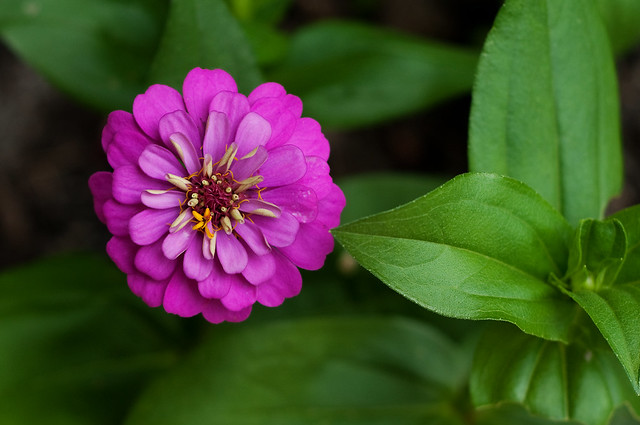
They live in sunsets and freckles.
They live at the ends of every loose strand of a young girl’s hair.
They shine in the darkness, and the darkness has not overcome them.
***
***
by Christie Purifoy | Aug 13, 2014 | Autumn, Faith, Grateful, grief, healing, Joy, motherhood, Pregnancy, Scripture, Seasons, Stories, Summer, Uncategorized
The world is loud and terrible this summer. It is as if the entire planet has tilted on its axis and dipped us all in nightmare.
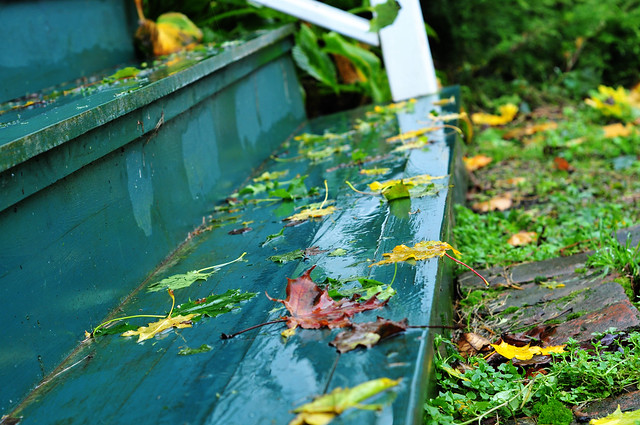
The grass outside my bedroom window is dotted with yellow maple leaves. I don’t know if this is because summer is already ending or because the largest and oldest of the maple trees is dying. Perhaps it is both.
Land and growing things are broken, nations are broken, bodies and minds are broken. And we respond by shouting at one another.
I indulge in shouting some days, but, mostly, I respond by retreating into silence.
When my children explode over cracked Legos and the last popsicle, I struggle to stay with them in the noise. I want only to slip away, to climb the steps to my bedroom, to sit in the curve of the bow window noticing yellow leaves on the lawn outside.
The world grows louder, and I grow quieter. Sometimes, this feels like wisdom, but I know it is also weakness.
It requires strength to share our stories. To risk being misunderstood.
It requires faith to tell small stories. To believe that what seems to be inadequate is of value.
When my fourth child was born, my body struggled to make milk for her. The hormonal peaks and valleys of that process seemed to switch a lever in my brain.
I became depressed.
I had so many reasons to be happy, but depression sucked all emotion from my mind and filled the emptiness with anxiety. I can remember sitting in my comfortable, soft rocking chair, holding my baby, and trying to remember why I had once cared about babies or repairing old farmhouses or ordering seeds for the spring garden or anything at all. I could no longer remember why it mattered if any of us ever got out of bed.
When I stopped trying to nurse my baby, and the last of my milk dried up, the depression lifted. A severe mercy.
It meant that I knew happiness again.
It meant that I knew sadness again.
Healing looked like a renewed capacity for both joy and sorrow.
This morning I read these words from Psalm 105:
Give thanks to the Lord, call on his name;
make known among the nations what he has done.
Sing to him, sing praise to him;
tell of all his wonderful acts.
And I remembered what had happened to me after my daughter’s birth and knew that I did have a song of praise.
Thank you, Lord. Thank you for healing me enough to grieve.
by Christie Purifoy | Jul 14, 2014 | children, Family, motherhood, Scripture, Summer, Uncategorized
In ancient times, the sea was the home of Chaos.
I could write that the sea symbolized chaos, but that word symbol is too easily brushed aside. As if symbols are merely tame bits of literary frippery with no power to unleash the deepest truths of our lives. Like opening the floodgates.
To the sea.
For these ancients, the sea was unfathomable. The sea bedded monsters. The sea could surge forth, at any time, and swallow up land, homes, lives.
Death, darkness, oblivion, terror. This was the sea.

And if you love beach vacations and find it hard to understand how the play of light on dancing waves could ever have been a harbinger of doom, then you will read the twenty-first chapter of the book of Revelation with surprise. And disappointment.
Then I saw “a new heaven and a new earth,” for the first heaven and the first earth had passed away, and there was no longer any sea. (Revelation 21:1)
But if you are like me, you will sigh with longing.
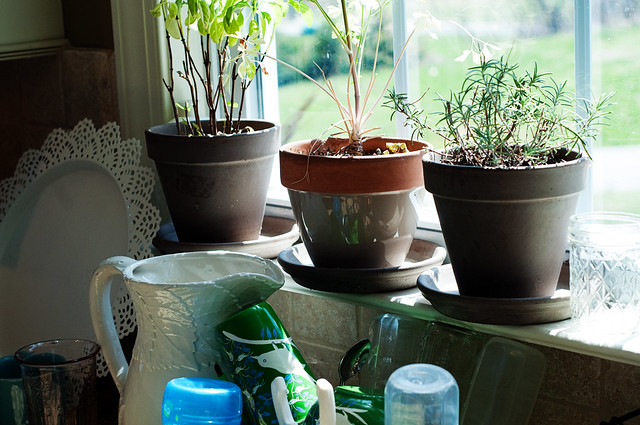
If you are like me, the mere act of sifting through an overfull kitchen drawer for a thermometer hiding somewhere in its depths while the milk you had intended to turn into yogurt boils away on the stove is all it takes for Chaos to begin seeping in.
A moment later and the failed yogurt, the waste of good milk, the scorched pot and the murky kitchen drawer have caught you in their surge. One glance around and you are lost in an ocean of legos and marbles and bits of paper from the morning’s craft and a sticky puddle you cannot explain.
Now you are drowning because it is so humid and your kitchen is a furnace and the baby, the beautiful curly-haired baby, abandoned the slip’n slide after five minutes and is now tracking wet grass and clumps of mud from kitchen to dining room to entryway rug.
One day there will be no sea.
Yes, the sea is a symbol and my kitchen drawer is a symbol and whoever told you a symbol isn’t real? Whoever said it was not possible to drown in symbolic waters?
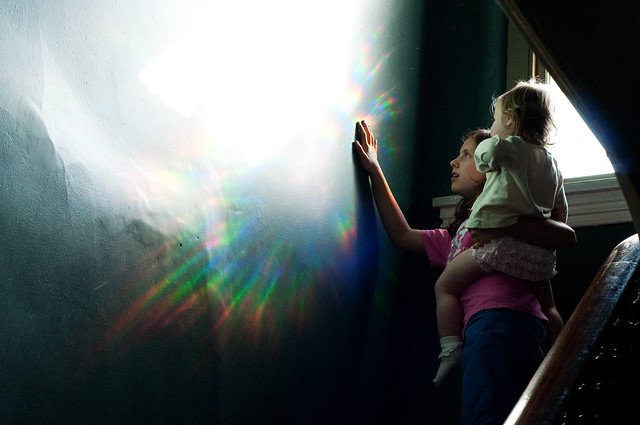
But if it is possible to drown, it must also be possible to swim. It must also be possible to open your eyes and observe the play of light on dancing waves.
To stand before the unknown and the unmanageable and discover, not the hiding place of terror, but the birthplace of beauty.
***
by Christie Purifoy | Jun 25, 2014 | children, Family, Gardening, Home, motherhood, Pennsylvania, river, Seasons, Summer, Uncategorized
It is summer.
Like the season itself, there is no ambiguity in this statement. It is a fact as plain and self-evident as the sun that now rises straight up to the top of the sky or the green tomatoes waiting on their vines.
In one of those rare congruences, the academic calendar and the moon calendar and every kind of calendar we might consult in this house agree that it is now summer. And most convincing of all, the fireflies are back. In the evening, I can see small, dancing pinpricks of light everywhere I turn. They flash and flash, and I imagine a crowd of fairies practicing their nighttime photography.
All month long, I have been tempted to use one particular word. I am tempted by the low humidity and the cool breeze. I am tempted by the first blooms on the rose bushes I planted in March. I am tempted by the orderly lushness of the green garden. Broccoli and carrot tops and kale exploding along their neat rows.
I want to say, but then I do not say: It is perfect.
***
I talk myself down from that word every time. Because tomorrow it will be hot or because the beetles will begin chewing on the rose leaves any day now or that lettuce will surely bolt (and turn bitter) in a week.
But I have confused perfection and permanence. Whoever told me that perfect is only perfect if it lasts?
***
My son and I share a June birthday. He is, has always been, a good and perfect gift. I can remember him at six months old and how I wanted him to just stay. Like that. Forever. I had already seen my daughter, my firstborn, turn from fussy baby to fierce toddler to fiery preschooler, and I had celebrated and mourned each beautiful transition. But I wasn’t sure I had the energy to do it all again. I thought my chill little baby boy was just perfect. Today, he is eight, and that, too, seems just about perfect.
But perfect isn’t permanent.
We celebrated our birthday with a canoe ride down the Brandywine River. The Brandywine River is as sweet and magical as it sounds. We paddled, we drifted, we observed the round stones of the riverbed through a few shallow feet of clear water, and I watched the back of my little boy’s head. From where I sat at the rear of the boat, I could hear him whispering over and over, “This is amazing. This is just great.”
This is perfect, I wanted to say. But I didn’t.
***
***
I used to think that earth was the place of imperfection and heaven the place of perfection. I used to think that this life was imperfect and death was the door toward perfect. I used to think that this world was change and impermanence and that other world? That’s where everything stays the same, forever.
But I no longer think it is quite so neat. I no longer believe the lines are so thickly drawn. And this is good news.
Today, I think that the kingdom of heaven Jesus spoke of so powerfully is more like a river. And that river is breaking out in deserts all over this place. And in so many corners of my shifting, changing life.
And I am determined. When perfect bubbles up, I will no longer avert my eyes. I will no longer bury it in a flurry of doubt and pessimism (it won’t last, it isn’t real, nothing is ever perfect).
Instead, I will dive in. I will say, this river is leading me home.

