by Christie Purifoy | Sep 28, 2013 | Books, Gardening, Uncategorized, Writing
Friends, a confession: I read some books this summer.
The bad news is that I forgot to start dinner, I never noticed when the baby ate cat food, and I forced all four children to endure 90 minutes of daily “quiet time.”
The good news is that I have so many books to tell you about. Let’s talk books, again, shall we?
(If you’re new to this Saturday series you can browse my previous recommendations right here and read more about my use of affiliate links.)
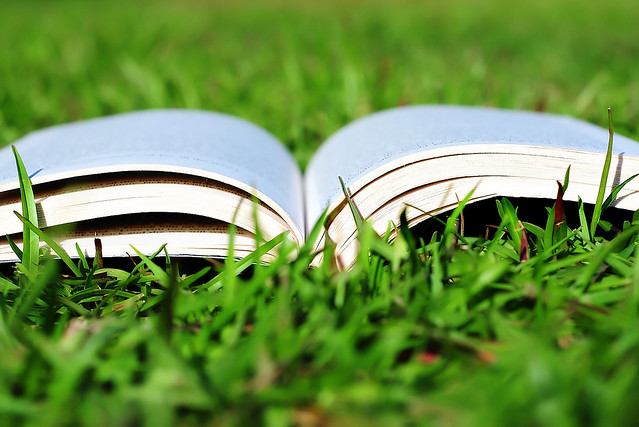
Summer, for me, was over the top in every way. Heat, humidity, rain, noise, activity, zucchini. Just Over The Top. I survived by reading novels.
One of my favorites was Where’d You Go, Bernadette: A Novel by Maria Semple.
After reading the first few pages, my expectations were not high. The storytelling is unconventional. Rather than a seamless narrative, you’ll find fragments of communication: emails, texts, letters, newspaper clippings, etc. I worried the book would be some sort of postmodern experiment, more taken with its construction than the story it tells. I have nothing against experiments (Joyce’s Ulysses is one of my favorite books), but, this summer, I wanted something thoughtful and enjoyable.
If Semple’s book is an experiment, it succeeds beautifully. Yes, the form is unusual, but it turns out to be integral to a story that is deeply, warmly human. This is a fun, funny novel, but it makes a serious point: first impressions, even second impressions, might give us entirely flawed ideas about other people.
I loved the hope inherent in this story. I loved knowing that even villains might turn out to be lovable.
Hovering over me was the Chihuly chandelier. Chihulys are the pigeons of Seattle. They’re everywhere and even if they don’t get in your way, you can’t help but build up a kind of antipathy toward them. – Maria Semple
Over the summer, I spent more time gardening than reading, a first for me. Of course, when I wasn’t gardening I was often reading about gardening. I’d read this memoir years ago, but when I found it on the shelf of my local used bookstore, I was happy to read it again.
William Alexander’s The $64 Tomato: How One Man Nearly Lost His Sanity, Spent a Fortune, and Endured an Existential Crisis in the Quest for the Perfect Garden is funny, self-deprecating, and surprisingly informative. Reading about battles with garden pests and plagues should be discouraging, but Alexander’s honesty (and his recipes!) allow us to see just how rewarding life in the garden can be, whether we’re winning those battles or not.
With the kitchen garden established, I decided – in an act of horticultural hubris perhaps not seen since, well, since Yahweh designed the Garden of Eden – to Build a Meadow. – William Alexander
This new book by award-winning memoirist Beth Kephart was one of my great finds of the summer: Handling the Truth: On the Writing of Memoir . If you have even the tiniest dream to write memoir (or even a blog post based on personal experience) this book will be your Bible. It is inspiring, it is instructive, and it is beautifully written.
I think this book deserves a much wider audience than only writers and writers-in-the-making, however. First, Kephart offers lists of must-read memoirs. Some were familiar to me, but many were not. Her descriptions of what makes each memoir valuable would make this book worth its purchase price even if that’s all it offered. But it offers a great deal more.
This is a book to wake us up to our own lives. This is a book to reveal the treasure that is our own experience. This is a book to help us shape the stories that must be shared.
If all your memoir does is deliver story – no sediments, no tidewater, no ambiguity – readers have no reason to return. If you cannot embrace the messy tug of yourself, the inescapable contradictions, the ugly and the lovely, then you are not ready yet. If you can’t make room for us, then please don’t expect us to start making room for you. – Beth Kephart
And you? Read any good books this summer?
by Christie Purifoy | Jun 19, 2013 | Faith, Food, Gardening, God, God's promises, Poetry, Summer, Uncategorized
I see the world through a lens of metaphor and story. The magnolia tree near our chicken coop is a love letter. The window in our stairwell is a promise.
Like a pair of good eyeglasses, metaphor helps me see the world and my life more clearly. It is the tool I use to scratch beneath the surface of things.
These days, I am learning its limits.
Or, maybe, I am learning my own limits.
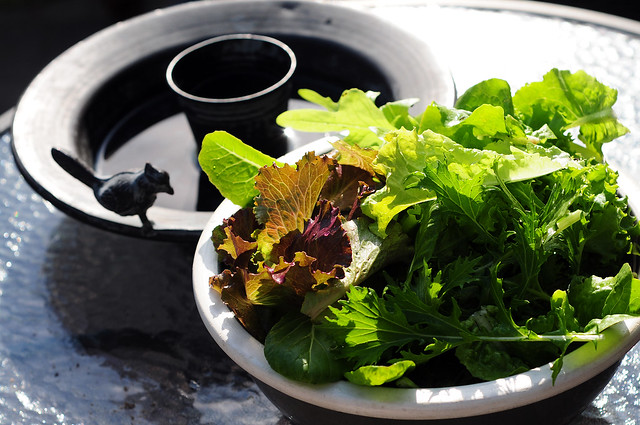
I plunge my arms up to the elbows in a deep farmhouse sink. Snap peas, carrots, a rainbow of swiss chard, and heads of broccoli so richly green they’re also purple. In every moment I can spare, I am harvesting, washing, blanching, freezing, eating, feeding. The kitchen garden we rushed to build and plant this spring has become a fountain. Between the rain and the explosion of good things to eat, that is no metaphor.
Apparently, metaphor has been more than a pair of eyeglasses to me. It has also been my preferred tool for setting up distance between the spiritual world and my own. I have used it to say here are my life and my world and way over there? Can you see it off in the distance? Those are the promises of God. The things that truly matter. We will get there someday.
Except, someday is today.
The things of God are here.
The things of God are now.
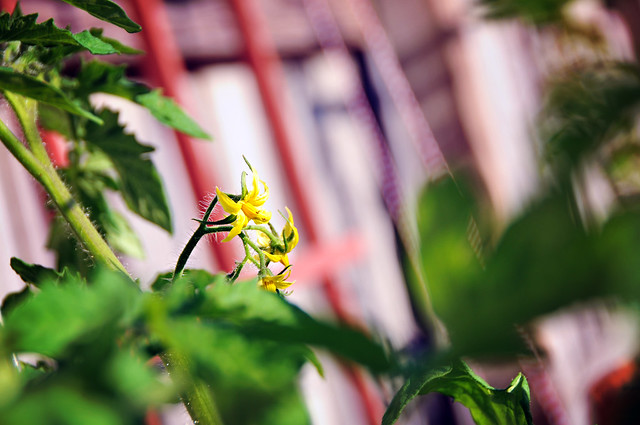
In my Bible, I can point out an inky smear of a date. Also, a little scribble of a star. They remind me that two years ago, I heard God say this, “they will make gardens and eat their fruit.”
Those words felt like a promise, and I held on to them through two very unfruitful years. In other words, I believed them. Yet, I know now that I believed them in a hazy, over-spiritualized kind of way.
What if God means exactly what he says?
What if his metaphors indicate, not distance, but nearness?
He promised, and, today, I am eating those words. I have sautéed them in oil and garlic, roasted them at high heat. I have shredded them and peeled them into ribbons. I have tossed them in salads and shared them with neighbors.
They taste good.
So good.
by Christie Purifoy | May 8, 2013 | Dreams, Gardening, Home, Pennsylvania, Spring, Uncategorized
I recently discovered that my house is surrounded by azaleas.
I came to this brilliant conclusion because spring arrived (our first in this new home), and the bushes I’d never really noticed turned brilliant pink and flowery almost overnight.

Next to the extravagance of these azaleas the flower beds in the front of our house suddenly looked sparse. There were big empty spots, and I worried about finding time to purchase and plant perennials. My days are overfull as it is just making snacks for children. In the small spaces of time when I am not making snacks, I am trying to get the new vegetable garden planted.
That’s when I noticed the fiddlehead ferns. Well, not the ferns, just the fiddleheads, really. It looked as if bright green violins had begun sprouting all around the azaleas.
I vaguely remembered seeing ferns when we moved in late last summer. I realized I could probably hold off on planting. I could wait and be surprised. Who knew what else might emerge.
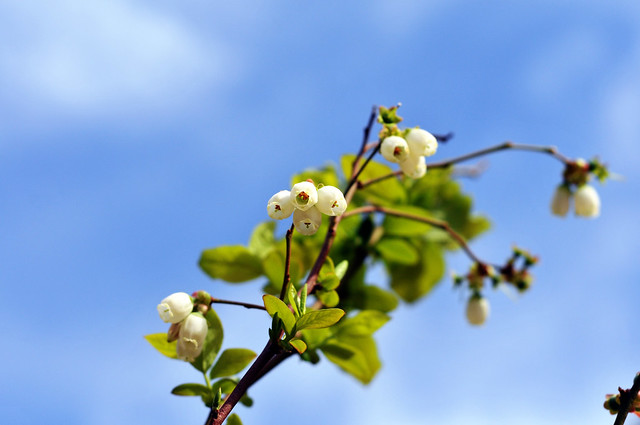
Like the dogwood tree. Also, a second dogwood tree. Apparently, I can’t identify most trees unless it’s spring and they are flowering. There’s also a crabapple in the corner I’d never noticed. And roses. So many roses are tucked along the fence line, but I had no idea how many there were until I went around inspecting every square inch for poison ivy.
For me, this first spring is all about surprise. My eyes are wide-open, and I have begun expecting hidden wonders to reveal themselves at every turn.
It has reminded me of the birth of my fourth baby, Elsa Spring. When I first looked at her she felt both familiar and utterly surprising. I loved her, she belonged to me, but I did not know her. She would reveal herself to me only in time. Anticipating that slow revelation carried me through so many heavy, hard newborn days.
I hardly know this place, but it is home. We are planting trees and putting down roots (quite literally), and the horizon of our dreams is farther out than we have ever seen it.
When I imagine teenagers, they are slipping through these bedroom windows to sun themselves on the roof of the porch. When I imagine weddings, I picture them here beneath the avenue of maple trees. When I consider grandchildren, I see them playing beneath the apple trees that are, today, more like apple sticks.
Until this spring, home meant familiar and comfortable. The place you know so well you no longer see it.
I’m discovering that home might be familiar and surprising. Our true home is not the place we no longer see, but the place (or state of mind?) that keeps us wide awake with wonder.
Home is where we expect good things. Home is where we say, with shining eyes and hope in our hearts, What next? What next? Is there more?
And there is always more.
“I have come home at last! This is my real country! I belong here. This is the land I have been looking for all my life, though I never knew it till now … Come further up, come further in!”
– C.S. Lewis, The Last Battle
by Christie Purifoy | Apr 20, 2013 | Books, Gardening, Home, Pennsylvania, Spring, Uncategorized
This is a gardener’s favorite time of year. All is new green growth and hopeful expectation. Weeds, bugs, and wilting heat are yet to come. Snow and freezing temperatures seem more and more remote.
It is my favorite time of year.
Whether you are an armchair gardener or a gardener with dirt under your nails (I’m a little bit of both), here are three books for the season.

Wild violets in the yard here at Maplehurst.
(all the photos in this post taken by yours truly)
Gardening books are some of the favorites on my shelves. In the age of google you’d imagine the internet would be a gardener’s best resource. In my opinion, the internet is almost too helpful. It can be difficult to sort the good advice from the bad, and I rarely google a gardening question without ending up overwhelmed. A well-edited, common-sense garden reference book is so much better.
My copy of The Garden Primer: Second Edition by Barbara Damrosch is creased and dirty. Like a good cookbook, this is a sign of its worth. When we planted apple trees, this book showed us how. When choosing blueberry varieties, I consulted this book. From roses to vegetables, from seed starting to planting bulbs, this book has just enough (and never too much) to say about almost everything that grows.

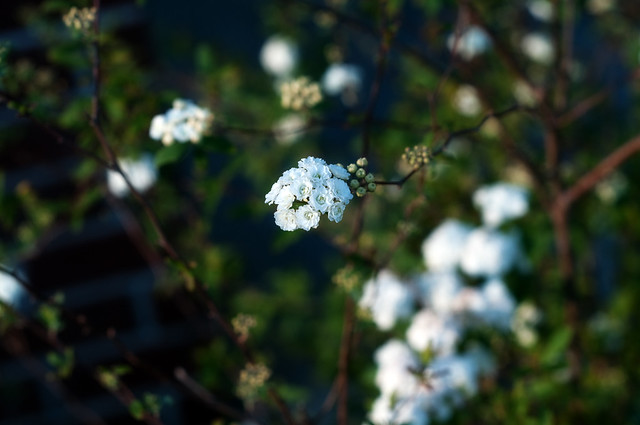
I need to learn the name of these white-flowering shrubs. They are stunning.
I bought The Tree Book for Kids and Their Grown Ups by Gina Ingoglia for my children. They’ve enjoyed it, but I know I’ve opened it up more than they have.
The watercolor illustrations are beautiful and informative. Yes, we could always turn to google images, but it is so much more satisfying to take this book along for a walk, identifying leaves and bark and fruit along the way.
It’s one of my goals to know the names of all the trees growing here at Maplehurst. This book is a very nice way to start.

Lawns without weeds or dandelions make me nervous. Our own lawn supports a healthy ecosystem of weeds.
The title of Ruth Stout’s Gardening Without Work: For the Aging, the Busy & the Indolent pretty much speaks for itself. Originally published in 1961, this book by the folksy grand dame of American home gardening is funny, entertaining, and, occasionally, quite helpful.
Stout’s advice can pretty much be summed up in one word: mulch. But, it’s a very good word. Ask me in a few years if mulching has really made vegetable gardening easier, however my broccoli seedlings do look very cozy in their mulched bed.

The magnolia blossoms are almost as beautiful after they’ve fallen.
Do you garden?
by Christie Purifoy | Mar 19, 2013 | Faith, Gardening, healing, Jesus, Lent, Seasons, Spring, Uncategorized, Waiting, Winter
Today is the day for a miracle …
Today the calendar says spring, but when has the calendar ever told us anything true?
As I write, darkness has dropped, the wind is howling, and the hanging porch lights are twisting like terrified animals on their chains.
The sound of this wild March wind does not make me feel cozy. It sounds too much like someone in pain.
Today is the day for a miracle …
I keep telling myself spring is already here. I’ve known for days that it was time to plant. Peas, lettuce, radishes, beets, spinach, swiss chard … so much needs to be in the ground.
But who has faith for gardening in the midst of snow flurries and sleet?
Today is the day for a miracle …
The apple trees we ordered months ago have arrived. They look like apple sticks. The children do not believe me when I tell them we’ll bake pies. I’m not sure I believe myself.
But I’ve seen more winters than my children, and I do know this: the day when daffodils emerge is not the day for hope. The day when seedlings show the bright green of new life is not the day for faith. That day came and went.
This is the day for a miracle. This day. The dark day. The cold day. The day when all you can see is mud and broken things, like so many toys strewn across the backyard.
Easter Sunday is not the day for miracles. It is the day for praise.
Every miracle we ever needed, every miracle we ever wanted begins on Good Friday.
“See, I am doing a new thing! Now it springs up; do you not perceive it?”
Isaiah 43:19
*Today I am listening to this song by Hans Kraenzlin


