by Christie Purifoy | Jan 13, 2012 | book of quotations, Books, healing
I’ve been sick. For a month. I’m worn out with it.
Worn out enough to have spent the last few days in bed. Worn out enough to have finally called the doctor. Having filled the prescription he gave, I can breathe again. Though I am still tired. And each breath has that ache-y, medicinal twinge suggesting that my body knows it isn’t yet breathing under its own strength.
To be confined to a sickbed feels like the ultimate waste. Productivity ceases. To-do lists are left undone. One can no longer give anything. Confined to bed, receiving is the name of the game.
In other words, it isn’t only the pain of illness that makes it so uncomfortable.
When sick, it is no longer possible to do; the challenge is simply to be. I focus on each breath in and out. At first, this brings fear. Later, comfort. To labor at something which is usually instinctive is to recognize that it has always been, will always be … a gift. Breath. The presence of God. Beyond us and within us.
When we are sick, the world shrinks. I have a book. The view from my bedroom window. A slowly ticking clock. This is life condensed. Which means there is more to notice, more to observe, more to think about in one minute of this life than in an hour of my usual busyness.
And that is a good thing.
Still, I hate the phrase “look on the bright side.” It suggests a yin-yang view of life that I simply can’t accept. I think you know what I mean: every cloud with its silver lining, every light with its shadow. No thank you.
Shadows only make me dream of a world without shadow. Of light without darkness. Of a day when “the moon will shine like the sun, and the sunlight will be seven times brighter … when the Lord binds up the bruises of his people and heals the wounds he inflicted” (Isaiah 30:26).
But, in the meantime, I do marvel that anything good can emerge from sickness. From brokenness. From darkness. This isn’t to say that “it’s all worthwhile” or “it happened for a reason.” Those are platitudes that do little justice to the utter wrongness of sickness. And brokenness. And darkness.
No, when I acknowledge the good gift I am marveling at the fact that darkness is never all. There is always something more. Something beyond.
For me, now, it is only a few words read in a book in the middle of the afternoon while I lie in bed and listen to the children scream their far-off screams. They are not, in this moment, my responsibility.
And so, released from every responsibility that says do, I lie still and read a description of wolves crying under a full moon in Yellowstone Park. I’ve never heard a wolf’s cry, I don’t know if I ever will, but now, having read these words, I can carry that cry with me for the rest of my life:
At the same time other wolves joined the first two, and we heard … the full-throated quiver of the pack. It haunted everything it touched, sanctified it. It rolled down the mountains and onto the plains and the bison heard it, the ground squirrels heard it, the crows nesting in the trees heard it. Mary began to tear.
“We are alive,” the wolves said. “And the world is beautiful.”
(from Eternal on the Water by Joseph Monninger)
by Christie Purifoy | Jan 10, 2012 | Books, Jesus, Stories
“Mom,” she asks, “What happens next in the story?”
I’m distracted, brushing my teeth, checking the clock. I realize that we only have 5 minutes before we need to leave for church. It takes more than 5 minutes to strap three kids into the car. At least, it does if one of those kids is a two-year-old who processes every instruction as an opportunity to run and hide.
“What story?” I ask.
“You know. The story at church. What happens after Christmas? What happens with Jesus?”
I rinse my mouth and give her a look of confusion. She says, “You know, the story! The angels and the stable and the star. What happens next?”
Finally, I understand her question, but I fumble for an answer. I may have an advanced degree in stories (I’m an expert! An authority!), but it only takes a child’s simple question to deflate those ego-balloons.
“Ummm … well … Jesus grows up. Then he starts teaching and performing miracles.”
Even I know my answer isn’t quite adequate, but the girl is thoroughly unconvinced. She huffs and rolls her eyes, and I know she thinks I still don’t understand.
But, I do. I do.
I know that it takes readers years to learn and even more years to appreciate that stories are not simply the sum of their plot developments. You could summarize a book by Agatha Christie and one by Virginia Woolf in the same number of sentences, but which summary would leave the most unsaid? You don’t need to have read Mrs. Dalloway to know the answer, I think.
“What happens next?” is not the only question we should ask. Why and how may be even more important.
I understand that my daughter, a new reader, is looking for excitement. We’ve had the star and the stable, the angels and the shepherds. What’s next? What’s next? Keep it coming! Keep it coming! Or, as her five-year-old brother might say, “Is there another picture in this book?”
We do get a few pictures between Christmas and Easter. Fishes and loaves. A broken jar of perfume. A man high up in a tree. Still, they aren’t quite as stunning as that stable or that cross. Neither the beginning nor the end, this is merely the hum-drum middle, right?
I’m not so sure. The middle may be less of a set-piece, less likely to be carved in wood or clay, but it’s the part that gives me the most hope for my day-to-day.
We live most of our lives in the middle. Between set-pieces. The funeral. The child’s birth. The phone call. The move. Those things happen, and they look like peaks and valleys as we glance back in time, but we mostly live in the in-between.
Jesus breaking bread. Jesus talking. Jesus healing. Jesus praying. That’s what the middle looks like. It’s beautiful and breath-taking in its own way. We only need to slow down enough to see it.
It’s like I always told my students when they first read Virginia Woolf. “Don’t rush. Take your time,” I would say. “If you hurry through only looking for what happens next you’ll turn the final page and realize that you’ve missed the story.”
I don’t want to miss the story. I want to live it.
by Christie Purifoy | Dec 8, 2011 | Advent, book of quotations, Books, Jesus
The following words can be found in Watch for the Light: Readings for Advent and Christmas. I’ve had this small volume on my Amazon wish list for several years, but this is my first season to read it. I should have clicked purchase long ago.
J. B. Phillips on Advent:
“What we are in fact celebrating is the awe-inspiring humility of God, and no amount of familiarity with the trappings of Christmas should ever blind us to its quiet but explosive significance. For Christians believe that so great is God’s love and concern for humanity that he himself became a man. Amid the sparkle and the color and music of the day’s celebration we do well to remember that God’s insertion of himself into human history was achieved with an almost frightening quietness and humility. There was no advertisement, no publicity, no special privilege; in fact the entry of God into his own world was almost heartbreakingly humble. In sober fact there is little romance or beauty in the thought of a young woman looking desperately for a place where she could give birth to her first baby. …
That is why, behind all our fun and games at Christmastime, we should not try to escape a sense of awe, almost a sense of fright, at what God has done. We must never allow anything to blind us to the true significance of what happened at Bethlehem so long ago. Nothing can alter the fact that we live on a visited planet.”
We live on a visited planet.
by Christie Purifoy | Nov 14, 2011 | Faith, Poetry, prayer, Uncategorized
For you on this Monday: a sonnet from Irish farmer-turned-poet Patrick Kavanaugh.
I suppose there are those who might find heresy in this poem. “Pantheism,” they would say.
I don’t defend the idea. If God is everything and everything is God then what good is God, I wonder? And yet, I do not think that this is a heresy strong enough to deserve much disapproval (at least not today in the United States). We have silenced nature very effectively with our parking lots and our strip malls, our corporate ladders and our electronic shadow selves.
This poem reminds me to listen for the voice of God whispering all around.
I can’t prove that His is the voice you hear in water and wind. But, to borrow Kavanaugh’s words, some arguments aren’t meant to be proven.
Canal Bank Walk
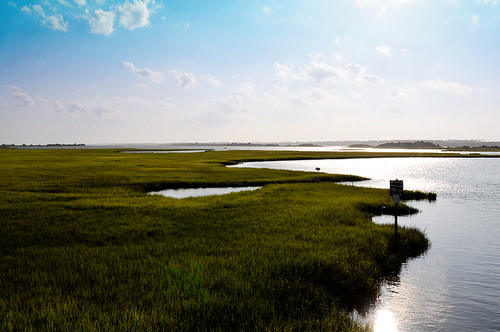
Leafy-with-love banks and the green waters of the canal
Pouring redemption for me, that I do
The will of God, wallow in the habitual, the banal,
Grow with nature again as before I grew.
The bright stick trapped, the breeze adding a third
Party to the couple kissing on an old seat,
And a bird gathering materials for the nest for the Word
Eloquently new and abandoned to its delirious beat.
O unworn world enrapture me, encapture me in a web
Of fabulous grass and eternal voices by a beech,
Feed the gaping need of my senses, give me ad lib
To pray unselfconsciously with overflowing speech
For this soul needs to be honoured with a new dress woven
From green and blue things and arguments that cannot be proven.
– Patrick Kavanaugh
by Christie Purifoy | Nov 8, 2011 | Books, Home
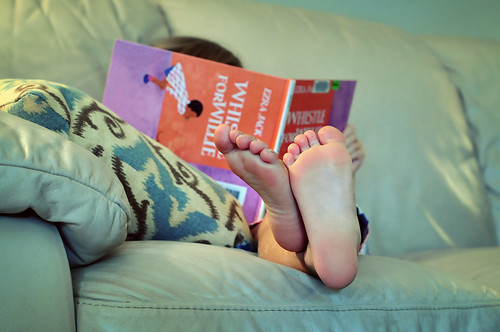
I recently bought a chair.
To be more precise, I bought an arm-chair.
This is no hard-backed dining chair. This is a reading chair, a tuck-in-by-the-window-with-a-stack-of-books-and-a-cup-of-tea-chair.
Full confession: I already had a good reading chair. With its faded green-velvet slipcover, it is soft and welcoming. It even has a small hole on the right arm, an x-marks-the-spot for the exact right place to rest my book. In our Chicago apartment, this chair sat between our third-floor window and a built-in bookcase. The ideal spot for reading; the ideal spot for thinking.
This chair still sits in the living room, but in our Florida house it has no window (the window, in this case, consisting of a sliding-glass door to the screened-in patio). A reading chair with no window is simply no good, in my opinion.
And so, I’ve been on the lookout for a new reading chair.
I’ve long kept its intended spot in mind. Because our Florida home is younger than our Chicago home (oh, by eighty years or so), the only consistently quiet spot in this house is in my bedroom (darn these contemporary “open” floor plans). If the quiet weren’t enough, the windows in this room would confirm it as the ideal place for reading: they are a tall, three-sided embrace for my writing desk with just enough room left over for an arm-chair.
And the view, you ask? Fruit trees, a spreading oak, water, and all kinds of birds.
Of course, as with any big purchase, there was no small amount of hand-wringing and budget-worrying. I want to live simply, but I recognize that my usual standards of comparison have become a bit skewed in a place where every other person appears to own a boat.
I might justify my purchase by saying, “Well, it isn’t as if I’m buying a boat.” And yet, I’ve learned that these two objects may not be all that different.
I know this because I sat next to a boat-owning businessman on my recent flight to Chicago. When he started talking to me about how much he loved living in Florida, I just smiled and nodded. I’ve learned that around here conversations tend to shut down once you admit to being more of a “cold-weather person.” It’s not hostility. Just bewilderment.
As I listened to him describe his weekends on the boat, the slow putt-putting to just the right quiet cove, I realized, with surprise, just how much we actually had in common. I understood that for some boat-lovers at least (and I’m afraid I must entirely exclude jet-ski lovers from this observation) a boat is like an arm-chair you can enjoy out on the water. It’s a place to sit, to hold a nice drink, to observe the glory of our world.
The biggest difference, as far as I can tell, is the cost of maintenance (in time and money). So, I am more than content to be an arm-chair kind of girl.
Still, it’s nice to know that I’m not quite the Florida-coast oddball I thought I was. I may not be a hot-weather person. I may not be a beach-person. I may not be a boat-person, but I know what it is to long for one inspiring, beautiful place.
I know what it is to sit in that place, quietly grateful.
