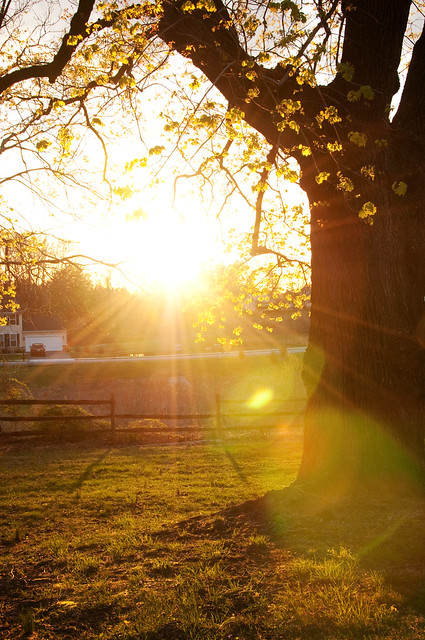
How To Grow The Garden Of Your Dreams …… In Six Easy Steps
Step One. Read books. Lots of them.
People will tell you to put down your books and join the real world, for heaven’s sake. They will remind you that you live in a university dorm or an apartment reached by only a sliver of light or a temporary rental and do not even think of wasting time or money on land you do not own, but you would do well to smile and say nothing. Go on. Read. Read your books and dream your dreams. You are storing up treasures in heaven.
Step Two. Pay attention to desire.
When winter wears on and you cannot stand it one more day, lean in to that ache. Accept that the two things you want most in life, a garden and a baby, may never be yours. But take heart. The moment you break under the weight of longing is the moment you wash out an old yogurt container and fill it with dirt and a few grass seeds. When the grass seeds sprout you will run your hand over cool greenness while icy snow tap-taps against the window. The smell of a few blades of grass snipped with kitchen scissors is the smell of hope.
Step Three. Try and fail.
When a friend invites you to share a plot in the neighborhood community garden, say yes. Say yes, even though you don’t actually know anything about growing vegetables. Commit to reading more books with titles like Practical Kitchen Gardens and fewer books with watercolor illustrations and titles like Roses I Have Loved. Say yes even though you are hugely pregnant and you cannot exactly bend over. When your firstborn, your longed-for baby girl, arrives that September, your friend will bring you pasta made with tomatoes and basil you did little to tend. For the rest of your days that combination of flavors will recall your daughter’s sleepy infant smile.
Step Four. Live without.
Trade your community garden plot in a northern city for a Florida backyard dominated by concrete pavers and chlorinated water. Watch your potted flowers shrivel and die beneath the showery splashes of three children. Look at those children and remember that God does sometimes give us the desires of our hearts. Pray for the garden of your dreams. Pray for those impractical, impossible roses.
Step Five. Dig.
When you come home to your own bit of earth at last, dig. Scatter your seeds widely and see what takes root. Do not despair when the groundhog churns holes, rabbits nibble tulips, and two chickens vanish in the night. Despite all that you do not possess (knowledge, time, energy, even, some days, vision), spring will come and seeds will grow. Desire is sometimes deep buried. Rock the baby girl, the fourth-born child you never knew you always wanted, while the snow tap-taps against the window.
Step Six. Rest.
After long days of ripping invasive vines and clearing weed trees, sit still in the shady spot you’ve made. Sit still long enough to notice the smell of memory. It is the almost-forgotten smell of your father’s roses, the roses your mother sent you out to cut just before guests arrived for dinner. Follow that smell around the curve of the just-cleared fence until you find it. A wild rambler, like but not like all the wild roses growing on the edges of this place. This one is not white but blush pink. This one does not sit like a stubborn tangle of thorns, but drapes gracefully across the ruined stones of the old barn. This one does not give out a whisper of spiciness but, rather, smells like rose-with-a-capital-R. It smells like the real deal.
Ask yourself if a garden is a thing made by human hands or a free gift of God.
Wonder, for the first time, if God’s glory can be cultivated. Perhaps it is a gift to be tended a thousand different ways in every place and every season.
For all your days.
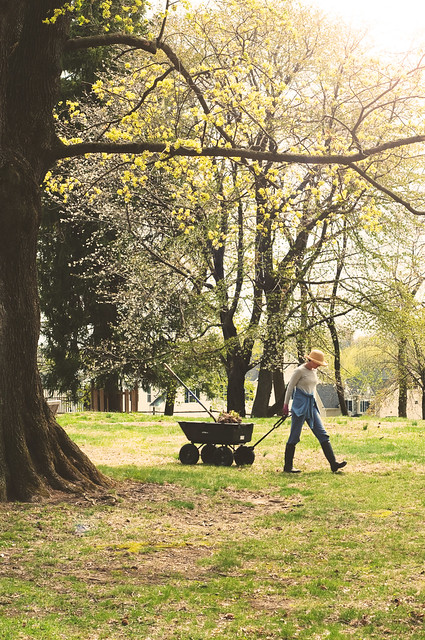
These Farmhouse Bookshelves
I sometimes worry that I have run out of books to recommend. Surely I’ve shown you every single book worth its shelf space in this old farmhouse?
But then I glance at my lap (there is almost always a book in my lap), and I realize that some of the books I love the most, some of the books I am so used to seeing, always at hand, are books I’ve never mentioned in this space.
Over the next few Saturdays, I will tell you about those books. They are the books I trip over on my way to the bathroom in the middle of the night. They are the books I find splayed and dusty underneath my little boy’s bed. Alas, they are the books most likely to sport ink or crayon marks from the budding baby-girl artiste.
They are rarely new or hip or trendy. I probably haven’t bothered to review them on Goodreads. But they are my constant companions.
And I hope you learn to love them, too.
(P.S. These posts contain affiliate links. Find all my book recommendations here.)
Quite a few of these special books are illustrated by Tasha Tudor. I have recommended one of her books before. It may be my favorite picture book I never read as a child. Recently, I pulled our copy of 1 Is One
This is a counting book (1 is one duckling swimming in a dish, 2 is two sisters making a wish …), and every child deserves to learn their numbers by counting twinkling stars (18!) and baby birds (12!). It features Tasha’s signature watercolors, old-fashioned settings, and naturalistic details. I am pleased as punch to report that one-year-old Elsa now adores it. We never read it unless we read it three times through.
Tasha Tudor was a prolific illustrator, and her books are fairly easy to find at used bookstores and thrift shops. I still remember the pleasure of finding her edition of Robert Louis Stevenson’s A Child’s Garden of Verses
Though she published her first picture book in the 1930s, Tasha and her books seem to come from a much earlier time. Apparently, she believed, only half-jokingly, that after dying she would return to her home in the 1830s, a strange sentiment I’m afraid I can relate with all too well. There is still a small part of my mind that believes, against my better judgement, that life would be so much better if I had twenty-two tiny buttons marching up my boots and was skilled with a button-hook (a romanticism inherited by my daughter who sighs deeply and says she wishes she were Amish every time she spies a little girl wrapped in bonnet and shawl).
These illustrations are like miniature worlds, and they are worlds I long to recreate. This may be why I spend so much time with two books written for adults: The Private World of Tasha Tudor

These large photography books take you inside the beautiful eddy in time that Tasha created at her Vermont farmhouse. Full of antique clothes and toys and cottage-garden flowers, these books prove that Tasha created her paintings from life. She dreamed it. She cultivated it. And then she painted it.
I do not actually own either of these books, but I have checked them out of my local library so many times that I really should buy both (but I might wait a few weeks since my birthday is June 23, ahem).
I especially love Tasha Tudor’s Garden. The writing is a bit too hero-worshipful, but I could live in the pictures.
Tasha’s ideas about plants are quirky and idiosyncratic, and I find that they give me permission to garden just as personally. I happen to love African violets, but their velvety leaves make Tasha shudder. I’ve always been skeptical of daylilies, so it’s a relief to read that Tasha finds them “raggedy.” And I have shamelessly copied the formula of her peony beds by planting a mass of peonies with lily bulbs to bloom after and edging the whole affair with purple verbena.
In researching this post, I discovered that Tasha illustrated a picture-book version of Psalm 23 (The Lord Is My Shepherd: The Twenty-third Psalm

Life isn’t long enough to do all you could accomplish. And what a privilege even to be alive. In spite of all the pollutions and horrors, how beautiful this world is. Supposing you only saw the stars once every year. Think what you would think. The wonder of it!”
The Sound of Our Waiting
I wrote a version of this post almost exactly two years ago. In early June of 2012, I had been wandering in a Florida wilderness for two years. I was tired of waiting. Tired of rootless living. I was six months pregnant and desperate to leave Florida. I wanted my baby girl to be born wherever home might be. But I had no idea where home might be.
Six weeks after our arrival in Pennsylvania, Elsa Spring was born. Today, that baby girl is rounding the curve on two years old. And we have come home. Every day I breathe “thank you.”
But it is Pentecost again, and I have realized something. We are lost and we are found, we are lost and we are found again, but we never truly leave this song behind. This beautiful ache of a song.
***
Pentecost Sunday is approaching, and I feel stuck in that room. Waiting. Asking this question: how did they survive the long, empty days between Jesus leaving and the Comforter coming?
How did they endure being lifted up by the joy of a promise believed only to drop again into the discouragement of yet another not yet?
And why the gap? Why did they have to wait at all?
We do know that the wait moved them to gather together. I imagine the promise was easier to believe when they could see the hope in one another’s faces. When they could pass around their Jesus stories, like a platter of bread and fish. Stories multiplied into hope. And faith.
And I imagine they worshipped. Sang and prayed.
Was this what it was all for? Was their worship the reason?
Did God wait, strain with holding himself back, because he wanted to hear their songs?
“Call to me,” he had once told them. “And I will answer you and tell you great and unsearchable things you do not know” (Jeremiah 33:3).
Call. My husband tells me this word suggests something organized, something formal. Something created. Like a song. Like a poem. Something more than careless words tossed at the sky.
Maybe you don’t sing songs. Maybe you don’t write poems. But maybe you journal. Maybe you sketch. Maybe you take photographs or bake bread for the neighbors. Maybe you orchestrate elaborate finger-painted messes with the three-year-olds at church and maybe, just maybe, that is a call? A song? A cry of longing for more of God?
And maybe that is the point of it all. The point of waiting. The point of living. To add our call to the many others until a crescendo of sound and beauty and worship rises to heaven and all is unleashed.
Then, just as it was that Pentecost when God’s church was born, wind and fire reveal the great unknowns.
What have we all been waiting for? To hear the mysteries of God’s glory in a language we can comprehend.
Those unsearchable glories we never even knew to seek.