
A New Name
“you will be called Repairer of Broken Walls”
Isaiah 58:12
*

*
We have arrived at those muddy, brown days between winter and spring. When I cross the yard to the chicken coop, it feels as if I am walking on a sponge. We have had a few warmer days and a few sunnier days, but it is not yet clear to me if the damage of this winter can be undone.
Somehow I find it harder to believe in spring the closer it comes.
*
My daughter is learning about the Holocaust in school. Every afternoon she shows me some newly acquired fact, as if she half believes that this time, this time, I will contradict her teacher. I will say, No, no, it wasn’t as bad as that. Instead, I only ever say yes. Yes, it’s true.
Here is what she does not say: How do you go on living in a world where such things have happened? Still happen?
Here is what I do not say: I don’t know.
*
As a writer, I pick up the pieces. Even the ugly, broken pieces. I arrange them and rearrange them, and I search for hidden meaning. I find patterns, and they always say the same thing. They say, Look! Here is something beautiful. Here is good news.
Except that recently, I can’t seem to find the pattern. The broken pieces remain only broken pieces.
They are so many. They are so sharp.
*
Because it is Lent, we begin each Sunday service with The Decalogue rather than a hymn. We hear the list of God’s ten commands, and they are like stones that form a wall that enclose a garden.
Gardens grow best within the shelter of a wall, but we have torn down the wall with our own hands.
*
Perhaps we must first listen to the bad news if we hope ever to hear the good.
Perhaps it is sorrow for all the broken pieces and all the tumbled stones that gives us courage to stand up. To rise up, leave the sackcloth and ashes, and go searching for our new name.
*
These Farmhouse Bookshelves
No doubt most of you are not sitting under a foot of snow as we are here at Maplehurst, but early March days are still ideal reading days.
I’m reading mostly gardening books, which, I suppose, must mean that I am a very hopeful person. Or else that I am practiced in denial.
I have a stack of gardening books currently checked out from my library, including the coffee-table treasury Visions of Paradise
To create a garden is to search for a better world. In our effort to improve on nature, we are guided by a vision of paradise. … This hope for the future is at the heart of all gardening.
I think this is true of gardening, but my late-winter prayer is that these words would be true in every area of my life. That my reading, my loving, my working – everything – be motivated by hope for the future.
The following post contains affiliate links. You can find all my book recommendations here.

My favorite book in that stack of gardening books is The Essential Earthman: Henry Mitchell on Gardening
Henry Mitchell was a columnist for the Washington Post. This posthumous collection has been called “one of the great American gardening books,” and I absolutely agree. This is wonderful reading: informative, practical, hilarious, witty. In its own subtle way, it is brilliant.
Its appeal for gardeners is obvious, but as I read I decided the book was worthy of an even broader audience. Almost all of the pieces are wonderful examples of what newspaper opinion writing can be.
We can all learn something from Henry Mitchell. We might learn about planting peonies or which varieties of daffodil are the most glorious. Or, we might learn the subtle art of communicating one’s own strong opinions in the most disarming and entertaining way.
*
Dept. of Speculation (Vintage Contemporaries)
From a distance, this is the story of a marriage that is falling apart. Now, I know that sounds entirely too depressing for late-winter, but the full arc of the story is hopeful and beautiful.
But close up? This is a strange collection of thoughts and facts and memories. I tend not to like experiments in fiction, James Joyce excepted, of course. But when an experiment works, it really, really works. And this one works.
There is nothing self-indulgent about Offill’s writing. Instead, she has found a new way to tell a familiar story, and the result is astonishing.
*
I sometimes postpone writing these book recommendation posts because I worry that I haven’t read enough new, great books. I forget that the premise, when I began, was simply to tell you about the books on my shelves. Or, more accurately, the books taken off the shelves and left lying near beds and armchairs.
We’ve loved Mary Ann Hoberman’s picture book The Seven Silly Eaters
We are big fans of other Hoberman books, especially A House Is a House for Me

Do you think your child is too old for picture books? Do you think you are too old for picture books? Then I recommend The Seven Silly Eaters as a very necessary corrective.
Happy reading, friends.
*
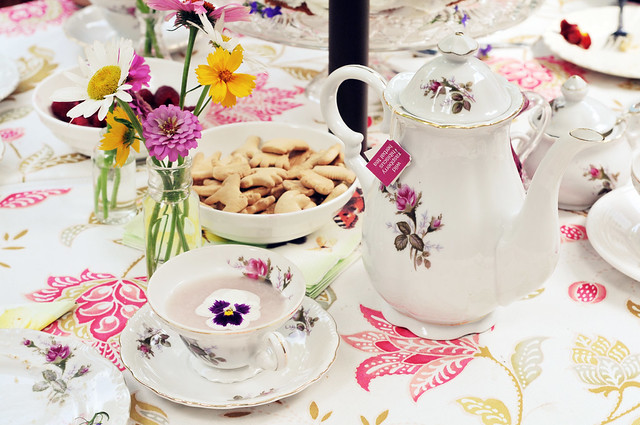
This Table Prepared For Me
When I was invited to write about “quiet hospitality” at Grace Table, I knew just what I would say.
I meant to tell you all about the loud hospitality we used to practice. About the parties and events and big efforts. Those days were good, but they are long gone.
I meant to tell you about the daily rhythms of our current life at Maplehurst. Those quiet practices, like a cooked breakfast every morning and homemade pizza every Friday night, that are easy and natural to share with others.
But all the while a very different story was unfolding at my own kitchen table. And that is the story I’m sharing today.
*
*
Grace Table is about love for God, love for neighbor, and love for the table. If you haven’t yet spent time there, I suggest you do. The storytelling is excellent, and the recipes are mouthwatering.
It’s a delicious combination.
Find my story here.
*