by Christie Purifoy | Mar 22, 2013 | Blog, Family, Lent, Seasons, Spring, Uncategorized
These last awe-full days of Lent are upon us.
To be honest, the past few weeks seem to me like a blur of pictures and noise. The world is spinning faster now than it was just a month ago (something the poets know even if the scientists haven’t yet discovered it), and I feel the need to stop and steady myself.
And then … the headlong rush into a world made new.
I want to be ready. Or more precisely – I want to notice where it is already springing up.
I don’t want to miss any of it.

I’ll be opening my laptop a little less and stepping outside a little more.
Look for me in this space after Easter.
Thanks to our Photographer Kelli Campbell for this image of
my daughter on one of the most beautiful spring days I can remember.
Find more of Kelli’s photography here.
by Christie Purifoy | Mar 19, 2013 | Faith, Gardening, healing, Jesus, Lent, Seasons, Spring, Uncategorized, Waiting, Winter
Today is the day for a miracle …
Today the calendar says spring, but when has the calendar ever told us anything true?
As I write, darkness has dropped, the wind is howling, and the hanging porch lights are twisting like terrified animals on their chains.
The sound of this wild March wind does not make me feel cozy. It sounds too much like someone in pain.
Today is the day for a miracle …
I keep telling myself spring is already here. I’ve known for days that it was time to plant. Peas, lettuce, radishes, beets, spinach, swiss chard … so much needs to be in the ground.
But who has faith for gardening in the midst of snow flurries and sleet?
Today is the day for a miracle …
The apple trees we ordered months ago have arrived. They look like apple sticks. The children do not believe me when I tell them we’ll bake pies. I’m not sure I believe myself.
But I’ve seen more winters than my children, and I do know this: the day when daffodils emerge is not the day for hope. The day when seedlings show the bright green of new life is not the day for faith. That day came and went.
This is the day for a miracle. This day. The dark day. The cold day. The day when all you can see is mud and broken things, like so many toys strewn across the backyard.
Easter Sunday is not the day for miracles. It is the day for praise.
Every miracle we ever needed, every miracle we ever wanted begins on Good Friday.
“See, I am doing a new thing! Now it springs up; do you not perceive it?”
Isaiah 43:19
*Today I am listening to this song by Hans Kraenzlin
by Christie Purifoy | Mar 16, 2013 | Books, Uncategorized
I tend not to read the books everyone else is reading. At least, I don’t read them while they are being talked about. Years after the fact, I might grab an “Oprah’s Pick” or a “Now a Major Motion Picture” paperback at the thrift store. Usually, I discover that everyone else was on to something good.
Still, this contrary streak persists.
I may not read the cocktail-party-conversation books, but I do read the The Big Conversation classics.
Of those, I re-read an even smaller selection.
Here are a few classics you may have missed. These aren’t the books to check off some must-read list (though if I had to recommend one of that sort, it would be James Joyce’s Ulysses, just fyi).
These are the books to read and read again.
These are books like old friends and crocheted afghans and steamy cups of tea.

First, there is The Woman in White by Wilkie Collins. No doubt Oprah’s Victorian equivalent would have splashed her name all over the cover of this page-turner. Here is mystery, crime, intrigue, and atmosphere like only the English Victorians knew how to do.
My hour for tea is half-past five, and my buttered toast waits for nobody. – Wilkie Collins
For those of you whose appetites for emotional dramas set during the French Revolution have recently been wetted, I recommend A Tale of Two Cities by Charles Dickens.
With all of the narrative padding that makes nineteenth-century fiction so maddening for some and so enjoyable for others, this is my favorite Dickens. That admission probably doesn’t say much about my critical prowess, but, remember, these are the classics we want to read, not the ones we must.
Not only do we have the French Revolution and a famous opening line, but, in hero Sydney Carton, we have a Christ-figure par excellence.
It is a far, far better thing that I do, than I have ever done; it is a far, far better rest that I go to than I have ever known. – Charles Dickens
Last, but, whoa-nelly, not least (this one’s a doorstop, folks), is George Eliot’s Middlemarch. If you want to impress people on the subway, el, or metro, then Eliot is your girl. But don’t let the length discourage you. The long length is one of my favorite things about this book. This is the kind of book that is most enjoyable while there are still lots of pages to go. It’s a sad day when the last page is turned and you must leave Eliot’s masterfully created world and the wonderful characters who populate it.
Middlemarch is Serious Victorian Literature, and so it is also Serious Reading Fun. I mean, there are so many words! so many characters! so many hyper-realist details! Open to the first page, read slowly, and do not worry about when you will reach the end. This one is all about the journey (and Eliot’s is a very impressive journey). Enjoy.
It is a narrow mind which cannot look at a subject from various points of view. – George Eliot
P.S. I googled Sydney Carton’s name to check the spelling and discovered that A Tale of Two Cities was once an Oprah Book Club Pick. My mind is blown. I had no idea. How did I ever miss a televised interview with Charles Dickens? Someone, please tell me, did he jump on the sofa?
by Christie Purifoy | Mar 13, 2013 | Family, God's promises, motherhood, Pregnancy, Seasons, Spring, Uncategorized, Winter
I spent most of Saturday outside. It looked nothing like spring, but I could feel it. By afternoon we had taken off our jackets and were warming ourselves with shovels and gardening gloves.
The firstborn and I cleared away some of the invasive (but gorgeous) vine that blankets the edge of our property.
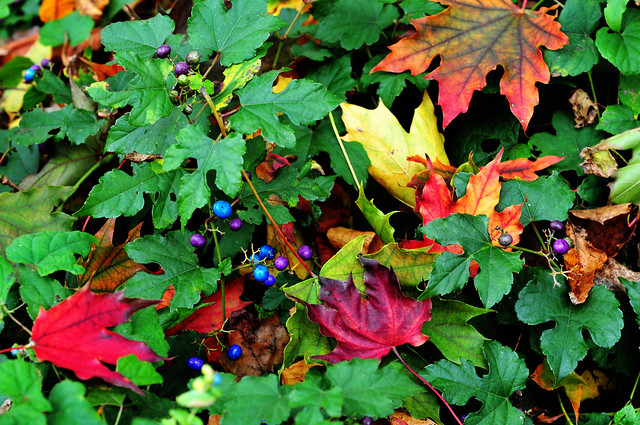
Do you remember, I asked her, what the porcelain berries look like? Do you remember that china blue?
They looked fake, she says.
Which is true. And telling. The most beautiful things look unreal to us. Maybe they are a part of some other reality. Maybe we are too, for that matter.
The dead vines were papery and grey in our hands, but when I ripped one open we could see a shocking, acid green.
They only look dead, my daughter said with round eyes.
/
/
We are in those last days of winter. Those days when the cold has moved deep into my bones, and I no longer believe in spring.
I mean this quite literally. Three days ago I had myself convinced that the bleached yellow shade of our lawn was a sign it would never turn green. We killed it, I thought. Too many weeds, too many autumn leaves, and we killed it.
Today, I noticed a spotty green haze. Just here and there. And I remembered: I have seen resurrection. There is such a thing.
/
/
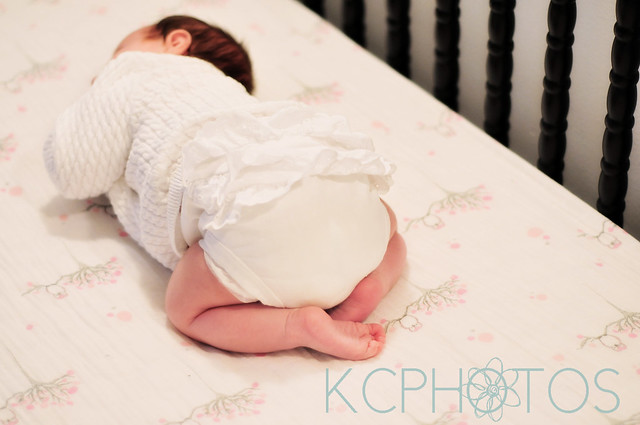
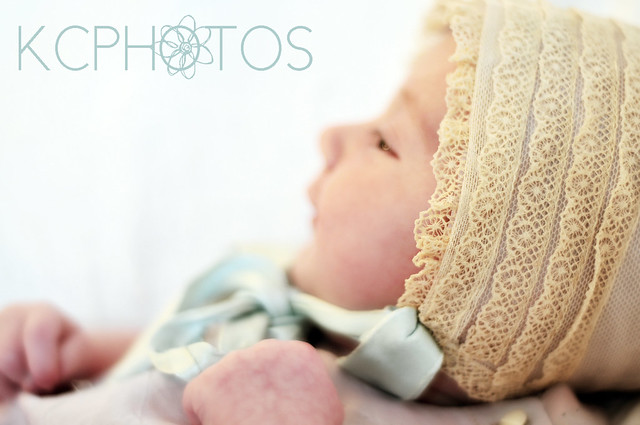
Six months ago, we named our daughter Elsa Spring. Soon – very soon – she will see her first spring. There are no words for all I feel about that.
Born in late summer, we named her Spring. Our last baby, our second daughter, she is yet everything new to us.
Before she was ever conceived “My beloved spoke and said to me, ‘Arise my darling, my beautiful one, come with me. See! The winter is past; the rains are over and gone. Flowers appear on the earth; the season of singing has come …” (Song of Songs 2: 10-12).
For a hundred and one foolish reasons I had not allowed myself to want another child, but I knew what those words meant. I bought a tiny, pink sweater, and I hid it in my dresser drawer.
/
/
Sometimes winter fools us. We are taken in by the surface of things, and death seems total and irreversible.
The truth is, we aren’t waiting for resurrection. We are living it.
/
“On that day living water will flow out from Jerusalem … in summer and in winter.”
Zechariah 14:8
by Christie Purifoy | Mar 9, 2013 | Art, Books, Poetry, Uncategorized
We don’t read poetry any longer, do we?
Oh, a bit here and there, and some of us more than others, but we’re much more likely to end our days with reality television than The Oxford Book of English Verse, aren’t we?
I often wonder why this is. Is it because we are so accustomed to the easy and comfortable we avoid using our spare time for anything that requires real effort? And I won’t fool you. Poetry requires effort. It asks that we meet it at least halfway.
We must quiet our minds (and our stereo speakers). We must slow down (no one ever speed-read a poem). We must re-read (a good poem can’t ever be checked as “read” on our reading lists and tracking apps; poetry happens in the re-reading).
All I really know is that I’ve hesitated to recommend poetry books in this space. I want to make you happy, and I’ve decided happiness means novels, memoirs, cookbooks, and picture books.

I read this article and realized that poetry is worth more than life to some people. They will risk everything for what it gives.
The least I can do is share a few recommendations with you.
Also, I can make this promise – tonight, when my children are (finally) asleep, I will not turn on my television. I will not pick up my big, fat novel. Instead, I will re-read, and I will remember. I will remember that my life is something different, something better, because I have read Yeats and Auden, Bishop and Heaney.
And these. I have read these:
I have read George Herbert.
One of the great English metaphysical poets (poets known for their elaborate imagery), Herbert was a priest in the Church of England and a friend of John Donne. His religious poetry is beautiful, desperate, and honest. But this is not confession (or not merely); it is art. It is art that dramatizes and explores the encounter between the flawed, sinful self and a God who is Love.
Herbert’s poems are intricately crafted. They reward the time we spend with them.
A verse may finde him, who a sermon flies, / And turn delight into a sacrifice. – George Herbert
I have read Eavan Boland.
I can’t recommend poetry without recommending the work of this contemporary Irish poet. Boland writes about home, about motherhood, about what it means to create beautiful art out of the raw materials of violence, loss, and the various troubles of history. Her work is accessible, but it is not superficial. It rewards our first reading, but it gives more with subsequent readings.
I suggest picking up a single volume of her work (rather than a collection or the few poems you might find in an anthology). Reading poetry is like music in this regard – poets write poems the way musicians create albums. It is one thing to know a hit single in isolation; it is entirely another to know what has been created when the artist gathers their work into a whole.
I often return to her volume In a Time of Violence. You might start there.
Write us out of the poem. Make us human / in cadences of change and mortal pain / and words we can grow old and die in. – Eavan Boland
I have read everything ever published by T. S. Eliot. But, always and especially, I have read Four Quartets.
Eliot was the first poet who ever made me love poetry. I was a teenager, and I was mesmerized by the rhythms of “The Love Song of J. Alfred Prufrock.” Now I don’t often go back to Prufrock and his coffee spoons (though the first lines of that poem are impossible for me to forget), but I return, more and more often, in fact, to Four Quartets.
There are times when an imperfect little art (like a quirky little poem) will suffice. It is like us: small yet precious, strange but lovely. There are other times when we need an art that hints at something much bigger and more perfect. Four Quartets is like that for me. It is big enough to move in, big enough to dream in, big enough to inspire your own creativity. It is Art-with-a-capital-A, and some days that is what my own little life needs most of all.
With the drawing of this Love and the voice of this Calling // We shall not cease from exploration / And the end of all our exploring / Will be to arrive where we started / And know the place for the first time. – T. S. Eliot
Do you read poetry? Why? Why not? I’d love to know.
by Christie Purifoy | Mar 6, 2013 | Faith, God, God's promises, prayer, Scripture, Uncategorized, Waiting
There were years when a little flag would start waving in my head any time I heard someone say God told me to do this or God told me to do that.
A red flag.
It sounded too much like crazy-talk. I’d never heard God’s voice, so what makes you sure? What makes you special?
//
//
Now I am that crazy person.
I’m the one setting eyes to roll with my casual God told us this and God gave us a dream, and, the boldest of all, God promised …
That’s the big one, isn’t it? Talk of promises is crazy and dangerous all at once. To talk about promises is to set oneself up as special and risk looking like a fool.
I am that fool.
//
This is how I got here: desperation. It was the not having, the hurting, the longing, and the pain.
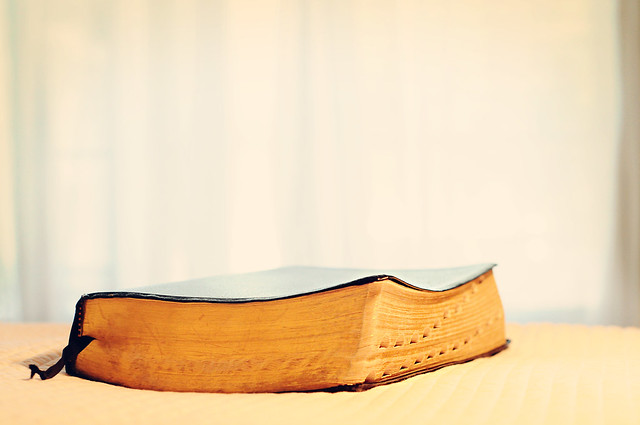
It was that one time I threw my Bible against the wall. I could see the pages bent and the cover smashed, but I could also see words that were so comforting, so particular, I was tempted to make Bible-throwing a regular spiritual discipline.
It was that time I screamed at heaven, until I turned the corner around the clump of trees and saw an optical-illusion moon so enormous and fiery I couldn’t tell what it was. But I heard it. It said, “I’m here. You’ve been heard.”
Sometimes, it wasn’t pain so much as utter emptiness. When there are no friends and no activities, when the phone never rings and you’ve given up the job you pursued for ten years, small things begin to sound very loud.
Like the verse that pastor shared from the front. I was one of a crowd, but those words were an arrow and I was the mark.
Like the song that came over the speakers just as I asked my question aloud. That song with the answer.
Or, all those times (so many times) when all I could do was open my Bible on my lap.
And that’s all it took. Because there it was. Right there.
//
I’m wary of prescriptions, of three-step plans. But if you want to hear the voice of God (and think very, very carefully whether or not you do), then this is what I suggest:
Lean in to the pain.
Listen to the silence.
Let the emptiness be just what it is.
And wait.