by Christie Purifoy | Dec 2, 2011 | Advent, Chicago, Family, Florida, Jesus, Seasons
I live in the “Sunshine State.” This is no mere tourist slogan, I assure you. This is the truth. And, after ten years in Chicago, I was utterly unprepared for it.
Do you know what it is to long for darkness?
Recently, our skies were heavy and dark for four days. This is unheard of here. Oh, we get plenty of rain: towering, fierce clouds and thunder to rattle your bones, but it rarely lasts long. But this was a nor’easter. For four days it rained, and the leaden clouds never dispersed. Until … they did. The sun came back, the blue sky that is our constant Florida refrain finally returned, and I could have wept. I wanted those clouds back.
Foolish? Perhaps. But here is what I love about darkness: it is the fitting backdrop to hot tea, hot coffee, and hot cocoa (I do like my drinks hot). It is “cozy” weather, as my kids say. Poor things. Here, in Florida, when a summer thunderstorm begins they out-shout the thunder: “Let’s get cozy!” We burrow beneath pillows and blankets on the sofa, but we’re lucky if the sun isn’t shining again by the time we open our storybook.
They’ve inherited my darkness-loving gene, I suppose. Or maybe it comes by birth. I may have been raised in Texas, but I was born in Rapid City, South Dakota, and my children were born into Chicago’s urban darkness, where winter means clouds and tall buildings cast deep shadows on even the brightest days.
In addition to hot drinks and storybooks read by the light of a flashlight, we love dinner by candlelight, Christmas books by the twinkling light of the tree, moonlight on snow (oh, how I miss this, though moonlight on ocean waves is lovely, too). In other words, we love the little lights, like fireflies on a summer evening. Like boats at night on Lake Michigan or the St. Johns River. Like warm lamplight on the pages of a book.
We love the light that shows up best against a backdrop of darkness.
When the light of the world came to us, our world was very dark. And His light was small. Cradle-sized. Today, his face may look “like the sun shining in all its brilliance,” but when he was born to us, it was with a delicate, fragile light (Revelation 1:16).
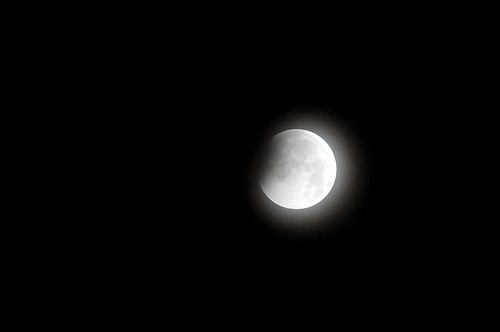
His birth was like the moon.
His return will be like the sun.
To keep up with each post this Advent season, visit the facebook page for There is a River and click “Like.” You can also receive each post delivered straight to your inbox by clicking here to subscribe by email.
by Christie Purifoy | Nov 29, 2011 | Advent, Family, Seasons
What is the point of darkness? Have you ever wondered?
In the beginning, we read, God created light, and he separated the light from darkness. Why didn’t he banish darkness?
We might argue that darkness is not inherently good or bad. It simply is. But something deep within us fears otherwise. One of the plagues sent to torment the Egyptians was a plague of darkness, after all.
If light is good and life-giving (in the natural world and in metaphor), I like to remember that it is most beautiful when it appears in darkness.
Each December at their Chicago preschool, my children walked an advent spiral. The usually bustling preschool classroom was silent and dark. The only light came from the candle burning at the center of a child-sized evergreen spiral on the classroom floor. In turn, from smallest to biggest, each child carried an apple, hollowed out to hold a candle, from the spiral’s entrance to its heart. Carefully lighting their candle (with the help of a preschool teacher dressed as an angel), each child walked slowly out again, depositing their candle along the spiral until the room filled with candlelight.
It always felt, to me, like one of the most spiritually profound moments of our year. Perhaps only excepting the year my then-two-year-old daughter caught her hair on fire. Well … maybe that year too. The angel did her job, and, ultimately, no little girls were harmed in the making of this magical, advent moment.
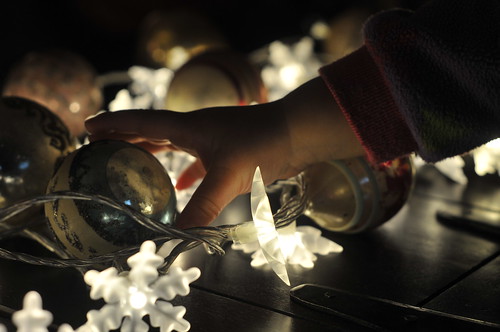
But, oh, those lights … we needed the darkness in order to see their beauty. In order to appreciate their message of hope.
For a while, we may sit in total darkness. Darkness, however, is never the end of the story. Ours or the world’s.
The darkness will not last forever. Morning will come. Your Light will come.
by Christie Purifoy | Nov 28, 2011 | Advent, Poetry, Seasons, Waiting
In keeping with my “poem-each-Monday” tradition, here is a poem for you on this first Monday of Advent.
These lines come from T. S. Eliot’s Four Quartets. They remind me of this Advent paradox: in a wintery season of death and darkness we perceive birth and new life. Midwinter spring, indeed.
from “Little Gidding”
Midwinter spring is its own season
Sempiternal though sodden towards sundown,
Suspended in time, between pole and tropic.
When the short day is brightest, with frost and fire,
The brief sun flames the ice, on pond and ditches,
In windless cold that is the heart’s heat,
Reflecting in a watery mirror
A glare that is blindness in the early afternoon.
And glow more intense than blaze of branch, or brazier,
Stirs the dumb spirit: no wind, but Pentecostal fire
In the dark time of the year. Between melting and freezing
The soul’s sap quivers. There is no earth smell
Or smell of living thing. This is the spring time
But not in time’s covenant. Now the hedgerow
Is blanched for an hour with transitory blossom
Of snow, a bloom more sudden
Than that of summer, neither budding nor fading,
Not in the scheme of generation.
Where is the summer, the unimaginable
Zero summer?
– T. S. Eliot
by Christie Purifoy | Nov 25, 2011 | Advent, Seasons

There’s a tension in our hearts and in our culture regarding Christmas.
On the one hand, we walk into a big-box store on October 31 and say, “Oh no. Already?” “Rudoph the Red-Nosed Reindeer” is playing over the loudspeakers, and even the Christmas-lovers amongst us feel resistant.
On the other hand, Halloween, Thanksgiving, and Christmas Eve rush us by in a flurry of to-do lists, shopping lists, and worries over family finances. By the time we find ourselves staring at the dirty dishes of our Christmas dinner, we remember, with surprise and regret, the “reason for the season.” (Sidenote: I solemnly swear that this is the last time I will repeat that annoying rhyme. No more, I promise.)
There is a beautiful middle ground: Advent. But, how to practice it outside of our churches? How to bridge the gap between lighting a candle on Sunday and the pressure to deliver two dozen holiday cupcakes to our child’s classroom on Monday?
To be honest, I’m not exactly sure. What I do know is that I don’t want to frame this season with Black Friday shopping and day-after-Christmas gift returns.
Beginning this Sunday and for the twenty-seven days that follow, I will be posting images (the photographer has been hard at work), reflections, stories and poetry in the hope of walking a middle way.
A way that moves between the too-much-too-soon and the over-and-done-in-a-blur. A way that steps between Sunday’s church service and Monday’s overwhelming to-do list. A way between the sugary sweetness of a televised Christmas movie and the disappointment of a trashbag filled with crumpled wrapping paper.
My intention is to create (and share) a quiet escape from consumerism and the Jingle Bells that only succeed in giving us a headache. Whether you adore Christmas and all of its trappings or you find the forced merriment of this season just too much to bear, you will, I hope, find a respite here.
It won’t be entirely comfortable, however.
I don’t want to consider Mary’s joy without remembering Mary’s pain. Christmas is a birth-day, after all, and I’ve long been convinced that birth and death are strange twins, one always shadowing the other. Our hope, as Christians, is that death does not triumph. One day, death itself will die, and the newness and joy of birth, no longer shadowed by sorrow, will be ours for eternity.
To keep up with each post this Advent season, visit the facebook page for There is a River and click “Like.” You can also receive each post delivered straight to your inbox by clicking here to subscribe by email.
by Christie Purifoy | Nov 21, 2011 | Poetry, Seasons

Soon we take our seats around the table in order to say, “Thank you.”
Gerard Manley Hopkins shows us how.
Pied Beauty
Glory be to God for dappled things –
For skies of couple-colour as a brinded cow;
For rose-moles all in stipple upon trout that swim;
Fresh-firecoal chestnut-falls; finches’ wings;
Landscape plotted and pieced – fold, fallow, and plough;
And all trades, their gear and tackle and trim.
All things counter, original, spare, strange;
Whatever is fickle, freckled (who knows how?)
With swift, slow; sweet, sour; adazzle, dim;
He fathers-forth whose beauty is past change;
Praise him.
– Gerard Manley Hopkins
by Christie Purifoy | Nov 16, 2011 | Florida, God's Love, Home, Seasons
My children make lists for Santa (yes, already), and I peer over their shoulders considering the annual dilemma. Which is better, to receive just what you have asked for or to be surprised with the lovely yet utterly unexpected? In other words, the castle Lego set he spied at the big-box store or the box of fairytale Lego figures that I think will inspire more creative play? The book she read at her friend’s house and loved, or the book she’s never heard of that I’m sure she’ll enjoy?
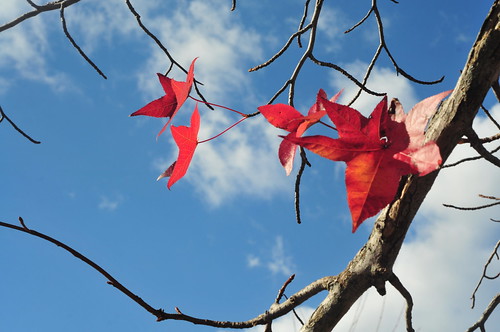
It’s a question I wrestle with particularly during this time of year. Autumn. A season when I long for predictable gifts: falling leaves, cold blue skies, and crisp apples hand-picked by my children.
But these are not the gifts given to me. Instead, as I write this, I can see from my window hot pink camellia blossoms and pale orange tangerines. God, don’t you know that I’m not really a hot-pink kind of girl? Can I exchange the showy flower for something a little more subtle, leaves crackling underfoot, perhaps?
It would be too easy to write that these, tropical flowers and citrus fruits, are the true gifts, and I just need to learn to appreciate them. Who am I to criticize the good things God gives? Who am I to find fault with a creation that is undeniably beautiful and sweet?
And yet … as good as tangerines may be, they do not feel like home to me. Some may taste a personal love note from God in the taste of a just-picked tangerine, but I taste nothing so personal. Good, yes, but not exactly personal.
Still, I can say thank you for the tangerine, and I can mean it. Thank you, God, for speaking a thousand different languages of beauty. Tropical. Desert. Aquatic. Forest. Prairie. Mountain. All good.
Thank you, too, for making me uniquely me. It may look as if I’m hard-to-please. I prefer to think that I am hungry for the love notes that are mine especially. It isn’t that I deserve them, or that I can’t live well without them. It’s simply that I’ve tasted those honey words before, and I trust that there is more, much more.
“… with honey from the rock I would satisfy you.” Psalm 81:16
I remember the sweet taste of things I love best and know that I have tasted God’s goodness. I could spend the rest of my life in the shadow of citrus trees and camellia shrubs, but every day would be drawing me closer to the source of all beauty. Every day would be bringing me towards the love that speaks my language. The love that knows my name.
