by Christie Purifoy | Feb 28, 2012 | Florida, God's Love, Lent, Seasons, Waiting

I live in Florida, but my inner calendar has been tuned by the north. In other words, no matter what I see outside my window, January means cold and snow and spring never shows up until after Easter. I suppose ten years living in Chicago did this, although I think it may go back even farther.
Growing up in Texas, I felt cheated by February heatwaves. I have always had an idealized version of the seasons; one more rooted in classic literature for children than in lived experience. Late winter meant sugar snow because I read Little House in the Big Woods no matter that late winter in Texas looks like fields full of bluebonnets.
In Chicago, Lent was appropriately dark, cold, and gray. A fitting backdrop for contemplating dust to dust. The right atmosphere for remembering the cross.
Last year, Lent in Florida surprised me with its very different rightness. The hot pink azaleas and vivid blue skies could not be reconciled with the grey smudges on our foreheads. They simply could not. But I decided that this was best. To practice Lent in such a place is to say, “I will not be distracted by youth or beauty. I will remember that death is ever present. I will not be seduced by sunshine and forget to pick up my cross.” How can we truly celebrate the resurrection power of God’s kingdom if we’ve forgotten how and why Jesus suffered?
Last year, I determined always to make an effort for Lent. It was necessary whether the fruit trees were blooming or not.
This year, I didn’t even make it to my church’s Ash Wednesday service. I was too tired. Too sick. Which says it all, I’m afraid, about the past few months of my life.
I thought about making an effort in some other way. What would I give up? Could I read through a special book of devotions? Make some goal for prayer or good works?
If only I weren’t so tired. If only my asthma would go away. If only I didn’t already feel crushed and weak. If only I didn’t already feel like dust, I might be able to make some effort to remember that I am dust.
Of course, If I had phrased it to myself just like that I might have realized sooner how foolish, how hopelessly circular my thinking had become.
Now I know that if Lent is about making some effort then the end result must always be gratitude that I need never make that effort.
With no effort on my part, I am loved.
With no effort on my part, I am redeemed.
Having made no choice, I might be led through a wintery, Lenten wilderness. Whether my calendar says it’s time for that or not.
Having done little but wait and rest, I will be led out again.
That in itself, I’ve learned, is a kind of discipline. God did tell his children, “It is a day of Sabbath rest for you, and you must deny yourselves” (Leviticus 23:32). Would he have put it like that if rest came easily and naturally?
What, then, is my Lenten discipline for 2012? Merely to rest in the shadow of the cross. And wait.
by Christie Purifoy | Jan 26, 2012 | allergies, Florida, God's promises, healing, Seasons
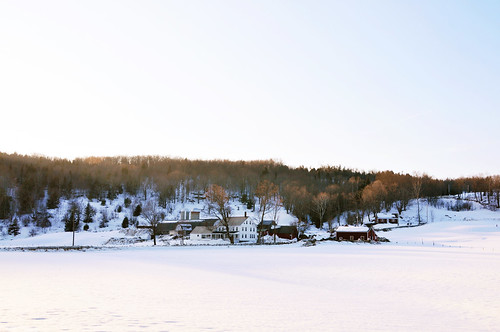
This is the kind of landscape I’m dreaming of. Cold. Bleak. Beautiful. Beautiful because there is not a drop of tree pollen for miles.
It seems that the trees here in northern Florida are trying to kill me. Maybe they have no such intention, and it’s only that my lungs have misunderstood. They think the thick yellow dust swirling through the air is reason enough to close up shop. I try to convince them otherwise with pills and inhalers.
It’s been a long month, and pollen.com tells me I still have a ways to go.
I’ve never experienced anything quite like this. It’s left me feeling nostalgic for Chicago’s concrete jungle. Living there I did do some sneezing in springtime, but this? I’ve never known anything like this. I’ve always said that I’m a winter person. That I need that season of cold, sleepy hibernation. It seems my body agrees. There’s always something blooming in Florida, and, apparently, my lungs have had enough.
For now, I’m sticking close by my bedroom air purifier. I have time to be inspired. Time to write. Somehow, though, I’ve found the life of the bedridden to be less than inspiring.
Still, whenever I open my Bible I find promise after promise of healing. Who knew God had so much to say about healing? Now I know, though the promise of it belies my reality. So, I’m holding tight to the promise and waiting.
Waiting.
Breathing.
Waiting.
“Blessed is the one whom God corrects; so do not despise the discipline of the Almighty. For he wounds, but he also binds up; he injures, but his hands also heal.”
Job 5:17-18
by Christie Purifoy | Jan 4, 2012 | Community, Florida, Home

That’s the name lettered over the door of the small shop. Home At Last. It makes me laugh. Somewhat bitterly, I’m afraid.
On this day, we are fifteen-years married, and, to celebrate, we wander the streets of this Texas hill-country town, the fruit of our union miles away at Grammie and Granddad’s house.
Sitting down to eat lunch amidst a babbling brook of soft, Texas accents, we talk about home. We may have grown up in this place, but each return only emphasizes how far we’ve fled. We’ve lived away nearly as long as we lived within, and even the memory of Texas as home is fading.
Our waiter asks where we’re from, and I suddenly realize how often we’ve heard this question today. Why? How do they know? Jonathan wrinkles his forehead and says, “Well, we don’t have accents?” Maybe, I say. Then my husband, the one I often imagine to be the less observant in our partnership, states what should have been obvious: “I don’t think we look like Texans. At least not small-town, hill-country Texans.”
My husband sits across from me in skinny cords and a sweater vest, looking unsure, and I laugh because the truth is suddenly so obvious. The men who pass by our window are all dressed as if they’ve just left either a football stadium or a deer blind. They are window shopping with their wives, they are nowhere near a stadium or a deer blind, but they look utterly at home.
Where are we from? We can no longer answer that question. It did take years, but at one time I could say “Chicago” with ease. Now, each time we’re asked, Jonathan says, “We live in Florida,” but we both know that this is not the answer to “where are you from?” or even “where is your home?”
We have a house in Florida, but we only dream about home.
I like to imagine that home is somewhere with snow. The kids tell me it’s a place with room for a dog.
Others tell me that the ache for home is all there is. At least for now. At least on earth.
I don’t believe them.
Home is too good. Too necessary.
We may be souls walking the shadowlands, but these shadows are God-made and God-breathed. The place that feels like home may only be a taste of what’s in store, but it is still good.
And the best part? To find a home is to reach, not an end, but a beginning.
by Christie Purifoy | Dec 2, 2011 | Advent, Chicago, Family, Florida, Jesus, Seasons
I live in the “Sunshine State.” This is no mere tourist slogan, I assure you. This is the truth. And, after ten years in Chicago, I was utterly unprepared for it.
Do you know what it is to long for darkness?
Recently, our skies were heavy and dark for four days. This is unheard of here. Oh, we get plenty of rain: towering, fierce clouds and thunder to rattle your bones, but it rarely lasts long. But this was a nor’easter. For four days it rained, and the leaden clouds never dispersed. Until … they did. The sun came back, the blue sky that is our constant Florida refrain finally returned, and I could have wept. I wanted those clouds back.
Foolish? Perhaps. But here is what I love about darkness: it is the fitting backdrop to hot tea, hot coffee, and hot cocoa (I do like my drinks hot). It is “cozy” weather, as my kids say. Poor things. Here, in Florida, when a summer thunderstorm begins they out-shout the thunder: “Let’s get cozy!” We burrow beneath pillows and blankets on the sofa, but we’re lucky if the sun isn’t shining again by the time we open our storybook.
They’ve inherited my darkness-loving gene, I suppose. Or maybe it comes by birth. I may have been raised in Texas, but I was born in Rapid City, South Dakota, and my children were born into Chicago’s urban darkness, where winter means clouds and tall buildings cast deep shadows on even the brightest days.
In addition to hot drinks and storybooks read by the light of a flashlight, we love dinner by candlelight, Christmas books by the twinkling light of the tree, moonlight on snow (oh, how I miss this, though moonlight on ocean waves is lovely, too). In other words, we love the little lights, like fireflies on a summer evening. Like boats at night on Lake Michigan or the St. Johns River. Like warm lamplight on the pages of a book.
We love the light that shows up best against a backdrop of darkness.
When the light of the world came to us, our world was very dark. And His light was small. Cradle-sized. Today, his face may look “like the sun shining in all its brilliance,” but when he was born to us, it was with a delicate, fragile light (Revelation 1:16).
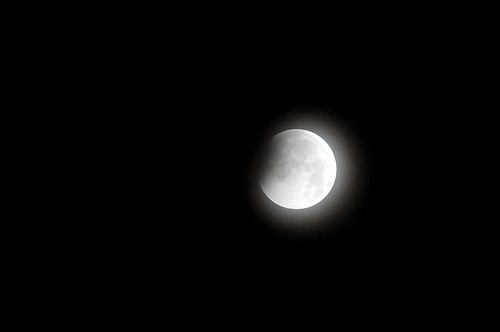
His birth was like the moon.
His return will be like the sun.
To keep up with each post this Advent season, visit the facebook page for There is a River and click “Like.” You can also receive each post delivered straight to your inbox by clicking here to subscribe by email.
by Christie Purifoy | Nov 16, 2011 | Florida, God's Love, Home, Seasons
My children make lists for Santa (yes, already), and I peer over their shoulders considering the annual dilemma. Which is better, to receive just what you have asked for or to be surprised with the lovely yet utterly unexpected? In other words, the castle Lego set he spied at the big-box store or the box of fairytale Lego figures that I think will inspire more creative play? The book she read at her friend’s house and loved, or the book she’s never heard of that I’m sure she’ll enjoy?
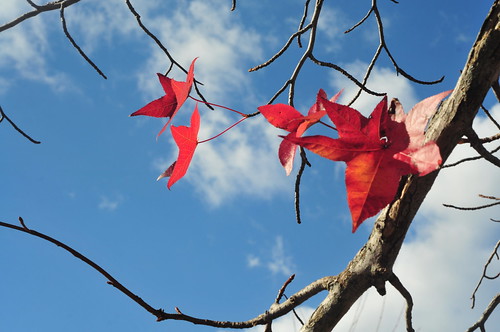
It’s a question I wrestle with particularly during this time of year. Autumn. A season when I long for predictable gifts: falling leaves, cold blue skies, and crisp apples hand-picked by my children.
But these are not the gifts given to me. Instead, as I write this, I can see from my window hot pink camellia blossoms and pale orange tangerines. God, don’t you know that I’m not really a hot-pink kind of girl? Can I exchange the showy flower for something a little more subtle, leaves crackling underfoot, perhaps?
It would be too easy to write that these, tropical flowers and citrus fruits, are the true gifts, and I just need to learn to appreciate them. Who am I to criticize the good things God gives? Who am I to find fault with a creation that is undeniably beautiful and sweet?
And yet … as good as tangerines may be, they do not feel like home to me. Some may taste a personal love note from God in the taste of a just-picked tangerine, but I taste nothing so personal. Good, yes, but not exactly personal.
Still, I can say thank you for the tangerine, and I can mean it. Thank you, God, for speaking a thousand different languages of beauty. Tropical. Desert. Aquatic. Forest. Prairie. Mountain. All good.
Thank you, too, for making me uniquely me. It may look as if I’m hard-to-please. I prefer to think that I am hungry for the love notes that are mine especially. It isn’t that I deserve them, or that I can’t live well without them. It’s simply that I’ve tasted those honey words before, and I trust that there is more, much more.
“… with honey from the rock I would satisfy you.” Psalm 81:16
I remember the sweet taste of things I love best and know that I have tasted God’s goodness. I could spend the rest of my life in the shadow of citrus trees and camellia shrubs, but every day would be drawing me closer to the source of all beauty. Every day would be bringing me towards the love that speaks my language. The love that knows my name.
by Christie Purifoy | Oct 28, 2011 | Chicago, Community, Faith, Florida, Seasons, Stories, Uncategorized
I believe in stories more than advice. In other words, I believe that a light is shined on our way forward, not when we finally hear the exact, right piece of advice, but when someone shares their story with us.
True stories contain all of the messy, untranslateable details of a life. Somehow, they also point us toward the maker of life.
I wish I could tell you how to live without the kind of community I described earlier this week. I wish I could tell you how to get it back. I even wish I could tell you that developing that kind of community in your own setting is the most important use of your time. But I can’t tell you these things.
If this whole Jesus-following-way-of-life is truly a relationship (as I’ve been hearing all my life) then we need to stop comparing our circumstances with everyone else’s. My marriage to Jonathan is fifteen-years-old (or fifteen-years-good), and it makes no sense for me to look at those still-awkward newlyweds and wonder why our lives are so different. Other than the fruits of the spirit, I’m not sure there are many things we can point to in order to say “that is a good Christian life” and “that is not.” At times Jesus walks us through joy and other times he walks us through trouble, but we can be confident in both that he has not and will not abandon us.
I lived in community for ten years, and it was good and it was painful, and I hope I haven’t said goodbye to that way of life forever. I could beat my head against my Bible wondering why my life no longer looks like that and how to get it back, or I can accept that when God empties our lives he also fills them up again. Not with the things we are missing, necessarily, but with himself.
In this world, we are wanderers. And that is not always a bad thing, not always a sin thing. We can wander quite a distance pursuing the good things of God’s kingdom on earth. Still, there’s little rest in wandering, and God knows we need rest. But where to find it?
God’s people “wandered over mountain and hill and forgot their own resting place” (Jeremiah 50:6).
Sometimes we need silence and emptiness, loneliness and barrenness in order to remember. We need winter.
The four walls of my suburban existence can feel like a prison, but they have been just the thing for feeling the heavy, holy pressure of God’s hand on me.
“You hem me in – behind and before; you have laid your hand upon me. Such knowledge is too wonderful for me, too lofty for me to attain.”
Psalm 139: 5-6
