by Christie Purifoy | Jun 7, 2014 | Amish, Books, children, Gardening, Uncategorized
I sometimes worry that I have run out of books to recommend. Surely I’ve shown you every single book worth its shelf space in this old farmhouse?
But then I glance at my lap (there is almost always a book in my lap), and I realize that some of the books I love the most, some of the books I am so used to seeing, always at hand, are books I’ve never mentioned in this space.
Over the next few Saturdays, I will tell you about those books. They are the books I trip over on my way to the bathroom in the middle of the night. They are the books I find splayed and dusty underneath my little boy’s bed. Alas, they are the books most likely to sport ink or crayon marks from the budding baby-girl artiste.
They are rarely new or hip or trendy. I probably haven’t bothered to review them on Goodreads. But they are my constant companions.
And I hope you learn to love them, too.
(P.S. These posts contain affiliate links. Find all my book recommendations here.)
Quite a few of these special books are illustrated by Tasha Tudor. I have recommended one of her books before. It may be my favorite picture book I never read as a child. Recently, I pulled our copy of 1 Is One down from the shelf. I’m fairly certain I bought this book as a first birthday gift for my oldest (which means it’s been on our shelves for nearly a decade).
This is a counting book (1 is one duckling swimming in a dish, 2 is two sisters making a wish …), and every child deserves to learn their numbers by counting twinkling stars (18!) and baby birds (12!). It features Tasha’s signature watercolors, old-fashioned settings, and naturalistic details. I am pleased as punch to report that one-year-old Elsa now adores it. We never read it unless we read it three times through.
Tasha Tudor was a prolific illustrator, and her books are fairly easy to find at used bookstores and thrift shops. I still remember the pleasure of finding her edition of Robert Louis Stevenson’s A Child’s Garden of Verses at the Printer’s Row Book Fair in Chicago.
Though she published her first picture book in the 1930s, Tasha and her books seem to come from a much earlier time. Apparently, she believed, only half-jokingly, that after dying she would return to her home in the 1830s, a strange sentiment I’m afraid I can relate with all too well. There is still a small part of my mind that believes, against my better judgement, that life would be so much better if I had twenty-two tiny buttons marching up my boots and was skilled with a button-hook (a romanticism inherited by my daughter who sighs deeply and says she wishes she were Amish every time she spies a little girl wrapped in bonnet and shawl).
These illustrations are like miniature worlds, and they are worlds I long to recreate. This may be why I spend so much time with two books written for adults: The Private World of Tasha Tudor by Tasha Tudor and Tasha Tudor’s Garden
 by Tovah Martin.
These large photography books take you inside the beautiful eddy in time that Tasha created at her Vermont farmhouse. Full of antique clothes and toys and cottage-garden flowers, these books prove that Tasha created her paintings from life. She dreamed it. She cultivated it. And then she painted it.
I do not actually own either of these books, but I have checked them out of my local library so many times that I really should buy both (but I might wait a few weeks since my birthday is June 23, ahem).
I especially love Tasha Tudor’s Garden. The writing is a bit too hero-worshipful, but I could live in the pictures.
Tasha’s ideas about plants are quirky and idiosyncratic, and I find that they give me permission to garden just as personally. I happen to love African violets, but their velvety leaves make Tasha shudder. I’ve always been skeptical of daylilies, so it’s a relief to read that Tasha finds them “raggedy.” And I have shamelessly copied the formula of her peony beds by planting a mass of peonies with lily bulbs to bloom after and edging the whole affair with purple verbena.
In researching this post, I discovered that Tasha illustrated a picture-book version of Psalm 23 (The Lord Is My Shepherd: The Twenty-third Psalm ) and the Lord’s Prayer, or “Our Father” (Give Us This Day
 ). It is possible that I purchased copies of each before finishing this post.
Life isn’t long enough to do all you could accomplish. And what a privilege even to be alive. In spite of all the pollutions and horrors, how beautiful this world is. Supposing you only saw the stars once every year. Think what you would think. The wonder of it!”
by Christie Purifoy | May 31, 2014 | Books, Gardening, prayer, Spring, Uncategorized
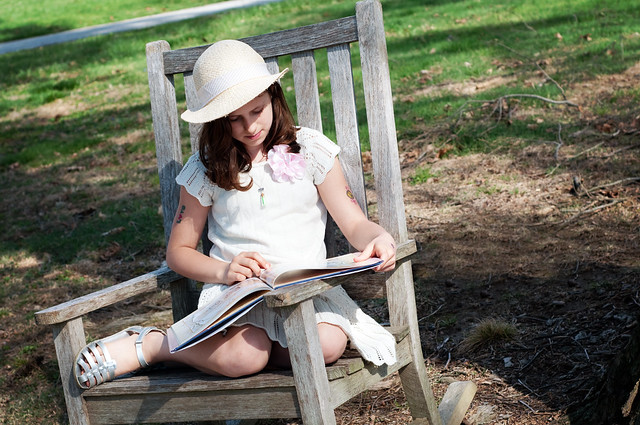
Let’s be honest. My springtime reading looks less like reading and more like one hour spent weeding the perfect reading spot under the sour cherry tree and then fifteen minutes given to sitting under that tree watching the peonies dance and catching my book as it just slips from my lap.
So, not a great deal of actual reading.
But books are food for me and even in springtime I manage to take a few bites here and there. Lately, these quick bites have been all about the letter P: pruning, poetry, and prayer.
(You can find more information about my occasional Saturday series of book recommendations here. These posts do include affiliate links. Thank you for clicking and buying. Thank you for reading along. And thank you for sharing your own recommendations in the comments!)
***
***
I learned about Lee Reich’s Pruning Book, The: Completely Revised and Updated by listening to a radio call-in gardening show. Since then I’ve seen his name everywhere (well, everywhere you might expect to find mention of a pruning expert). This is an award-winning, highly-praised reference book. It is also beautifully made, comprehensive, and a joy to browse. Best of all? It makes pruning seem easy.
If you’ve ever wondered what to do with that old apple tree (or the apple whip you recently planted), or how to keep your tomatoes from sprawling into a disease-ridden mess, or how to keep your clematis vine blooming then you really should own this book. I first checked out a copy from the library, but it only took me about five minutes of flipping pages to realize I needed this one on my shelf.
***
If anyone could turn pruning into poetry that someone would be Verlyn Klinkenborg. His eloquent observations of life on his New York farm are deservedly famous. The Rural Life is nature writing as poetry.
You might think you don’t have much interest in nature or country living (and I should mention that just the words nature documentary put me straight to sleep), but if you appreciate language and metaphor, if you want to learn how to see to the depths of what is always right in front of our eyes, then you should be reading Klinkenborg.
I haven’t yet read his follow-up collection More Scenes from the Rural Life but simply holding the book makes me happy. Published by Princeton Architectural Press, the jacket design and interior illustrations are perfect. Beautifully old-fashioned but also minimalist and modern. Choose this gorgeous hardcover for yourself and as a gift. It’s that kind of book.
Everyone reaches for fullness in summer, but the fullness that most of us know best belongs to the memory of childhood. What was it that made summer days so long back then and made the future seem so distant? What was the thing we knew or didn’t know? – Verlyn Klinkenborg
***
Phyllis Tickle’s prayer books are year-round favorites of mine, but I love them especially during the busyness of spring and summer. I don’t pray the hours (morning, noon, and night) regularly, but when I only have a few minutes and don’t even know where to begin with prayer or Bible-reading I almost always find myself reading the morning office in Prayers for Springtime.
The Divine Hours (Volume Three): Prayers for Springtime: A Manual for Prayer (Tickle, Phyllis) and The Divine Hours (Volume One): Prayers for Summertime: A Manual for Prayer
 are part of a three-volume set. Whether or not you are familiar with the Benedictine practice of fixed-hour prayer, I think you will find Tickle’s contemporary selections of prayers, psalms, and Scriptures easy to use either regularly or (like me) irregularly as the need or mood strikes.
I sometimes think that fifteen minutes spent sitting under the sour cherry tree observing the birds and noticing the breeze is a form of prayer. Reading a bit from this book as I sit only makes it more official.
And you? Which books are you reading on the patio as the sun begins to set?

by Christie Purifoy | May 28, 2014 | Amish, Books, children, Family, motherhood, Pennsylvania, Seasons, Spring, Uncategorized
… for history is a pattern / Of timeless moments.
– T. S. Eliot, Four Quartets
The kids and I are reading the Little House books. One chapter each night. We began with Farmer Boy and a fire in the old stone hearth. Now we are in the big woods of Wisconsin, and there is birdsong through our open window.
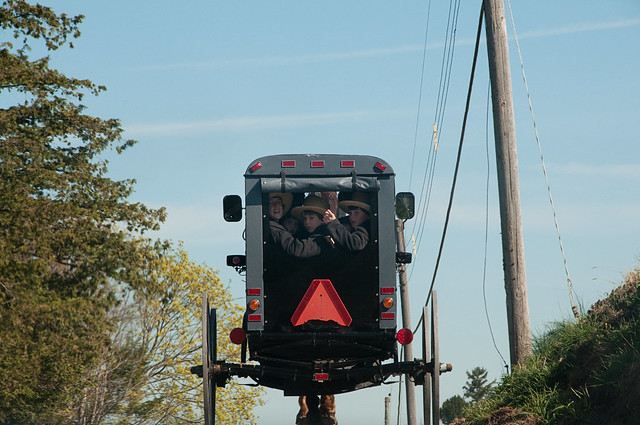
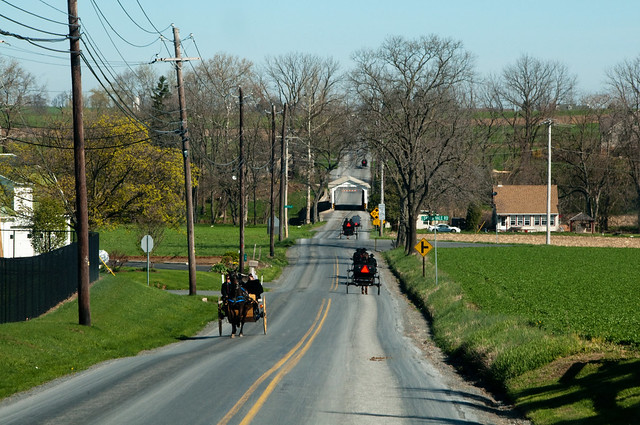
It is also haying time in the fields west of this house. When we drive in that direction, to buy chicken feed from the feed and lumber store or flats of annuals from a greenhouse, we watch teams of muscled, shaggy horses at work in every field. They look as if they have been plowing the same red-clay soil for two hundred years. Day in, day out.
Sometimes there is a young boy holding the reins. He wears suspenders and a straw hat, and together we wriggle to keep from pointing and shout “Look! Farmer Boy!”
***
***
In this place, when the breeze carries the bracing smell of hay, just-cut, I am able to understand something about time that is normally hidden from me.
Time is not a line carrying us always farther from the past. Time is not a thread, and we are not simply biding it until the day ours is cut.
These days, in Lancaster County, I can see that time is a spring. Past and present and future bubble up together, and the sound is like music. Like the clip-clop of horses’ hooves. Like birdsong through an open window.
But my children appear to be lines racing, racing away from me. Willowy is the word that comes to mind when I observe my firstborn girl. For nearly two years, I’ve seen her baby face when I look at my youngest, my second girl, but that face is now lost. Elsa Spring has grown into herself. There is a family resemblance, yes, but more and more she looks only like Elsa. Something has been shed, and the lines of her eyes and chin are now hers alone. No longer her older sister’s.
And thus, two baby girls vanish from every place but memory.
***
I don’t really know if I am living in a country of lost things or a kingdom of restoration and everything made new. I look around, I read the news, and I find both. Hopelessly jumbled.
We lose babies and grandmothers. We lose marriages and homes. We lose our younger selves and friendships and health and peace between nations and on and on forever, it seems.
But every new season is also a return, and the month of May, this pivot between spring and summer, reminds me that it is possible to root myself in that bubbling spring. To live sure of what I cannot always see: that time is not linear but rhythmic. It is a song where every note returns and every note is new.
And this is the living water that sustains me. This is the living water I hold out. To my racing children. To my thirsty neighbor.
Maybe eternity begins when I read a favorite story for the third, fourth, fifth time.
Maybe eternity begins here. Now.
***
***
by Christie Purifoy | May 3, 2014 | Books, children, Food, Gardening, Spring, Uncategorized
Let’s all spread a blanket on some fresh spring grass and read a book, shall we?
Not sure what to read? Let’s see if I can help you with that. Not only am I recommending a few of my favorite recent reads (books with this season very much in mind), but I am GIVING AWAY FREE BOOKS.
Do I have your attention? Read to the end for all the details. And, as always, remember that I use affiliate links in each new edition of These Farmhouse Bookshelves. You can find more information about that right here.
*
*
Recently, my sister Kelli sent us this first book as a gift (yes, the same sister of photography fame). It’s a picture book, but it was pretty much my lifeline during those last few horribly brown pre-spring days. The kids love it, too.
And Then It’s Spring (Booklist Editor’s Choice. Books for Youth (Awards)) by Julie Fogliano and illustrated by Erin Stead is a gorgeous, award-winning, treasure of a book. I recommend it for kids and for any big people in your life who love spring or gardening or quietly humorous storytelling.
This is a far cry from captain-underpants and diary-of-a-wimpy-kid humor, but it had my own kids howling. And then breathing very quietly and asking questions about the seasons and how plants grow. So, pretty much a winner.
… it is still brown, but a hopeful, very possible sort of brown … – Julie Fogliano
I discovered this next writer, and her debut book, at the recent Festival of Faith and Writing at Calvin College in Grand Rapids, MI. This book may have been the very best thing about that festival (though I hesitate to quantify an experience that was full to overflowing with Very Good Things).
Things That Are by Amy Leach is not like anything you have ever read. I promise you that.
First, it is a beautiful book. Lovely to hold and with elegant, whimsical illustrations. A book-lover’s book.
Second, the writing is startling. Every single word is surprising and unanticipated. Hilarious and wise. Leach makes me laugh out loud and reminds me of the power words have to stab me straight through the heart. This book is a marvel.
What is it, exactly? It’s like a cross between a PBS nature documentary and Lewis Carroll. Except, so much better. So much wiser. Leach writes about nature – everything from panda bears and sea cucumbers to caterpillars and pea vines. She isn’t writing about people, except that she is. This is a book about the beautiful strangeness of our world and how much we can learn by taking a very close look at the creatures all around us.
Things That Are stretches the English language to its most delightful limits. This is nature writing as poetry, and each essay deserves to be read out loud.
Haywire personalities like peas, wobbly personalities with loose ends, iffy ends, result not from having no aim, no object in life, but from having an extrasensory object. What they want is beyond their powers of apprehension – until they hold it in their acute green wisps- so their manner is vagabond. The personality that longs only for perceptible things is down-to-earth, like a dung eater. But the teetery-pea kind send out aerial filaments to hound the yonder, tending every which way, guessing themselves into arabesques, for they are fixed on the imperceptible. – Amy Leach
Amy Leach sat right next to Fred Bahnson for one of my favorite panel presentations of the festival. I am also recommending his book Soil and Sacrament: A Spiritual Memoir of Food and Faith . If you enjoyed Barbara Kingsolver’s Animal, Vegetable, Miracle: A Year of Food Life
 then I’m sure you will appreciate Bahnson’s own memoir which explores the spiritual dimensions of the same subject (and if you haven’t read Kingsolver’s book please do go and rectify that).
In Bahnson’s words, this book is written from the perspective of a “pilgrim” and an “immersion journalist.” He tells his own stories, but he tells the stories of many others around the world who have discovered the sacredness of the dirt under our feet. This is a diverse bunch. There are mushroom-cultivating monks, metal-head, ex-con coffee roasters, maiz-growers in Mexico and Honduras, Pentecostal farmers, and Jewish growers of organic vegetables.
Gardeners and foodies will automatically appreciate this book, but I think it deserves a much wider audience. This book is also for all those interested in peacemaking and justice.
Beyond even that, this is a book about our spiritual origins. As Bahnson describes so eloquently, one of humanity’s oldest stories tells us something about ourselves that remains vitally important: we are the Adam who was created from the adamah. We are humans made of humus. Our spiritual and physical lives depend on the soil too many of us find it easy to ignore and abuse.
Our ecological problems are a result of having forgotten who we are – soil people, inspired by the breath of God. – Fred Bahnson
Now, on to the details you’ve been waiting for … free books.
The first giveaway is straight from me to you. I want to say thank you for reading these book recommendation posts, for sharing your own recommendations with me, and for clicking on those amazon affiliate links!
Also, I love Amy Leach’s book so much I want to share it with one of you. Leave a comment on this post, and you are automatically entered to win a copy. It will be very professional and unbiased and probably involve names in a hat.
The second giveaway is courtesy of Moody Publishers and my fellow writer Hannah Anderson. I’ve appreciated Hannah’s contributions at Pick Your Portion (we are both regular contributors there), and she has just written an eloquent and important book.
Conversations about women, the church, and identity tend to focus on roles or categories or accomplishments. I happen to think that those are very important topics of debate, and I love the books that shine new light on old conversations. But Anderson sets up camp somewhere else entirely, and we need that too. Made for More: An Invitation to Live in God’s Image explores a woman’s identity as first a person and an image bearer of a glorious God.
This is an inspiring, encouraging, beautifully written book. Again, leave a comment on this post, and I’ll stick your name in the hat for a chance to win your own copy.
I’ll leave comments open for a week. Leave your comment before Friday, May 9 at 11:59 pm.
Good luck and happy reading!
by Christie Purifoy | Jan 18, 2014 | Books, children, Food, Uncategorized
Last weekend, on facebook, I promised you a peek at the bookshelves in my kitchen.
That’s right, I said, BOOKSHELVES IN MY KITCHEN.
Yes, I have all-caps feelings about the bookshelves in my kitchen. I don’t care all that much about granite countertops or stainlesss steel appliances, but I love having a built-in bookcase for my cookbooks.
Here are three of the books I reach for most often in that room … (p.s. you can see an actual glimpse of my kitchen bookshelves on instagram).
The Homemade Pantry: 101 Foods You Can Stop Buying and Start Making by Alana Chernila is my kind of cookbook. Lovely, big photographs, fun personal introductions before each recipe, everything tasty, nothing too hard.
Plus, it’s inspiring, never shaming. This isn’t a book to make you feel guilty for buying your sandwich bread. More a book that nudges you to say, “Why wouldn’t I at least try making this if it tastes so good and takes so little extra time?”
At least, that’s the voice I hear as I flip these pages.
Also, despite what you might imagine after reading the subtitle, these are not gimicky recipes. This is good, basic, family food: yes, there are recipes for chocolate peanut butter cups and toaster pastries, but there are also crackers, pasta sauce, and breads. You can learn how (and why) to make your own applesauce, yogurt, and canned tomatoes. I even adopted her granola recipe. Apparently, granola is better with lots of cinnamon and a dash of almond extract.
From the vanilla ice cream to the vanilla extract, this is one of my favorite cookbooks.
Fold down this page. You are going to want to come back to this recipe a lot. If you are going to ditch one packaged thing from your pantry, I suggest the cereal box. – Alana Chernila
One of the biggest changes my family has made in our eating in the past two years is to add fermented foods to our diets. And while stomach bugs and the flu and various colds run rampant through all our friends and neighbors, for two winters in a row, these bugs have mostly passed us by. I no longer spend my winters moving from sore throat to nasty cough and back again, and when my children do get sick, they almost always bounce back quickly.
Fermented foods have been a major part of the human diet around the world for thousands of years, but, in the past 50-100 years, we Americans have stopped consuming them almost entirely. There is growing evidence that we should rethink that.
And don’t let the word fermented frighten you off. I’m talking about yogurt, pickles, sauerkraut, kimchi, and kombucha, the soda-like drink my kids can’t get enough of. So, nothing nasty, everything delicious and tangy.
Real Food Fermentation by Alex Lewin is a good place to start. Again, great photographs, helpful explanations, easy step-by-steps. I used his guidelines for making pickles with last summer’s cucumbers, and we are still enjoying them.
Here’s another reason to check out this book: unless you can purchase raw pickled goods from your Amish neighbors (ahem), then you have to make this stuff on your own. The heat-treated pickles on the supermarket shelf have had all of their living, immune-enhancing ingredients cooked out of them in the name of food safety. One exception is kombucha. Buy it from Whole Foods to see if you like it, but one glance at the pricetag and you’ll understand why I make my own.
When we make our own food, we regain some control over our lives – especially at a time in history when many of us feel at the mercy of events, governments, corporations, and industrial food producers. – Alex Lewin
Here is a book to watch out for in the second-hand shops: The Fun of Cooking by Jill Krementz. As a child, I checked this one out of the school library so many times, my parents finally bought me my own copy. I literally loved it to bits.
This is a book for kids by kids (from really little ones to teenagers). The recipes are good and diverse, but the real treat for me has always been the stories. This is a book with an urban/New York bent, and I loved imagining a world where kids my own age might hop on the subway to pick up ingredients for the dinner they’d make before Mom arrived home from work. So, pretty much the opposite of my life then.
It’s quite possible that my city-living dreams began with this book.
And dreams can be passed down. This year, my daughter made the teddy-bear bread for her teacher, just like I used to do.
Last year we had a baby-sitter named Jean Williams who taught me how to make teddy bear bread. I always make two of them so I can give one away to a friend. – Jessica, age ten
Tell me, do you keep books in the kitchen?
by Christie Purifoy | Jan 4, 2014 | Books, Gardening, Uncategorized, Winter
I love winter. I love snow.
I love them for themselves, but, let’s be honest, I love that they give me more time for my books.
Is your driveway buried in as much snow as mine? Here are a few books perfect for snowy days.
Now, if only the library delivered …
(You can find all my Saturday book recommendations here and some explanation about my use of affiliate links.)
*
*
Lately, I’ve kept my nose buried in seed and plant catalogs rather than books. I open one up determined to find just the right cucumber for pickling and within minutes I am planning a quarter-acre rose garden. These catalogs are just a little dangerous for me.
Almost the only thing with the power to pull me away from the catalogs (and the daydreams) is a book by Louise Penny. Her Chief Inspector Gamache detective novels are my new favorite thing. One by one, I am devouring them. I’ve started treating them like chocolate. I am always greedy for more, but I’m desperately concerned I’ll run out.
Yes, they are that good.
You’ll want to begin with the first: Still Life (Chief Inspector Armand Gamache Mysteries, No. 1) . Today, I’m reading # 6: Bury Your Dead: A Chief Inspector Gamache Novel
 . These books just keep getting better.
Number Six is perfect snow day reading. Inspector Gamache is wandering the snowy streets of old Quebec City, and it is Winter Carnival time. Everything that makes this series so special is present and accounted for: a charming and brave hero, tangled mysteries, delicious food and drink (I can’t read one of these books without craving fresh-baked croissants and creamy cafe au lait), history, spirituality, and a beautiful setting.
Have I mentioned I love these books?
Another book I love is Winter Solstice by Rosamunde Pilcher. I’d never read this one before December, but, like one of my favorite book bloggers, I plan to reread it every December from now on.
This novel is beautifully written but easy to read. It is deeply thoughtful but light and fun. It is set in Scotland. There’s a snowstorm. The characters are wonderful.
And the ending? Beautiful.
Here is a book for the little skiers and sledders: It’s Snowing! by Olivier Dunrea. This sweet little picture book captures the joy of a mama and her baby playing in the snow. It’s simple and lovely and quiet, and I love it very much.
I bought it while living in Florida and just about cried the first time I read it, but now? I read it with a smile on my face.
Tell me, which books keep you company in winter?
