by Christie Purifoy | Nov 16, 2011 | Florida, God's Love, Home, Seasons
My children make lists for Santa (yes, already), and I peer over their shoulders considering the annual dilemma. Which is better, to receive just what you have asked for or to be surprised with the lovely yet utterly unexpected? In other words, the castle Lego set he spied at the big-box store or the box of fairytale Lego figures that I think will inspire more creative play? The book she read at her friend’s house and loved, or the book she’s never heard of that I’m sure she’ll enjoy?
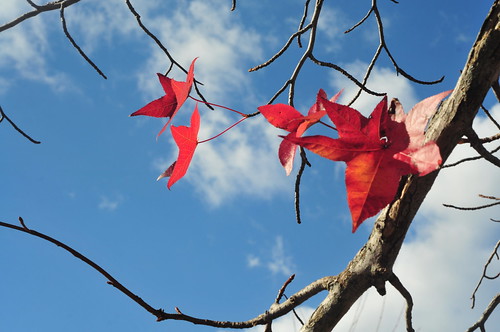
It’s a question I wrestle with particularly during this time of year. Autumn. A season when I long for predictable gifts: falling leaves, cold blue skies, and crisp apples hand-picked by my children.
But these are not the gifts given to me. Instead, as I write this, I can see from my window hot pink camellia blossoms and pale orange tangerines. God, don’t you know that I’m not really a hot-pink kind of girl? Can I exchange the showy flower for something a little more subtle, leaves crackling underfoot, perhaps?
It would be too easy to write that these, tropical flowers and citrus fruits, are the true gifts, and I just need to learn to appreciate them. Who am I to criticize the good things God gives? Who am I to find fault with a creation that is undeniably beautiful and sweet?
And yet … as good as tangerines may be, they do not feel like home to me. Some may taste a personal love note from God in the taste of a just-picked tangerine, but I taste nothing so personal. Good, yes, but not exactly personal.
Still, I can say thank you for the tangerine, and I can mean it. Thank you, God, for speaking a thousand different languages of beauty. Tropical. Desert. Aquatic. Forest. Prairie. Mountain. All good.
Thank you, too, for making me uniquely me. It may look as if I’m hard-to-please. I prefer to think that I am hungry for the love notes that are mine especially. It isn’t that I deserve them, or that I can’t live well without them. It’s simply that I’ve tasted those honey words before, and I trust that there is more, much more.
“… with honey from the rock I would satisfy you.” Psalm 81:16
I remember the sweet taste of things I love best and know that I have tasted God’s goodness. I could spend the rest of my life in the shadow of citrus trees and camellia shrubs, but every day would be drawing me closer to the source of all beauty. Every day would be bringing me towards the love that speaks my language. The love that knows my name.
by Christie Purifoy | Nov 14, 2011 | Faith, Poetry, prayer, Uncategorized
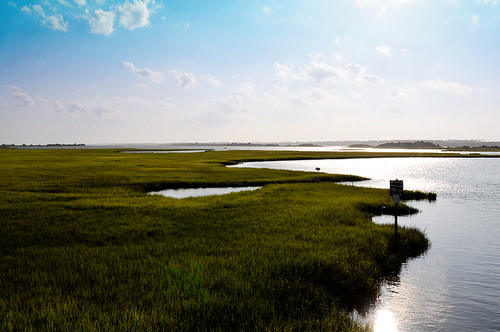
For you on this Monday: a sonnet from Irish farmer-turned-poet Patrick Kavanaugh.
I suppose there are those who might find heresy in this poem. “Pantheism,” they would say.
I don’t defend the idea. If God is everything and everything is God then what good is God, I wonder? And yet, I do not think that this is a heresy strong enough to deserve much disapproval (at least not today in the United States). We have silenced nature very effectively with our parking lots and our strip malls, our corporate ladders and our electronic shadow selves.
This poem reminds me to listen for the voice of God whispering all around.
I can’t prove that His is the voice you hear in water and wind. But, to borrow Kavanaugh’s words, some arguments aren’t meant to be proven.
Canal Bank Walk
Leafy-with-love banks and the green waters of the canal
Pouring redemption for me, that I do
The will of God, wallow in the habitual, the banal,
Grow with nature again as before I grew.
The bright stick trapped, the breeze adding a third
Party to the couple kissing on an old seat,
And a bird gathering materials for the nest for the Word
Eloquently new and abandoned to its delirious beat.
O unworn world enrapture me, encapture me in a web
Of fabulous grass and eternal voices by a beech,
Feed the gaping need of my senses, give me ad lib
To pray unselfconsciously with overflowing speech
For this soul needs to be honoured with a new dress woven
From green and blue things and arguments that cannot be proven.
– Patrick Kavanaugh
by Christie Purifoy | Nov 10, 2011 | allergies, Community, Faith, Family, Food, God's Love, grief, healing, Jesus, motherhood

On Friday, our weekly pizza-and-a-movie night had to be postponed (and, yes, for those of you wondering, I make two: one deliciously normal for four of us, one dairy-free, wheat-free and “pizza” in name only for the middle child).
This middle child, our accident-prone five-year-old, had to be taken to the emergency room after a fall onto the cement floor of our garage. He came home late that same night happy to show off his new plastic dinosaur and the half-dozen staples on the back of his head.
I still remember, years ago, the preschool teacher who told me that if any child was going to fall into a puddle or trip on the curb it would be my son. Always. This has never stopped being true.
Twenty-four hours later, three of us kneel to receive communion. We prepare to remember death and taste resurrected life while the boy so recently knitted back together stands behind us. The boy who knows what death tastes like better than any of us. He does not yet receive the elements, but he is always given a short blessing, a gentle hand on his head.
Our servers are an elderly couple unfamiliar to me. They must be Sunday-morning regulars moonlighting at our Saturday-evening service. The husband places his hand on my son’s head and leans in close. He prays and prays until it seems that the attention of a whole room has condensed and fixed itself on this prayer for one small boy. I don’t remember a communion blessing that ever continued so long.
It is long enough for this memory: I am seven-months pregnant with my miracle baby, my-sewn-in-tears-and-reaped-in-joy son. I am filled up with a baby and with fear. Having waited so long for him, I am sure that this gift cannot be given with no strings attached. There must be some price, in pain, that I must pay. Until someone touches my own head and prays for me, and I see … well, I hardly know what I see, but it is as if my unborn son and his maker are alone together. Then I understand that I have only a peripheral role in the relationship between them, and I see that my love is small and weak compared with the love God has for the child he’s made.
Kneeling at the communion rail, I can see that the young couple next to me are also watching my son and the gray-haired man. I can see tears in her eyes and feel them in my own, and I know that this, this, is what it means to live in a beloved community. We have been so well-loved by God that our hearts break for how he loves everyone around us. We are loved, and we are loving, and our hands touching broken heads and fearful hearts are the hands of Jesus, always.
And the heavy burden of love that I carry for my son is shared. It is not, has never been, mine alone. Of course, my husband shares it, the firstborn (who runs to her room weeping as the car leaves for the emergency room) shares it, but Jesus also shares it and his beautiful church shares it.
We are a beloved community.
by Christie Purifoy | Nov 8, 2011 | Books, Home

I recently bought a chair.
To be more precise, I bought an arm-chair.
This is no hard-backed dining chair. This is a reading chair, a tuck-in-by-the-window-with-a-stack-of-books-and-a-cup-of-tea-chair.
Full confession: I already had a good reading chair. With its faded green-velvet slipcover, it is soft and welcoming. It even has a small hole on the right arm, an x-marks-the-spot for the exact right place to rest my book. In our Chicago apartment, this chair sat between our third-floor window and a built-in bookcase. The ideal spot for reading; the ideal spot for thinking.
This chair still sits in the living room, but in our Florida house it has no window (the window, in this case, consisting of a sliding-glass door to the screened-in patio). A reading chair with no window is simply no good, in my opinion.
And so, I’ve been on the lookout for a new reading chair.
I’ve long kept its intended spot in mind. Because our Florida home is younger than our Chicago home (oh, by eighty years or so), the only consistently quiet spot in this house is in my bedroom (darn these contemporary “open” floor plans). If the quiet weren’t enough, the windows in this room would confirm it as the ideal place for reading: they are a tall, three-sided embrace for my writing desk with just enough room left over for an arm-chair.
And the view, you ask? Fruit trees, a spreading oak, water, and all kinds of birds.
Of course, as with any big purchase, there was no small amount of hand-wringing and budget-worrying. I want to live simply, but I recognize that my usual standards of comparison have become a bit skewed in a place where every other person appears to own a boat.
I might justify my purchase by saying, “Well, it isn’t as if I’m buying a boat.” And yet, I’ve learned that these two objects may not be all that different.
I know this because I sat next to a boat-owning businessman on my recent flight to Chicago. When he started talking to me about how much he loved living in Florida, I just smiled and nodded. I’ve learned that around here conversations tend to shut down once you admit to being more of a “cold-weather person.” It’s not hostility. Just bewilderment.
As I listened to him describe his weekends on the boat, the slow putt-putting to just the right quiet cove, I realized, with surprise, just how much we actually had in common. I understood that for some boat-lovers at least (and I’m afraid I must entirely exclude jet-ski lovers from this observation) a boat is like an arm-chair you can enjoy out on the water. It’s a place to sit, to hold a nice drink, to observe the glory of our world.
The biggest difference, as far as I can tell, is the cost of maintenance (in time and money). So, I am more than content to be an arm-chair kind of girl.
Still, it’s nice to know that I’m not quite the Florida-coast oddball I thought I was. I may not be a hot-weather person. I may not be a beach-person. I may not be a boat-person, but I know what it is to long for one inspiring, beautiful place.
I know what it is to sit in that place, quietly grateful.
by Christie Purifoy | Nov 7, 2011 | Poetry, prayer, Seasons
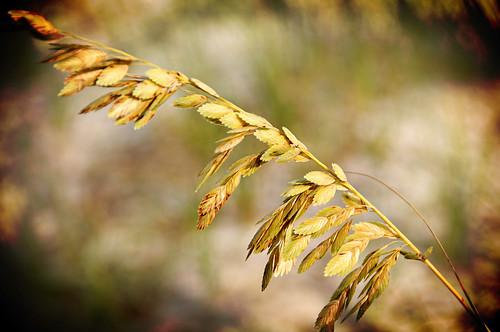
This poem is well suited to November’s darker days.
The changing of the clocks seems like an example of humanity’s authority over its own environment, and yet it always reminds me just how out-of-our-control day and night, light and dark truly are. The days will grow shorter, no matter our efforts or anxieties. Nature will begin to die. We will too, come to that.
This poem suggests that embracing the inevitable (whether it be the changing of the seasons or death itself) need not be an act of despair. It can be an act of great trust.
Technically, I should call this a pastoral poem, but, to me, it always reads more like prayer.
Let Evening Come
Let the light of late afternoon
shine through chinks in the barn, moving
up the bales as the sun moves down.
Let the cricket take up chafing
as a woman takes up her needles
and her yarn. Let evening come.
Let dew collect on the hoe abandoned
in long grass. Let the stars appear
and the moon disclose her silver horn.
Let the fox go back to its sandy den.
Let the wind die down. Let the shed
go black inside. Let evening come.
To the bottle in the ditch, to the scoop
in the oats, to air in the lung
let evening come.
Let it come, as it will, and don’t
be afraid. God does not leave us
comfortless, so let evening come.
– Jane Kenyon
