by Christie Purifoy | Mar 9, 2013 | Art, Books, Poetry, Uncategorized
We don’t read poetry any longer, do we?
Oh, a bit here and there, and some of us more than others, but we’re much more likely to end our days with reality television than The Oxford Book of English Verse, aren’t we?
I often wonder why this is. Is it because we are so accustomed to the easy and comfortable we avoid using our spare time for anything that requires real effort? And I won’t fool you. Poetry requires effort. It asks that we meet it at least halfway.
We must quiet our minds (and our stereo speakers). We must slow down (no one ever speed-read a poem). We must re-read (a good poem can’t ever be checked as “read” on our reading lists and tracking apps; poetry happens in the re-reading).
All I really know is that I’ve hesitated to recommend poetry books in this space. I want to make you happy, and I’ve decided happiness means novels, memoirs, cookbooks, and picture books.
I read this article and realized that poetry is worth more than life to some people. They will risk everything for what it gives.
The least I can do is share a few recommendations with you.
Also, I can make this promise – tonight, when my children are (finally) asleep, I will not turn on my television. I will not pick up my big, fat novel. Instead, I will re-read, and I will remember. I will remember that my life is something different, something better, because I have read Yeats and Auden, Bishop and Heaney.
And these. I have read these:
I have read George Herbert.
One of the great English metaphysical poets (poets known for their elaborate imagery), Herbert was a priest in the Church of England and a friend of John Donne. His religious poetry is beautiful, desperate, and honest. But this is not confession (or not merely); it is art. It is art that dramatizes and explores the encounter between the flawed, sinful self and a God who is Love.
Herbert’s poems are intricately crafted. They reward the time we spend with them.
A verse may finde him, who a sermon flies, / And turn delight into a sacrifice. – George Herbert
I have read Eavan Boland.
I can’t recommend poetry without recommending the work of this contemporary Irish poet. Boland writes about home, about motherhood, about what it means to create beautiful art out of the raw materials of violence, loss, and the various troubles of history. Her work is accessible, but it is not superficial. It rewards our first reading, but it gives more with subsequent readings.
I suggest picking up a single volume of her work (rather than a collection or the few poems you might find in an anthology). Reading poetry is like music in this regard – poets write poems the way musicians create albums. It is one thing to know a hit single in isolation; it is entirely another to know what has been created when the artist gathers their work into a whole.
I often return to her volume In a Time of Violence. You might start there.
Write us out of the poem. Make us human / in cadences of change and mortal pain / and words we can grow old and die in. – Eavan Boland
I have read everything ever published by T. S. Eliot. But, always and especially, I have read Four Quartets.
Eliot was the first poet who ever made me love poetry. I was a teenager, and I was mesmerized by the rhythms of “The Love Song of J. Alfred Prufrock.” Now I don’t often go back to Prufrock and his coffee spoons (though the first lines of that poem are impossible for me to forget), but I return, more and more often, in fact, to Four Quartets.
There are times when an imperfect little art (like a quirky little poem) will suffice. It is like us: small yet precious, strange but lovely. There are other times when we need an art that hints at something much bigger and more perfect. Four Quartets is like that for me. It is big enough to move in, big enough to dream in, big enough to inspire your own creativity. It is Art-with-a-capital-A, and some days that is what my own little life needs most of all.
With the drawing of this Love and the voice of this Calling // We shall not cease from exploration / And the end of all our exploring / Will be to arrive where we started / And know the place for the first time. – T. S. Eliot
Do you read poetry? Why? Why not? I’d love to know.
by Christie Purifoy | Mar 6, 2013 | Faith, God, God's promises, prayer, Scripture, Uncategorized, Waiting
There were years when a little flag would start waving in my head any time I heard someone say God told me to do this or God told me to do that.
A red flag.
It sounded too much like crazy-talk. I’d never heard God’s voice, so what makes you sure? What makes you special?
//
//
Now I am that crazy person.
I’m the one setting eyes to roll with my casual God told us this and God gave us a dream, and, the boldest of all, God promised …
That’s the big one, isn’t it? Talk of promises is crazy and dangerous all at once. To talk about promises is to set oneself up as special and risk looking like a fool.
I am that fool.
//
This is how I got here: desperation. It was the not having, the hurting, the longing, and the pain.
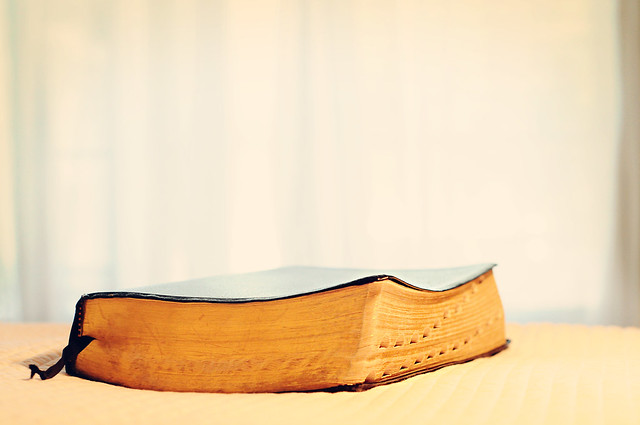
It was that one time I threw my Bible against the wall. I could see the pages bent and the cover smashed, but I could also see words that were so comforting, so particular, I was tempted to make Bible-throwing a regular spiritual discipline.
It was that time I screamed at heaven, until I turned the corner around the clump of trees and saw an optical-illusion moon so enormous and fiery I couldn’t tell what it was. But I heard it. It said, “I’m here. You’ve been heard.”
Sometimes, it wasn’t pain so much as utter emptiness. When there are no friends and no activities, when the phone never rings and you’ve given up the job you pursued for ten years, small things begin to sound very loud.
Like the verse that pastor shared from the front. I was one of a crowd, but those words were an arrow and I was the mark.
Like the song that came over the speakers just as I asked my question aloud. That song with the answer.
Or, all those times (so many times) when all I could do was open my Bible on my lap.
And that’s all it took. Because there it was. Right there.
//
I’m wary of prescriptions, of three-step plans. But if you want to hear the voice of God (and think very, very carefully whether or not you do), then this is what I suggest:
Lean in to the pain.
Listen to the silence.
Let the emptiness be just what it is.
And wait.
by Christie Purifoy | Mar 2, 2013 | Books, Stories, Uncategorized, Writing
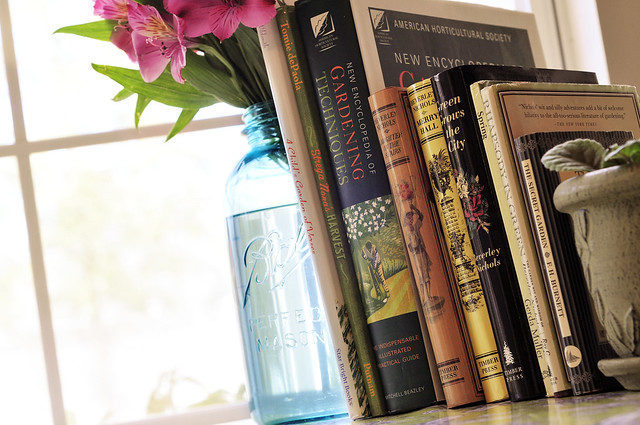
I think this is the first Friday evening when I have not been excited to sit down and give you another peak at my bookshelves. The reason? I’m in the middle of a new book, and I would really rather be reading.
My internet connection was out all day, and I was secretly thrilled. It meant I felt a little less guilty propping the baby in her bouncy seat and getting back to Major Pettigrew’s Last Stand by Helen Simonson.
However, since I have one of you to thank for this book recommendation, and I want to keep the good times rolling, here are three more books for your reading pleasure.
//
//
Today, I’m giving you characters.
When I read novels what I want more than anything – more than a great plot or beautiful language – is character. I want human beings who are so fully realized, so perfectly flawed yet sympathetic, that I struggle to believe they have been created out of nothing more than the alphabet.
Cassandra Mortmain is a marvel of a narrator. She is the wonderfully awkward heroine of Dodie Smith’s 1948 novel I Capture the Castle . The incredible thing about this novel is that the narrator, who hovers somewhere between childhood and adulthood, does not know herself and yet she fully reveals herself to us. We have only her words, but we know things she is only slowly discovering.
This novel is sweet, funny, and over-the-top in so many good ways. We have a crumbling English castle, first love, eccentrics around every corner, and poverty that is a little worse than genteel. Cassandra, like the story she tells, is a gem.
And no bathroom on earth will will make up for marrying a bearded man you hate. – Dodie Smith
Next, I give you a character who is much darker and more mysterious. He is a young, Irish police detective, and he is the narrator of In the Woods by Tana French.
French writes what some have called “literary mystery thrillers.” Literary is a rather inadequate word, but what it should tell you is that French is an incredible writer. In particular, she has a gift for characters.
Although the plot will keep you turning pages late at night (my life pretty much comes to a standstill whenever French publishes a new book), if you value plot (especially those of the neat and tidy variety) you may be disappointed.
I think I love French’s books because, though they are atmospheric and wildly creative, I find them to be more honest than most mysteries. French gives us compelling characters and page-turning stories, but she does not pretend that all mysteries can be solved, that all questions can be answered, or that the past can always be known.
What I am telling you, before you begin my story, is this – two things: I crave truth. And I lie. – Tana French
I am always amazed that one small island can produce so many gifted writers. Here is another: the Irish writer Colm Toibin. Brooklyn: A Novel is told by Eilis Lacey. She is a young woman who has grown up in a small Irish town just after the second world war. Sponsored by a priest, Lacey leaves her family and goes, alone, to make a new life in America.
This is a quiet book. Beginning it, you may find it too easy to put it down and forget to pick it up again. Don’t do this: you are in the hands of a master. Turning pages you will begin to care for Eilis, you will see the world through her naive but curious eyes, and you will know, having turned the last page, that you have been richly rewarded.
‘She has gone back to Brooklyn,’ her mother would say. – Colm Toibin
Tell me, who are the characters you especially love?
You can find earlier recommendations here: week one, week two, week three, week four, week five, week six, week seven, and week eight.
by Christie Purifoy | Feb 26, 2013 | Dreams, God, Jesus, Scripture, Uncategorized
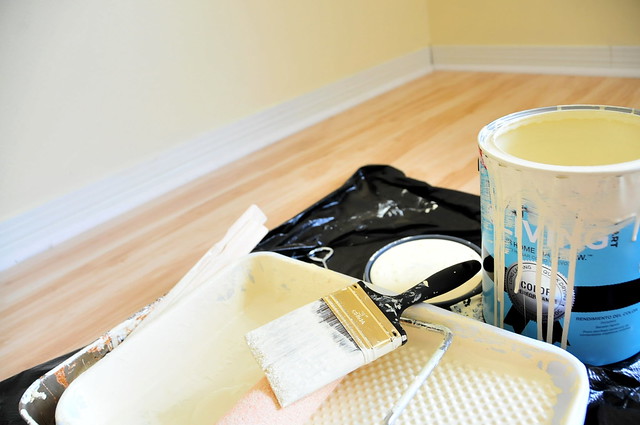
If you walked through my front door today, you would be greeted by three large green splotches. Two on the wall. One on the ceiling over your head. Actually, if you had walked through my front door two months ago, you would have seen the same green splotches.
We were testing paint colors. We even chose one. But in between the choosing and the painting, five-hundred little tasks, and maybe a dozen big tasks, elbowed their way in.
The thing about realizing a big dream is that you will always feel behind. Overwhelmed. In over your head. (Of course, feeling in over your head is generally a sure sign that you are right where you are supposed to be).
//
//
We feel a lot of pressure on Saturday mornings. If not much happens on a Monday, well, no big deal, that’s just Monday. But Saturdays are the days for getting stuff done. Last Saturday, my husband, having just cleaned up all the breakfast dishes, started murmuring about the floor. Would now be a good time to pull out the steam mop?
Loving wife that I am, I shrieked and said, “No! Now would be a good time to get out the paint can!”
Here is one of those ironies about marriage, another of those little things that sound good in theory but mostly annoy in practice: he sees the crumbs and dirt, I see the unpainted walls and the absence of a fence around the garden. On paper this is a match made in heaven. In our house, someone always has their eye on the details and someone else on the big picture.
Unfortunately, the one who is bothered by the lack of a fence is the same one who is not very capable with power tools. But, we’ve learned a few things in our sixteen years of marriage and didn’t waste too much time before I pulled out the mop and he pulled out the paint can.
//
When each Saturday (with its ever-growing list of to-dos) comes around, I often find myself repeating these words, “This is only the beginning.” These words remind me that I am exactly where I need to be. They remind me that something good is starting. They remind me that in God’s story, the best is always yet to come.
Though these words are specific to my life here in a new place, I find they are becoming much more than that.
I may be at the beginning of the work God has planned for me here at Maplehurst, but we are all of us at the beginning of things. This is as true for my baby daughter as it is for my older parents.
Our life on this planet is just the beginning. It is chapter one. Or better yet – only the prologue. It is where we begin to experience the work, play, rest, and worship we will enjoy forever.
//
I think “the beginning” matters much more and much less than we typically imagine.
It matters more because the world we are experiencing now is not moving toward destruction. It is moving toward renewal.
It matters less because the petty annoyances, the illnesses, the losses, and even the tragedies we suffer are passing away. The sin and evil and general brokenness that leave us breathless with fear and anger? They have already been defeated. They are on the way out.
I’m afraid too many of us believe the wild poetry of the book of Revelation has not yet happened. That we are still waiting for that victory. But here is the Good News: it is finished. Revelation is simply the Cross from the point of view of heaven.
We don’t throw up our hands and say it will all be sorted out when Jesus comes back.
He already came.
He already sorted it out.
And there is nothing to stop us from sowing those kingdom seeds.
“He who was seated on the throne said, ‘I am making everything new!’ Then he said, ‘Write this down, for these words are trustworthy and true.’ He said to me: ‘It is done. I am the Alpha and the Omega, the Beginning and the End.'”
Revelation 21: 5,6
by Christie Purifoy | Feb 23, 2013 | allergies, Books, Family, Food, Uncategorized
Food is my love language.
Isn’t that one in the book? No? Well, I’m convinced food is my love language. I know my mother loved me because she sometimes surprised me during the after-dinner homework hour by sneaking into my bedroom with chocolate pudding. Yes, Mom, I still remember the chocolate pudding.
I show my kids love by feeding them.
Which has, on more than one occasion, resulted in a call to 911 and an epi-pen. Which just goes to show that love is complicated.
//
//
Making something that is healthy, non-allergenic, and liked by all is my holy grail of cooking. Actually, it’s my holy grail of motherhood. But, like any epic quest, mine is marked by failure, disappointment, and only occasional victory. Like the knights of old, I am not giving up.
Books like these inspire me to get up and give it another try. Books like these remind me that food and its enjoyment are among the very greatest gifts of our creator.
//
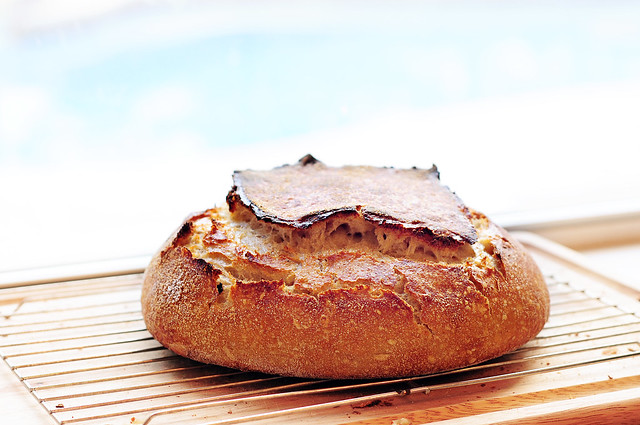
First, (for those whose taste buds have been set dancing by the photo above) is Tartine Bread by Chad Robertson. Yes, that photo shows actual bread baked by the actual me. In my actual home kitchen. And, it actually tastes even better than the picture looks.
In addition to the cookbook, you will need a digital scale and a cast-iron combo cooker (though I think a dutch oven would also work). Then, simply follow directions. Robertson takes us step-by-step from making our sourdough starter through his basic country loaf and on to variations that include everything from pizza dough to English muffins.
I am generally something of a disaster in the kitchen, but this book makes me look like I know what I’m doing.
//
Next, is a book I suspect many of you have read. It’s Animal, Vegetable, Miracle: A Year of Food Life by Barbara Kingsolver. If you haven’t yet read it, then I am thrilled to be the one to give you that final push. Because read it you must.
Do you like food? Do you like memoir? Then you will like this book. Kingsolver chronicles the year she and her family spent eating only locally grown foods, most of them foods they had grown or raised themselves. Kingsolver talks politics, global warming, and the state of American agriculture, but at the heart of this story is good food, family, and love.
This is a book about tomatoes. How we care for them. How we harvest them. How we spoon them out of jars in the middle of winter and remember warm, summer days. This is a book about bread. About what it does for our families when our homes smell of fresh-baked bread.
This is a book about celebration.
//
Finally, a new-to-me book I admit I’ve only just begun. Two chapters in, and I’m smitten. It’s An Everlasting Meal: Cooking with Economy and Grace by Tamar Adler. Generally, I won’t recommend a book I haven’t yet finished, but this is one of those books you start telling all your friends about before you’re even halfway through.
Adler is funny and wise. She begins with the simple act of boiling water, and I am now convinced that a big pot of bubbling, well-salted water is the start of all sorts of magic.
This is a book for those of us who love food but get bogged down in long, complicated recipes. It’s a book to make you believe that you, too, can create, not restaurant masterpieces, but the stuff of life. Good, nourishing food.
Which is, of course, the whole point.
