by Christie Purifoy | Aug 2, 2014 | Books, Family, Gardening, Seasons, Summer, Uncategorized
(This is a summer installment in my occasional series of book recommendations. The following post contains affiliate links. You can find previous recommendations right here.)
*
I adore summer, but I was not made for summer.
I was made for curling up with a book on snowy days. I was made for the slow, careful glide across ice. I was made for the silence of the whole world hushed by snow.
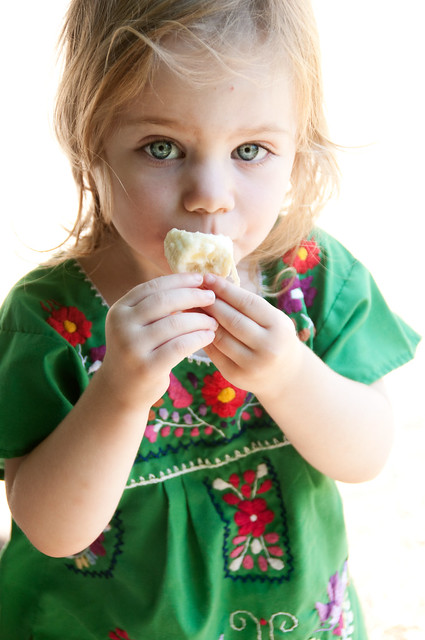
But I love summer. I love raised beds for vegetables and 3 chickens fighting for one worm. I love sun-warmed tomatoes with cracked pepper and babies sticky with a first popsicle. I love that one white lily picked from my flowerbed fills nearly the entire house with its scent.
*
*
Summer is sensory overload.
Which means I am having a hard time reading. A novel, especially, is a whole new world of sights and sounds and emotions and ideas. But my small world is full to bursting with those things. At least in summer. And I can’t handle any more.
I tried reading The Expats: A Novel by Chris Pavone. Someone recommended it to me, though I’ve forgotten who. It seems clever and thrilling. Hip and suspenseful. I only managed a chapter (maybe half?) before I set it aside. It’s summer, and I have no room in myself for cleverness or hipness. I’ve taken to rereading my favorite essays in Amy Leach’s wonderful Things That Are
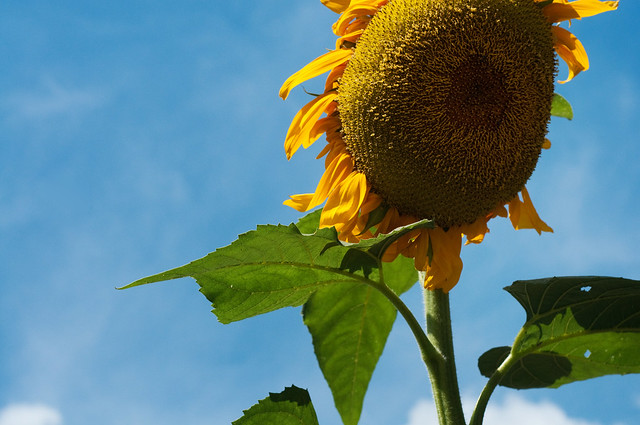
 , instead. Somehow, they are clever in a way that moves me deeper into what is right in front of me, like sunflowers grown taller than my husband and a woodchuck who nibbles my daylilies despite the cat stalking him from behind the baby plum tree.
Jonathan and I watch the cat/woodchuck drama while we rinse and load the dinner dishes. Then we go and watch British television shows on YouTube. Comfort-food television like Restoration Home and Great British Garden Revival.
*
*
My nightly reading with the kids is also a serving of comfort and nostalgia. Tumtum & Nutmeg: Adventures Beyond Nutmouse Hall by Emily Bearn is a new book, but it reads like an old favorite. This is an English countryhouse novel for kids, and even my boys love it. The firstborn and I dream of genteel mice making a kind of summer home in a child’s dollhouse, and the boys cheer on General Marchmouse as he advances against the cartoonishly evil Aunt Ivy.
The baby and I are reading Adventures with Barefoot Critters by Teagan White. The illustrations and typography are lovely in this just-released picture book. With its adorable animals in adorable clothes doing adorably fun things, you might call it Tumtum & Nutmeg for the toddler set.
And when everyone is in bed? No, they aren’t asleep. It is summer, after all. But as long as they are in their rooms, and the door is muffling all the not-so-subtle sounds of a sibling “sleep-over,” then you will find me curled up with Empress of the Garden by G. Michael Shoup (an enormous coffee-table book of antique roses) or Private Edens: Beautiful Country Gardens
 by Jack Staub (another coffee-table-sized treasury of garden inspiration), or maybe The Layered Garden: Design Lessons for Year-Round Beauty from Brandywine Cottage
 by David Culp (this one weighs a little less and is as practical as it is inspiring).
In other words, in summer, you will either find me in the garden or reading about gardens.
Because there are three other seasons for smart novels and broadening your horizons and ticking items off of must-read lists.
Happy summer, friends.
*
by Christie Purifoy | Jul 23, 2014 | children, Gardening, God, motherhood, Scripture, Seasons, Summer, Uncategorized
My youngest, not yet two years old, has begun to say her own name. She has been speaking of other things for quite some time. Important words like “shoe” and “mine” and “chicken.” But apparently one can live perfectly well for many, many months without feeling a pressing need to pronounce your own name.
But if I ask … if I say, “Elsa, where is Elsa?” then she will tap her own chest and say “Elsuh-suh.”
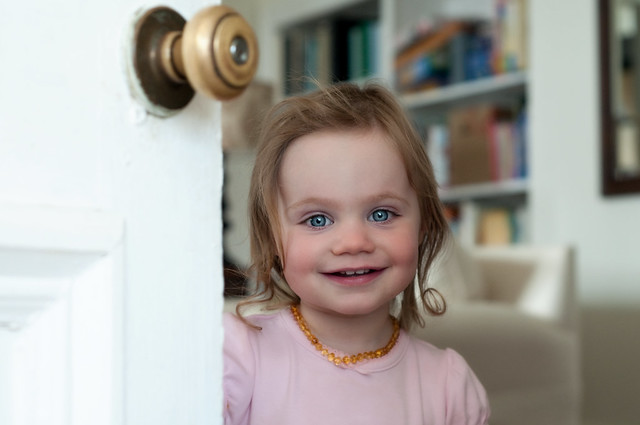
She is my fourth child. This means I am under no illusions. I know that even if I write the memory down in her baby book, even if I manage to capture phonetically the doubled sounds of her pronunciation, I will forget. A day will come, sooner than I imagine, when I will find myself unable to recall the particular cadence of my daughter, naming herself at not-quite-two.
This season, this brief summer at home with my children, seems built entirely of such small things. In five years, I doubt I will be able to recall anything of these weeks.
Scripture speaks repeatedly of a “fountain of life.” I am a mother, and I tend a garden. Raising babies and flowers, I have learned to seek that living, renewing water in things that would seem to be the most fleeting. The most temporary. I have learned that the most important things in life are only rarely weighty enough to settle permanently in our memories.
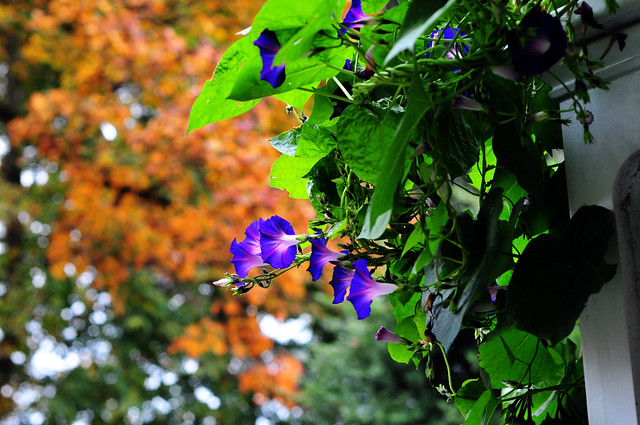
For instance, just when I had entirely forgotten them, the morning glories have returned. Green leaves and deep purple flowers are twining themselves around the spindles of the front porch. Each fall, the vines die. They die utterly, to the tips of their roots, but before the arrival of the first killing freeze, they scatter their seeds.
In early summer, those seeds sprout and stretch and reach for the same spindles of the same front porch. They are the most ephemeral of flowers. Yet, somehow, they are the most enduring. They are, in their way, eternal.
For years I sought eternity by keeping my arms wrapped tightly around solid things. Permanent things. Things known and understood. Things that were sure to last. These were the things I believed had eternal significance.
But years of mothering and years of gardening have taught me to look elsewhere. These years have taught me that I touch the far horizon of forever when I step forward into emptiness, seeking, like a twirling vine, for things unseen. Unknown. Imperfectly understood.
God our maker has “set eternity in the human heart” (Ecclesiastes 3:11). We reach for the far horizon of forever like those vines reaching for the home, the source, they have never actually touched.
It may be that eternity is the home of so many things I have forgotten or misplaced or failed even to notice.
Certainly, eternity is God’s home. The throne room of the One who counts hairs. Bottles tears. Holds sparrows as they fall.
by Christie Purifoy | Jul 14, 2014 | children, Family, motherhood, Scripture, Summer, Uncategorized
In ancient times, the sea was the home of Chaos.
I could write that the sea symbolized chaos, but that word symbol is too easily brushed aside. As if symbols are merely tame bits of literary frippery with no power to unleash the deepest truths of our lives. Like opening the floodgates.
To the sea.
For these ancients, the sea was unfathomable. The sea bedded monsters. The sea could surge forth, at any time, and swallow up land, homes, lives.
Death, darkness, oblivion, terror. This was the sea.

And if you love beach vacations and find it hard to understand how the play of light on dancing waves could ever have been a harbinger of doom, then you will read the twenty-first chapter of the book of Revelation with surprise. And disappointment.
Then I saw “a new heaven and a new earth,” for the first heaven and the first earth had passed away, and there was no longer any sea. (Revelation 21:1)
But if you are like me, you will sigh with longing.
If you are like me, the mere act of sifting through an overfull kitchen drawer for a thermometer hiding somewhere in its depths while the milk you had intended to turn into yogurt boils away on the stove is all it takes for Chaos to begin seeping in.
A moment later and the failed yogurt, the waste of good milk, the scorched pot and the murky kitchen drawer have caught you in their surge. One glance around and you are lost in an ocean of legos and marbles and bits of paper from the morning’s craft and a sticky puddle you cannot explain.
Now you are drowning because it is so humid and your kitchen is a furnace and the baby, the beautiful curly-haired baby, abandoned the slip’n slide after five minutes and is now tracking wet grass and clumps of mud from kitchen to dining room to entryway rug.
One day there will be no sea.
Yes, the sea is a symbol and my kitchen drawer is a symbol and whoever told you a symbol isn’t real? Whoever said it was not possible to drown in symbolic waters?
But if it is possible to drown, it must also be possible to swim. It must also be possible to open your eyes and observe the play of light on dancing waves.
To stand before the unknown and the unmanageable and discover, not the hiding place of terror, but the birthplace of beauty.
***
by Christie Purifoy | Jul 12, 2014 | children, Community, Family, God, Uncategorized, Vacation
I’ve written about my extended family before.
These are almost always stories of absence. The cousins we have yet to meet. The grandparents we too rarely hold. Family, for us, is always too much or too little.
I am a foreigner to my own family,
a stranger to my own mother’s children.
(Psalm 69:8).
Our lives are stretched across too many time zones. My father has always said it is a good thing our country is not any larger because then we would only live farther apart. But with one sister’s imminent move to Hawaii, our country has suddenly grown much larger. And we will, indeed, live farther apart.
But summer days are reunion days, and through some miracle of spirit and frequent flier miles, we came together.
They say absence makes the heart grow fonder, and I have found this to be true. But now I know that absence grows other good fruit. Because the holes in our lives where family might be do not stay empty. These gaps and fissures turn out to be fertile ground for things like hospitality and community. Friendship and adventure. Without family to lean on, we become needy, but these needs are always met.
We come together and discover that we do not have less but so much more. We have family, and we have friends. We have family, and we have neighbors. We have family, and we have our communities. We have family, and we have life in abundance.
We have more.
May your deeds be shown to your servants,
your splendor to their children.
(Psalm 90:16)

by Christie Purifoy | Jun 30, 2014 | Gardening, grief, Summer, Uncategorized
We have quite successfully banished grief from our lives.
Dying proceeds in hospitals. It leaves no lingering trace in the pristine spaces of our homes.
Death is sometimes marked in an old-fashioned way. We do occasionally carve the same old stones. Though the ancient words requiescat in pace have been abbreviated and largely limited to Halloween décor.
But then we follow the trail of job offers and changes of scene until the grave stones that matter, the ones we still see with our mind’s eye, lie miles away. We cannot bring flowers. We cannot bring our children and tell them stories of the one we knew and loved.
But somehow grief still finds us. It winds its way in on unexpected paths. And in unexpected places.
For instance, the garden.
An old tree falls, and we are surprised, embarrassed even, by our tears.
We learn practical gardening techniques, and give them misleadingly neutral names like layered gardening or four seasons gardening. Now, we cheerfully interplant our tulips and daffodils with shallow-rooted perennials. See! What fun! You and I need no longer be assaulted by the dying bulb foliage. Death is always camouflaged by the next blooming plant.
Always there is the next thing. We need never look back. Daffodils! Then lilac! Then azaleas! Then roses! Now hydrangeas! And daylilies! And late-summer dahlias!
There is no need to mourn the passing of the daffodils.
But if the gaps still find you … If the empty space in your flowerbed haunts your sleep even in the midst of summer’s blooming bounty … well, the horticulturists can help.
They have tinkered and fiddled (plotted and potted), and now you can purchase the solution to your sorrow.
Every plant now has its reblooming variety.
Reblooming lilac. Reblooming azaleas. Reblooming roses. Reblooming daylilies.
Dry your eyes. Take up your nursery catalog. Look for words like boomerang and knock-out.
Because even in the garden we need never say goodbye. We need never sit in quietness waiting for the return of every beautiful thing we have loved and lost.
*
*
