by Christie Purifoy | Dec 2, 2011 | Advent, Chicago, Family, Florida, Jesus, Seasons
I live in the “Sunshine State.” This is no mere tourist slogan, I assure you. This is the truth. And, after ten years in Chicago, I was utterly unprepared for it.
Do you know what it is to long for darkness?
Recently, our skies were heavy and dark for four days. This is unheard of here. Oh, we get plenty of rain: towering, fierce clouds and thunder to rattle your bones, but it rarely lasts long. But this was a nor’easter. For four days it rained, and the leaden clouds never dispersed. Until … they did. The sun came back, the blue sky that is our constant Florida refrain finally returned, and I could have wept. I wanted those clouds back.
Foolish? Perhaps. But here is what I love about darkness: it is the fitting backdrop to hot tea, hot coffee, and hot cocoa (I do like my drinks hot). It is “cozy” weather, as my kids say. Poor things. Here, in Florida, when a summer thunderstorm begins they out-shout the thunder: “Let’s get cozy!” We burrow beneath pillows and blankets on the sofa, but we’re lucky if the sun isn’t shining again by the time we open our storybook.
They’ve inherited my darkness-loving gene, I suppose. Or maybe it comes by birth. I may have been raised in Texas, but I was born in Rapid City, South Dakota, and my children were born into Chicago’s urban darkness, where winter means clouds and tall buildings cast deep shadows on even the brightest days.
In addition to hot drinks and storybooks read by the light of a flashlight, we love dinner by candlelight, Christmas books by the twinkling light of the tree, moonlight on snow (oh, how I miss this, though moonlight on ocean waves is lovely, too). In other words, we love the little lights, like fireflies on a summer evening. Like boats at night on Lake Michigan or the St. Johns River. Like warm lamplight on the pages of a book.
We love the light that shows up best against a backdrop of darkness.
When the light of the world came to us, our world was very dark. And His light was small. Cradle-sized. Today, his face may look “like the sun shining in all its brilliance,” but when he was born to us, it was with a delicate, fragile light (Revelation 1:16).
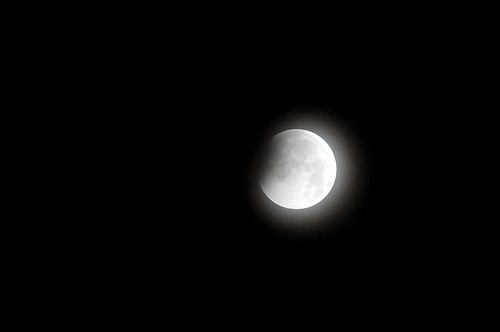
His birth was like the moon.
His return will be like the sun.
To keep up with each post this Advent season, visit the facebook page for There is a River and click “Like.” You can also receive each post delivered straight to your inbox by clicking here to subscribe by email.
by Christie Purifoy | Nov 28, 2011 | Advent, Poetry, Seasons, Waiting

In keeping with my “poem-each-Monday” tradition, here is a poem for you on this first Monday of Advent.
These lines come from T. S. Eliot’s Four Quartets. They remind me of this Advent paradox: in a wintery season of death and darkness we perceive birth and new life. Midwinter spring, indeed.
from “Little Gidding”
Midwinter spring is its own season
Sempiternal though sodden towards sundown,
Suspended in time, between pole and tropic.
When the short day is brightest, with frost and fire,
The brief sun flames the ice, on pond and ditches,
In windless cold that is the heart’s heat,
Reflecting in a watery mirror
A glare that is blindness in the early afternoon.
And glow more intense than blaze of branch, or brazier,
Stirs the dumb spirit: no wind, but Pentecostal fire
In the dark time of the year. Between melting and freezing
The soul’s sap quivers. There is no earth smell
Or smell of living thing. This is the spring time
But not in time’s covenant. Now the hedgerow
Is blanched for an hour with transitory blossom
Of snow, a bloom more sudden
Than that of summer, neither budding nor fading,
Not in the scheme of generation.
Where is the summer, the unimaginable
Zero summer?
– T. S. Eliot
by Christie Purifoy | Oct 28, 2011 | Chicago, Community, Faith, Florida, Seasons, Stories, Uncategorized
I believe in stories more than advice. In other words, I believe that a light is shined on our way forward, not when we finally hear the exact, right piece of advice, but when someone shares their story with us.
True stories contain all of the messy, untranslateable details of a life. Somehow, they also point us toward the maker of life.
I wish I could tell you how to live without the kind of community I described earlier this week. I wish I could tell you how to get it back. I even wish I could tell you that developing that kind of community in your own setting is the most important use of your time. But I can’t tell you these things.
If this whole Jesus-following-way-of-life is truly a relationship (as I’ve been hearing all my life) then we need to stop comparing our circumstances with everyone else’s. My marriage to Jonathan is fifteen-years-old (or fifteen-years-good), and it makes no sense for me to look at those still-awkward newlyweds and wonder why our lives are so different. Other than the fruits of the spirit, I’m not sure there are many things we can point to in order to say “that is a good Christian life” and “that is not.” At times Jesus walks us through joy and other times he walks us through trouble, but we can be confident in both that he has not and will not abandon us.
I lived in community for ten years, and it was good and it was painful, and I hope I haven’t said goodbye to that way of life forever. I could beat my head against my Bible wondering why my life no longer looks like that and how to get it back, or I can accept that when God empties our lives he also fills them up again. Not with the things we are missing, necessarily, but with himself.
In this world, we are wanderers. And that is not always a bad thing, not always a sin thing. We can wander quite a distance pursuing the good things of God’s kingdom on earth. Still, there’s little rest in wandering, and God knows we need rest. But where to find it?
God’s people “wandered over mountain and hill and forgot their own resting place” (Jeremiah 50:6).
Sometimes we need silence and emptiness, loneliness and barrenness in order to remember. We need winter.
The four walls of my suburban existence can feel like a prison, but they have been just the thing for feeling the heavy, holy pressure of God’s hand on me.
“You hem me in – behind and before; you have laid your hand upon me. Such knowledge is too wonderful for me, too lofty for me to attain.”
Psalm 139: 5-6
by Christie Purifoy | Oct 24, 2011 | Poetry, Seasons
For the past few days, I’ve been back in Chicago, remembering with my feet as I walk the familiar slate sidewalks.
If poems had mailing addresses, this one would surely be marked Chicago, the Southside.
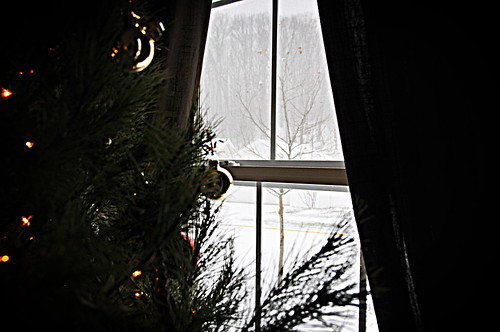
Winter hasn’t yet arrived, even in Chicago, but I’ve been reliving one particular winter memory. It was my first winter here, and the heavy skies were unburdening themselves of a record amount of snow. In early December, I sat at my writing desk trying to complete my first graduate seminar paper. Hunched close to my window, my Texas-bred eyes couldn’t stop wandering toward the snow-globe view.
Everything outside had been erased by the whiteness, even the people and the cars had disappeared. But then I saw a black parade slowly winding its way in front of my building. A hearse, a limousine, followed by a patient tail of black-flagged vehicles: I knew, without being told, that this was for Gwendolyn Brooks. Her death, on December 3, had been in all the papers and on every channel.
I can’t remember if the memorial was open to the public. I don’t think I would have made it to the university’s gothic chapel anyway, not through all that snow, not with a paper keeping me at my desk.
The chapel is beautiful, but it isn’t a poem. The slow slash of black in a washed-white world: that was a poem. I’m sure I could never fully capture what I saw in words, but there’s really no need. Gwendolyn Brooks had already done it.
Cynthia in the Snow
It SHUSHES
It hushes
The loudness in the road.
It flitter-twitters,
And laughs away from me.
It laughs a lovely whiteness,
And whitely whirls away,
To be
Some otherwhere
Still white as milk or shirts,
So beautiful it hurts.
– Gwendolyn Brooks
by Christie Purifoy | Aug 1, 2011 | Florida, Religion
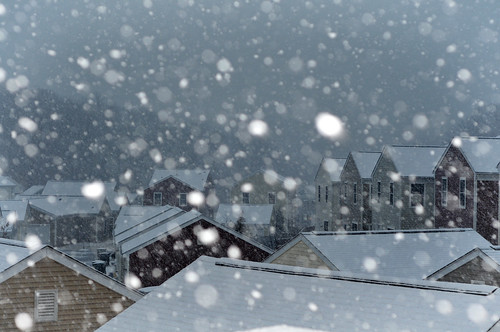
Understandably, winters in Chicago were long and hard. Still, I enjoyed them more than most of my friends and neighbors. I’ve always imagined that my Texas childhood created a snow deficit deep inside of me that no amount of Midwestern cold could fill up. As much as we all longed for spring come March, I was never sad, even then, to see snowflakes fall.
The hardest thing about winter for me was always the thaw. Those of you with experience living in frigid climates know what I’m talking about. The thaw is that period (maybe it comes once, maybe it comes and goes repeatedly, every winter is different) in which the sidewalks and streets are impassable. Snow has melted and refrozen until not even a polar bear could walk the ice safely. Or, layers of snow have turned to slush all the way through, and it’s impossible to move without icy meltwater pouring over the tops of my boots. Pushing a stroller through the muck and mess of a thaw? Absolutely impossible.
The hardest thing about winters in Chicago? Not being able to (safely) leave the house.
The hardest thing about summers in Florida? Not being able to (safely) leave the house.
Obviously, we’re no longer in danger of breaking our bones as we slip and slide on the sidewalks. But when my daughter asks at noon whether we can go for a bike ride, all I can think is “heat stroke.” It’s 95 degrees and very humid and I actually convince my kids to watch another half hour of tv rather than take them outside.
There are bright spots in both seasons. Here, swimming pools dot the landscape like weeds and as long as I’m willing to walk the gauntlet of sunscreen application (which always requires chasing the two-year-old around the house and listening to the seven-year-old whine that her face is white), we can enjoy being outside without too much pain.
In Chicago, the compensation came with sledding and snowman building. As long as I was willing to bundle up three children in snowsuits and long underwear, we could forget the discomfort of cold noses and tender fingers for an hour of fun.
In Chicago, I loved to sit directly on the warm radiator cover and watch snow fall past our third-story window. In Florida, I sit on the small sofa and watch that day’s thunderstorm pile up in the west. Seeing the palm fronds flatten in the wind and sensing the house go dark, I like to imagine that it’s cold outside. The reality feels more like getting hit in the face with solid swamp, but I keep the door shut and pretend. It’s very cozy.
More than cabin-fever and long hours spent indoors, these two seasons in these two places share a mood of longing. In Chicago, I yearned for warmth and color. In Florida, I want crisp air and sunshine that doesn’t burn like fire.
I’ve often felt guilty about giving in to this mood. As if desire is always an altogether bad thing, a temptation to ignore the good gifts right in front of us.
I think that is sometimes the case.
However, occasionally we only recognize the best things in life because we’ve longed for them and waited for them. Tulips in spring. The first day in fall when the humidity plunges.
The goal, I’ve decided, should not be some stay-in-the-moment mental trick we play on ourselves, but a more straightforward acceptance of goodness in the present and desire for something else. And why should these be mutually exclusive?
I love Florida’s daily summer thunderstorms. I love the wind, the dark clouds, and thunder rumbling all afternoon. But I am also eager for cooler temperatures and hours that can be spent outdoors. Summer, here, is about enjoying and longing.
And when the cooler days come, I’ll say goodbye to the thunderstorms with no regrets, knowing that I loved them in their time, but the thing I’ve really wanted, the thing I am now prepared to enjoy, has finally come.
Hope justifies longing.
“But hope that is seen is no hope at all. Who hopes for what he already has?” (Romans 8:24)

