by Christie Purifoy | Dec 11, 2012 | Advent, Home, Stories, Uncategorized
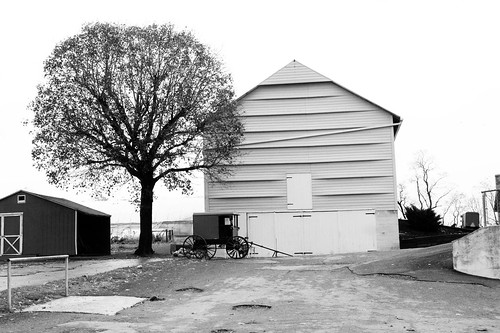
I drive around and keep hearing these words from Christina Rossetti’s Christmas poem: “in the bleak midwinter.” They seem to fit the landscape this time of year.
Bare trees. White barns. Grey silos. Black laundry flapping on the clothesline at every Amish farm.
I’m trying to figure out why I love it so much. Why does this place feel like home when the palm trees and turquoise water of a backyard-pool never did?
I love the melancholy, the shadowy, the bittersweet. Hot tea, dark chocolate, sad songs. Always have.
It may sound as if I love darkness, but I don’t actually think that’s the truth.
I love the light, but light always shows up best in a dark room. Candlelight. Starlight. The light of a full moon. It is as if we must have both light and darkness together, side by side, in order to glimpse the Story.
“In him was life, and that life was the light of all mankind. The light shines in the darkness, and the darkness has not overcome it” (John 1:4-5).
That is a very good story (and I love a good story most of all).
Explore the growing collection of Advent imagery here.
Click here to subscribe to There is a River and here to connect with There is a River on facebook.
by Christie Purifoy | Dec 6, 2012 | Advent, Uncategorized, Waiting

We are still waiting for snow.
We’ve seen flurries now and again, but the inches we’ve been promised have yet to materialize.
This sixty-degree day is mocking my hope. It’s hard to believe in snow when the sun is this warm. I’ve decided it will be easier if I stop thinking about it. If I stop hoping.
If snow will come when snow will come then what is the point of anticipation? What is the point of hopeful watching? If the end result will be the same (because snow will come when snow will come), then why not pass the time thinking of other things? Why not try to forget that I have new sleds hidden in the basement?
And yet, because this waiting for snow corresponds with Advent, I can’t quite accept that waiting is pointless. I wonder if our waiting does something. Could the end be different not simply because time has passed but because we have waited and watched with heavy, hopeful hearts?
It hurts to wait. Especially when we do not know how long our wait will last. When we have no idea when the end will come.
How long, Lord, how long?
And, of course, I’m writing about more than snow. I’m writing about snow, and spring, and babies, and degrees, and jobs, and weddings, and healing, and hope and peace and love.
How long, Lord, how long?
Waiting is like wind. It appears to be just nothing, but it can do so much. I don’t mean that it teaches us some lesson, though, I suppose that is sometimes true. I mean, rather, that the waiting itself shapes us, changes us, makes us ready in some hard to grasp way.
Snow is snow, but snow we have waited for …
Snow we have longed for …
Snow we have watched for … it is what snow was always meant to be. It is more itself because we have changed.
We now have eyes to see.
What does Advent look like to you? Click here for the Advent flickr group hosted by our own photographer, Kelli Campbell.
Want to keep up with each post this Advent? Find There is a River on facebook here. You can subscribe or sign up to receive each post by email here.
by Christie Purifoy | Nov 27, 2012 | Advent, Blog, Jesus, motherhood, Seasons, Uncategorized, Waiting
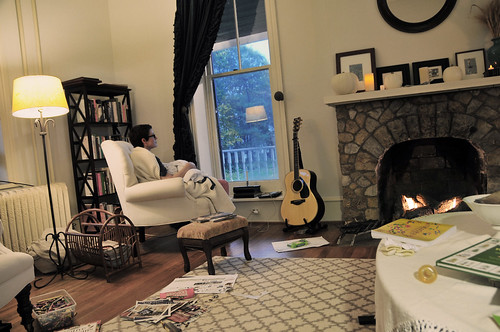
As I write this, we are waiting for snow. I can hear rain on the metal roof of the red barn, but I am straining my ears for quiet. When the rain turns to snow (as the forecast promises it will), quietness will spread the news.
Silence heralds the advent of snow.
There were so many silent years between the words of Malachi and those of Matthew. I imagine the silence building until those who strained their ears, like Simeon and Anna in the temple, could hear the silence speak: He is coming. Hold on. He is coming.
I want to be like Anna.
I want to pray him in with my waiting.
My own season of intense waiting may have ended (with an old Pennsylvania farmhouse and a new baby girl), but I need Jesus more than ever.
I need his presence because, apart from him, this home is just a pile of old bricks crushing us with endless to-dos. Apart from him, there is no hope for me as a mother (the best and hardest thing my firstborn taught me, and it’s a lesson I learn again with each child, is I do not have what it takes).
I desperately need him for today (to give meaning to my dishwashing and the endless picking up of toys), and I need him for tomorrow (because, apart from him, my life has no destination; what am I walking toward?).
And so, this month, I will pause in the midst of online shopping and tree decorating. I will put down the toy catalog and the cookie cutter (which, let’s be honest, will be a relief. I could write a book on the horrors of holiday baking for the child allergic to butter, wheat, and nuts).
I will turn my face towards darkness and watch for light.
I will listen to silence.
I will pray him in with my waiting.
“… come quickly to me, O God. You are my help and my deliverer; Lord, do not delay.”
(Psalm 70:5)
You can read the introduction to last year’s Advent series here.
Receive each Advent post in your email inbox by subscribing here. You can also keep up with the series on the There is a River facebook page. Click “like” here.
by Christie Purifoy | Apr 20, 2012 | allergies, healing, Jesus, Music, Seasons, Uncategorized, Waiting

Unless this is your first visit to my blog, you know that I’ve been in waiting mode almost since the day, two years ago, when we arrived in Florida. One of the very first posts I wrote was called On Waiting.
Two years ago, I didn’t know what I was waiting for. And, sometimes, waiting is like that. It is a heavy weight. An ache. A question: what now?
But God was present in the waiting. Every day there was water seeping from desert rocks. Food dropped, fully-prepared, on the desert floor.
Occasionally, I even spotted the cloud by day and the fire by night. Spring wildfire season in Florida meant that once we followed a narrow column of smoke the whole twenty-minute drive from our church to our house. Another evening, we followed a full moon made blood-red by reflected fire. That fiery moon hovered in the center of our ash-covered windshield for the long, long drive from a downtown theater to our home. Whoever said that metaphors aren’t as solidly real as flesh, blood, and bread? Those old Bible stories are still alive, you know.
God has been water and bread, fire and cloud for us. And, slowly, so slowly, he filled in the emptiness of waiting with vision. I still waited, but I could see something of what it was that I waited for. This waiting was less desperate but more impatient.
Even hopeful, expectant waiting is difficult. I have wearied of the waiting. I wearied of it long before I knew how heavy it would become.
This winter I got sick. Florida’s pollen season came early and fiercely, and my lungs failed. I spent weeks lying still beside my bedroom air-purifier focusing on each breath. On the worst day, the day that found me back on the doctor’s examining table desperate for new asthma drugs, I found out that I was pregnant. Such surprising, beautiful news, but it was hard to hold on to my belief in an unseen baby while my body tumbled down into an even darker hole. Now nausea and exhaustion kept me pressed into my pillow more tightly than even the asthma.
And I waited. For hope. For healing. For breath.
I waited for God to show up, and I expected fireworks. I imagined an end to my waiting something like a switch clicking from dark to light. When will he come, I wondered. Tomorrow? The next day? How long, Lord, how long?
This morning I sat in the lovely light of a college chapel for a presentation on lament. Lament like that of Psalm 13: “How long must I wrestle with my thoughts and day after day have sorrow in my heart?”
I’m in Michigan for a writer’s conference, and it feels strange and beautiful to be enjoying again the midwestern spring. Daffodils and tulips. Redbuds and soft, green grass. Unfortunately, the beauty also means that Florida’s pollen has followed me northward. In the busyness of travel I forgot to take my little, pink asthma pill. During my first day at the conference I could never quite escape the pain in my chest and the breathless anxiety that is like a sharp, metallic taste in my mouth. I remembered the pill this second day, and I could enjoy, a little more easily, the cool, wet wind and the rainy sidewalks plastered with petals.
One of the presenters in this session on lament, a songwriter, asked his audience of writers to sing. And, so, I found myself breathing out these words, my own tune-less voice supported by all the voices around me: “The One who gives me breath. He is my Shepherd. I shall never be in want. I shall never be in want.”
The One who gives me breath.
He is my Shepherd.
While I waited for fireworks, for the coming of God like thunder and lightning, my Shepherd slowly, almost imperceptibly, brought me from a sickbed to a chapel filled with the light of a midwestern spring. He did this so that I could know: He is the one who gives me breath. I shall never be in want.
Perhaps my waiting isn’t over, but I know that it is ending. One seed planted in darkness and emptiness is now a fully-formed child, prodding me from within. And I believe that this new life is not the only seed that God has planted in these waiting years.
The true end of my waiting will be, I think, like the coming of spring itself. Subtle. Slow. Until I find myself singing a God-given song and wonder, “When did this happen? How did I get here?”
“How long, Lord? … How long will you hide your face from me? … But I trust in your unfailing love; my heart rejoices in your salvation. I will sing the Lord’s praise, for he has been good to me.”
(Psalm 13)
by Christie Purifoy | Feb 28, 2012 | Florida, God's Love, Lent, Seasons, Waiting
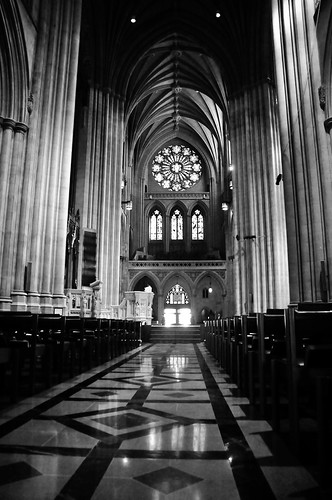
I live in Florida, but my inner calendar has been tuned by the north. In other words, no matter what I see outside my window, January means cold and snow and spring never shows up until after Easter. I suppose ten years living in Chicago did this, although I think it may go back even farther.
Growing up in Texas, I felt cheated by February heatwaves. I have always had an idealized version of the seasons; one more rooted in classic literature for children than in lived experience. Late winter meant sugar snow because I read Little House in the Big Woods no matter that late winter in Texas looks like fields full of bluebonnets.
In Chicago, Lent was appropriately dark, cold, and gray. A fitting backdrop for contemplating dust to dust. The right atmosphere for remembering the cross.
Last year, Lent in Florida surprised me with its very different rightness. The hot pink azaleas and vivid blue skies could not be reconciled with the grey smudges on our foreheads. They simply could not. But I decided that this was best. To practice Lent in such a place is to say, “I will not be distracted by youth or beauty. I will remember that death is ever present. I will not be seduced by sunshine and forget to pick up my cross.” How can we truly celebrate the resurrection power of God’s kingdom if we’ve forgotten how and why Jesus suffered?
Last year, I determined always to make an effort for Lent. It was necessary whether the fruit trees were blooming or not.
This year, I didn’t even make it to my church’s Ash Wednesday service. I was too tired. Too sick. Which says it all, I’m afraid, about the past few months of my life.
I thought about making an effort in some other way. What would I give up? Could I read through a special book of devotions? Make some goal for prayer or good works?
If only I weren’t so tired. If only my asthma would go away. If only I didn’t already feel crushed and weak. If only I didn’t already feel like dust, I might be able to make some effort to remember that I am dust.
Of course, If I had phrased it to myself just like that I might have realized sooner how foolish, how hopelessly circular my thinking had become.
Now I know that if Lent is about making some effort then the end result must always be gratitude that I need never make that effort.
With no effort on my part, I am loved.
With no effort on my part, I am redeemed.
Having made no choice, I might be led through a wintery, Lenten wilderness. Whether my calendar says it’s time for that or not.
Having done little but wait and rest, I will be led out again.
That in itself, I’ve learned, is a kind of discipline. God did tell his children, “It is a day of Sabbath rest for you, and you must deny yourselves” (Leviticus 23:32). Would he have put it like that if rest came easily and naturally?
What, then, is my Lenten discipline for 2012? Merely to rest in the shadow of the cross. And wait.
