by Christie Purifoy | Nov 14, 2011 | Faith, Poetry, prayer, Uncategorized
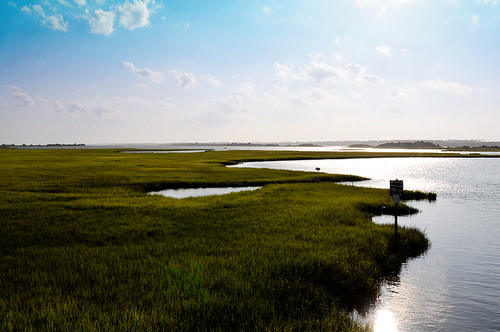
For you on this Monday: a sonnet from Irish farmer-turned-poet Patrick Kavanaugh.
I suppose there are those who might find heresy in this poem. “Pantheism,” they would say.
I don’t defend the idea. If God is everything and everything is God then what good is God, I wonder? And yet, I do not think that this is a heresy strong enough to deserve much disapproval (at least not today in the United States). We have silenced nature very effectively with our parking lots and our strip malls, our corporate ladders and our electronic shadow selves.
This poem reminds me to listen for the voice of God whispering all around.
I can’t prove that His is the voice you hear in water and wind. But, to borrow Kavanaugh’s words, some arguments aren’t meant to be proven.
Canal Bank Walk
Leafy-with-love banks and the green waters of the canal
Pouring redemption for me, that I do
The will of God, wallow in the habitual, the banal,
Grow with nature again as before I grew.
The bright stick trapped, the breeze adding a third
Party to the couple kissing on an old seat,
And a bird gathering materials for the nest for the Word
Eloquently new and abandoned to its delirious beat.
O unworn world enrapture me, encapture me in a web
Of fabulous grass and eternal voices by a beech,
Feed the gaping need of my senses, give me ad lib
To pray unselfconsciously with overflowing speech
For this soul needs to be honoured with a new dress woven
From green and blue things and arguments that cannot be proven.
– Patrick Kavanaugh
by Christie Purifoy | Nov 7, 2011 | Poetry, prayer, Seasons
This poem is well suited to November’s darker days.
The changing of the clocks seems like an example of humanity’s authority over its own environment, and yet it always reminds me just how out-of-our-control day and night, light and dark truly are. The days will grow shorter, no matter our efforts or anxieties. Nature will begin to die. We will too, come to that.
This poem suggests that embracing the inevitable (whether it be the changing of the seasons or death itself) need not be an act of despair. It can be an act of great trust.
Technically, I should call this a pastoral poem, but, to me, it always reads more like prayer.
Let Evening Come
Let the light of late afternoon
shine through chinks in the barn, moving
up the bales as the sun moves down.
Let the cricket take up chafing
as a woman takes up her needles
and her yarn. Let evening come.
Let dew collect on the hoe abandoned
in long grass. Let the stars appear
and the moon disclose her silver horn.
Let the fox go back to its sandy den.
Let the wind die down. Let the shed
go black inside. Let evening come.
To the bottle in the ditch, to the scoop
in the oats, to air in the lung
let evening come.
Let it come, as it will, and don’t
be afraid. God does not leave us
comfortless, so let evening come.
– Jane Kenyon
by Christie Purifoy | Oct 31, 2011 | Books, Chicago, Poetry

I didn’t discover the poetry of George Herbert until graduate school (my undergraduate education in literature had more than a few gaps, I’m afraid. This due, mostly, to my own indiosyncratic course selection criteria: what time is the class and who is the professor?).
Thankfully, I did find Herbert, and I still remember my shock that we could actually discuss such Christ-centered poetry around a University of Chicago seminar table. Who says there’s no Jesus in higher education? Though, to be honest, there’s a lot more of Freud in my dissertation than Jesus. A lot more. I blame Virginia Woolf for leading me astray.
However, with the job market in the humanities being what it is, I have a good deal of time for Herbert these days. And, my love for the modernists notwithstanding, that’s a very good thing.
Without further ado, a poem on rest (one I’ve recently been feeling the truth of deep in my bones):
The Pulley
When God at first made man,
Having a glass of blessings standing by,
“Let us” (said He) “pour on him all we can;
Let the world’s riches, which dispersed lie,
Contract into a span.”
So strength first made a way;
Then beauty flow’d, then wisdom, honor, pleasure;
When almost all was out, God made a stay,
Perceiving that alone of all his treasure
Rest in the bottom lay.
“For if I should” (said He)
“Bestow this jewel also on my creature,
He would adore my gifts instead of me,
And rest in nature, not the God of nature:
So both should losers be.
“Yet let him keep the rest,
But keep them with repining restlessness;
Let him be rich and weary, that at least,
If goodness lead him not, yet weariness
May toss him to my breast.”
– George Herbert
by Christie Purifoy | Oct 24, 2011 | Poetry, Seasons
For the past few days, I’ve been back in Chicago, remembering with my feet as I walk the familiar slate sidewalks.
If poems had mailing addresses, this one would surely be marked Chicago, the Southside.
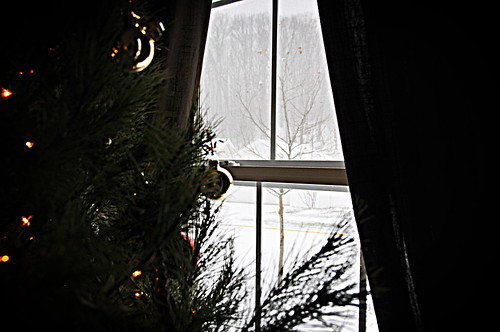
Winter hasn’t yet arrived, even in Chicago, but I’ve been reliving one particular winter memory. It was my first winter here, and the heavy skies were unburdening themselves of a record amount of snow. In early December, I sat at my writing desk trying to complete my first graduate seminar paper. Hunched close to my window, my Texas-bred eyes couldn’t stop wandering toward the snow-globe view.
Everything outside had been erased by the whiteness, even the people and the cars had disappeared. But then I saw a black parade slowly winding its way in front of my building. A hearse, a limousine, followed by a patient tail of black-flagged vehicles: I knew, without being told, that this was for Gwendolyn Brooks. Her death, on December 3, had been in all the papers and on every channel.
I can’t remember if the memorial was open to the public. I don’t think I would have made it to the university’s gothic chapel anyway, not through all that snow, not with a paper keeping me at my desk.
The chapel is beautiful, but it isn’t a poem. The slow slash of black in a washed-white world: that was a poem. I’m sure I could never fully capture what I saw in words, but there’s really no need. Gwendolyn Brooks had already done it.
Cynthia in the Snow
It SHUSHES
It hushes
The loudness in the road.
It flitter-twitters,
And laughs away from me.
It laughs a lovely whiteness,
And whitely whirls away,
To be
Some otherwhere
Still white as milk or shirts,
So beautiful it hurts.
– Gwendolyn Brooks
by Christie Purifoy | Oct 17, 2011 | Art, Books, Poetry
In my ideal Christian bookstore, the Jesus knick-knacks and the Amish romances would be pushed to a far corner. The coveted window display space would be filled with books like the collected poems of Czeslaw Milosz.
I guess if I’m being perfectly honest, my ideal Christian bookstore would look exactly like my favorite independent bookstore in Chicago’s Hyde Park neighborhood, with a few more Bibles. As Madeleine L’Engle writes in Walking On Water, “Christian art? Art is art; painting is painting; music is music; a story is a story. If it’s bad art, it’s bad religion, no matter how pious the subject.”
Even if you think that L’Engle pushes the point too far, I imagine that many of you, having picked up a copy of Milosz’s New and Collected Poems (1931-2001), would agree that this is a writer Christians should be reading. A believer and a Nobel Prize winner, Milosz never turned his face away from the darkness of twentieth-century history. Yet he did this without losing his grip on hope and belief. A light shining in darkness. I think that may be my definition of Christian art.
Rays of Dazzling Light
Light off metal shaken,
Lucid dew of heaven,
Bless each and every one
To whom the earth is given.
Its essence was always hidden
Behind a distant curtain.
We chased it all our lives
Bidden and unbidden.
Knowing the hunt would end,
That then what had been rent
Would be at last made whole:
Poor body and the soul.
– Czeslaw Milosz
