by Christie Purifoy | Dec 6, 2011 | Advent, Jesus, Scripture, Waiting
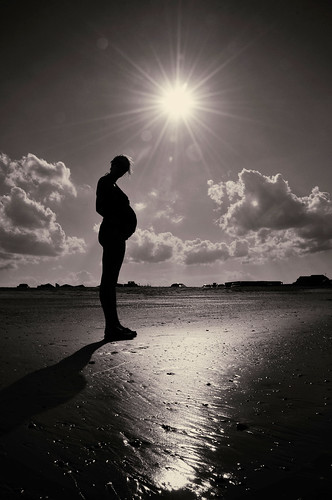
Living in a one-hundred-year-old apartment in the city, we took our baths in a narrow, enameled tub. Back then, I found the idea of a jetted, whirlpool bathtub very appealing. I live in suburbia now, and I have just such a tub. Alas, the reality is less exciting than the fantasy.
I think I tried using the jets once. As it turns out, I don’t much like soaking in bubbles with the sound of a motor in my ears. Now the jets only get turned on when the big kids want to terrify the two-year-old during bathtime.
Even worse, without an apartment-building-sized boiler, we don’t actually have enough hot water to fill this fancy whirlpool bath to the top. I’ve learned the hard way to open only the hot water tap and not to let it run past halfway, lest I find myself with a tub full of lukewarm water.
Still, I do occasionally indulge (minus the jets and with the tub less than full). Recently, my soak was disturbed by the shrieks of my arguing children. I sank down beneath the water hoping to block out the noise and was surprised by the enveloping silence.
Immediately, I was a kid again. At what other stage of life do you spend so much time going pruney beneath the bathwater or shutting out the sounds of Marco-Polo cries at the swimming pool?
I’d forgotten how loud this kind of watery silence actually is. There is a whole other world in this silence: the rush of blood, the wheeze of each breath. It is a noisy world within a world, though it is generally unnoticed, unheard.
I typically imagine silence to be a kind of emptiness. A kind of nothingness.
The gap between Old and New Testaments suggests that God was silent for many, many years before the birth of his son.
I wonder what this silence signified. Emptiness? Distance? Or, could it have been, a world within a world?
When the infant Jesus was presented at the Temple, there were two waiting for him. Two, prepared to recognize and honor him: Simeon and Anna.
In these two we glimpse the truth. God’s silence weighed so heavy on them that they knew he was neither distant nor inactive. They knew their Christ was coming.
One day, he arrives. The silence erupts. The angels sing.
On this day, many can see what had always been there unnoticed and unheard. Songs of joy and prayers of thanksgiving are lifted to the heavens over one tiny head.
But Simeon and Anna are not surprised. They have long been listening to the sound of blood pumping and breath rising. They know that God’s silence is anything but empty.
by Christie Purifoy | Dec 3, 2011 | Advent

O come, O come, Emmanuel
And ransom captive Israel
That mourns in lonely exile here
Until the Son of God appear
Rejoice! Rejoice! Emmanuel
Shall come to thee, O Israel.
by Christie Purifoy | Nov 30, 2011 | Advent, Faith, God's promises, Jesus, Scripture, Waiting

The Bible is an often cacophonous, centuries-long conversation with God about the things of God, but some of its most powerful voices have spoken to us out of darkness.
There is Job, who understood that God himself had “blocked” his way and “shrouded” his paths “in darkness” (Job 19:8).
There is Jeremiah, lifelong witness to unimaginable chaos, suffering, and loss.
Both stared into the darkness of their lives, darkness willed by the God they faithfully served, and saw … something good. But also something so mysterious they could not name it.
God spoke to Job from the darkness of a storm, and Job received wisdom, like a spark of light. “I know that you can do all things; no plan of yours can be thwarted,” Job responded. “Surely I spoke of things I did not understand, things too wonderful for me to know” (Job 42: 2,3).
With the sound of weeping in his ears, Jeremiah received a glorious yet inexplicable vision: “The Lord will create a new thing on earth – a woman will surround a man” (Jeremiah 31: 22).
In darkness, they were given Light.
And we who live on the other side of the mystery, we who are citizens of a kingdom Job and Jeremiah could only dream of, who are we to despair? Who are we to lose hope?
We, too, are promise-bearers. For, we know: He will come again.
“And we have the word of the prophets made more certain, and you will do well to pay attention to it, as to a light shining in a dark place, until the day dawns and the morning star rises in your hearts.”
2 Peter 1:19
To keep up with each post this Advent season, visit the facebook page for There is a River and click “Like.” You can also receive each post delivered straight to your inbox by clicking here to subscribe by email.
by Christie Purifoy | Nov 28, 2011 | Advent, Poetry, Seasons, Waiting
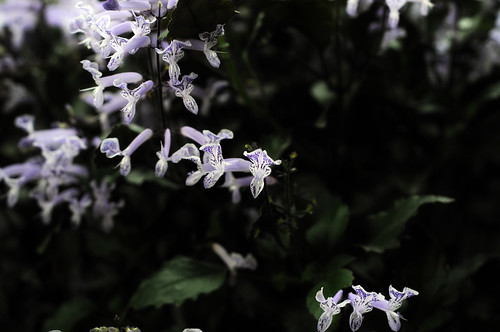
In keeping with my “poem-each-Monday” tradition, here is a poem for you on this first Monday of Advent.
These lines come from T. S. Eliot’s Four Quartets. They remind me of this Advent paradox: in a wintery season of death and darkness we perceive birth and new life. Midwinter spring, indeed.
from “Little Gidding”
Midwinter spring is its own season
Sempiternal though sodden towards sundown,
Suspended in time, between pole and tropic.
When the short day is brightest, with frost and fire,
The brief sun flames the ice, on pond and ditches,
In windless cold that is the heart’s heat,
Reflecting in a watery mirror
A glare that is blindness in the early afternoon.
And glow more intense than blaze of branch, or brazier,
Stirs the dumb spirit: no wind, but Pentecostal fire
In the dark time of the year. Between melting and freezing
The soul’s sap quivers. There is no earth smell
Or smell of living thing. This is the spring time
But not in time’s covenant. Now the hedgerow
Is blanched for an hour with transitory blossom
Of snow, a bloom more sudden
Than that of summer, neither budding nor fading,
Not in the scheme of generation.
Where is the summer, the unimaginable
Zero summer?
– T. S. Eliot
by Christie Purifoy | Nov 16, 2011 | Florida, God's Love, Home, Seasons
My children make lists for Santa (yes, already), and I peer over their shoulders considering the annual dilemma. Which is better, to receive just what you have asked for or to be surprised with the lovely yet utterly unexpected? In other words, the castle Lego set he spied at the big-box store or the box of fairytale Lego figures that I think will inspire more creative play? The book she read at her friend’s house and loved, or the book she’s never heard of that I’m sure she’ll enjoy?
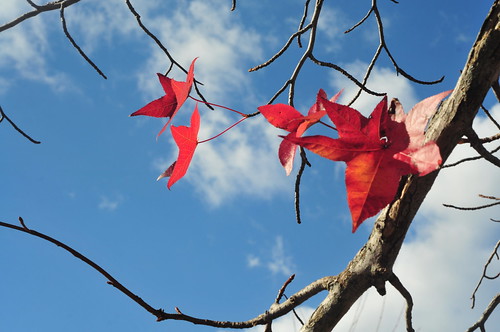
It’s a question I wrestle with particularly during this time of year. Autumn. A season when I long for predictable gifts: falling leaves, cold blue skies, and crisp apples hand-picked by my children.
But these are not the gifts given to me. Instead, as I write this, I can see from my window hot pink camellia blossoms and pale orange tangerines. God, don’t you know that I’m not really a hot-pink kind of girl? Can I exchange the showy flower for something a little more subtle, leaves crackling underfoot, perhaps?
It would be too easy to write that these, tropical flowers and citrus fruits, are the true gifts, and I just need to learn to appreciate them. Who am I to criticize the good things God gives? Who am I to find fault with a creation that is undeniably beautiful and sweet?
And yet … as good as tangerines may be, they do not feel like home to me. Some may taste a personal love note from God in the taste of a just-picked tangerine, but I taste nothing so personal. Good, yes, but not exactly personal.
Still, I can say thank you for the tangerine, and I can mean it. Thank you, God, for speaking a thousand different languages of beauty. Tropical. Desert. Aquatic. Forest. Prairie. Mountain. All good.
Thank you, too, for making me uniquely me. It may look as if I’m hard-to-please. I prefer to think that I am hungry for the love notes that are mine especially. It isn’t that I deserve them, or that I can’t live well without them. It’s simply that I’ve tasted those honey words before, and I trust that there is more, much more.
“… with honey from the rock I would satisfy you.” Psalm 81:16
I remember the sweet taste of things I love best and know that I have tasted God’s goodness. I could spend the rest of my life in the shadow of citrus trees and camellia shrubs, but every day would be drawing me closer to the source of all beauty. Every day would be bringing me towards the love that speaks my language. The love that knows my name.
