by Christie Purifoy | Jun 22, 2012 | Family, God's Love, grief, motherhood, Uncategorized

Sissie and me, not long after our first shared "birth" day.
For fifteen years we celebrated our birthdays together.
Sometimes they were long-distance celebrations. Cards and phone calls. Sometimes a room full of people sang “Happy Birthday” to the two of us. Those years, we shared cakes and posed together for pictures. She entertained my friends with elaborate (and messy) party games.
She was our aunt, but we called her Sissie. I used to think the reason our relationship with her was special was because she had no children of her own. I’m sure now that it was really she who was special. I think she would have loved us that much even if she’d had a house full of her own kids.
Three days after my fifteenth birthday, she died on a long, straight stretch of country road. Twenty years ago.
Here’s the thing about losing someone you love (something I imagine most of you already know): it doesn’t hurt less, just differently. The pain doesn’t go away, but you do become accustomed to it.
Also, this: it grows.
Loss is not a one-time event. It reveals itself over time, becoming bigger and more unwieldy with each missed birthday, wedding, graduation, child’s birth.
I still enjoyed my birthdays after 15, it’s just that they felt lopsided. Too much me. Someone else always missing.
Thirteen unshared birthdays.
Until I turned 29. That day my son was born.

Me and Thaddeus. Our first birthday together.
This Saturday, we share our sixth birthday together.
I will celebrate my 35th birthday with a gluten-free, dairy-free cake. It will be decorated with Hot Wheels. I love butter, and I do not care for Hot Wheels, but I’m finally old enough to wonder whether Sissie really wanted to celebrate her birthday by orchestrating games of Chubby Bunny for twenty-two six-year-olds.
It’s not the wanting that matters (because, if I’m honest, I want a cake full of butter and wheat, I want a party attended by adults, and I want another shared birthday with Sissie). It’s the love that matters most. In this case, love looks like celebrating 35 with a Hot Wheels cake. Love means no time alone with my husband, just a date to see the latest Pixar movie with a six-year-old boy.
Small things that give me just a glimpse of a much, much bigger love.
Because love is a God who will one day restore all that has been lost (no matter how big that loss has become).
And love is a God who is always, every day, giving new gifts.

by Christie Purifoy | Apr 6, 2012 | Faith, Family, God's Love, God's promises, grief, Jesus, Lent, motherhood, Uncategorized
I thought it would be hard to fit Good Friday into Spring Break. I thought it would be difficult to clear space for the cross in a week devoted to beach, pool, and mother-daughter shopping.
I was wrong.
In the car, on our way to the dollhouse store, her voice pipes up from the back seat. It’s hard to hear, the radio too loud, but I know she’s just said something about Daniel. I want her to stop talking. I can’t bear to hear any more about Daniel.
“That’s where Daniel lived.”
“Daniel is gone now.”
“Daniel is the first kid my age to die.”
Then she repeats the words I’ve heard so many times these past few weeks: “I wish I knew what happened.”
My daughter wants to understand how her second-grade classmate died. She wants to know how his little brother died. And how his mother died. We’ve talked about it a lot, but when it comes to the details, I’ve been vague. I’ve spoken of mental illness and accidents. I’ve never spoken the word murder. I can’t bear for her to know how dark the darkness really is.
It’s amazing, really, that she doesn’t know. With all the television cameras camped in front of her school, the grief counselors gathering the children into circles on the floor, the adults whispering at the bus stop, and me, trying to turn the tv off, the radio off, whenever she walked into the room, it’s a wonder that we managed to protect her from the full story. Because, of course, the full story only leads to an unanswerable question: why?
Why did this happen to these beautiful boys? God, why did you let this happen?
The small voice from the backseat says, “Daniel is in the ground now.” With these words, I find my voice again, and I tell her what I believe.
I tell her about Good Friday. I share the word gospel, and I explain that it is so much bigger, so much more beautiful than I understood when I was her age.
When I was a child, growing up in the church, I thought the gospel was this: “I am a sinner so Jesus died and rose again to reconcile me to God. Now I can have a relationship with God.” But I only understood a small part of the story.
My personal salvation is precious to me, but it is only one, small part of the Easter story. When I face evil, like the darkness which led to Daniel’s death, my personal salvation starts to look small. Insufficient. Sometimes, I even dare to whisper this dreadful doubt: “Do I want to be in relationship with a God who allows such things?”
Confronted by the brokenness of our world, I want more … so much more.
On Good Friday, God gave more. He entered history at one, specific moment and he bore on that cross all the brokenness which came before and all the brokenness that comes after. Including Daniel’s murder.
When God’s own son, Israel’s righteous King, chose to suffer and die he unleashed rivers of justice and peace that will one day flood all of creation. This is a kingdom flood. A flood of living water. A flood to make all that is broken whole again.
When Jesus spoke his final words, he meant not only that his ministry on earth was complete, he meant that death, sin, and all the brokenness of creation were ended.
It is finished.
Can we trust him when evil continues to rear its head? Should we turn to him when our questions push us towards despair?
We know that God gave his own son to suffer and die. We know that God did not abandon his son to the grave. I am convinced that he has not abandoned Daniel. He will not abandon me.
He has not abandoned his creation. He is making it new.
Sometimes we see only a trickling fountain. Sometimes we glimpse the roaring river, but we who have pledged ourselves to this King have been given living water.
For now we share that water with our thirsty neighbors, and we look forward to the day promised each Easter, the day when there will be no more desert. No more thirst.
“Of the greatness of his government and peace there will be no end. He will reign on David’s throne and over his kingdom, establishing and upholding it with justice and righteousness from that time on and forever.”
Isaiah 9:7
Shalom.

(photo by yours truly)
by Christie Purifoy | Jan 19, 2012 | Faith, Jesus
Wisdom is a treasure, a precious cargo worth seeking, but it can also feel like a heavy weight threatening to sink our ship.
Through wisdom we know that our days on this earth are brief. Like a whisper of mist. Like a flower that blooms and fades. We are little more than grass and flowers, and we know that “grass withers and the flowers fall” (Isaiah 40:8).
Through wisdom, we do indeed learn “to number our days” (Psalm 90:12).
How, then, do we hold on to wisdom’s treasure without sinking under its weight? How do we keep our spirits from tipping over into despair? “For with much wisdom comes much sorrow; the more knowledge, the more grief” (Ecclesiastes 1:18).
The voice of pragmatism and reason would likely advise balance. Seek wisdom but not too much. In other words, don’t overdo it!
Yet, there is nothing balanced or reasonable about following Jesus. He is a lion and a lamb, not some creature halfway between the two.
The best way may be the utterly reckless way. Pursue wisdom with everything you have. Hold tight to it and weep. Feel the grief of that knowledge. For here is another paradox: there is laughter in these tears. Lady Wisdom “can laugh at the days to come” (Proverbs 31:25).
This is the laughter of children, the laughter of innocence.
To be like Jesus is to be utterly wise and thoroughly innocent, a serpent and a dove.
To be wise and innocent is to feel grief and joy that haven’t been dulled by fear. It is the wide-awake life he promised us.
“Awake, my soul!”
Psalm 57:8

by Christie Purifoy | Nov 10, 2011 | allergies, Community, Faith, Family, Food, God's Love, grief, healing, Jesus, motherhood

On Friday, our weekly pizza-and-a-movie night had to be postponed (and, yes, for those of you wondering, I make two: one deliciously normal for four of us, one dairy-free, wheat-free and “pizza” in name only for the middle child).
This middle child, our accident-prone five-year-old, had to be taken to the emergency room after a fall onto the cement floor of our garage. He came home late that same night happy to show off his new plastic dinosaur and the half-dozen staples on the back of his head.
I still remember, years ago, the preschool teacher who told me that if any child was going to fall into a puddle or trip on the curb it would be my son. Always. This has never stopped being true.
Twenty-four hours later, three of us kneel to receive communion. We prepare to remember death and taste resurrected life while the boy so recently knitted back together stands behind us. The boy who knows what death tastes like better than any of us. He does not yet receive the elements, but he is always given a short blessing, a gentle hand on his head.
Our servers are an elderly couple unfamiliar to me. They must be Sunday-morning regulars moonlighting at our Saturday-evening service. The husband places his hand on my son’s head and leans in close. He prays and prays until it seems that the attention of a whole room has condensed and fixed itself on this prayer for one small boy. I don’t remember a communion blessing that ever continued so long.
It is long enough for this memory: I am seven-months pregnant with my miracle baby, my-sewn-in-tears-and-reaped-in-joy son. I am filled up with a baby and with fear. Having waited so long for him, I am sure that this gift cannot be given with no strings attached. There must be some price, in pain, that I must pay. Until someone touches my own head and prays for me, and I see … well, I hardly know what I see, but it is as if my unborn son and his maker are alone together. Then I understand that I have only a peripheral role in the relationship between them, and I see that my love is small and weak compared with the love God has for the child he’s made.
Kneeling at the communion rail, I can see that the young couple next to me are also watching my son and the gray-haired man. I can see tears in her eyes and feel them in my own, and I know that this, this, is what it means to live in a beloved community. We have been so well-loved by God that our hearts break for how he loves everyone around us. We are loved, and we are loving, and our hands touching broken heads and fearful hearts are the hands of Jesus, always.
And the heavy burden of love that I carry for my son is shared. It is not, has never been, mine alone. Of course, my husband shares it, the firstborn (who runs to her room weeping as the car leaves for the emergency room) shares it, but Jesus also shares it and his beautiful church shares it.
We are a beloved community.
by Christie Purifoy | Nov 7, 2011 | Poetry, prayer, Seasons
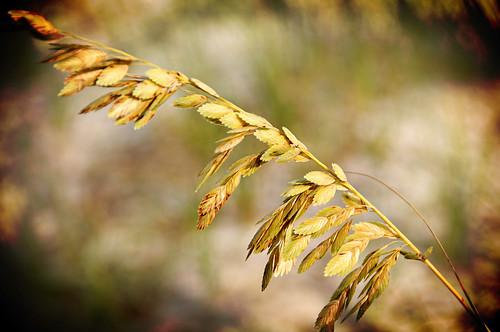
This poem is well suited to November’s darker days.
The changing of the clocks seems like an example of humanity’s authority over its own environment, and yet it always reminds me just how out-of-our-control day and night, light and dark truly are. The days will grow shorter, no matter our efforts or anxieties. Nature will begin to die. We will too, come to that.
This poem suggests that embracing the inevitable (whether it be the changing of the seasons or death itself) need not be an act of despair. It can be an act of great trust.
Technically, I should call this a pastoral poem, but, to me, it always reads more like prayer.
Let Evening Come
Let the light of late afternoon
shine through chinks in the barn, moving
up the bales as the sun moves down.
Let the cricket take up chafing
as a woman takes up her needles
and her yarn. Let evening come.
Let dew collect on the hoe abandoned
in long grass. Let the stars appear
and the moon disclose her silver horn.
Let the fox go back to its sandy den.
Let the wind die down. Let the shed
go black inside. Let evening come.
To the bottle in the ditch, to the scoop
in the oats, to air in the lung
let evening come.
Let it come, as it will, and don’t
be afraid. God does not leave us
comfortless, so let evening come.
– Jane Kenyon

