
How To Swim in Symbolic Waters
In ancient times, the sea was the home of Chaos.
I could write that the sea symbolized chaos, but that word symbol is too easily brushed aside. As if symbols are merely tame bits of literary frippery with no power to unleash the deepest truths of our lives. Like opening the floodgates.
To the sea.
For these ancients, the sea was unfathomable. The sea bedded monsters. The sea could surge forth, at any time, and swallow up land, homes, lives.
Death, darkness, oblivion, terror. This was the sea.

And if you love beach vacations and find it hard to understand how the play of light on dancing waves could ever have been a harbinger of doom, then you will read the twenty-first chapter of the book of Revelation with surprise. And disappointment.
Then I saw “a new heaven and a new earth,” for the first heaven and the first earth had passed away, and there was no longer any sea. (Revelation 21:1)
But if you are like me, you will sigh with longing.
If you are like me, the mere act of sifting through an overfull kitchen drawer for a thermometer hiding somewhere in its depths while the milk you had intended to turn into yogurt boils away on the stove is all it takes for Chaos to begin seeping in.
A moment later and the failed yogurt, the waste of good milk, the scorched pot and the murky kitchen drawer have caught you in their surge. One glance around and you are lost in an ocean of legos and marbles and bits of paper from the morning’s craft and a sticky puddle you cannot explain.
Now you are drowning because it is so humid and your kitchen is a furnace and the baby, the beautiful curly-haired baby, abandoned the slip’n slide after five minutes and is now tracking wet grass and clumps of mud from kitchen to dining room to entryway rug.
One day there will be no sea.
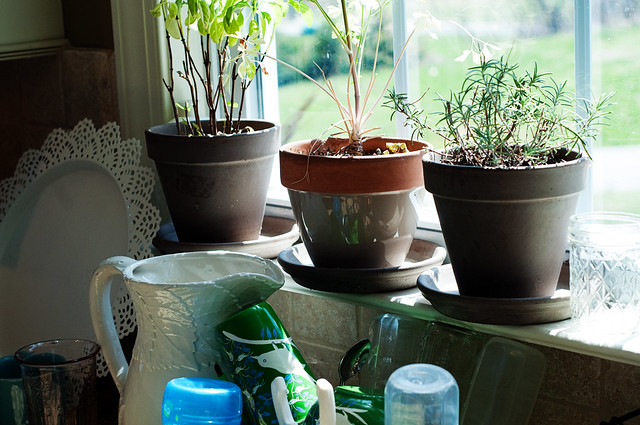
Yes, the sea is a symbol and my kitchen drawer is a symbol and whoever told you a symbol isn’t real? Whoever said it was not possible to drown in symbolic waters?
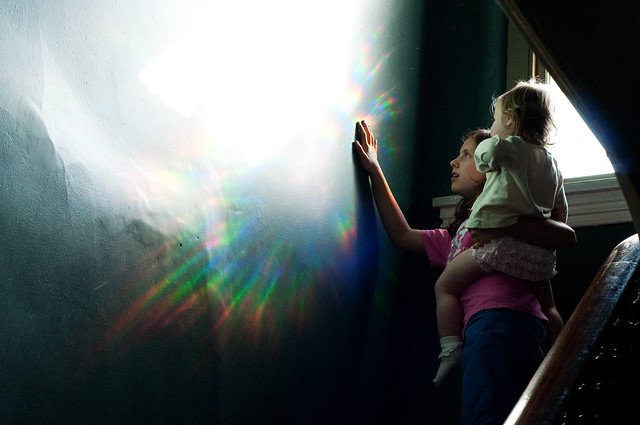
But if it is possible to drown, it must also be possible to swim. It must also be possible to open your eyes and observe the play of light on dancing waves.
To stand before the unknown and the unmanageable and discover, not the hiding place of terror, but the birthplace of beauty.
***
Reunion Days
I’ve written about my extended family before.
These are almost always stories of absence. The cousins we have yet to meet. The grandparents we too rarely hold. Family, for us, is always too much or too little.
I am a foreigner to my own family,
a stranger to my own mother’s children.
(Psalm 69:8).
Our lives are stretched across too many time zones. My father has always said it is a good thing our country is not any larger because then we would only live farther apart. But with one sister’s imminent move to Hawaii, our country has suddenly grown much larger. And we will, indeed, live farther apart.
But summer days are reunion days, and through some miracle of spirit and frequent flier miles, we came together.
They say absence makes the heart grow fonder, and I have found this to be true. But now I know that absence grows other good fruit. Because the holes in our lives where family might be do not stay empty. These gaps and fissures turn out to be fertile ground for things like hospitality and community. Friendship and adventure. Without family to lean on, we become needy, but these needs are always met.
We come together and discover that we do not have less but so much more. We have family, and we have friends. We have family, and we have neighbors. We have family, and we have our communities. We have family, and we have life in abundance.
We have more.
May your deeds be shown to your servants,
your splendor to their children.
(Psalm 90:16)

Grief in the Garden
We have quite successfully banished grief from our lives.
Dying proceeds in hospitals. It leaves no lingering trace in the pristine spaces of our homes.
Death is sometimes marked in an old-fashioned way. We do occasionally carve the same old stones. Though the ancient words requiescat in pace have been abbreviated and largely limited to Halloween décor.
But then we follow the trail of job offers and changes of scene until the grave stones that matter, the ones we still see with our mind’s eye, lie miles away. We cannot bring flowers. We cannot bring our children and tell them stories of the one we knew and loved.
But somehow grief still finds us. It winds its way in on unexpected paths. And in unexpected places.
For instance, the garden.
An old tree falls, and we are surprised, embarrassed even, by our tears.
We learn practical gardening techniques, and give them misleadingly neutral names like layered gardening or four seasons gardening. Now, we cheerfully interplant our tulips and daffodils with shallow-rooted perennials. See! What fun! You and I need no longer be assaulted by the dying bulb foliage. Death is always camouflaged by the next blooming plant.
Always there is the next thing. We need never look back. Daffodils! Then lilac! Then azaleas! Then roses! Now hydrangeas! And daylilies! And late-summer dahlias!
There is no need to mourn the passing of the daffodils.
But if the gaps still find you … If the empty space in your flowerbed haunts your sleep even in the midst of summer’s blooming bounty … well, the horticulturists can help.
They have tinkered and fiddled (plotted and potted), and now you can purchase the solution to your sorrow.
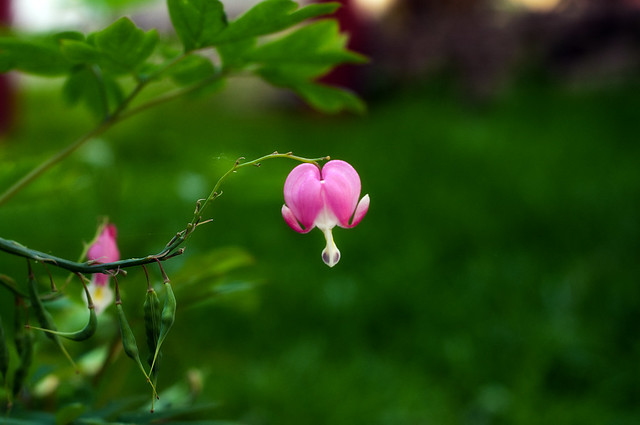
Every plant now has its reblooming variety.
Reblooming lilac. Reblooming azaleas. Reblooming roses. Reblooming daylilies.
Dry your eyes. Take up your nursery catalog. Look for words like boomerang and knock-out.
Because even in the garden we need never say goodbye. We need never sit in quietness waiting for the return of every beautiful thing we have loved and lost.
*
*