
These Farmhouse Bookshelves
I’m afraid it’s been too long since I wrote anything new for this, my occasional series of Saturday book recommendations.
Truthfully, I’ve been reading up a storm, but it all felt so weirdly personal. Either I was reading very particular books intended to fuel my own book writing, or I was escaping into novels that seemed either too lightweight or too well known (or both!) to be worth mentioning.
But then I realized something. The only thing really holding me back from writing another addition to this series was pride. Pride because I didn’t feel I’d been reading anything earth-shattering enough, or esoteric enough, or special enough. As if I share book recommendations in this space in order to cultivate a certain self-image.
But pride is so boring. My own pride, especially. So, I’m kicking it aside and telling you, honestly, what I’ve been reading. It’s an oddball pile of books, but I think you might just find something you like. I know I did.
(P.S. These posts contain affiliate links. Find all my book recommendations here.)

I first read A Country Year: Living the Questions
The Wisdom of Stability: Rooting Faith in a Mobile Culture
My love for picture books is well documented in this space. I’ve told you before that I think we push chapter books too often and too early. Quality picture books are not only works of art, but they tend to aim at a higher level of storytelling and language. All the Places to Love
This one was recommended to me by another friend. It isn’t new, but I’d never encountered it until this year. The art feels slightly dated, but that is a small, small quibble with a beautiful book. This one makes me cry. Every time. It isn’t a sad story; it’s a lovely story. Reading this book you realize just how heart-breakingly beautiful are our small lives and small homes and ordinary days. This book is for anyone who has ever loved some special place, and, especially, for anyone who has ever shared that love of place with another.
I’m reading a lot of heavy, heady stuff right now, but if my own book is inspired by anything I hope it is inspired by this picture book.
Anyone ready for a big, fat, fun novel? Liane Moriarty’s novels always fit the bill. I’ve told you before how much I loved What Alice Forgot

This isn’t high-art by any stretch of the imagination, but I think Moriarty is a genius.
Tell me, what’s sitting on your shelf these days?
Some Beginnings Are Like This
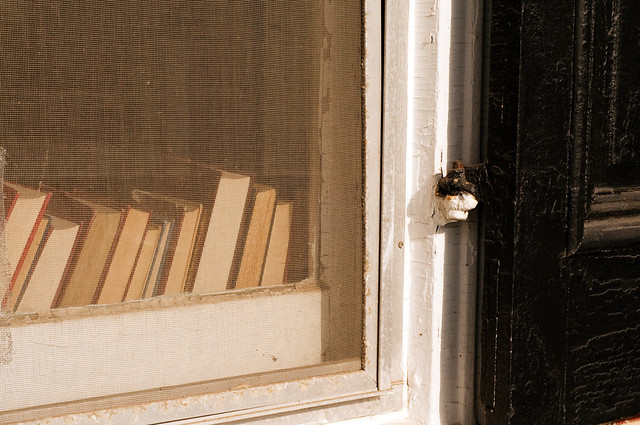
Some beginnings are brown. There is nothing fresh or new about them.
Take autumn, for instance. In my mind, it begins with the first gilded edge on the giant magnolia tree. In my mind, it begins with the weeping willow’s coppery sheen.
Apparently, my mind is wrong. Has been wrong for all these years. Because autumn is beginning, and it is brown.
It is brown where the seed pods rattle in the flowerbeds. It is brown where the first leaves have fallen and turned crispy. They were overeager. They could not wait for their orange or red transformation. The reward for their impatience is to be mistaken for dull oak leaves rather than the vivid maples they are.
*
*
Some have asked how the book writing is progressing. I tell them all the same thing. I tell them I have written a lot of words, and I despise every one of them.
The response to my honesty has been, universally, a wide-eyed look of concern. I appreciate the concern. It draws out the nurturer in me. I want to pat each friend on the hand, I want to pat myself on the hand, and say, “There, there. I think it will be okay. It is only that some beginnings are brown.”
*
*
Beginnings rarely make a clean break with endings. The two are usually muddled together.
It can all be a bit discouraging without eyes to see. I am praying for eyes to see.
Forget the former things; do not dwell on the past. See, I am doing a new thing! Now it springs up; do you not perceive it? (Isaiah 43:18-19)
Do not dwell on the past.
What relief there is in those words. How light is their burden.
Light enough that we are able to keep walking. Perhaps even with a spring in our step, which, as you know, is a sign of anticipation. We know we are closer.
Every day brings us closer to that place where the water runs fast and clear.
*
*
The Puzzle of Prayer
I tend to think of seasons as four separate compartments to the year. Like nesting boxes in graduated sizes.
I forget that they are more like the Lego blocks in my son’s latest creation. Interlocking and overlapping. Difficult to pry apart.
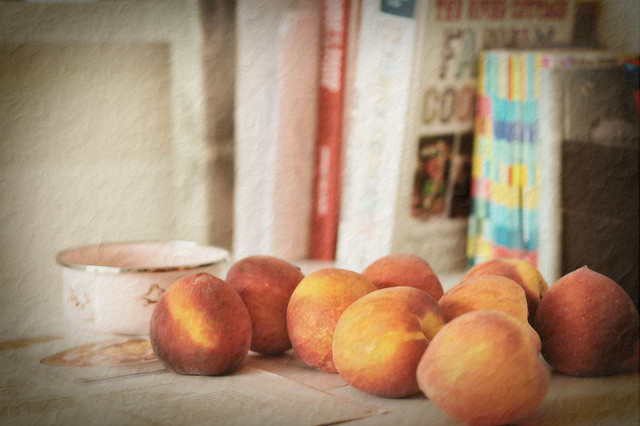
Recently, I stood over the sink and ate a peach. It tasted perfectly peachy, and the juice ran in rivers down my right arm. Like a sunset, melting.
I held the fading summer sun in my hand, and watched gray clouds hauling themselves briskly across an autumn sky. Yellow leaves somersaulted across the grass.
*
*
I also tend to think of prayer in separate compartments. Like the paper trays I keep on my desk.
There is the inbox and the outbox. There is a spot marked urgent and one for the less pressing overflow.
If I think long enough, I can assign each prayer a neat label. Answered. Unanswered. Ongoing. Expires in five days. The paper trail of prayer is clearly defined. Requests move in one direction. Responses in the other.
But of course prayer is nothing like my paper tray. Of course, of course, I tell myself. Of course it is so much more like standing in a chill autumn wind while you hold summer in your hand.
The truly astonishing thing about prayer is not that our prayers are sometimes answered. The thing that never fails to startle me, to wake me up and scatter the paper piles of my mind, is that even the prayers themselves are given.
First, the prayer like one falling leaf.
Then, the answer, like the taste of that sweet peach.
*
On Friday, I breathed out the heaviness of the whole week with the thought It has been a long time since someone prayed for me.
That sort of thing was once a regular occurrence. I lived on a cushion of tightly knit community, and I rarely went more than a week or two without someone reaching out a hand. Someone holding out a prayer.
But two cross-country moves in four years have disrupted so many once-regular things. And every so often I let myself feel the jagged edges. Every so often I lean into them and breathe my own jaggedness.
Which is one way I know to pray without ceasing.
On Saturday a friend drove thirty minutes to come sit on my porch. While our children played, we talked. And we prayed.
She reached out her hand. She gave me her prayer.
I responded, with surprise and with gratitude, Amen.
*
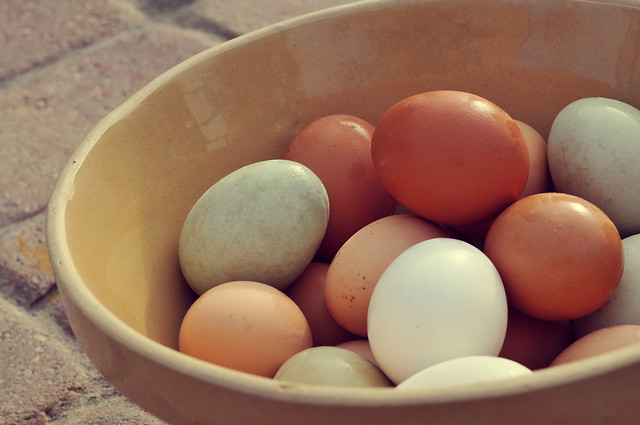
Which came first? Like chickens and eggs. Like seeds and flowers. Prayers and answers are a puzzle I hope I never solve.
*