by Christie Purifoy | Oct 30, 2014 | Autumn, children, Community, Jesus, Pennsylvania, Seasons, Uncategorized
My friend looks up toward the trees and says I had forgotten how graceful dying can sometimes be.
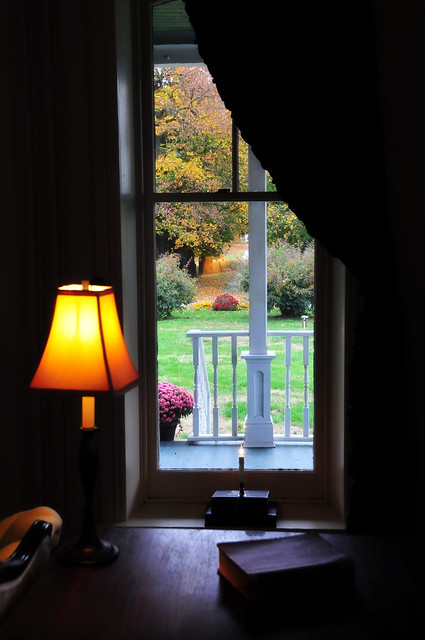
I follow her glance and know that she is right. I, too, have forgotten. I remember autumn through snapshots. Which means, I remember the brilliance of that one sugar maple down the road. Or, I remember the startling red of a Burning Bush shrub against a deep blue sky.
The snapshots help me to remember true moments, fiery moments, but they do not give an accurate picture of the whole.
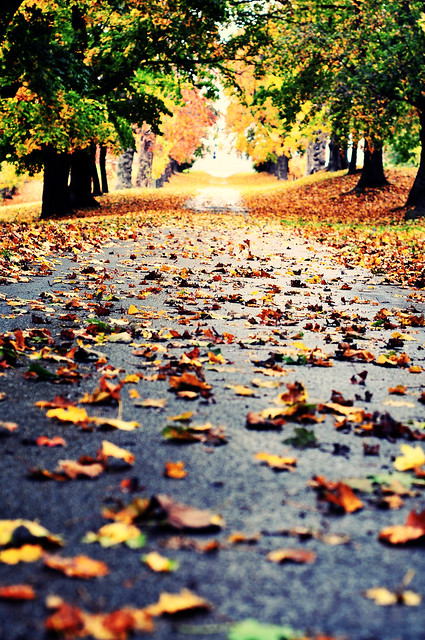
Autumn, taken as a whole, does not look like clear, bright brilliance. Here in my corner of Pennsylvania, it is gentle. Faded. It is burnished gold and copper. It is gray clouds and wet pavement.
This autumn world does not rage against the dying of the light. It smolders, quietly. Gracefully.
*
*
This time of year, it seems Christians like to talk about Halloween on the internet. I tend to abstain from those “conversations.” So much depends upon context. Like the context of our own memories. Like the context of our own communities. Often, the internet is a conversation without a context.
Here is a bit of mine.
In the church of my childhood, Halloween was ever-so-slightly taboo. We wore costumes, but we wore them to collect candy at our church’s “Harvest Fair.”
As new parents, we discovered the great adventure of escorting a tempermental two-year-old ladybug down city streets. We stole her candy when she wasn’t watching, and we hugged our neighbors. We tried to catch the eye of their over-tired Dorothy or Scarecrow. To tell each one we had no idea it was them.
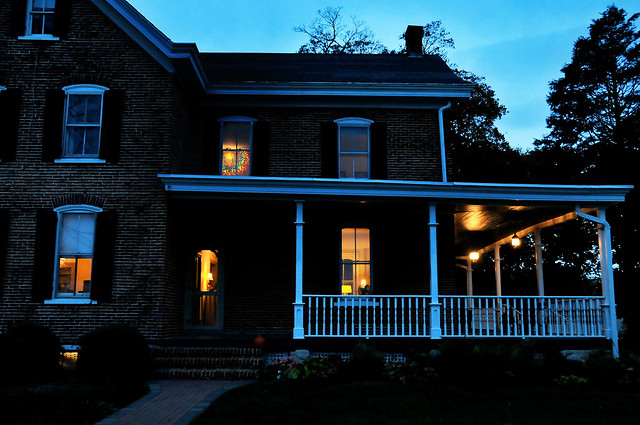
Still, decorating my home for Halloween always seemed like a step too far. Until we came here. Now we live in the farmhouse on the hill and how else can we entice our neighbors and their children to climb our hill, to receive our gift of love and candy, but with a few smiling ghosts and candle-lit pumpkins?
Context. It changes things.
Changes us.
*
*
We live in a culture that largely ignores death. Our children no longer walk to church through churchyards dotted with graves.
Our own church is that rare thing with its own cemetery, but it is all the way around by the back door. My children often ask to walk that way, but I am in a hurry. Another time, I say, as I rush them through the front door.
I am sorry for this. And so, this year, I am grateful for Halloween. I am grateful for the space it opens up. I am less grateful for the gory zombie poster set at a child’s eye level at the local Wal Mart, but mostly I am grateful for the opportunity to talk about death. About dying. About our baptism and what it might mean that we have already died with Christ.
Which is, to say, we will have a conversation about living.
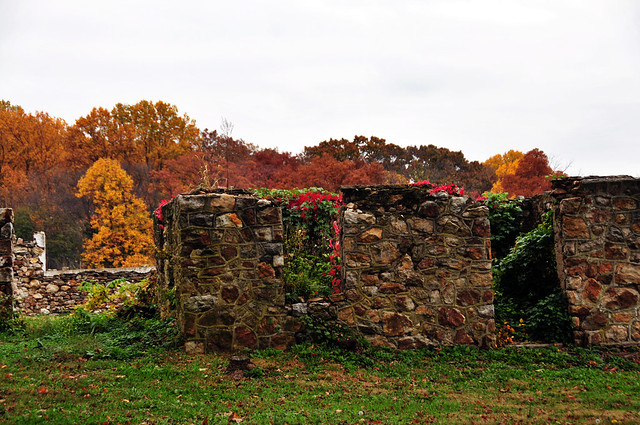
Soon, we will bring out the plywood grave markers my husband made last year. Our kids painted them gray with black crosses and the letters R I P. We will tuck them near the crumbling stone foundations of the old farm buildings, and we will drape them with twinkly lights.
As we outline a path for candy-seeking neighbors, my daughter will ask me again about those letters R I P. And as darkness settles, and the lights begin to flicker and gain strength, she will tell me It’s beautiful, Mom. So beautiful.
*
*
by Christie Purifoy | Oct 16, 2014 | Florida, Grateful, Home, Pennsylvania, Uncategorized, wilderness
At first, the wilderness appears wide open. It is unexplored. Who knows what wonders wait to be found.
When we first moved to Florida, we were eager to explore new roads. We caught glimpses of water – river or ocean – and we pressed on. But the river always remained hidden behind endless waves of Spanish moss. The ocean was a mirage, a blue spot on the GPS we could never quite reach.
The real ocean hid behind grassy bluffs or gated mansions. Park your car and pay your fee, and you’d find it. But it was not open to the wanderer. To those with a car full of kids who only wanted to drive and believe they were free.
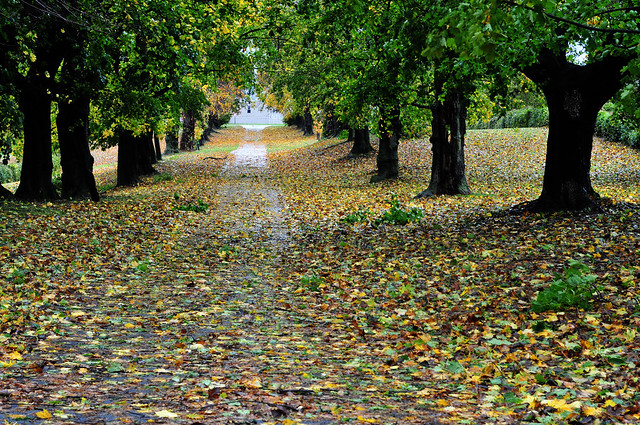
Wilderness roads are straight roads. To meander without a plan across a network of straight lines will only lead to disappointment. There can be no circling back in some surprising way. There is only that moment of disenchantment, that moment when you agree it is probably best to turn around.
The wilderness looks like a spacious place. You cannot see the edges, no matter which direction you look. But there is no real spaciousness here.
In the wilderness, you wander but you are also hemmed in.
*
*
I grew up with the siren song let’s go for a drive. When my parents couldn’t take our squabbling for one more minute, they piled all four of us in the station wagon.
Where are we going? we always asked.
Crazy, my mother always answered.
Years later, heading out for a long drive became our favorite date. Especially in the spring. In the spring, you never knew when you might round a bend and find yourself slowing, slowing, and finally stopping to watch the wind dance in a field of bluebonnets. We’d park your pickup truck by the barbed-wire fence and roll down our windows.
All the better for watching flowers dance in a field we happily admitted we would probably never find again.
*
The roads are my favorite thing about my new home. This promised land.
They are narrow and curvy. They force a slower pace. You must stop at every bridge to let the car opposite cross first. You often find yourself caught behind horse-drawn buggies or herds of Sunday cyclists.
In this place, there is no scenic route. There are only the familiar roads, with their familiar beauty, and the turns you haven’t yet taken. The eighteenth-century farm you’ve never seen. The historic blacksmith shop you never noticed. The “ancient burial ground” half-hidden behind a brilliant maple tree. I lose miles wondering who might be buried in this “ancient burial ground.”
The daily chore of Kindergarten carpool is a thirty-five-miles-per-hour roller coaster. Gypsy Lane carves a path through the forest. Schoolhouse Road curves along the edge of a steep hill. I can see sheep and a fast-running creek down below.
Old stone barns and shabby farmhouses and that one crazy place with the alpacas. Every single day I forget where I’m headed.
Every drive, every errand, feels like a Sunday afternoon drive in God’s country.
*
On the hard days, and in the hard places, I sometimes resist gratitude. To “give thanks in all circumstances,” can feel like shutting my eyes. Like pretending.
But giving thanks has nothing to do with renaming a prison a spacious place. It is only the grateful acknowledgement that God never leaves us behind. He always comes back for the lost sheep. He always makes a way.
These days, I am looking back. I am remembering and giving thanks.
Thank you, Lord, for the hard, straight roads that led me here. Thank you for the wilderness.
Thank you, Lord, for the Promised Land. This spacious place where every road leads somewhere new.
*
by Christie Purifoy | Oct 11, 2014 | Books, Dreams, Gardening, Pennsylvania, Seasons, Uncategorized
Today, I am not giving you a peek at the bookshelves lining the walls of this old farmhouse.
Instead, I am giving you a peek at what you’ll find spilling out of baskets and boxes. What you’ll find stacked beside my bed and by my armchair near the fireplace. I’m showing you my pile of dreams. My paper stack of wishes.
I am recommending plant and seed catalogs.
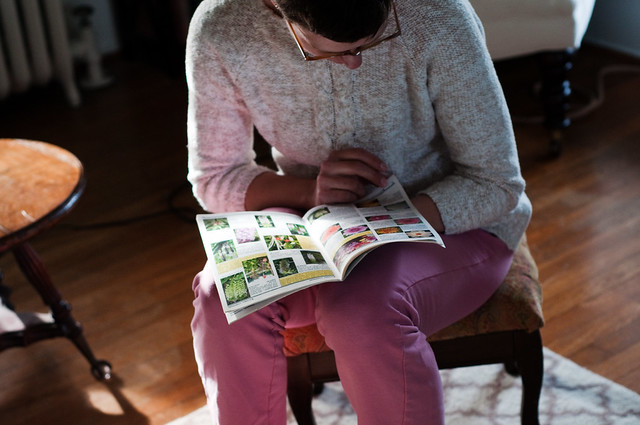
Why now? Why now as I put my vegetable garden to bed and watch for the first hard freeze?
Because gardens are born in winter. And this is the perfect time to sign up for at least a few (free) catalogs. They’ll be the guides to your dreams come December.
A garden should make you feel you’ve entered privileged space – a place not just set apart but reverberant – and it seems to me that, to achieve this, the gardener must put some kind of twist on the existing landscape, turn its prose into something nearer poetry. – Michael Pollan
The vegetable and flower seed catalog from Seed Savers Exchange is always a glossy, full-color treasure trove. This one is perfect for winter browsing, almost as good as a collection of short stories. You’ll read about the real “Grandpa Ott” behind “Grandpa Ott’s Morning Glories,” and the fascinating history of the “Moon and Stars” watermelon. Even better, by ordering heirloom seeds from the exchange you are also supporting the biodiversity of our planet.
The supermarket produce shelf offers a tiny slice – not even that, perhaps a pin drop – of the variety of creation. If a blight shows up this year favoring the (tasteless) grocery-story tomato, it will be the home-gardening seed savers and networks like Seed Savers Exchange who save tomatoes for future generations.
I don’t save many of my own seeds beyond a few dried flower heads. I’ve listed that activity under things I’ll do when I no longer have children underfoot. Until then, I do my part by ordering from Seed Savers.
Gardening is akin to writing stories. No experience could have taught me more about grief or flowers, about achieving survival by going, your fingers in the ground, the limit of physical exhaustion. – Eudora Welty
If you ever buy bulbs through the mail, especially daffodils and tulips, your mailbox will be flooded with catalogs claiming direct links to Dutch tulip fields. They will have phrases like “fine purveyors” on their covers. Brent and Becky’s Bulbs, a family operation based in Virginia, is pretty much the opposite of that. And I love them.
Brent and Becky (yes, they are real people) offer excellent service, quality bulbs, and fair prices. You can buy all the classic varieties, and you can find homegrown varieties they have named for a favorite relative or friend. Their catalog is full of advice and inspiration, and you can enjoy it at least twice a year. They send out separate catalogs for spring and fall-planted bulbs.
I buy my daffodil and tulips bulbs here every year. Last year I filled a bed with their lily bulbs. And I’ll soon be planting a few of their purple alliums.
I am intrigued by writers who garden and gardeners who write. The pen and the trowel are not interchangeable, but seem often linked. – Marta McDowell
The Antique Rose Emporium in Independence, Texas is a magical place. I grew up visiting it with my father, a farmer-turned-gardener, yet I somehow never dreamed of growing roses myself. Until, I came to Maplehurst.
Our little corner of Pennsylvania was once well-known for the roses Quaker farmers grew here for city markets. That heritage is still evident in street names and in long memories. Last year, it seemed important to me to bring roses back to Maplehurst. Of course, now I’m hooked.
I used to hear “antique roses” and imagine fussy, hard-to-please plants. If caring for antique furniture was more complicated than dusting a piece from IKEA, then surely plants were the same. Strangely, the opposite is true. If you are looking for a rose that is easy to grow, less susceptible to diseases and insects, and (bonus!) highly scented, then it is an antique rose that you want.
You can also find them described as “Old Garden Roses,” and the catalog from the Antique Rose Emporium is one of the best ways to learn about these wonderful plants. Thanks to this catalog and other books published by its founder, I have gorgeous, cabbage-y pink roses still blooming in my garden today. In the middle of October. Yes, you can call me a fan.
Also, I think it very important to support any business with “emporium” in its name. Just a personal pledge of mine.
I love my garden, and I love working in it. To potter with green, growing things, watching each day to see the dear, new sprouts come up, is like taking a hand in creation, I think. Just now my garden is like faith – the substance of things hoped for. – L.M. Montgomery, Anne’s House of Dreams
I grew dahlias for the first time this year, and I am hooked. My gardens all look a bit shabby by October, but the flower bed across from our front door has exploded with beautiful, bouncy, mop-headed dahlias. You can find a million pictures (approximately) of my dahlias on instagram. Like this one. And this one. I can’t seem to stop taking their pictures.
I’ve done little dahlia comparison shopping, but Swan Island Dahlias was recommended to me, and I will be ordering from them again. Their catalog is beautiful and extensive, and every one of the tubers they sent grew and thrived. My favorite bit? They stamp each tuber with the name of the variety. This made it easy to remember what I was planting and where.
Dahlias always intimidated me because I knew they weren’t cold-hardy. The thought of planting something only to dig it up again in the fall seemed ridiculous. Why would I do that? Well, now I know exactly why. (Also, here’s a tip. If you aren’t sure you can handle that amount of effort: plant them anyway. No one will ever know if you just leave them in the ground. And if it’s a mild winter? They may just come blooming back again.)
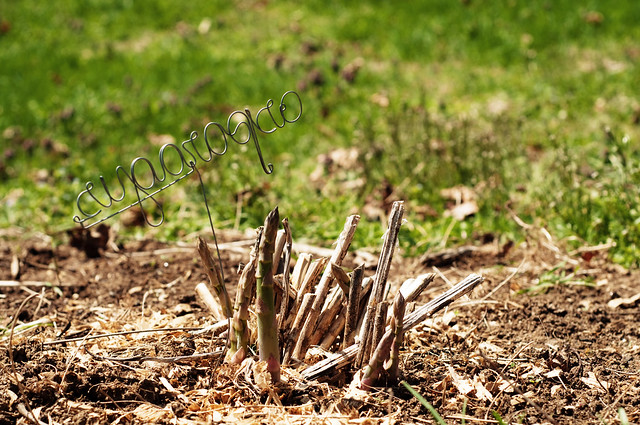
However many years she lived, Mary always felt that “she should never forget that first morning when her garden began to grow.” – Frances Hodgson Burnett
Now I’d love to know, do any of you garden? What are your favorite sources? Please share them in the comments!
by Christie Purifoy | Oct 2, 2014 | Autumn, Faith, Jesus, Scripture, Seasons, Stories, Uncategorized
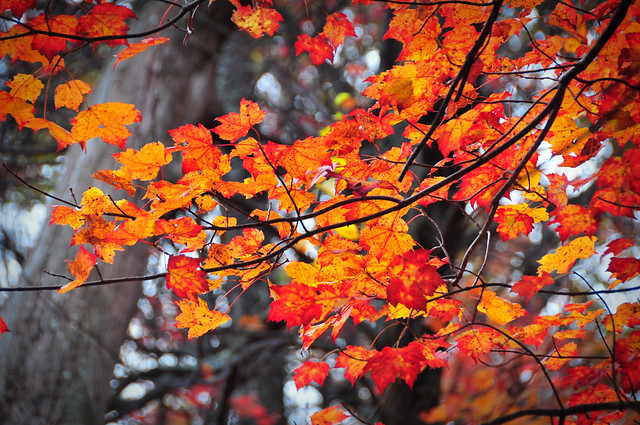
Autumn is announced by the seedling trees. The baby trees. They are the first to abandon their green in favor of orange or red or yellow.
Driving these country roads, they are like lit matches. Small, flickering flames against the general greens and faded browns of early autumn.
They are children embracing the arrival of something new. They wear their faith like Joseph’s multi-colored coat, and we cannot look away. Soon, even the staid elders will shake off their summer sleep.
Until they blaze.
*
Truly I tell you, unless you change and become like little children, you will never enter the kingdom of heaven. (Matthew 18:3)
I observed the brilliant, baby trees, and I immediately thought of Jesus’s words. I imagined I could write out the connection. That I could find some moral in what I had seen.
But trees are living things. They are not convenient object lessons.
Maybe they could be parables. Easy to decode but almost impossible to comprehend. Truth so tall and deep, it avoids our grasp, seeking instead the deep well of our hearts.
I will open my mouth in parables, I will utter things hidden since the creation of the world. (Matthew 13:34)
Yesterday, I saw a strange sight. Walking to shut up the chickens for the night, I saw a line of geese heading southeast. They were black silhouettes against the slate gray backdrop of the sky.
I stood perfectly still watching them, captured by some mystery that wasn’t immediately apparent. Then it came to me in two parts.
First, the geese traveled in a single diagonal line, but there was only emptiness where the other half of the V should have been. Was this a picture of loss and grief? Or only the notice of job vacancies in the sky?
Second, they were quiet. I could hear nothing. No flap of wings, no honking calls.
Be silent, all flesh, before the Lord, for he has roused himself from his holy dwelling. (Zechariah 2:13)
I read my Bible, and I watch the trees. I stop to consider the birds. I am learning to collect hidden things. To store them up for the winter day of my need.
And on that day I will know exactly what it means to be a young tree wearing a blaze of color.
I will understand just how much depends upon chasing the far horizon in complete silence.
*
by Christie Purifoy | Sep 27, 2014 | Books, Uncategorized, Writing
I’m afraid it’s been too long since I wrote anything new for this, my occasional series of Saturday book recommendations.
Truthfully, I’ve been reading up a storm, but it all felt so weirdly personal. Either I was reading very particular books intended to fuel my own book writing, or I was escaping into novels that seemed either too lightweight or too well known (or both!) to be worth mentioning.
But then I realized something. The only thing really holding me back from writing another addition to this series was pride. Pride because I didn’t feel I’d been reading anything earth-shattering enough, or esoteric enough, or special enough. As if I share book recommendations in this space in order to cultivate a certain self-image.
But pride is so boring. My own pride, especially. So, I’m kicking it aside and telling you, honestly, what I’ve been reading. It’s an oddball pile of books, but I think you might just find something you like. I know I did.
(P.S. These posts contain affiliate links. Find all my book recommendations here.)

I first read A Country Year: Living the Questions by Sue Hubbell months ago on a good friend’s recommendation. Hubbell is a university-librarian-turned-beekeeper in rural Missouri. This book offers four seasons worth of reflections rooted in her mountain home. It’s a quiet book. A plain book. But it sticks with you. Lately, I’ve been rereading it, hoping that some of Hubbell’s no-nonsense, beautifully observant style will wear off on me.
The Wisdom of Stability: Rooting Faith in a Mobile Culture by Jonathan Wilson-Hartgrove is new to me, though it was released a few years ago. Wilson-Hartgrove is probably best known as one of the so-called “New Monastics.” He writes simply and straightforwardly about his choice to stay in an impoverished, urban neighborhood. The book offers an easy introduction to monastic spirituality and what that might look like for us today. That is, it’s easy to read and Wilson-Hartgrove’s storytelling is easy to enjoy, but the stability he describes is hard. The kind of hard I want and need and hope to spend the rest of my life learning.
My love for picture books is well documented in this space. I’ve told you before that I think we push chapter books too often and too early. Quality picture books are not only works of art, but they tend to aim at a higher level of storytelling and language. All the Places to Love by Patricia Maclachlan is no exception.
This one was recommended to me by another friend. It isn’t new, but I’d never encountered it until this year. The art feels slightly dated, but that is a small, small quibble with a beautiful book. This one makes me cry. Every time. It isn’t a sad story; it’s a lovely story. Reading this book you realize just how heart-breakingly beautiful are our small lives and small homes and ordinary days. This book is for anyone who has ever loved some special place, and, especially, for anyone who has ever shared that love of place with another.
I’m reading a lot of heavy, heady stuff right now, but if my own book is inspired by anything I hope it is inspired by this picture book.
Anyone ready for a big, fat, fun novel? Liane Moriarty’s novels always fit the bill. I’ve told you before how much I loved What Alice Forgot , and Moriarty’s latest, Big Little Lies
 , is another excellent, fun, funny, thought-provoking romp. This one tackles the heavy topic of domestic violence, but does so with such a uniquely hilarious Moriarty touch that you can’t help but be charmed even as you find your eyes being opened, your heart softened.
This isn’t high-art by any stretch of the imagination, but I think Moriarty is a genius.
Tell me, what’s sitting on your shelf these days?
by Christie Purifoy | Sep 17, 2014 | Autumn, river, Scripture, Seasons, Uncategorized, Writing
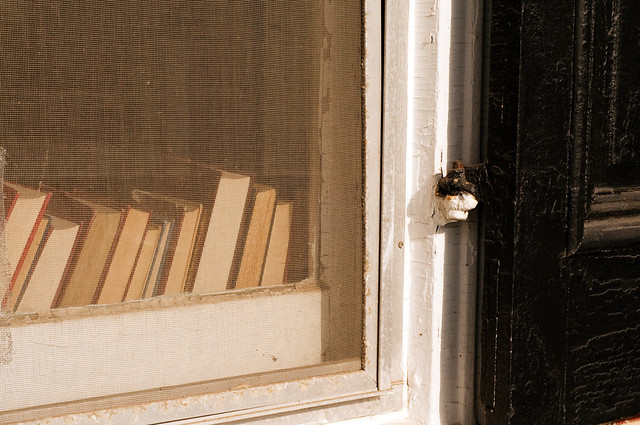
Some beginnings are brown. There is nothing fresh or new about them.
Take autumn, for instance. In my mind, it begins with the first gilded edge on the giant magnolia tree. In my mind, it begins with the weeping willow’s coppery sheen.
Apparently, my mind is wrong. Has been wrong for all these years. Because autumn is beginning, and it is brown.
It is brown where the seed pods rattle in the flowerbeds. It is brown where the first leaves have fallen and turned crispy. They were overeager. They could not wait for their orange or red transformation. The reward for their impatience is to be mistaken for dull oak leaves rather than the vivid maples they are.
*
*
Some have asked how the book writing is progressing. I tell them all the same thing. I tell them I have written a lot of words, and I despise every one of them.
The response to my honesty has been, universally, a wide-eyed look of concern. I appreciate the concern. It draws out the nurturer in me. I want to pat each friend on the hand, I want to pat myself on the hand, and say, “There, there. I think it will be okay. It is only that some beginnings are brown.”
*
*
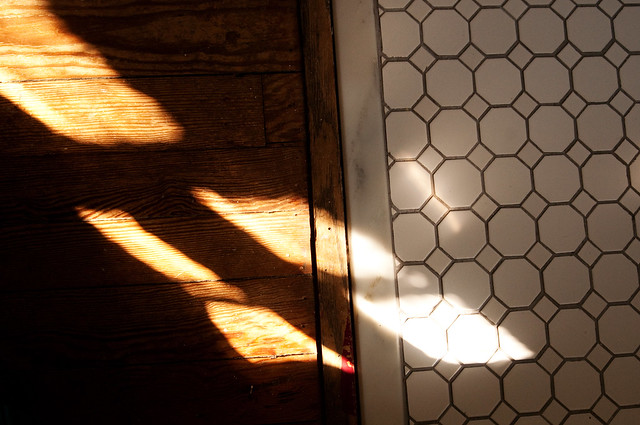
Beginnings rarely make a clean break with endings. The two are usually muddled together.
It can all be a bit discouraging without eyes to see. I am praying for eyes to see.
Forget the former things; do not dwell on the past. See, I am doing a new thing! Now it springs up; do you not perceive it? (Isaiah 43:18-19)
Do not dwell on the past.
What relief there is in those words. How light is their burden.
Light enough that we are able to keep walking. Perhaps even with a spring in our step, which, as you know, is a sign of anticipation. We know we are closer.
Every day brings us closer to that place where the water runs fast and clear.
*
*
