by Christie Purifoy | Nov 7, 2011 | Poetry, prayer, Seasons
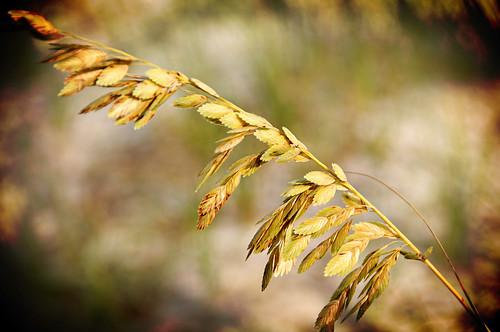
This poem is well suited to November’s darker days.
The changing of the clocks seems like an example of humanity’s authority over its own environment, and yet it always reminds me just how out-of-our-control day and night, light and dark truly are. The days will grow shorter, no matter our efforts or anxieties. Nature will begin to die. We will too, come to that.
This poem suggests that embracing the inevitable (whether it be the changing of the seasons or death itself) need not be an act of despair. It can be an act of great trust.
Technically, I should call this a pastoral poem, but, to me, it always reads more like prayer.
Let Evening Come
Let the light of late afternoon
shine through chinks in the barn, moving
up the bales as the sun moves down.
Let the cricket take up chafing
as a woman takes up her needles
and her yarn. Let evening come.
Let dew collect on the hoe abandoned
in long grass. Let the stars appear
and the moon disclose her silver horn.
Let the fox go back to its sandy den.
Let the wind die down. Let the shed
go black inside. Let evening come.
To the bottle in the ditch, to the scoop
in the oats, to air in the lung
let evening come.
Let it come, as it will, and don’t
be afraid. God does not leave us
comfortless, so let evening come.
– Jane Kenyon
by Christie Purifoy | Oct 31, 2011 | Books, Chicago, Poetry

I didn’t discover the poetry of George Herbert until graduate school (my undergraduate education in literature had more than a few gaps, I’m afraid. This due, mostly, to my own indiosyncratic course selection criteria: what time is the class and who is the professor?).
Thankfully, I did find Herbert, and I still remember my shock that we could actually discuss such Christ-centered poetry around a University of Chicago seminar table. Who says there’s no Jesus in higher education? Though, to be honest, there’s a lot more of Freud in my dissertation than Jesus. A lot more. I blame Virginia Woolf for leading me astray.
However, with the job market in the humanities being what it is, I have a good deal of time for Herbert these days. And, my love for the modernists notwithstanding, that’s a very good thing.
Without further ado, a poem on rest (one I’ve recently been feeling the truth of deep in my bones):
The Pulley
When God at first made man,
Having a glass of blessings standing by,
“Let us” (said He) “pour on him all we can;
Let the world’s riches, which dispersed lie,
Contract into a span.”
So strength first made a way;
Then beauty flow’d, then wisdom, honor, pleasure;
When almost all was out, God made a stay,
Perceiving that alone of all his treasure
Rest in the bottom lay.
“For if I should” (said He)
“Bestow this jewel also on my creature,
He would adore my gifts instead of me,
And rest in nature, not the God of nature:
So both should losers be.
“Yet let him keep the rest,
But keep them with repining restlessness;
Let him be rich and weary, that at least,
If goodness lead him not, yet weariness
May toss him to my breast.”
– George Herbert
by Christie Purifoy | Oct 24, 2011 | Poetry, Seasons
For the past few days, I’ve been back in Chicago, remembering with my feet as I walk the familiar slate sidewalks.
If poems had mailing addresses, this one would surely be marked Chicago, the Southside.
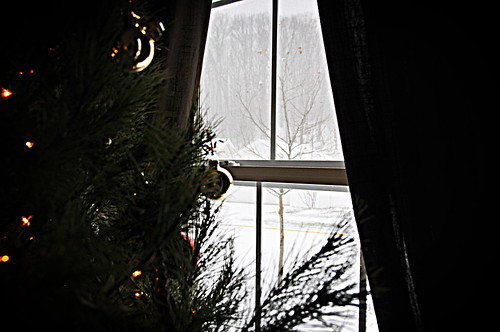
Winter hasn’t yet arrived, even in Chicago, but I’ve been reliving one particular winter memory. It was my first winter here, and the heavy skies were unburdening themselves of a record amount of snow. In early December, I sat at my writing desk trying to complete my first graduate seminar paper. Hunched close to my window, my Texas-bred eyes couldn’t stop wandering toward the snow-globe view.
Everything outside had been erased by the whiteness, even the people and the cars had disappeared. But then I saw a black parade slowly winding its way in front of my building. A hearse, a limousine, followed by a patient tail of black-flagged vehicles: I knew, without being told, that this was for Gwendolyn Brooks. Her death, on December 3, had been in all the papers and on every channel.
I can’t remember if the memorial was open to the public. I don’t think I would have made it to the university’s gothic chapel anyway, not through all that snow, not with a paper keeping me at my desk.
The chapel is beautiful, but it isn’t a poem. The slow slash of black in a washed-white world: that was a poem. I’m sure I could never fully capture what I saw in words, but there’s really no need. Gwendolyn Brooks had already done it.
Cynthia in the Snow
It SHUSHES
It hushes
The loudness in the road.
It flitter-twitters,
And laughs away from me.
It laughs a lovely whiteness,
And whitely whirls away,
To be
Some otherwhere
Still white as milk or shirts,
So beautiful it hurts.
– Gwendolyn Brooks
by Christie Purifoy | Oct 17, 2011 | Art, Books, Poetry
In my ideal Christian bookstore, the Jesus knick-knacks and the Amish romances would be pushed to a far corner. The coveted window display space would be filled with books like the collected poems of Czeslaw Milosz.
I guess if I’m being perfectly honest, my ideal Christian bookstore would look exactly like my favorite independent bookstore in Chicago’s Hyde Park neighborhood, with a few more Bibles. As Madeleine L’Engle writes in Walking On Water, “Christian art? Art is art; painting is painting; music is music; a story is a story. If it’s bad art, it’s bad religion, no matter how pious the subject.”
Even if you think that L’Engle pushes the point too far, I imagine that many of you, having picked up a copy of Milosz’s New and Collected Poems (1931-2001), would agree that this is a writer Christians should be reading. A believer and a Nobel Prize winner, Milosz never turned his face away from the darkness of twentieth-century history. Yet he did this without losing his grip on hope and belief. A light shining in darkness. I think that may be my definition of Christian art.
Rays of Dazzling Light
Light off metal shaken,
Lucid dew of heaven,
Bless each and every one
To whom the earth is given.
Its essence was always hidden
Behind a distant curtain.
We chased it all our lives
Bidden and unbidden.
Knowing the hunt would end,
That then what had been rent
Would be at last made whole:
Poor body and the soul.
– Czeslaw Milosz
by Christie Purifoy | Oct 10, 2011 | Art, Food, Poetry

This is the first (and best) of all refrigerator poetry. It reminds me that the line between the mess of everyday and the wholeness of art is sometimes very slight. And yet, there is a line. Transforming ordinary raw materials (a pigment, a word) is not as easy as it looks.
If the raw material is depleted or broken, what then? Light from darkness. Beauty from ashes. Is it possible?
Those are cosmic considerations. This … well, this is more like a post-it note turned poem. And yet, when Williams turns the ordinary into something lovely, I perceive a giant’s theology on a dollhouse scale.
This Is Just To Say
I have eaten
the plums
that were in
the icebox
and which
you were probably
saving
for breakfast
Forgive me
they were delicious
so sweet
and so cold
– William Carlos Williams
by Christie Purifoy | Sep 30, 2011 | book of quotations, Poetry

I keep a book of quotations. It looks exactly like any other journal, but it’s for a different kind of journaling. Journaling with the words of other writers, if you will. Here I scribble down quotations from all kinds of books: poetry, theology, memoir, literary theory, fiction, you name it. I write down anything I want to remember.
Sometimes I use these quotations later, in my own writing or maybe just in conversation. But, it isn’t really about utility. It’s about beauty. Language can be so beautiful it stuns. However, I am generally reading so much, so quickly that I need a way to hold on to those beautiful bits that I just can’t bear to let wash down the stream of words, words, words.
In The Poetics of Space the French philosopher* Gaston Bachelard tells us that “the house shelters day-dreaming, the house protects the dreamer, the house allows one to dream in peace.”
That is pure poetry and reminds me, once again, that I will always find more truth in poetry (and myth, and story, and art) than in the dictionary.
Like many introverts, I imagine, I am happiest when in my own home. I also love the purely abstract idea of houses. As a middle-schooler, I wanted to be an interior designer. As an almost-college student, I considered architecture. Ultimately, my desire for fame and fortune led me to study literature. (For those perhaps unfamiliar with the current job market in the humanities, I should explain: that was a joke.)
After ten years of English lit. and babies, I finally did finish with school, and we left Chicago. I have missed my Chicago home for one year and six months. When I picture what it is that I miss, I see what Bachelard prompts me to call my “dreaming spot.” A soft green chair is huddled up against a corner window. A tall built-in bookshelf is just on the other side of the window, and through the glass there are rooftops with one-hundred year old chimneys and treetops that shift from bare, to bright green, to rich green, to shades of fire, and back again.
When I leave this Florida house, I am sure that I will miss the big bay window that shelters my writing desk. I still have the soft, green chair, but I no longer spend much time there. I prefer the hard-backed desk chair, here by the window, where I can see vegetable beds, ripening citrus, water, and (when I’m lucky) river otters. Right now, this is my spot for dreaming.
For me, one of the saddest and most troubling verses in the Bible is Matthew 8:20 where Jesus tells us, “‘Foxes have holes and birds of the air have nests, but the Son of Man has no place to lay his head.’” To follow Jesus, is to say, “Lord, I will make my home in you.”
But we have also been given a promise. In John 14:2 Jesus says, “’In my Father’s house are many rooms . . . I am going there to prepare a place for you.’”
I love houses, mine (wherever it happens to be) most of all. I simply cannot imagine having no place (let alone a cozy, book-filled place) to lay my head. And so I stumble upon yet one more difficult, beautiful paradox: my desire for Home is God-given and good, but this fact gives me no right to hold my house in a possessive, white-knuckled grip.
“Then Jesus said to his disciples, ‘If anyone would come after me, he must deny himself and take up his cross and follow me. For whoever wants to save his life will lose it, but whoever loses his life for me will find it.’”
(Matthew 16: 24-25)
*Lest anyone formulate an unduly high regard for my intellectual habits, I must admit that I do not actually spend my days reading French philosophy. I encountered this quotation in the travel section of my Sunday New York Times. Poetry can find us in the most surprising places.
