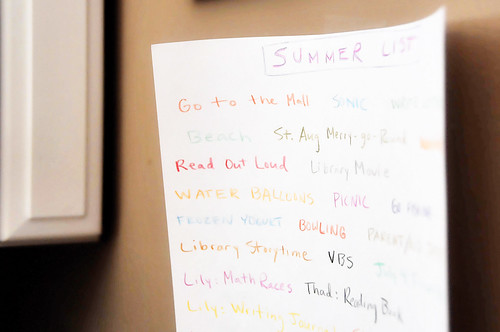
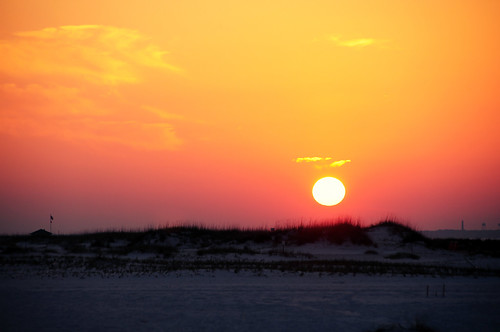
This once-favorite tradition hasn’t traveled well. I started writing Summer Lists in Chicago. At first, they were just for me, but my oldest child did contribute an item or two in recent years.
A Summer List is exactly what it sounds like: a list of activities and experiences you want to do and have before September arrives. It might sound sentimental and overly precious, but my Chicago Summer Lists were deadly serious things.
Having endured months of bitter cold and forced hibernation, I often felt a little stressed at the beginning of Chicago’s second season (you know, don’t you, that Chicago is called the Second City because it has two newspapers, two baseball teams, and two seasons? You don’t need me to tell you what those seasons are, do you?). A Chicago summer offers so much goodness, I actually worried about fitting it all in.
What if Labor Day arrived and I hadn’t seen a film on the grass in Grant Park? What if the wind turned cold, and I hadn’t yet eaten apricots and just-made goat cheese on a blanket at the Green City Market? What if busyness or laziness kept me from packing up the kids and the snacks and listening to music under the stars at Millennium Park? What if we said “yes” to too many weekend birthday parties and forgot to leave time for blueberry picking in Michigan City?
Thus, the Summer List.
Those lists helped me to make the most of a glorious but, ultimately, fleeting season. It felt like an antidote for the to-do lists that kept me rushing and preoccupied the other nine months of the year.
The problem with a Florida Summer List is that the season is not fleeting. I’ve discovered that this part of our country also has two seasons: hot and not so hot. Everything I could think of to write on my list today caused me to think, “Well, but I’d rather do that when it’s not so hot.”
Beach? I prefer to collect seashells in February sunshine. Pool? Yes, of course, but we’ve been swimming since March, and I’m already a little tired of wet swimsuits. The zoo? It was beautiful in January. Disney? Not if you paid me. Too many tourists this time of year. And did I mention the heat? Maybe fruit picking? Beau’s two favorite episodes of Caillou are the one in which Caillou picks strawberries and the one in which Caillous picks apples (which makes me very, very happy). Oh, but Florida’s strawberry season ended months ago.
So many people love Florida because the joys of summer last for most of the year. And even I can’t complain about weather like this. After all, I enjoyed those grilled pizzas in January. But what do I make of summer now? Is there anything special about June, July, and August when our activities and experiences are mostly the same? What is summer, anyway? A date? A point of view?
For now, I’m focusing on the one thing I have in abundance only during these months: time. I’m not teaching, baby girl isn’t due to arrive until the end of September, my two oldest are out of school, even the two-days-a-week preschool is on summer break. We have time.
We’ll get bored. We’ll get hot. No doubt, tempers will flare. But, unlike summer itself, these hours will never come around again. Once crossed off the list, they’re gone for good. I do not know what they’re for or why they’ve been given, but I’m glad that, for now, they’re still mine to anticipate. Each hour listed neatly on pristine paper.
This is a familiar story (though I’ve never told it before). I’m sure you have your own version. It’s a story about how one song comes to represent something big: young love, say, or new parenthood, or that one particular summer when the weather just couldn’t be believed.
It actually was summer, and, yes, the weather couldn’t be believed. The coolest Chicago summer in a decade. I’ve never liked hot weather, but I was heavily pregnant and extra grateful for lake breezes.
I’d emerged from the long, dark tunnel of infertility. I’d survived the euphoria and illness of the first trimester. I was cocooned in the mellow hormones of the third trimester.
I’m sure it wasn’t all mellow dreaminess, but that’s how I remember it. The worst was behind. The earthquake that is a first baby was still to come. My husband and I took long walks. Went for long drives. Ate out in all our favorite restaurants.
That summer we could hardly turn on the car radio without hearing the song “Yellow” by Coldplay. Perhaps it only happened once, but when I think of that summer this is what I remember: a nighttime drive down the length of Chicago’s lakefront, overhead the city lights like glittery stars, windows rolled down, a baby girl filling me up, and “Yellow” playing on the radio.
That song and my firstborn: they’ve been tangled up in my mind ever since.
Which is a good thing.
Now when I hear that song, I’m taken right back to a place and a feeling it’s important never to forget. I hear the song, and I remember all of the joy and love and hope that a mother feels when her baby is tucked up inside, still unknown.
It can be difficult (often impossible) to hold on to those feelings through sleepless nights, temper tantrums, sibling fights, meltdowns over homework … well, all the ordinary awfulness of day to day life.
And my own mother-failures are the most awful of all.
But the ordinary awfulness is a distraction. It’s not the real thing. It doesn’t tell us who we really are. It tries to obscure the truth of who our child is.
More and more, I’m convinced that good parenting is learning to coast through the awfulness without losing my grip on the truth.
And the truth is this: life is magical, motherhood is an indescribably good gift, and my child (yours too) is more precious and beautiful than even the nighttime sky.
That is the truth, and this song helps me remember.
Just in time for Mother’s Day: a gorgeous cover of “Yellow” by Renee and Jeremy:
A birthday letter for one’s child should be a marker of all that a mother knows. For instance, on the day you turned three you had a scratch on your cheek and a bruise on your forehead. Your legs and arms were somehow both surprisingly long and impossibly tiny. You loved your balloon. You whined for more chocolate cake. You pronounced it so carefully: “choc-oh-lut.”
But you are almost entirely unknown. This doesn’t bother me or frighten me. At least once a day your father or I will laugh at you and say, “Who are you? Where did you come from?”
Your blonde hair sets you apart in our family. But it is more than appearance. Perhaps it is comparison. With two older siblings whose personalitites and interests have seemed long settled, you are less familiar. We are still getting acquainted. You are still getting acquainted with the world.
Or, perhaps it is a holdover. You were unknown for nine months before your birth. Boy or girl? We chose not to know. You were the little stranger born into the thoroughly familiar, the utterly known: our own bed, in our own apartment, in a city that felt like home.
There has been only one moment when I saw more. One moment when I seemed to glimpse the you that is still buried in your bones.
You were six months old. It was late at night. Your cough was so like a barking seal that we had no need to google symptoms. We could name it. By naming it we felt we had tamed it.
We had done no such thing. In the space between those known, nameable coughs your breath became jagged. Desperate. Each breath seemed just on the verge of not coming at all.
Your father spoke with the nurse on call, and I held you on the floor of the bathroom, your face hardly visible through the steam. I prayed for you.
So often prayer is just a desperate word or two. It hardly seems capable of traveling whatever distance lies between my mouth and God’s ear. But sometimes prayer takes over and I know that it does not come from me at all. It is more like a river, and I’ve just fallen in.
Sitting there, holding you, I was in that river and I saw something. It was as if that rushing river of prayer drew back the veil between known and unknown, seen and unseen. I saw You, the you that is never just a baby or a three-year-old, but the You that is every age, and I recognized how far away from me you would travel. I could see you bringing light into dark places where I would never go. It seemed to me, as I prayed, that there was a great struggle taking place in this ordinary, steamy bathroom.
Later, I recognized that this river of prayer was not my communication with God. It wasn’t my puny request for healing. A simple question to be answered “yes” or “no.” The prayer was God’s own roaring response to the darkness, the utter evil, that would end your life before you could do all that you were made to do. Or, more importantly, before you could become who you were made to be.
God wouldn’t allow it. Yes, the darkness was there with us, grasping at you as you grasped for breath, but God was shoving it aside. Saving you because we needed you. A “we” that includes so many more than just your father and I.
I don’t know exactly who you are or how far you will go. I do know your life will be beautiful, more beautiful even than these first three years. Your life will matter, more than it already has to your family. And I know you are one step closer today to the promise I glimpsed in that prayer.
Sometimes I think about the privileged ones in God’s story. The ones called out into the desert, like Abraham, Moses, even Jesus. The desert was brutal. Not a place or an experience they would have chosen.
It was also beautiful. They met angels there. They met God himself there.
There are others, too. Like Hagar. Hagar knew desolation in the desert, but it was also there that she discovered the intimacy and the peace of being seen. “You are the God who sees me,” she said. “I have now seen the One who sees me.”
To follow God into the desert is to turn your back on ordinary life. To trade comfort for something much harder and much better.
I know this, but why do I also know that I don’t want to hear that call? Shouldn’t I be willing not only to follow but to run toward the God of the desert?
I’ve had these lyrics bubbling up in my mind for days:
I thought it would be hard to fit Good Friday into Spring Break. I thought it would be difficult to clear space for the cross in a week devoted to beach, pool, and mother-daughter shopping.
I was wrong.
In the car, on our way to the dollhouse store, her voice pipes up from the back seat. It’s hard to hear, the radio too loud, but I know she’s just said something about Daniel. I want her to stop talking. I can’t bear to hear any more about Daniel.
“That’s where Daniel lived.”
“Daniel is gone now.”
“Daniel is the first kid my age to die.”
Then she repeats the words I’ve heard so many times these past few weeks: “I wish I knew what happened.”
My daughter wants to understand how her second-grade classmate died. She wants to know how his little brother died. And how his mother died. We’ve talked about it a lot, but when it comes to the details, I’ve been vague. I’ve spoken of mental illness and accidents. I’ve never spoken the word murder. I can’t bear for her to know how dark the darkness really is.
It’s amazing, really, that she doesn’t know. With all the television cameras camped in front of her school, the grief counselors gathering the children into circles on the floor, the adults whispering at the bus stop, and me, trying to turn the tv off, the radio off, whenever she walked into the room, it’s a wonder that we managed to protect her from the full story. Because, of course, the full story only leads to an unanswerable question: why?
Why did this happen to these beautiful boys? God, why did you let this happen?
The small voice from the backseat says, “Daniel is in the ground now.” With these words, I find my voice again, and I tell her what I believe.
I tell her about Good Friday. I share the word gospel, and I explain that it is so much bigger, so much more beautiful than I understood when I was her age.
When I was a child, growing up in the church, I thought the gospel was this: “I am a sinner so Jesus died and rose again to reconcile me to God. Now I can have a relationship with God.” But I only understood a small part of the story.
My personal salvation is precious to me, but it is only one, small part of the Easter story. When I face evil, like the darkness which led to Daniel’s death, my personal salvation starts to look small. Insufficient. Sometimes, I even dare to whisper this dreadful doubt: “Do I want to be in relationship with a God who allows such things?”
Confronted by the brokenness of our world, I want more … so much more.
On Good Friday, God gave more. He entered history at one, specific moment and he bore on that cross all the brokenness which came before and all the brokenness that comes after. Including Daniel’s murder.
When God’s own son, Israel’s righteous King, chose to suffer and die he unleashed rivers of justice and peace that will one day flood all of creation. This is a kingdom flood. A flood of living water. A flood to make all that is broken whole again.
When Jesus spoke his final words, he meant not only that his ministry on earth was complete, he meant that death, sin, and all the brokenness of creation were ended.
It is finished.
Can we trust him when evil continues to rear its head? Should we turn to him when our questions push us towards despair?
We know that God gave his own son to suffer and die. We know that God did not abandon his son to the grave. I am convinced that he has not abandoned Daniel. He will not abandon me.
He has not abandoned his creation. He is making it new.
Sometimes we see only a trickling fountain. Sometimes we glimpse the roaring river, but we who have pledged ourselves to this King have been given living water.
For now we share that water with our thirsty neighbors, and we look forward to the day promised each Easter, the day when there will be no more desert. No more thirst.
“Of the greatness of his government and peace there will be no end. He will reign on David’s throne and over his kingdom, establishing and upholding it with justice and righteousness from that time on and forever.”
It’s Holy Week. It’s also – in our house – Spring Break.
Which means there are fewer quiet prayers and meditations, more picnics at the park and kids screaming in the car. In other words, the holy is not hard to find. It’s in my face, and it’s ringing in my ears (quite literally).
My Bible has stayed mostly closed, and I’m not sure if Friday’s Tenebrae service is appropriate for my eight-year-old, but this may all be for the best.
There has been time, after all, to cross one item off of my most important to-do list.
Flowers for the Doll Family.
(the dollhouse dining room prepared for Easter brunch)