by Christie Purifoy | Apr 30, 2012 | God's Love, Home, prayer, Seasons, Uncategorized, Waiting

I have a picture in my mind, and I can’t seem to let it go. Maybe the picture has me and won’t let go. I honestly can’t tell which way it is.
I see God’s children in Egypt in the moment before he rescues them. I see them just on the verge of being carried away toward their true home.
They are standing, as God asked, with their cloaks tucked up into their belts, sandals on their feet, walking sticks held in their hands. They are ready. They are waiting.
They are also eating. Eating in haste, yes, but still eating. Roasted lamb can only be consumed so quickly, after all.
How excited they must have been. How afraid. Where did they get the strength to stand still, to chew and swallow, to wait quietly but in full expectation?
I want to know because I feel myself among them.
We are continuously arriving at new thresholds. What is on the other side? Sometimes we see quite clearly. A child’s birth. A new job. A move. Sometimes we see less clearly. We are filled with expectation, but … for what, exactly? We’re not sure.
And I’m wondering, given all the uncertainty, how to find the balance between readiness (bags packed, sandals on feet) and stillness (I will cook, I will chew, I will swallow).
We are asking certain questions in our house. Where will we be living this time next year? Where will our baby be born? In Florida? Somewhere new? How long will God ask us to live this in-between life?
I sat down in church this weekend, and the questions made so much noise in my head that I shut my eyes. I wanted to give them my whole attention. I wanted to listen to my questions more than I wanted to listen to Scripture. Or prayer. Or a song. So, I didn’t see the words of the next worship song flash onto the screen. I heard them.
There’s no place I’d rather be than here in your love
That startled me. In my mind, I heard new, much more insistent questions: can I sing these words? Are they true?
I don’t know if they are true for me. That, however, may not be the best question to ask.
Here is the question I am asking: how do I make these words true?
I sang those words. I’m still singing them.
They may not be a statement of fact, but I think that they are something better.
They are a prayer.
by Christie Purifoy | Apr 24, 2012 | Family, Florida, God's Love, Home, Jesus, motherhood, Music, Pregnancy, Uncategorized
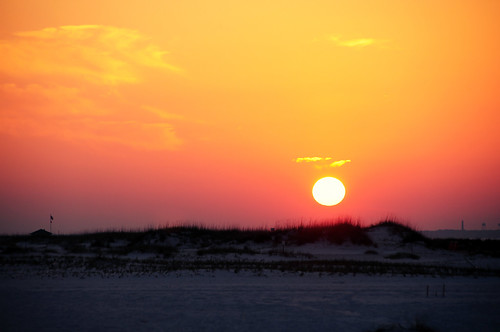
Sometimes I think about the privileged ones in God’s story. The ones called out into the desert, like Abraham, Moses, even Jesus. The desert was brutal. Not a place or an experience they would have chosen.
It was also beautiful. They met angels there. They met God himself there.
There are others, too. Like Hagar. Hagar knew desolation in the desert, but it was also there that she discovered the intimacy and the peace of being seen. “You are the God who sees me,” she said. “I have now seen the One who sees me.”
To follow God into the desert is to turn your back on ordinary life. To trade comfort for something much harder and much better.
I know this, but why do I also know that I don’t want to hear that call? Shouldn’t I be willing not only to follow but to run toward the God of the desert?
I’ve had these lyrics bubbling up in my mind for days:
When we were young
We walked where we wanted to
Life was ours
And now we’re old
We go where we’re told
The Lord’s Spirit calls
He’s singing
Follow my road to sorrow and joy.
(from “Desert Father” by Josh Garrels)
We left Chicago two years ago to follow that singing voice into the desert. I hoped for joy, but found, mostly, sorrow.
I’m not sure I would have followed had I known.
I’m glad I didn’t know, because we never do look far enough ahead.
I would have seen loss. I would have seen loneliness, and I would have stopped looking, turned my back, and walked the other way. I’m sure of it.
I would have turned my back on the road that would carry me through the loss, through the loneliness and toward …
Another daughter. A gift and a blessing I was sure would never be mine. I was sure, and I was wrong.
Now I pray, with hope and joy, the final words of “Desert Father.” I pray them for myself. I pray them for you:
Hold on
All you
Who wait by the blue shores
For him
To part the water
Desert Father
Show us a new way
The impossible dream
Through the deep and the unseen
Carry us home.
by Christie Purifoy | Apr 6, 2012 | Faith, Family, God's Love, God's promises, grief, Jesus, Lent, motherhood, Uncategorized
I thought it would be hard to fit Good Friday into Spring Break. I thought it would be difficult to clear space for the cross in a week devoted to beach, pool, and mother-daughter shopping.
I was wrong.
In the car, on our way to the dollhouse store, her voice pipes up from the back seat. It’s hard to hear, the radio too loud, but I know she’s just said something about Daniel. I want her to stop talking. I can’t bear to hear any more about Daniel.
“That’s where Daniel lived.”
“Daniel is gone now.”
“Daniel is the first kid my age to die.”
Then she repeats the words I’ve heard so many times these past few weeks: “I wish I knew what happened.”
My daughter wants to understand how her second-grade classmate died. She wants to know how his little brother died. And how his mother died. We’ve talked about it a lot, but when it comes to the details, I’ve been vague. I’ve spoken of mental illness and accidents. I’ve never spoken the word murder. I can’t bear for her to know how dark the darkness really is.
It’s amazing, really, that she doesn’t know. With all the television cameras camped in front of her school, the grief counselors gathering the children into circles on the floor, the adults whispering at the bus stop, and me, trying to turn the tv off, the radio off, whenever she walked into the room, it’s a wonder that we managed to protect her from the full story. Because, of course, the full story only leads to an unanswerable question: why?
Why did this happen to these beautiful boys? God, why did you let this happen?
The small voice from the backseat says, “Daniel is in the ground now.” With these words, I find my voice again, and I tell her what I believe.
I tell her about Good Friday. I share the word gospel, and I explain that it is so much bigger, so much more beautiful than I understood when I was her age.
When I was a child, growing up in the church, I thought the gospel was this: “I am a sinner so Jesus died and rose again to reconcile me to God. Now I can have a relationship with God.” But I only understood a small part of the story.
My personal salvation is precious to me, but it is only one, small part of the Easter story. When I face evil, like the darkness which led to Daniel’s death, my personal salvation starts to look small. Insufficient. Sometimes, I even dare to whisper this dreadful doubt: “Do I want to be in relationship with a God who allows such things?”
Confronted by the brokenness of our world, I want more … so much more.
On Good Friday, God gave more. He entered history at one, specific moment and he bore on that cross all the brokenness which came before and all the brokenness that comes after. Including Daniel’s murder.
When God’s own son, Israel’s righteous King, chose to suffer and die he unleashed rivers of justice and peace that will one day flood all of creation. This is a kingdom flood. A flood of living water. A flood to make all that is broken whole again.
When Jesus spoke his final words, he meant not only that his ministry on earth was complete, he meant that death, sin, and all the brokenness of creation were ended.
It is finished.
Can we trust him when evil continues to rear its head? Should we turn to him when our questions push us towards despair?
We know that God gave his own son to suffer and die. We know that God did not abandon his son to the grave. I am convinced that he has not abandoned Daniel. He will not abandon me.
He has not abandoned his creation. He is making it new.
Sometimes we see only a trickling fountain. Sometimes we glimpse the roaring river, but we who have pledged ourselves to this King have been given living water.
For now we share that water with our thirsty neighbors, and we look forward to the day promised each Easter, the day when there will be no more desert. No more thirst.
“Of the greatness of his government and peace there will be no end. He will reign on David’s throne and over his kingdom, establishing and upholding it with justice and righteousness from that time on and forever.”
Isaiah 9:7
Shalom.

(photo by yours truly)
by Christie Purifoy | Mar 17, 2012 | Faith, Family, God's Love, motherhood, Pregnancy
When we moved from Chicago to Florida, we gave away all of our baby things. There was no reason to bring a bassinet, a baby swing, or a boppy pillow halfway across the country. Our family was complete.
Some friends asked me how I knew. I’m not sure what I said, but I know, looking back, that our decision felt like the most reasonable one. It felt right. It felt wise. I think it was wise, given our circumstances and what we thought we knew about our future.
The decision to try to grow your family is very emotional, and I can remember congratulating myself that I was able to say “no” to the idea so rationally. So reasonably. Of course, I’d always had a hard time getting pregnant and the first trimester of being pregnant was even harder. That may have had something to do with the ease with which I said “no more.”
Here’s something I’ve learned since moving to Florida: God’s gifts are not always rational or reasonable. In fact, I’m beginning to suspect that God is wildly unreasonable. And we – well, we are too easily content to stay within our comfort zones, to respect our limits, to steer clear of obstacles and hardship, while all along God desires to give us more.
I’m not necessarily talking about more babies. Or more money in the bank account. God’s more, at least in the beginning, may actually look like less. The money is shrinking. The troubles are multiplying. The mountains are growing.
Yet, there in our midst, is God, and he is longing to give us more, always more. If he is holding back it is for a season and for a purpose, but all through history his cry is the same: “I am the Lord your God, who brought you up out of Egypt. Open wide your mouth and I will fill it” (Psalm 81:10).
I heard those words from God way back in August. I can remember the goosebumps on my arms and the question in my head: “What is God about to do?” I was slightly excited and terribly afraid.
I don’t think I’ve yet glimpsed the full answer to my question. What is God about to do? What is he preparing to give? I know that there is always more. More than I’ve seen. More than I can imagine.
But I have seen one thing … and it is very good.
A small blur of a heart beating furiously on the ultrasound screen.
And I have felt the slightest flutters of new life being knit together.
We have forgotten our “no” and embraced God’s “yes,” and it feels like nothing less exhilarating than a feet-first jump into a rushing river.

“There is a river whose streams make glad the city of God, the holy place where the Most High dwells.”
Psalm 46:4
by Christie Purifoy | Feb 28, 2012 | Florida, God's Love, Lent, Seasons, Waiting
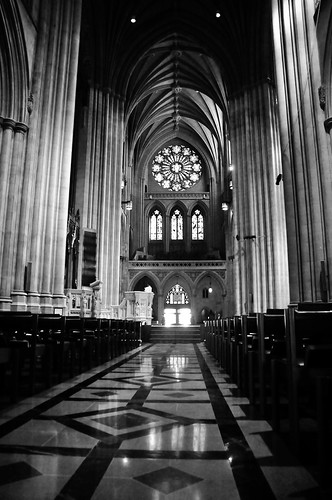
I live in Florida, but my inner calendar has been tuned by the north. In other words, no matter what I see outside my window, January means cold and snow and spring never shows up until after Easter. I suppose ten years living in Chicago did this, although I think it may go back even farther.
Growing up in Texas, I felt cheated by February heatwaves. I have always had an idealized version of the seasons; one more rooted in classic literature for children than in lived experience. Late winter meant sugar snow because I read Little House in the Big Woods no matter that late winter in Texas looks like fields full of bluebonnets.
In Chicago, Lent was appropriately dark, cold, and gray. A fitting backdrop for contemplating dust to dust. The right atmosphere for remembering the cross.
Last year, Lent in Florida surprised me with its very different rightness. The hot pink azaleas and vivid blue skies could not be reconciled with the grey smudges on our foreheads. They simply could not. But I decided that this was best. To practice Lent in such a place is to say, “I will not be distracted by youth or beauty. I will remember that death is ever present. I will not be seduced by sunshine and forget to pick up my cross.” How can we truly celebrate the resurrection power of God’s kingdom if we’ve forgotten how and why Jesus suffered?
Last year, I determined always to make an effort for Lent. It was necessary whether the fruit trees were blooming or not.
This year, I didn’t even make it to my church’s Ash Wednesday service. I was too tired. Too sick. Which says it all, I’m afraid, about the past few months of my life.
I thought about making an effort in some other way. What would I give up? Could I read through a special book of devotions? Make some goal for prayer or good works?
If only I weren’t so tired. If only my asthma would go away. If only I didn’t already feel crushed and weak. If only I didn’t already feel like dust, I might be able to make some effort to remember that I am dust.
Of course, If I had phrased it to myself just like that I might have realized sooner how foolish, how hopelessly circular my thinking had become.
Now I know that if Lent is about making some effort then the end result must always be gratitude that I need never make that effort.
With no effort on my part, I am loved.
With no effort on my part, I am redeemed.
Having made no choice, I might be led through a wintery, Lenten wilderness. Whether my calendar says it’s time for that or not.
Having done little but wait and rest, I will be led out again.
That in itself, I’ve learned, is a kind of discipline. God did tell his children, “It is a day of Sabbath rest for you, and you must deny yourselves” (Leviticus 23:32). Would he have put it like that if rest came easily and naturally?
What, then, is my Lenten discipline for 2012? Merely to rest in the shadow of the cross. And wait.
by Christie Purifoy | Feb 21, 2012 | allergies, Art, Food, God's Love
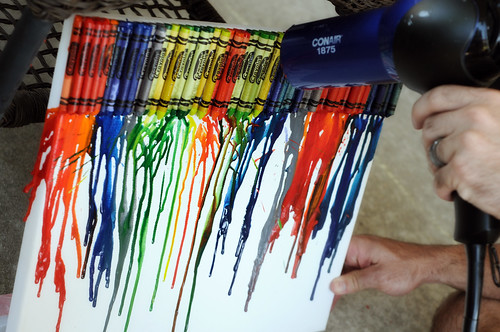
I’ve been sick and in bed a lot (Florida’s motto should be The Pollen State) and dreaming of everything I want to do when I’m feeling better. You know, practical, productive activities like cleaning my house, making dinner for my kids, and organizing my desk.
I kid! I’ve actually been dreaming of the wonderful and utterly nonessential. Things like making my own sourdough bread and picking a bouquet of teensy flowers for my daughter’s dollhouse. Oh, and writing out my favorite recipes to fill an antique recipe box. Why? Because it’s prettier than my binder full of recipe clippings, that’s why.
Illness has stripped away my ability to be energetic and efficient, but I am not daydreaming about regaining my productivity. I am daydreaming about Folly.
The capital F is important. Do you know about Follies? Those small architectural oddities which dotted the landscapes of eighteenth-century British aristocrats? If you’ve seen the latest film version of Pride and Prejudice you know what I’m referring to. Elizabeth and Darcy exchange words when they take shelter from the rain in a miniature reproduction of a Greek temple. That is a Folly with a capital F.
It serves no purpose. It has no point. It is as if those who built them said, “I am going to create something beautiful. And, then, I am going to look at it.” That is all.
We can easily criticize the Folly (and the one who built it) for its ridiculousness. Its wasteful extravagance. What is the point? What does it do? Aren’t there better uses for your time? Your money? Your life?
I have no desire to defend those eighteenth-century aristocrats. Is it a coincidence that this century ended in revolution or the threat of it all around the globe? Probably not.
Lying in my sickbed, however, I find a lot to like about the idea of Folly with a capital F. Folly, as it appeals to me, has more to do with beauty than foolishness. It means acknowledging that life is not Life if it is all efficiency, productivity, and utility. It must also make room for beauty, creativity, whimsy, and delight.
For homemade sourdough bread. For handwritten recipe cards. For tiny tabletop bouquets bestowed on a family of dolls.
For art.
For music.
For dance.
For embracing the Creator in whose image we are made.
“How priceless is your unfailing love, O God!
People take refuge in the shadow of your wings.
They feast on the abundance of your house;
you give them drink from your river of delights.
For with you is the fountain of life;
in your light we see light.”
(Psalm 36:7-9)
I’d love to know: what is bringing you delight during these late winter days?

