by Christie Purifoy | Oct 17, 2011 | Art, Books, Poetry
In my ideal Christian bookstore, the Jesus knick-knacks and the Amish romances would be pushed to a far corner. The coveted window display space would be filled with books like the collected poems of Czeslaw Milosz.
I guess if I’m being perfectly honest, my ideal Christian bookstore would look exactly like my favorite independent bookstore in Chicago’s Hyde Park neighborhood, with a few more Bibles. As Madeleine L’Engle writes in Walking On Water, “Christian art? Art is art; painting is painting; music is music; a story is a story. If it’s bad art, it’s bad religion, no matter how pious the subject.”
Even if you think that L’Engle pushes the point too far, I imagine that many of you, having picked up a copy of Milosz’s New and Collected Poems (1931-2001), would agree that this is a writer Christians should be reading. A believer and a Nobel Prize winner, Milosz never turned his face away from the darkness of twentieth-century history. Yet he did this without losing his grip on hope and belief. A light shining in darkness. I think that may be my definition of Christian art.
Rays of Dazzling Light
Light off metal shaken,
Lucid dew of heaven,
Bless each and every one
To whom the earth is given.
Its essence was always hidden
Behind a distant curtain.
We chased it all our lives
Bidden and unbidden.
Knowing the hunt would end,
That then what had been rent
Would be at last made whole:
Poor body and the soul.
– Czeslaw Milosz
by Christie Purifoy | Oct 11, 2011 | Family, God's promises, motherhood, Waiting

If there is one word to describe most parents of young children, it is this: tired.
However, the tiredness itself doesn’t always make sense. It isn’t always logical. For instance, there is this strange equation: I am less tired, less overwhelmed now with three children than I was with one (and my youngest has yet to learn to sleep all night in his own bed).
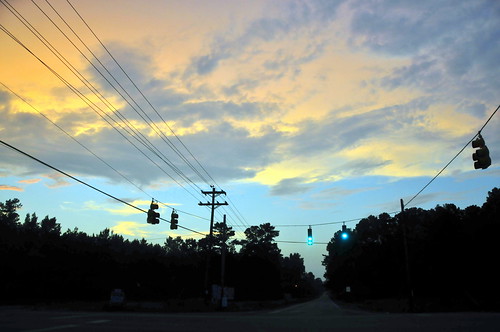
I’ve come to believe that many of the most difficult periods of parenting are like bad weather. The radar map of my early years as a mother was covered in angry reds and oranges. More recently, the forecasts have called for blue skies, occasional rain.
Is there some parenting secret to be tapped here? Have my years of experience brought me wisdom and thus fair weather?
I don’t think so. If anything I have abandoned my early intensity to always do the right thing. I have forgotten much of my new-mother knowledge.
Absorbed in the busyness of living, I can no longer recall the good advice of the parenting books I used to read. When the two-year-old refuses his bedtime and asks for popcorn instead, I sometimes remember how firm and controlling we once would have been. Now, more often than not, our evening couples time is spent in the company of a toddler. We talk over his head and share our popcorn. Maybe it isn’t ideal, but it isn’t terrible, either. He’s very cute eating his popcorn, this one is.
And yet, the “secret” if there is one doesn’t lie in a relaxation of standards or parental laziness. The weather is fair, but I’m convinced that we can take little credit for this.
The little girl who was overwhelmed by life (and so overwhelmed her mother) has shifted into the child who starts her homework as soon as she walk in the door after school, the child who makes her bed every day because she likes her room to look nice. Knowing firsthand how emotions spiral out of control, she says to me, “The girls will probably fight to sit next to Emma at the birthday party. But, I’ll be okay sitting next to someone else.”
How did this happen? And why did I assume that the weather would always be rough? Why did I listen to the well-meaning older parents who said, “Oh, just wait! If you think it’s hard now …”
Jesus has said, “Don’t worry about tomorrow. Tomorrow will worry about itself.” And, yes, I find that each day does have its own trouble. But far worse than the particular trouble of each day is our despair when we believe that all we can hope for are storms. The storm is one thing, but the hopelessness that says, “morning will never come” is much more destructive.
Morning will dawn, and the one who is beaten down by life’s storms will open the door and find sunshine. Perhaps that day is coming sooner than you think?
by Christie Purifoy | Oct 4, 2011 | Faith, Family, God's promises, motherhood, Waiting

Taken yesterday by Yours Truly. Ok, it was six years ago. It just feels like yesterday.
I read tall, teetering stacks of parenting books when I was pregnant with my first. Not one told me how much it would hurt.
Oh, sure, they talked about childbirth. The pain of it. I read a lot about that, and I was prepared. Well, as prepared as you can ever be.
But not one of those books prepared me for the pain of loving.
To love a child is to hurt. Desperately. They seem to grow and change by the minute, and this growth is both a good thing and a terrible loss. Every day you are saying goodbye: to the baby you held, the toddler who made you laugh, the brave one who left for her first sleepover. And on it goes. They’re relentless, these goodbyes.
I have never looked at old photographs without an almost physical pain. Of course, there’s pleasure too. But you expect that. It’s the pain that feels so strange. It’s the pain that seems to demand some sort of answer. God, does love have to make us cry?
There’s a song by the group Mumford and Sons called “After the Storm.” My favorite line is this: “There will come a time, you’ll see, with no more tears and love will not break your heart.”
Do you believe that? Do you believe that one day love, like everything else, will be perfect and whole? That one day there will be no more goodbyes?
Peter told us that “[Jesus] must remain in heaven until the time comes for God to restore everything” (Acts 3:21). And I can’t help but wonder: when he says “everything,” does he mean everything? Will God restore everything that we seem to lose in this life?
Will there come a day when love will not break our hearts?

by Christie Purifoy | Sep 13, 2011 | Faith, grief, Scripture

I slumped down at my writing desk one recent morning, and this phrase floated up to the top of my mind: “there is nothing new under the sun” (Ecclesiastes 1:9).
I was feeling a little depressed, a little overwhelmed, and Solomon’s words came unbidden to justify my dark mood.
For me, it was nothing more serious than hot weather, kids fighting (again), and dirt tracked all over my just-mopped floors. Some days it only takes that little bit and we are carrying the burdens of the world: in an instant my eyes roam from the dirt, sweat, and tears in my own house to the global orphan crisis, drought in Texas, famine in Africa (again!).
Why is my life such a mess? Why is the world such a mess?
Supposedly, we Christ-followers are the bearers of “Good News” (just search the Bible for the phrase “good news”: it comes up a lot). But what can we possibly have to say to those suffering amidst the ever-present darkness of this world?
As a child, growing up in the church, I heard a lot about good news. Maybe the message was simplistic or maybe I was only able to understand a simple message, but I believed then that the good news was all about heaven. The good news, then, was that Jesus made a way for us to go to heaven when we die. That seemed like pretty good news to me, which is strange because I was a lot farther from death than I am now. Today, thirty years closer to my own end, that news doesn’t seem nearly good enough.
You and I and our neighbors on this planet? We need good news now. We need good news for today.
Solomon’s words take me there. He writes, “Is there anything of which one can say, ‘Look! This is something new’?” (Ecclesiastes 1:10). I’m not sure, I can’t really answer his question, but then I remember these words in Isaiah: “I am doing a new thing! Now it springs up; do you not perceive it?” (Isaiah 43: 19).
God is doing something new. In fact, He’s been working at it for thousands of years. The Old Testament whispers it, and Jesus embodies it. New life. New creation. New covenant. New heaven. New earth.
God is making all things new (Revelation 21: 5).
I don’t know exactly what that means. But I feel something good deep down in my bones when I hear the word new. New, new, new. All is being made new.
Was there ever a more hopeful, beautiful word than “new”?
In me, in you, and in this gorgeous, broken-down world, God is doing a new thing. Look closely. Do you not perceive it?
by Christie Purifoy | Aug 1, 2011 | Florida, Religion

Understandably, winters in Chicago were long and hard. Still, I enjoyed them more than most of my friends and neighbors. I’ve always imagined that my Texas childhood created a snow deficit deep inside of me that no amount of Midwestern cold could fill up. As much as we all longed for spring come March, I was never sad, even then, to see snowflakes fall.
The hardest thing about winter for me was always the thaw. Those of you with experience living in frigid climates know what I’m talking about. The thaw is that period (maybe it comes once, maybe it comes and goes repeatedly, every winter is different) in which the sidewalks and streets are impassable. Snow has melted and refrozen until not even a polar bear could walk the ice safely. Or, layers of snow have turned to slush all the way through, and it’s impossible to move without icy meltwater pouring over the tops of my boots. Pushing a stroller through the muck and mess of a thaw? Absolutely impossible.
The hardest thing about winters in Chicago? Not being able to (safely) leave the house.
The hardest thing about summers in Florida? Not being able to (safely) leave the house.
Obviously, we’re no longer in danger of breaking our bones as we slip and slide on the sidewalks. But when my daughter asks at noon whether we can go for a bike ride, all I can think is “heat stroke.” It’s 95 degrees and very humid and I actually convince my kids to watch another half hour of tv rather than take them outside.
There are bright spots in both seasons. Here, swimming pools dot the landscape like weeds and as long as I’m willing to walk the gauntlet of sunscreen application (which always requires chasing the two-year-old around the house and listening to the seven-year-old whine that her face is white), we can enjoy being outside without too much pain.
In Chicago, the compensation came with sledding and snowman building. As long as I was willing to bundle up three children in snowsuits and long underwear, we could forget the discomfort of cold noses and tender fingers for an hour of fun.
In Chicago, I loved to sit directly on the warm radiator cover and watch snow fall past our third-story window. In Florida, I sit on the small sofa and watch that day’s thunderstorm pile up in the west. Seeing the palm fronds flatten in the wind and sensing the house go dark, I like to imagine that it’s cold outside. The reality feels more like getting hit in the face with solid swamp, but I keep the door shut and pretend. It’s very cozy.
More than cabin-fever and long hours spent indoors, these two seasons in these two places share a mood of longing. In Chicago, I yearned for warmth and color. In Florida, I want crisp air and sunshine that doesn’t burn like fire.
I’ve often felt guilty about giving in to this mood. As if desire is always an altogether bad thing, a temptation to ignore the good gifts right in front of us.
I think that is sometimes the case.
However, occasionally we only recognize the best things in life because we’ve longed for them and waited for them. Tulips in spring. The first day in fall when the humidity plunges.
The goal, I’ve decided, should not be some stay-in-the-moment mental trick we play on ourselves, but a more straightforward acceptance of goodness in the present and desire for something else. And why should these be mutually exclusive?
I love Florida’s daily summer thunderstorms. I love the wind, the dark clouds, and thunder rumbling all afternoon. But I am also eager for cooler temperatures and hours that can be spent outdoors. Summer, here, is about enjoying and longing.
And when the cooler days come, I’ll say goodbye to the thunderstorms with no regrets, knowing that I loved them in their time, but the thing I’ve really wanted, the thing I am now prepared to enjoy, has finally come.
Hope justifies longing.
“But hope that is seen is no hope at all. Who hopes for what he already has?” (Romans 8:24)


